

Catalogue craft
Screen Stencil explains how catalogue enquiries are handled with honest specs, direct replies and practical questions about the print job.
Overview
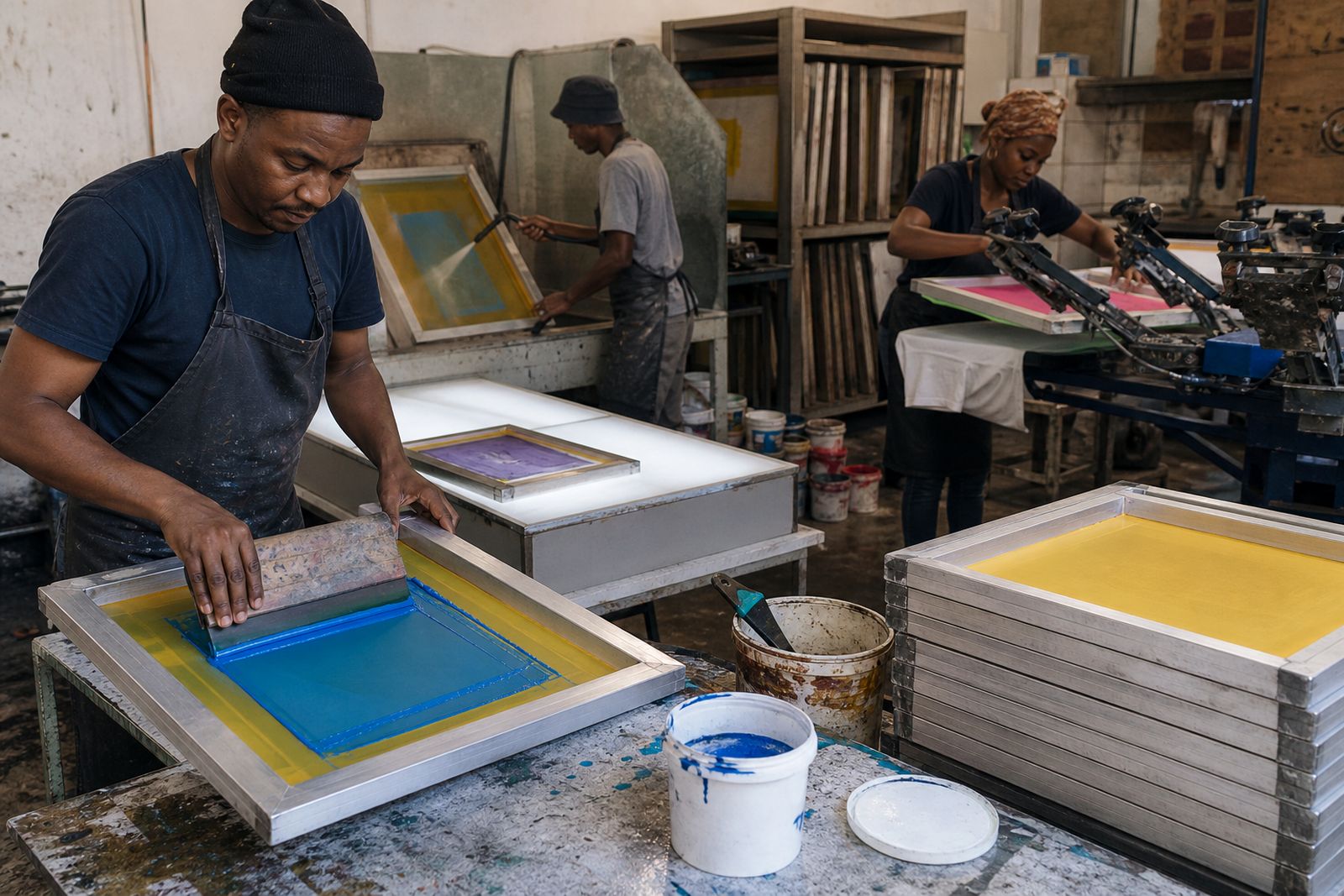
Each enquiry goes straight to the people who deal with stencil film, mesh and screen room stock. We ask which press you print on, the mesh count or artwork detail you need, and your required delivery date, then send a practical recommendation with lead time and price.
We handle enquiries about screen print stencils and mesh routes for South African print rooms.
Choosing the right stencil route
Screen print rooms in South Africa rarely need theory for its own sake. They need a clear choice between dual-cure, diazo and SBQ photopolymer emulsions, plus guidance on which route suits the job, the mesh and the press conditions.
We look at the artwork detail, the mesh count and tension, and whether you are printing garments, posters or signs. That helps narrow down the practical fit, whether you are working with capillary film, coating on frame, or matching an exposure unit to the way your room is set up.
- Dual-cure, diazo and SBQ emulsion guidance
- Capillary film and direct coating support
- Mesh counts, tension and frame choice
Working conditions that affect results
A good stencil setup is not only about materials. Humidity, dry Highveld air and coastal moisture all change how screens behave, especially when you are dealing with coating, drying, exposure and washout.
We also talk through power cuts and exposure timing, lamp age, reclaim, haze removal, pinholes and touch-up. If a screen is giving trouble, send site photos through the contact form and we will help you work out what is happening before you order anything.
- Exposure units and lamp age
- Washout, pinholes and touch-up
- Reclaim and haze removal
Support for the full print room
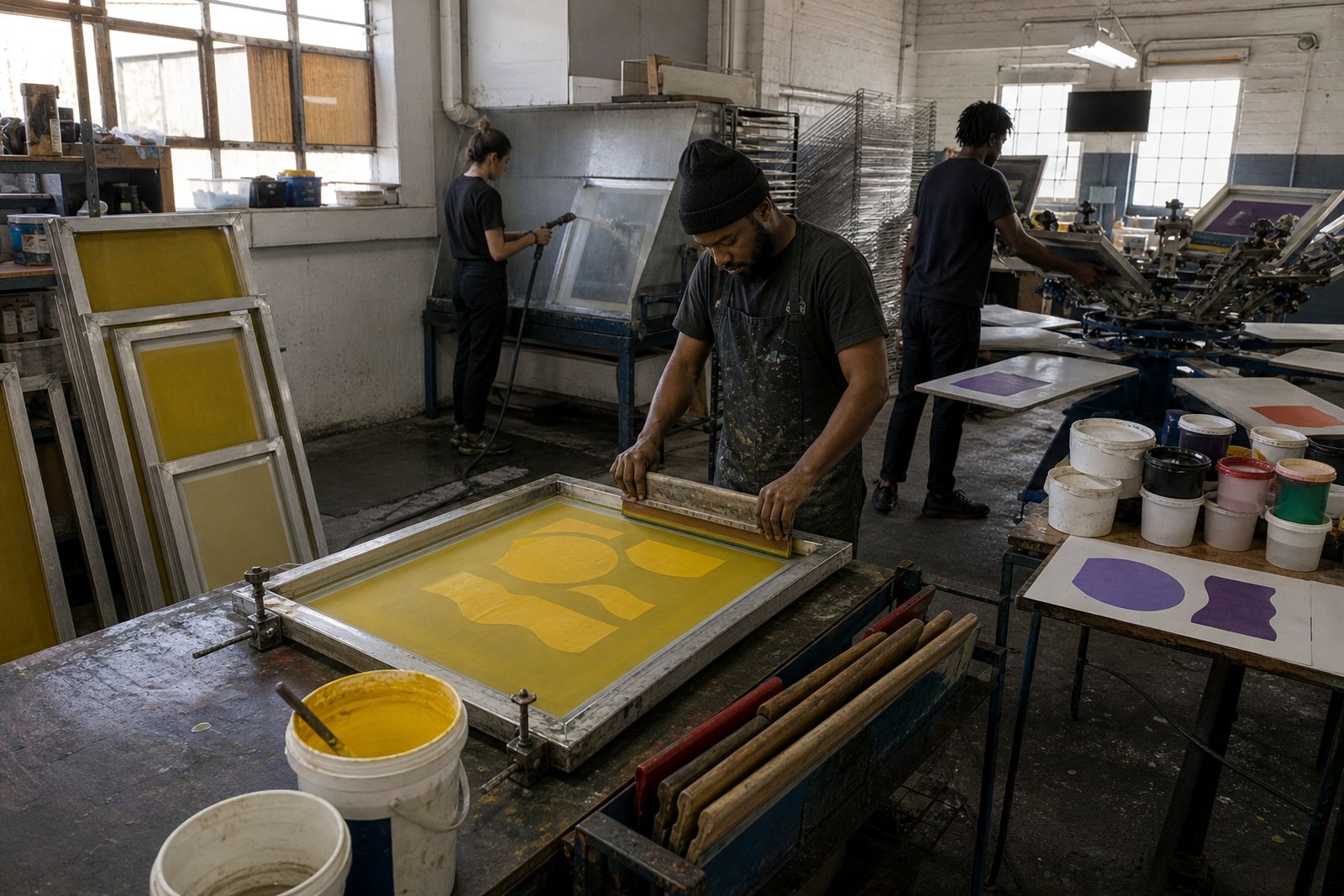
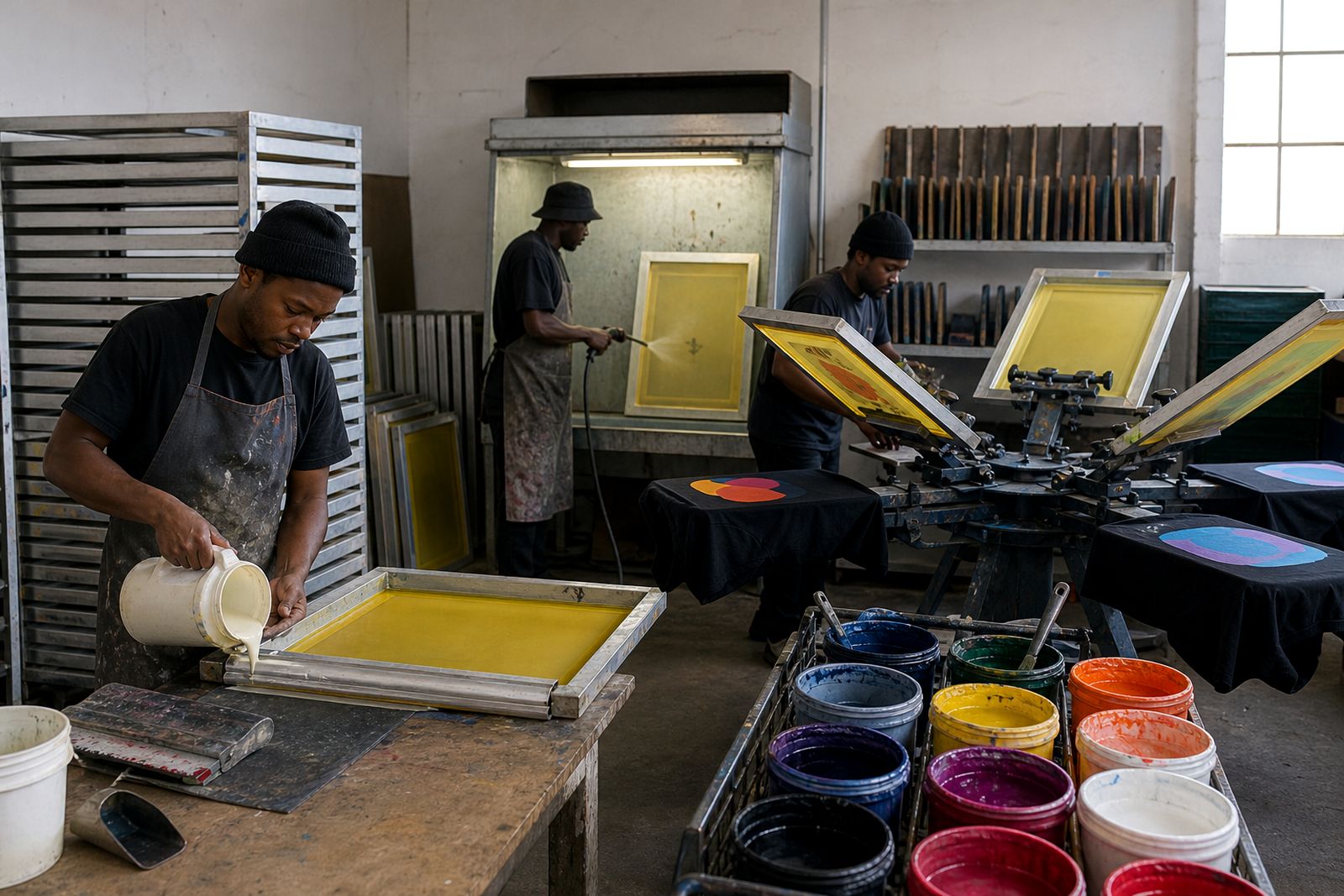
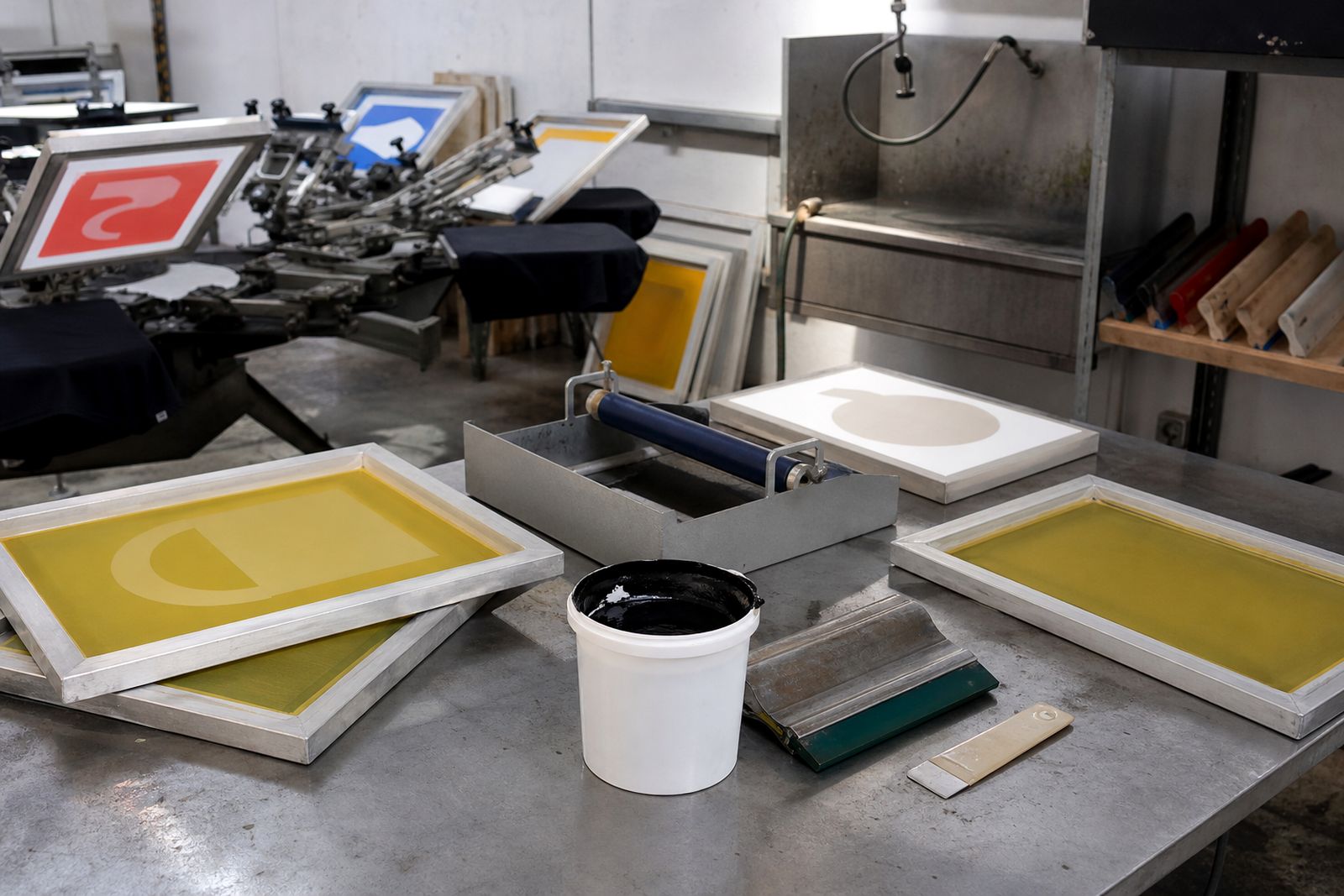
Screen stencil work sits alongside the rest of the print room, so the advice covers what happens before and after exposure too. That includes aluminium and timber frames, scoop coaters, coating technique and how the stencil should behave with plastisol, waterbase or discharge inks.
Whether your work is for garment decoration or poster and sign printing, the aim is the same: a practical recommendation that suits your setup and your working rhythm. Screen Stencil operates from Salt River, Cape Town, and serves print rooms through the listed showrooms across South Africa.
- Aluminium and timber frames
- Scoop coating and coating technique
- Plastisol, waterbase and discharge inks
What our Screen Stencil customers say
Verified Google reviews
Also worth a look

Tell us what you are printing
Send a note through our contact form with the inks and substrates you print, your mesh counts and frame sizes, your exposure unit and your town, and we will come back with practical advice and a quote.
Open the contact form