

Before and after
Before and after examples show how the right emulsion, mesh count and screen tension affect clean stencil results.
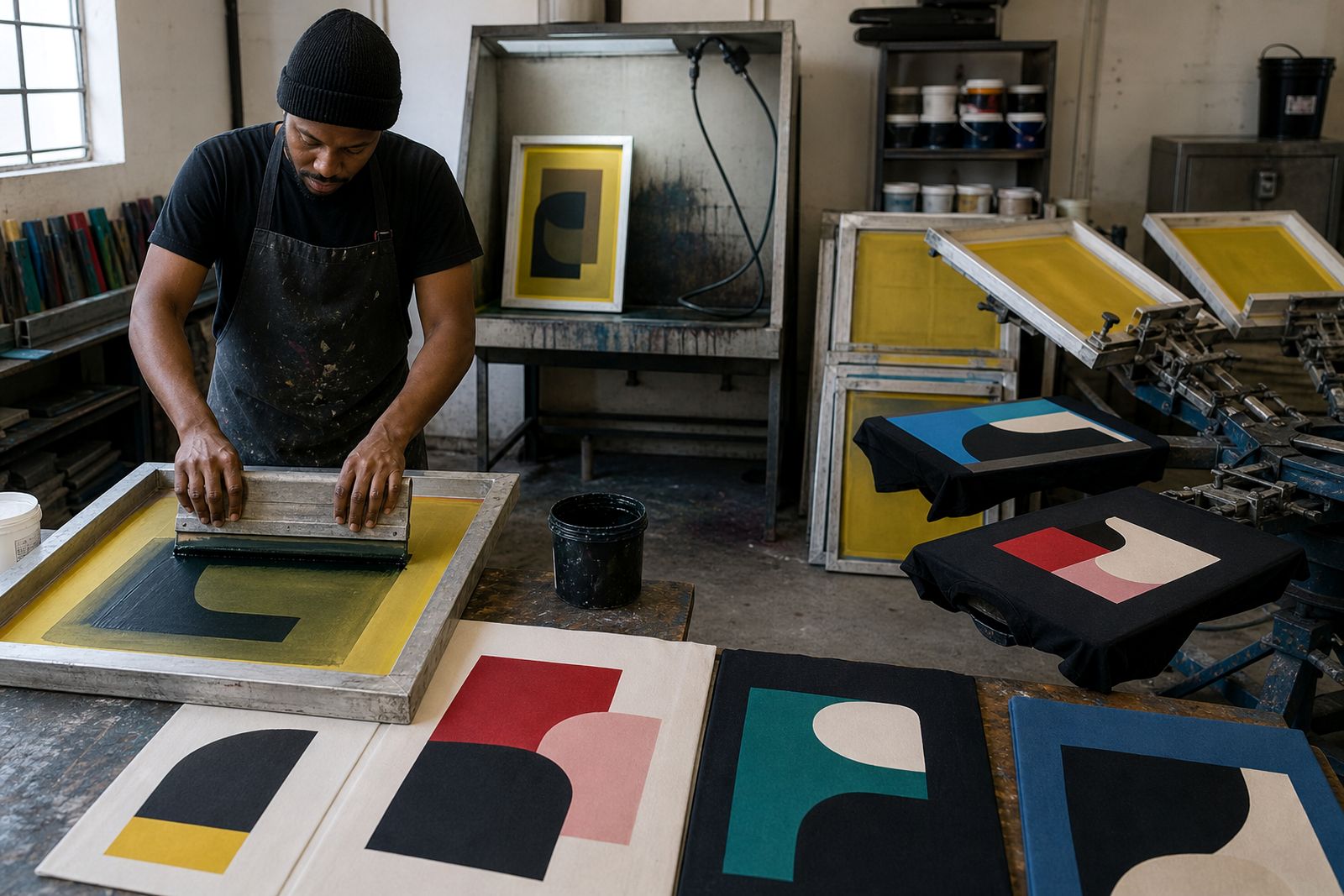
What to check before exposure
For a clean stencil, the basics matter: the right emulsion for the job, a mesh count that suits the image, and proper tension in the screen. In South African print rooms, that conversation often starts with dual-cure, diazo or SBQ emulsions, then moves to whether the work is for garments, posters or signage.
Before exposure, check the coating on the mesh for even coverage, smooth edges and no dry spots. Scoop coating technique affects how the stencil holds fine detail, especially on softer artwork and halftones. Exposure units also need attention. Lamp age, exposure timing and power cuts can all change the result, so it pays to test and keep notes. If you need help choosing the right setup, see stencils or ask via the contact form.
From washout to reclaim
After exposure, washout should reveal clean edges without leaving pinholes or undercutting. If the image is for a difficult run, look closely at weak points before the screen goes onto press. That is especially useful for plastisol, waterbase and discharge inks, where image sharpness and edge integrity can affect the print.
Reclaim is part of the same story. Haze removal, degreasing and a proper check of the mesh help the screen return to service without old residue affecting the next stencil. If the frame has been in heavy use, look at the mesh tension and the condition of aluminium or timber frames before the next coating pass.
- Check for pinholes after washout
- Inspect mesh tension before coating again
- Remove haze before re-use
Examples from the gallery
The gallery shows how stencil choices change from job to job, from a dual cure tee to a soft edge poster or a sports blockout. Some samples focus on crisp logo work, while others show how stencil detail holds up on larger runs, repeated marks or tricky edges.
Coastal humidity, dry Highveld air and busy production schedules all shape the result. These before and after examples are useful if you are comparing capillary film to direct coating, or checking what kind of mesh, frame and exposure setup suits the work. For a broader look at screen room support in South Africa, visit showrooms or use the contact form to ask for a quote.
Before and after
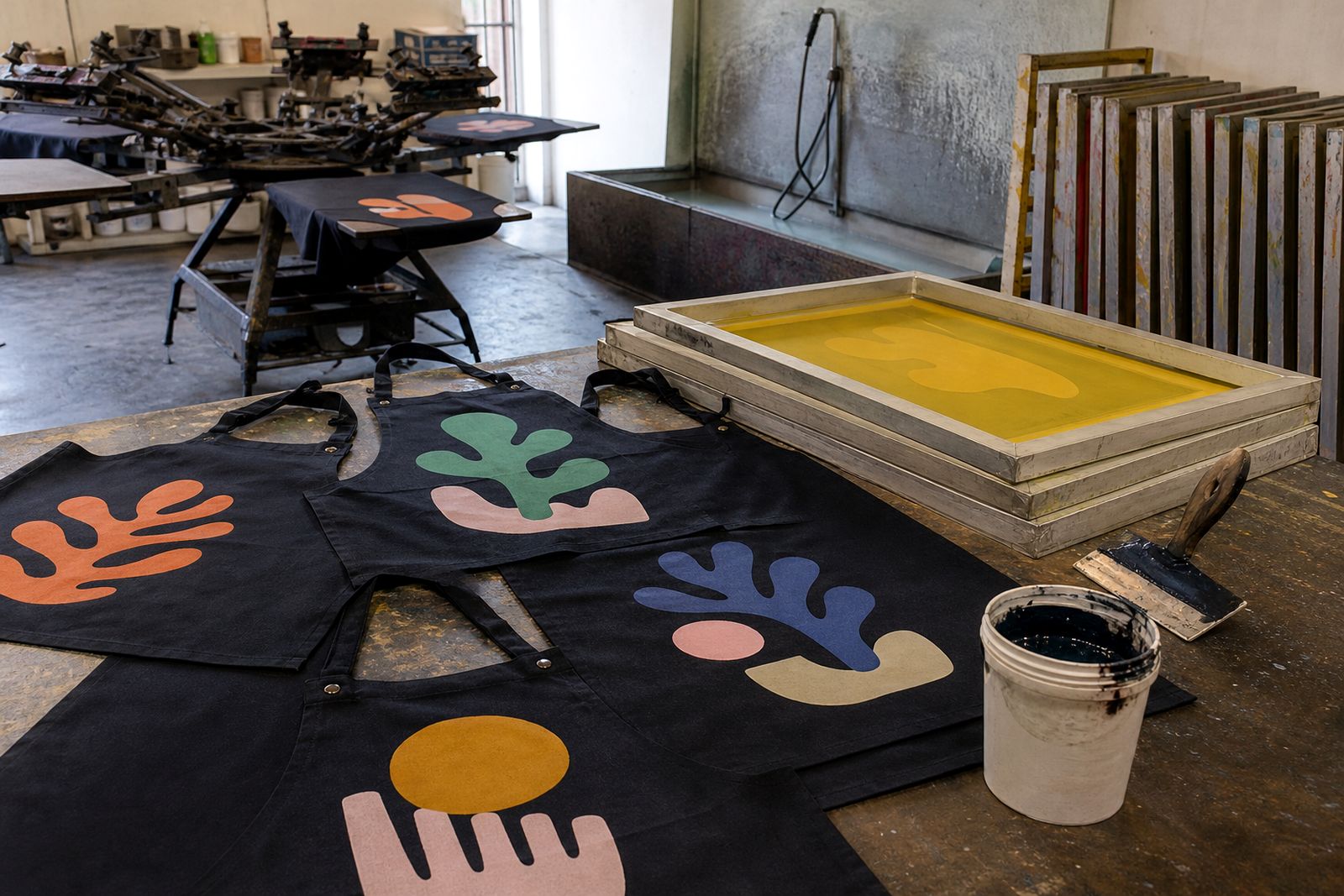
Water-resistant apron stencil
Water-resist stencil on cafe aprons.
Read more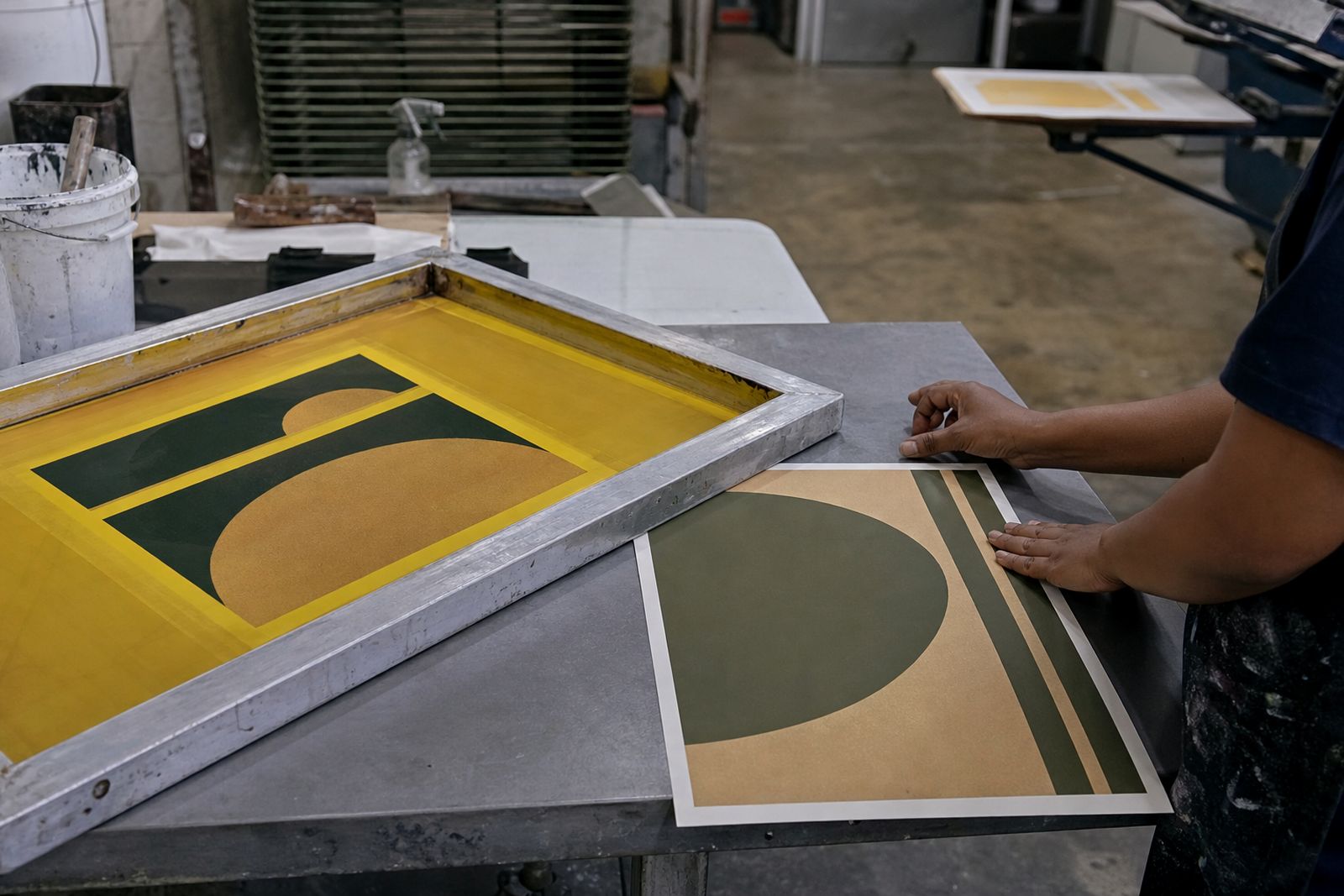
Pinhole-free bottle sleeve
Pinhole-free sleeve stencil before wrap.
Read more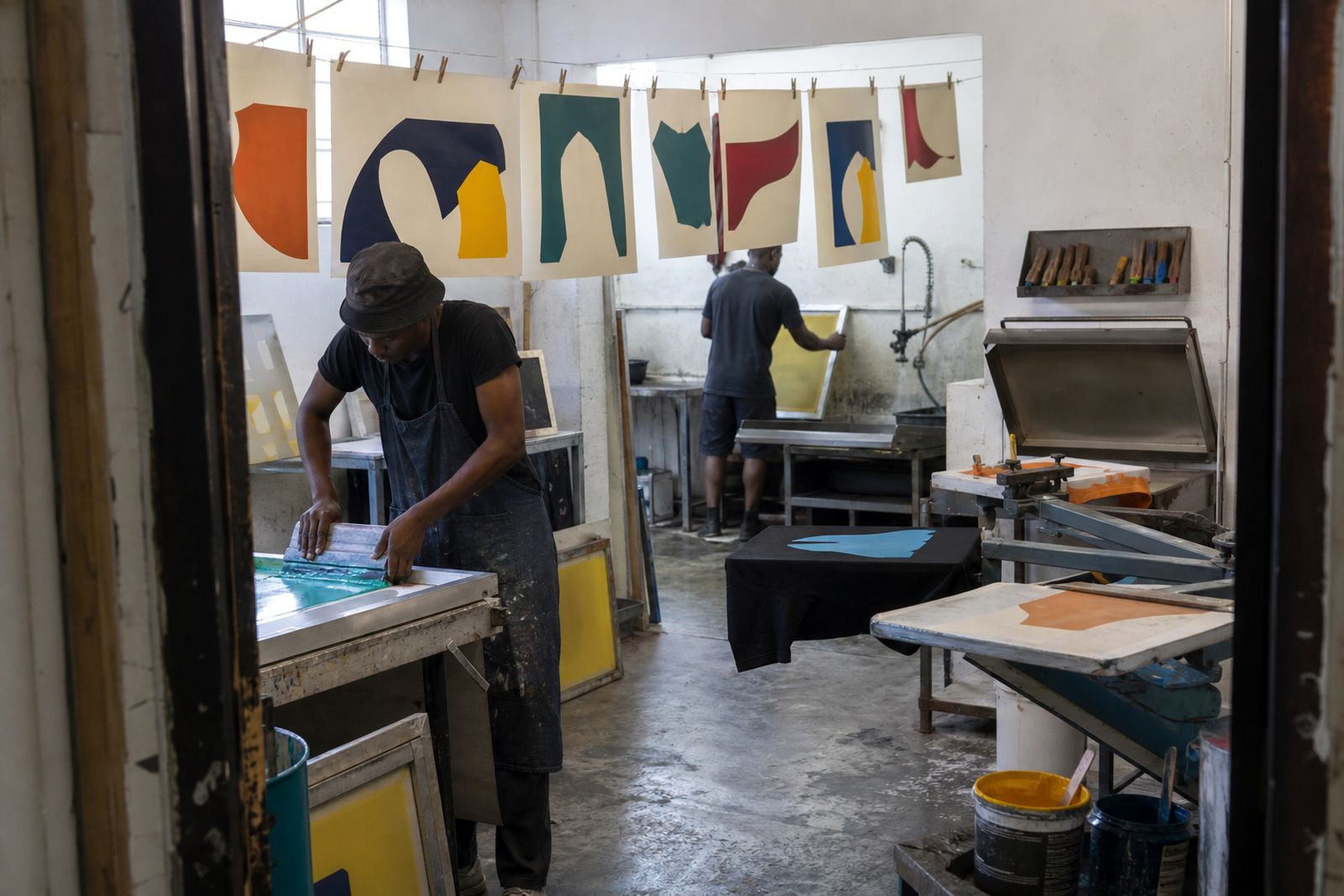
Coating rack for coastal air
Coating rack drying honest in coastal air.
Read more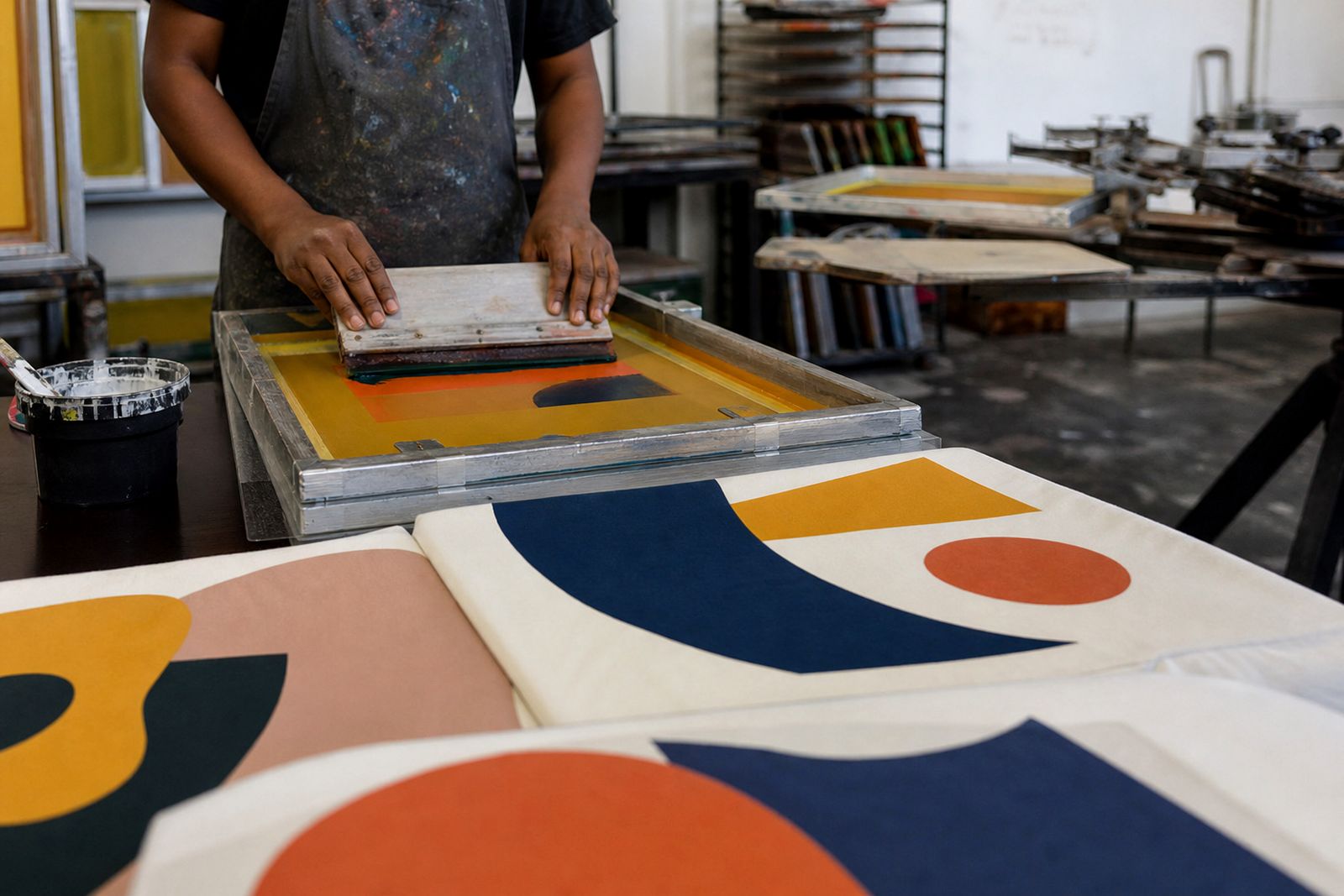
Dual-cure multicolour tee
Dual-cure stencil on a multi-colour tee set.
Read more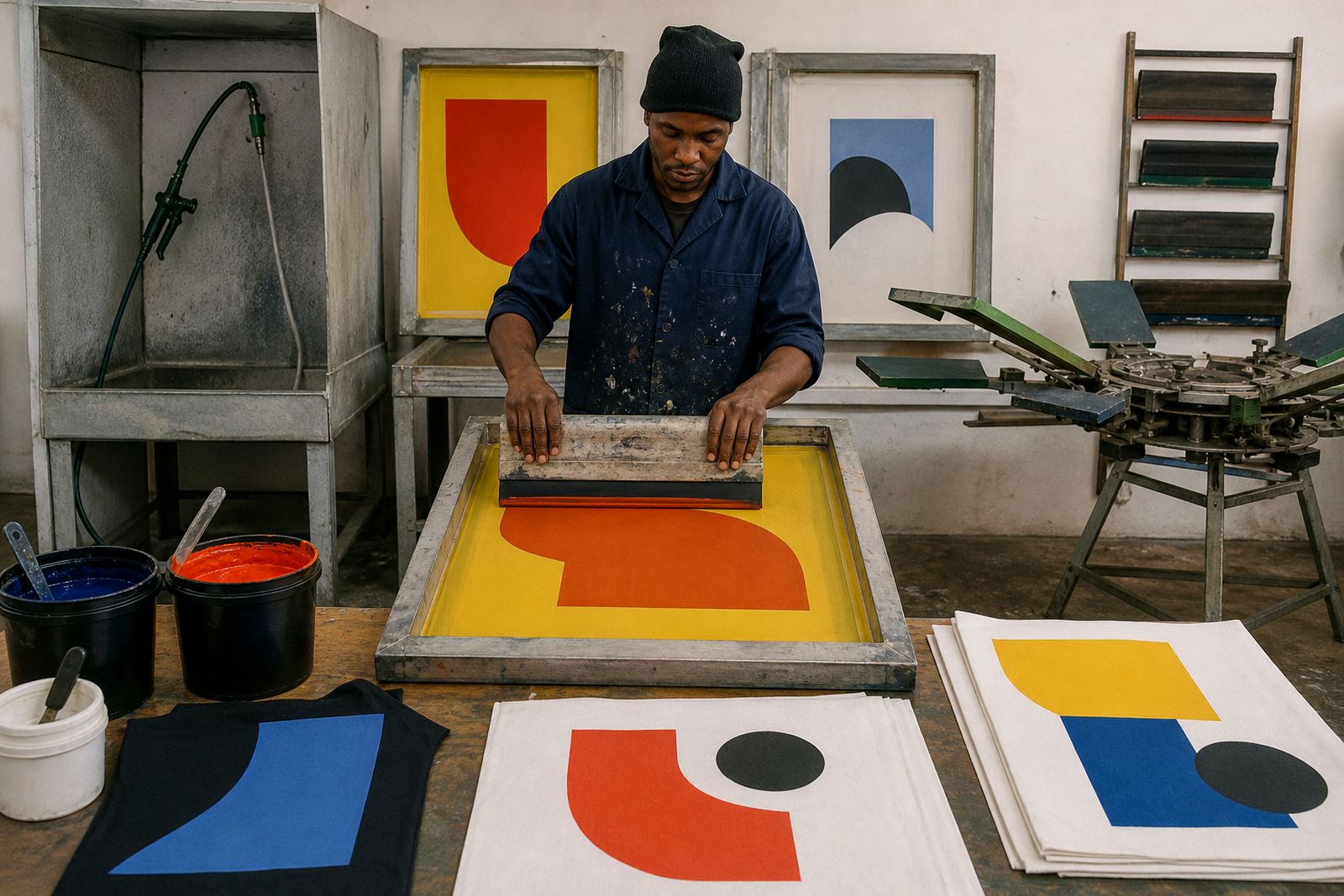
Export carton mark
Stencil art mark on export carton stock.
Read more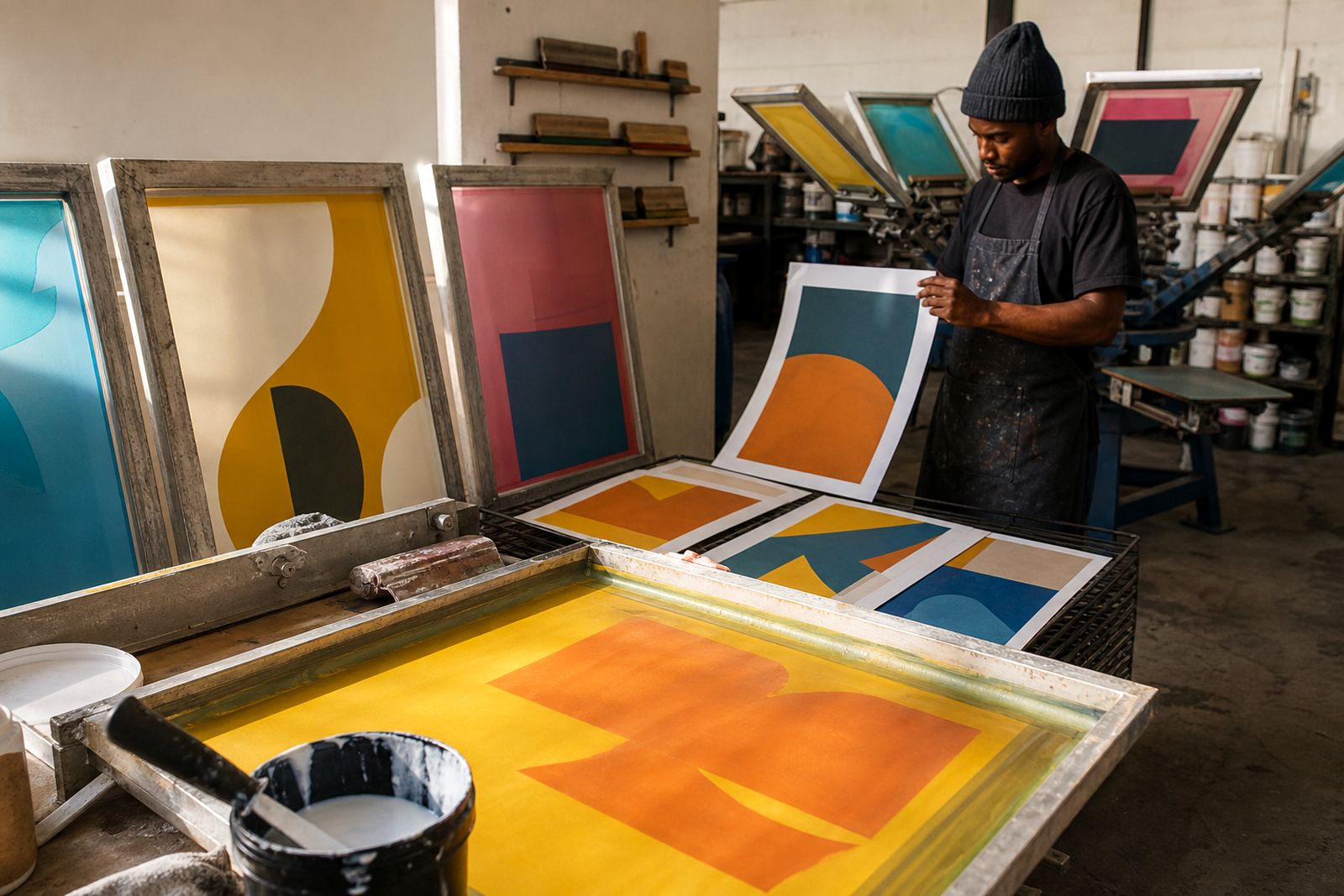
Festival rush poster sheet
SBQ rush poster sheet before doors open.
Read more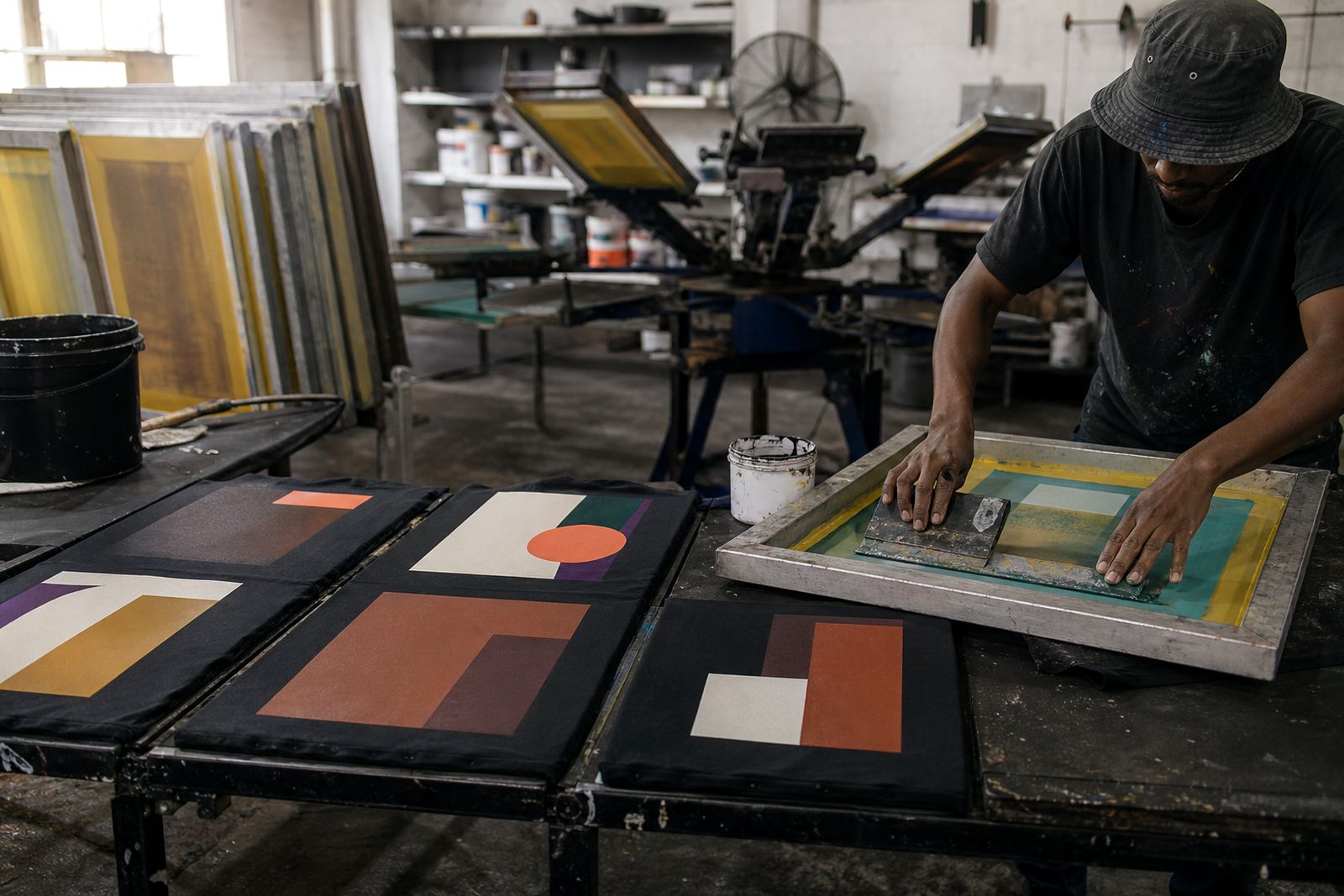
Night reclaim at the sink
Soft reclaim at the night sink, mesh intact.
Read more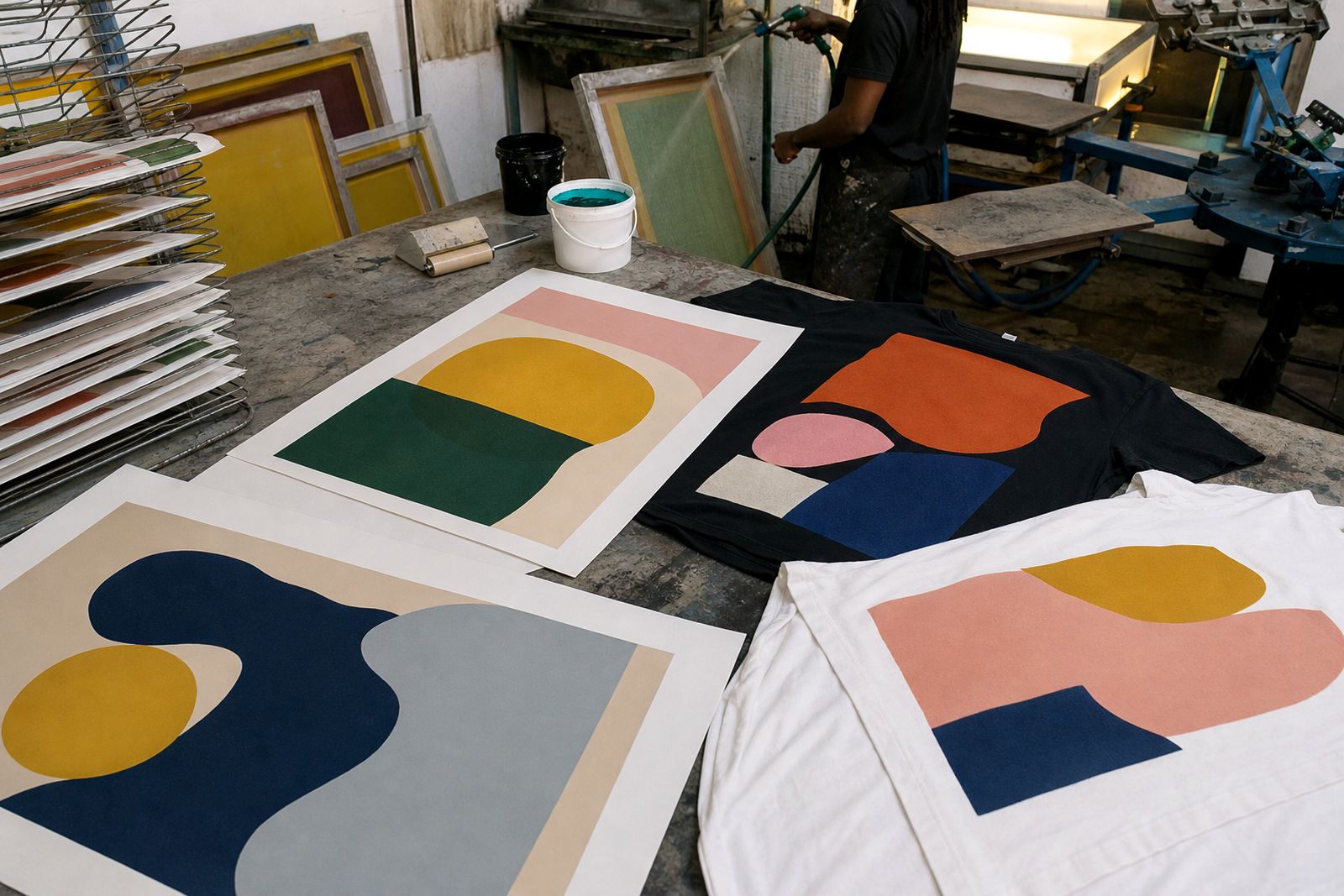
Soft edge poster print
Soft edge poster print on a Salt River poster.
Read more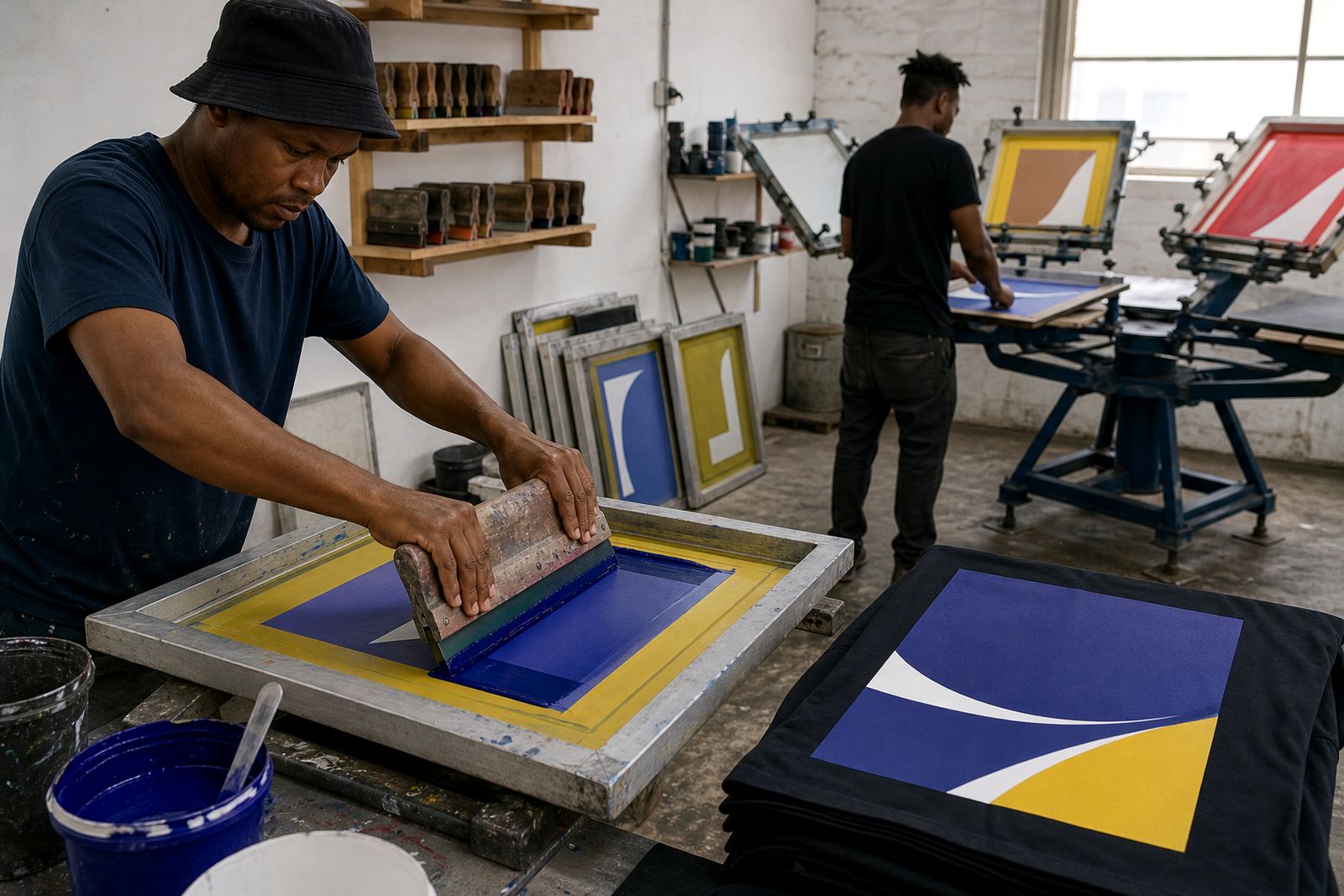
Sports kit blockout
Blockout edges on a club kit run.
Read more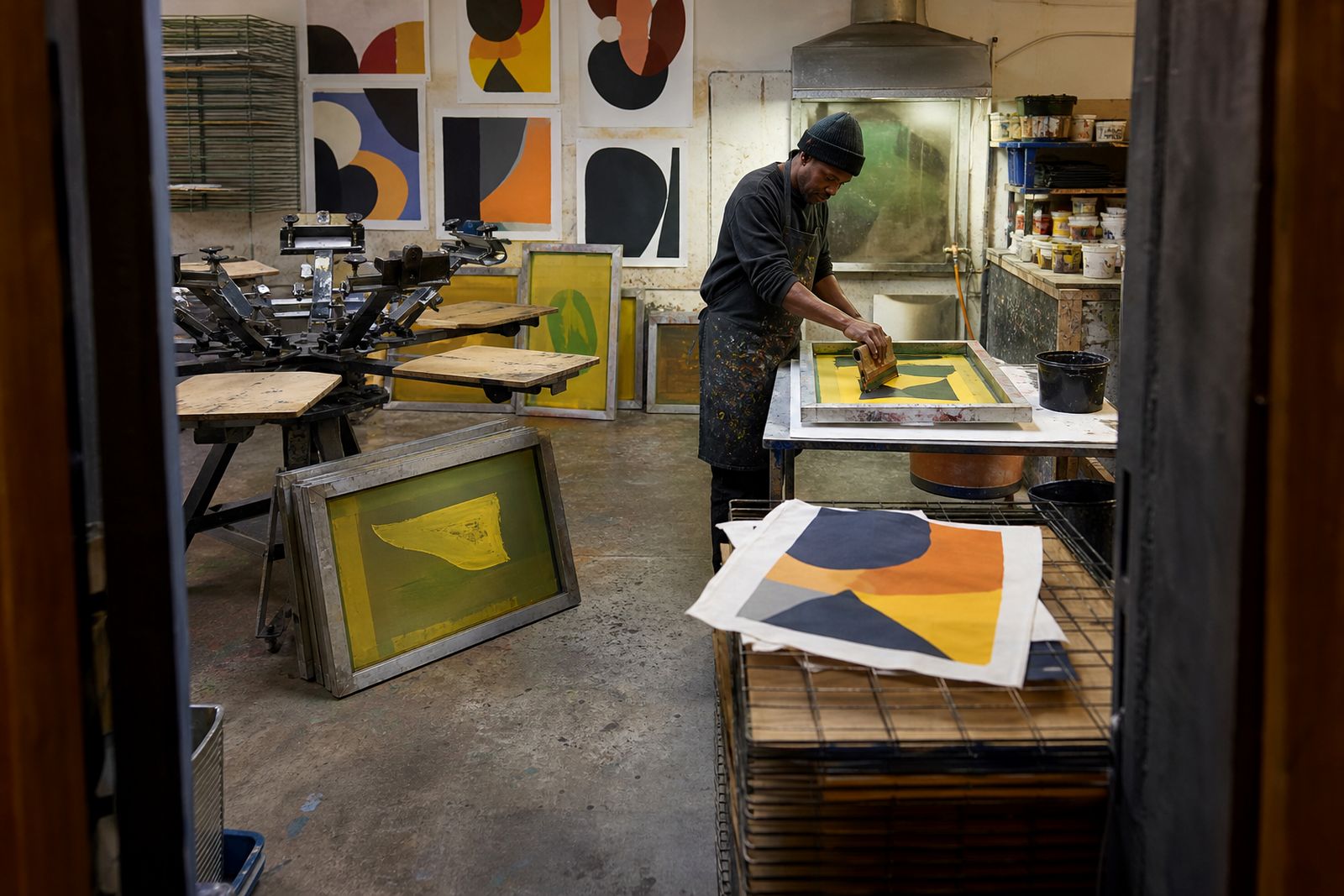
Stencil art transfer panel
Gallery transfer panel with honest mesh texture.
Read more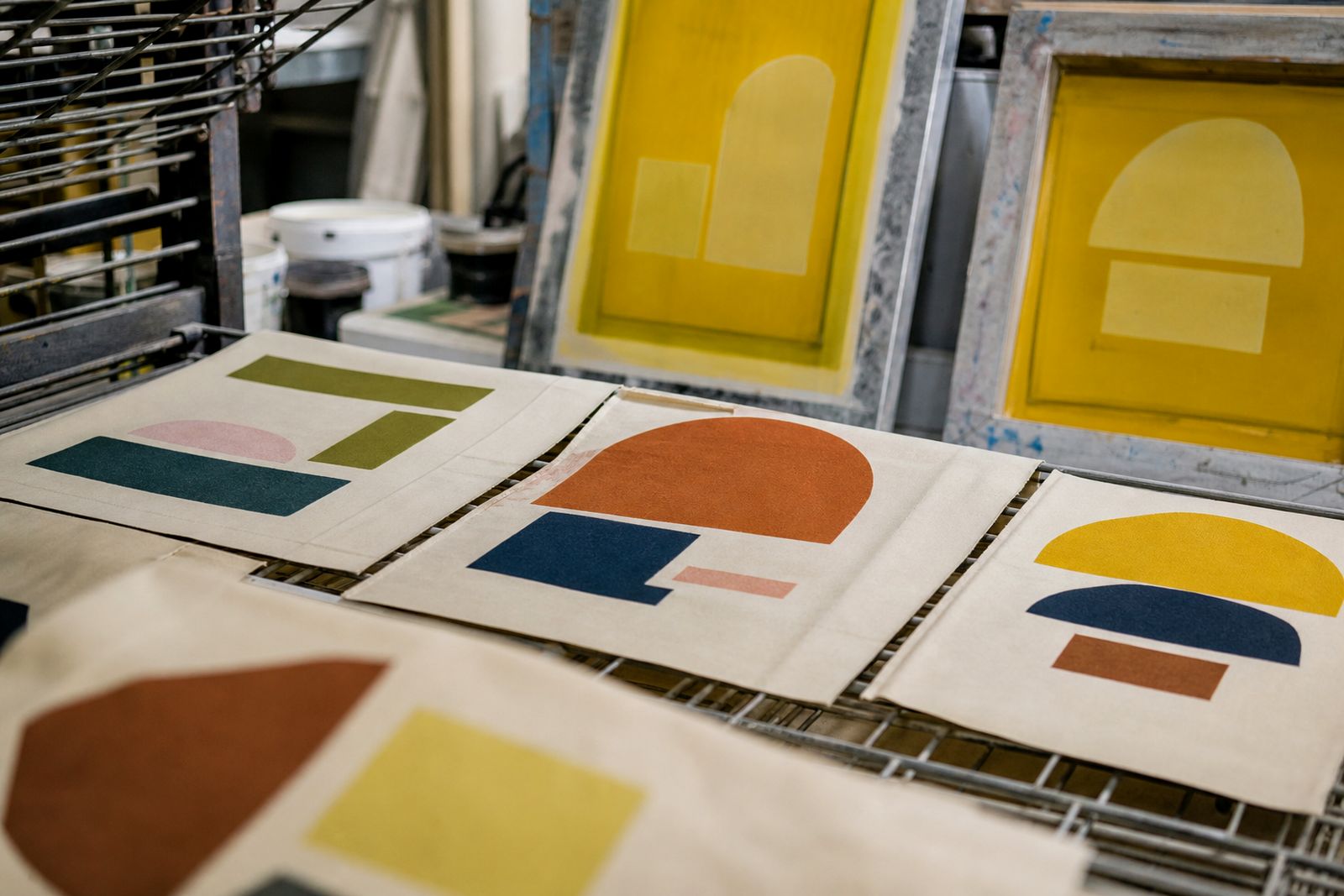
First pull after burn
Classroom first pull after a diazo burn.
Read more
High mesh yardage repeat
High mesh yardage with soft shoulders.
Read moreWhat our Screen Stencil customers say
Verified Google reviews
Tell us what you are printing
Send a note through our contact form with the inks and substrates you print, your mesh counts and frame sizes, your exposure unit and your town, and we will come back with practical advice and a quote.
Open the contact form