

Mesh
Screen Stencil mesh notes help print rooms choose mesh count and tension for ink control, detail and drying behaviour.
Mesh and emulsion basics
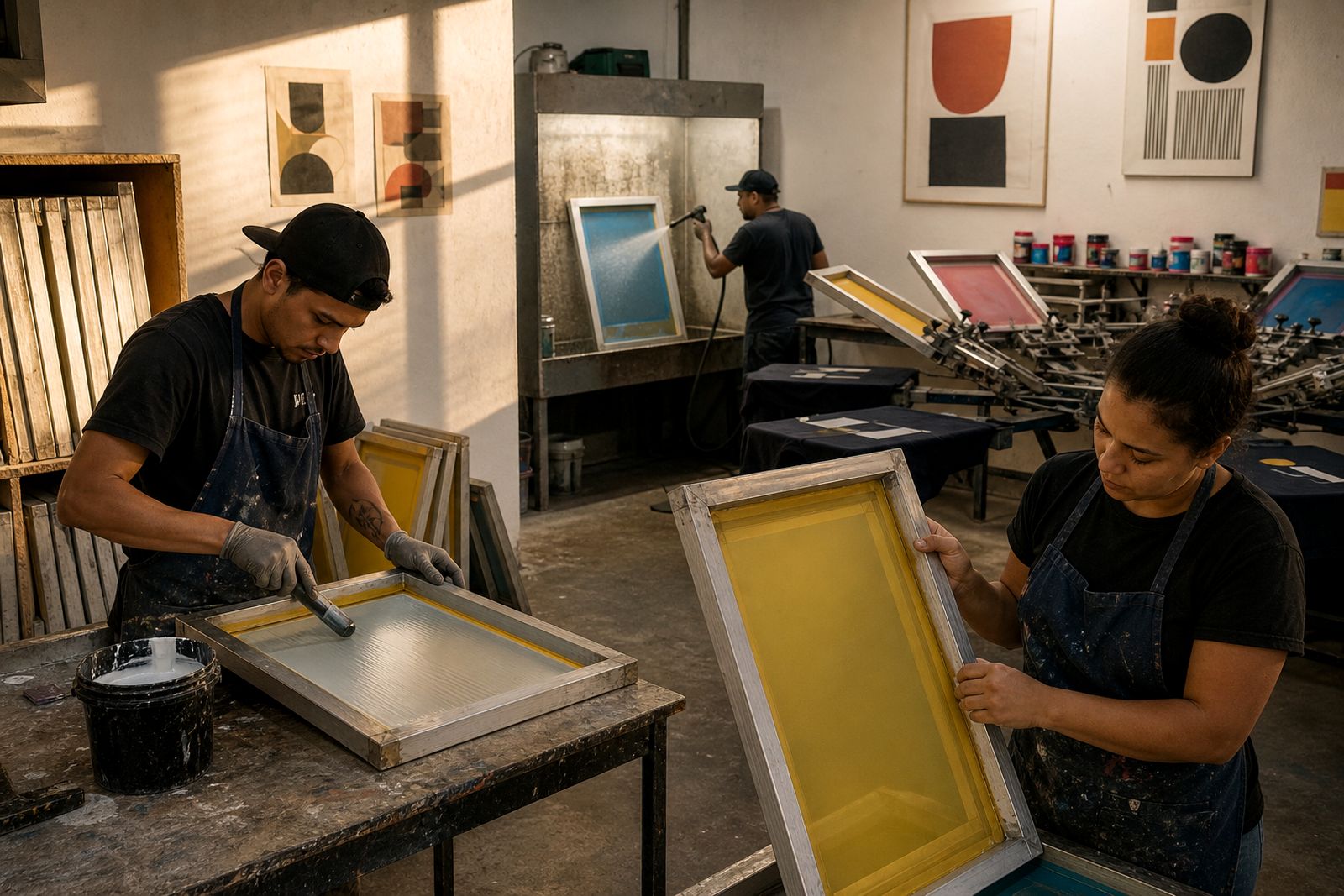
Screen printing starts with the mesh, because the mesh controls how much ink, detail, and drying behaviour your stencil will carry. On South African print rooms, that means choosing mesh count and tension to suit the job, then matching the stencil system to the artwork and the ink system.
We talk through dual-cure, diazo and SBQ emulsions, plus capillary film where a cleaner, more even coating is needed. The aim is practical: hold fine detail, release cleanly on washout, and give you a stencil that behaves sensibly in real room conditions.
Coating, exposure and washout
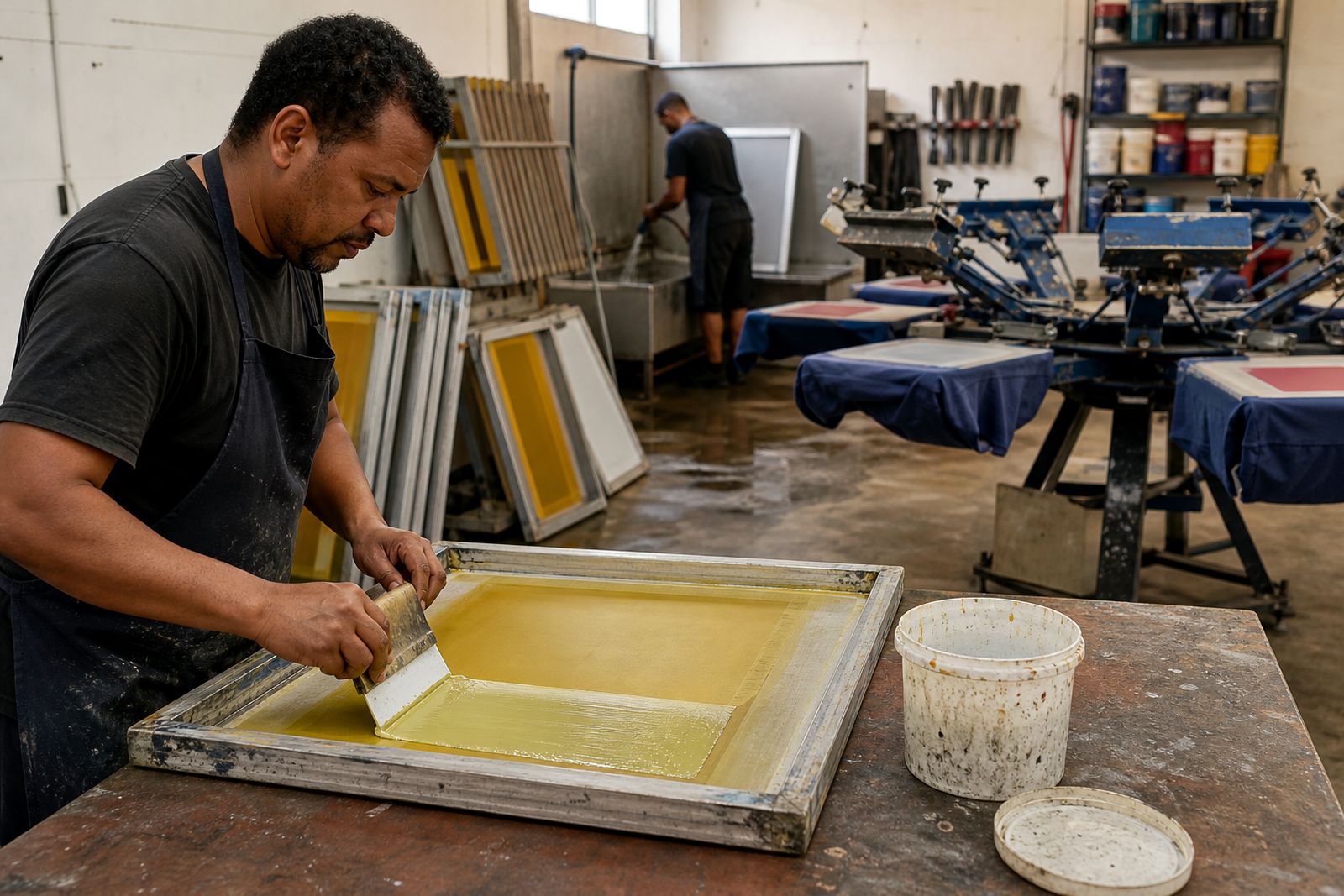
Good results usually start before exposure. Frame choice, scoop coating, coating technique, and the number of coats all affect stencil thickness, sharpness and edge strength. A tidy coating can save time later when you are chasing pinholes, ragged edges, or unwanted haze.
- First coat photo for coating control
- Lamp age truth for exposure checks
- Sleeve pinhole hunt for touch-up habits
Exposure timing matters too, especially when lamp age changes or power cuts interrupt the rhythm. After that, washout should be calm and controlled, so the stencil opens cleanly without chewing the edges.
Keeping counters moving
Mesh work does not stop at imaging. Reclaim, degrease, haze removal and drying all affect the next print. Coastal humidity can slow dry-down, while dry Highveld air can change how the coating sits and how fast the screen is ready for the next stage.
We also look at how mesh setup affects garment, poster and sign work, from plastisol to waterbase and discharge inks. If you need a sensible starting point for a job, or want to compare notes on mesh count, tension, or stencil choice, send site photos through the contact form and ask for a quote via the contact form.
Mesh
Blockout on the edge
Pinholes and frame edges that ruin a sports kit run.
Read more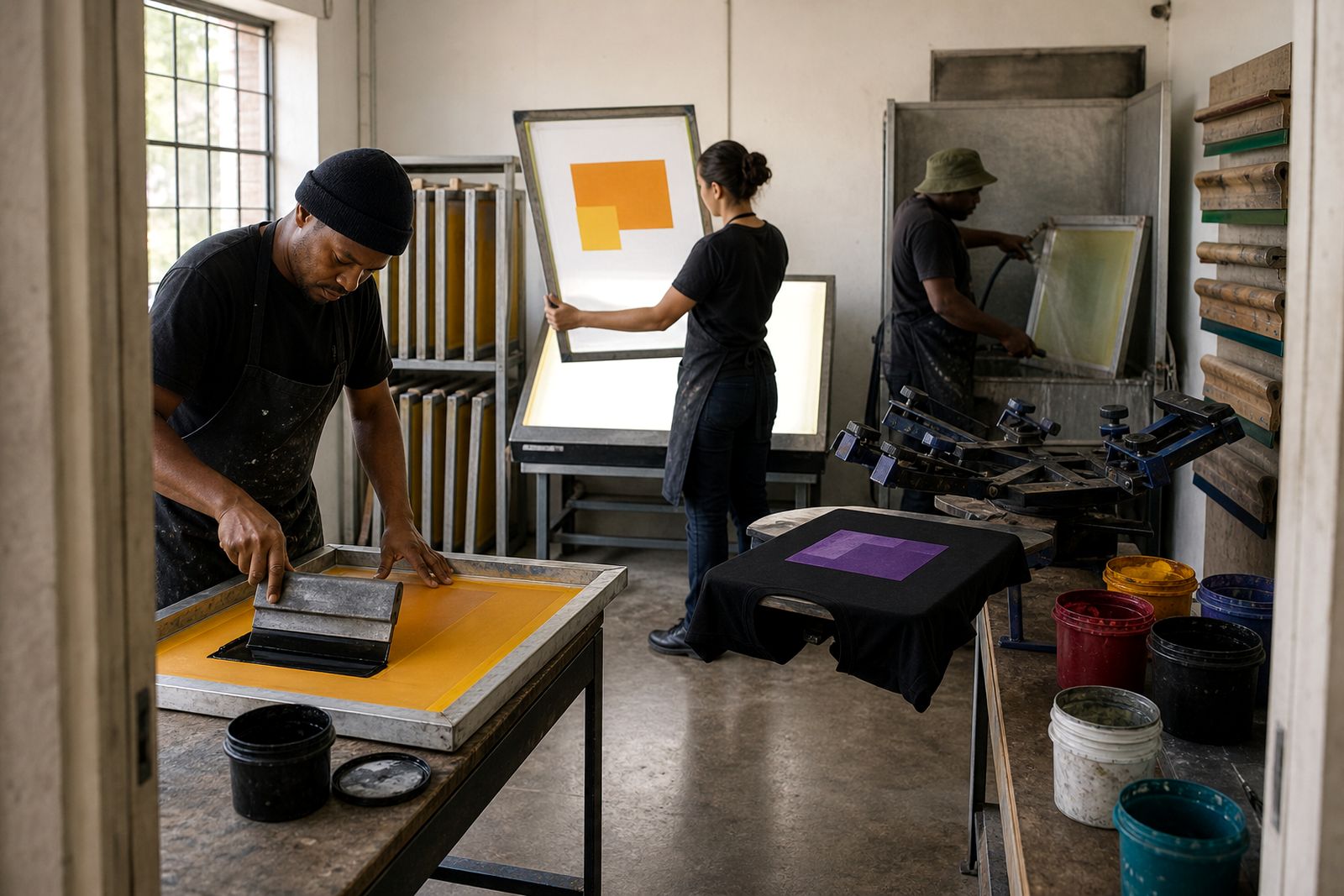
Calc card honesty
Step wedges that keep Salt River and Joburg lamps comparable.
Read more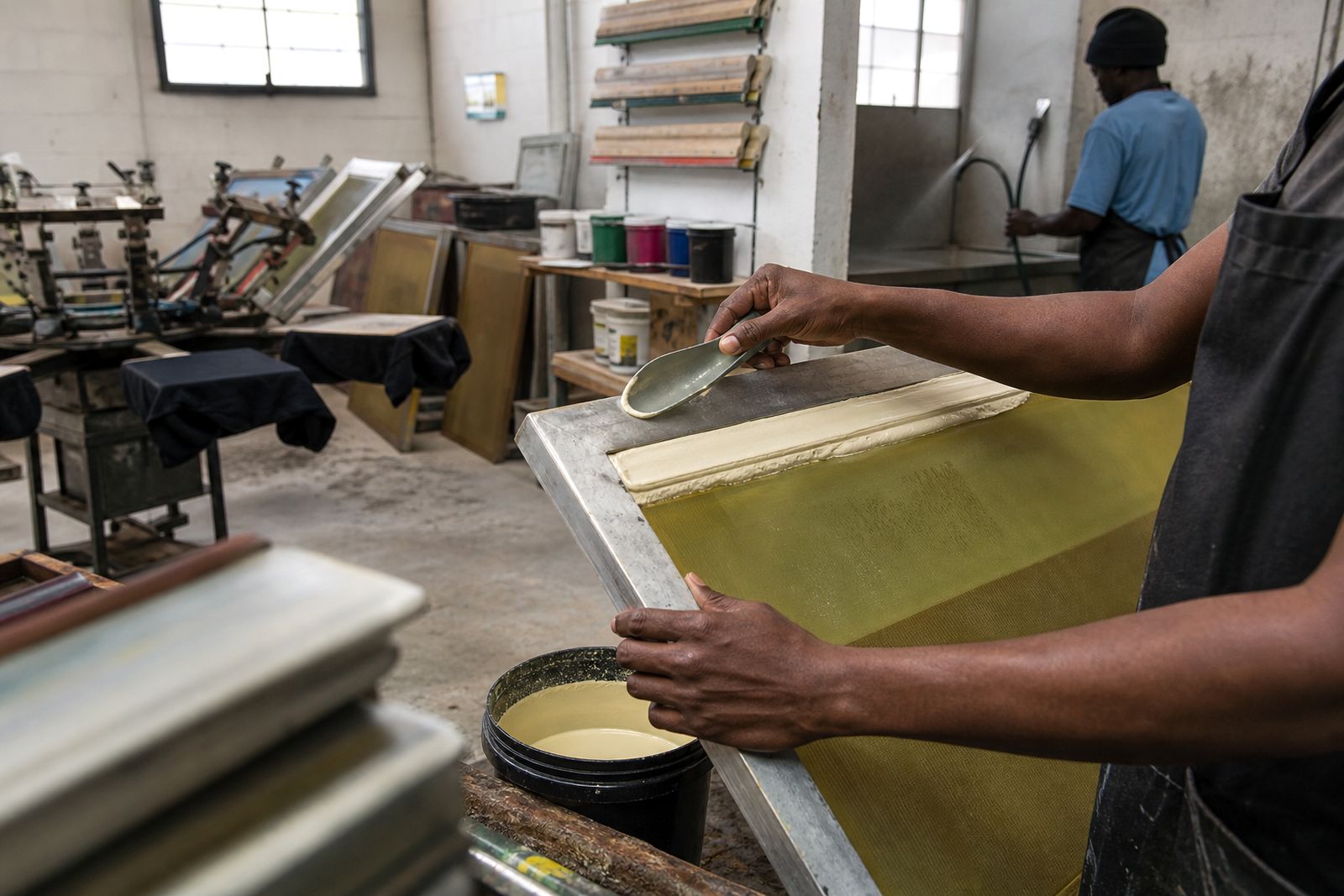
Capillary soft rim
Soft shoulders for poster type without losing edge on solids.
Read more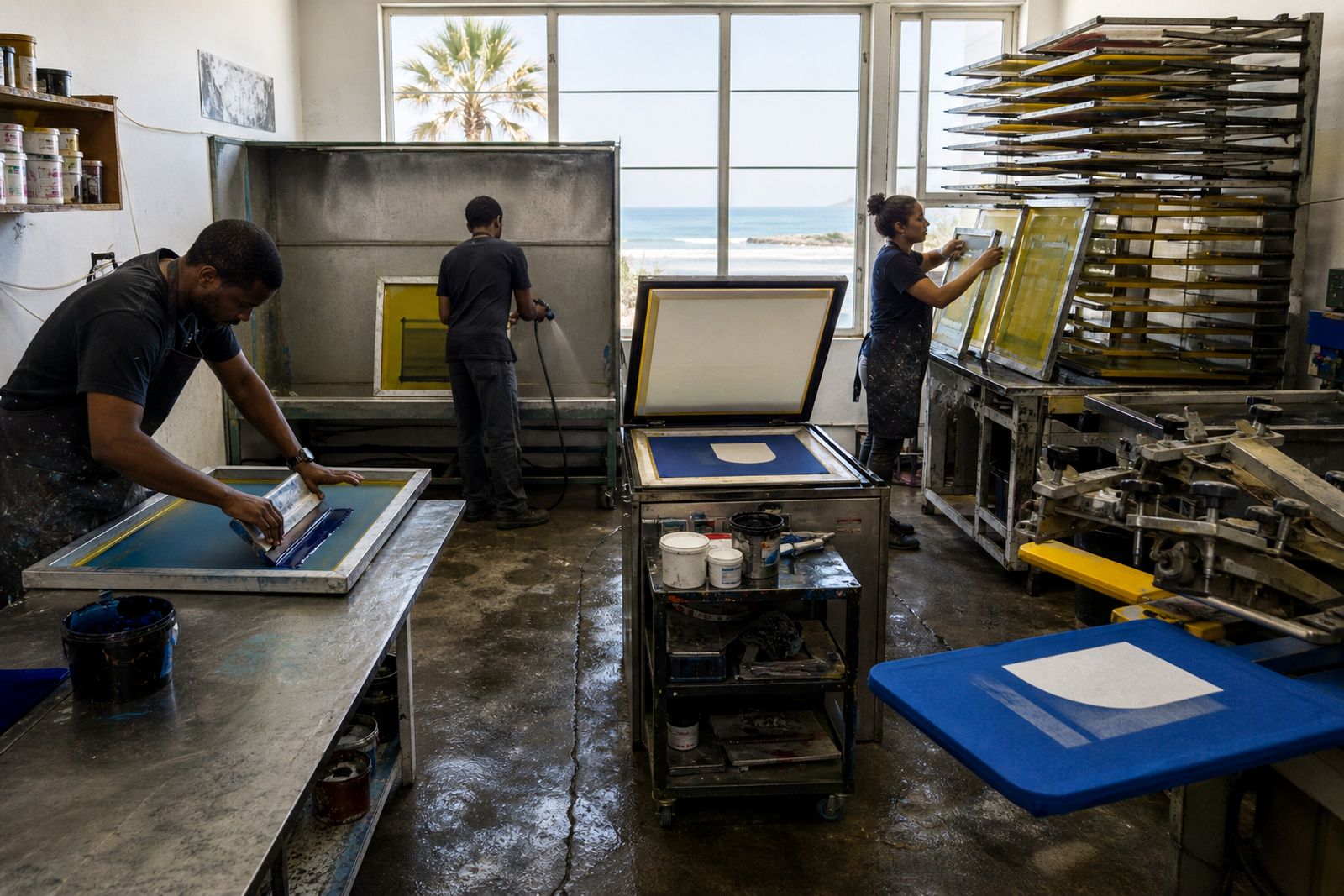
Coastal dry-down
Humidity on the coast and how coating racks stay honest.
Read more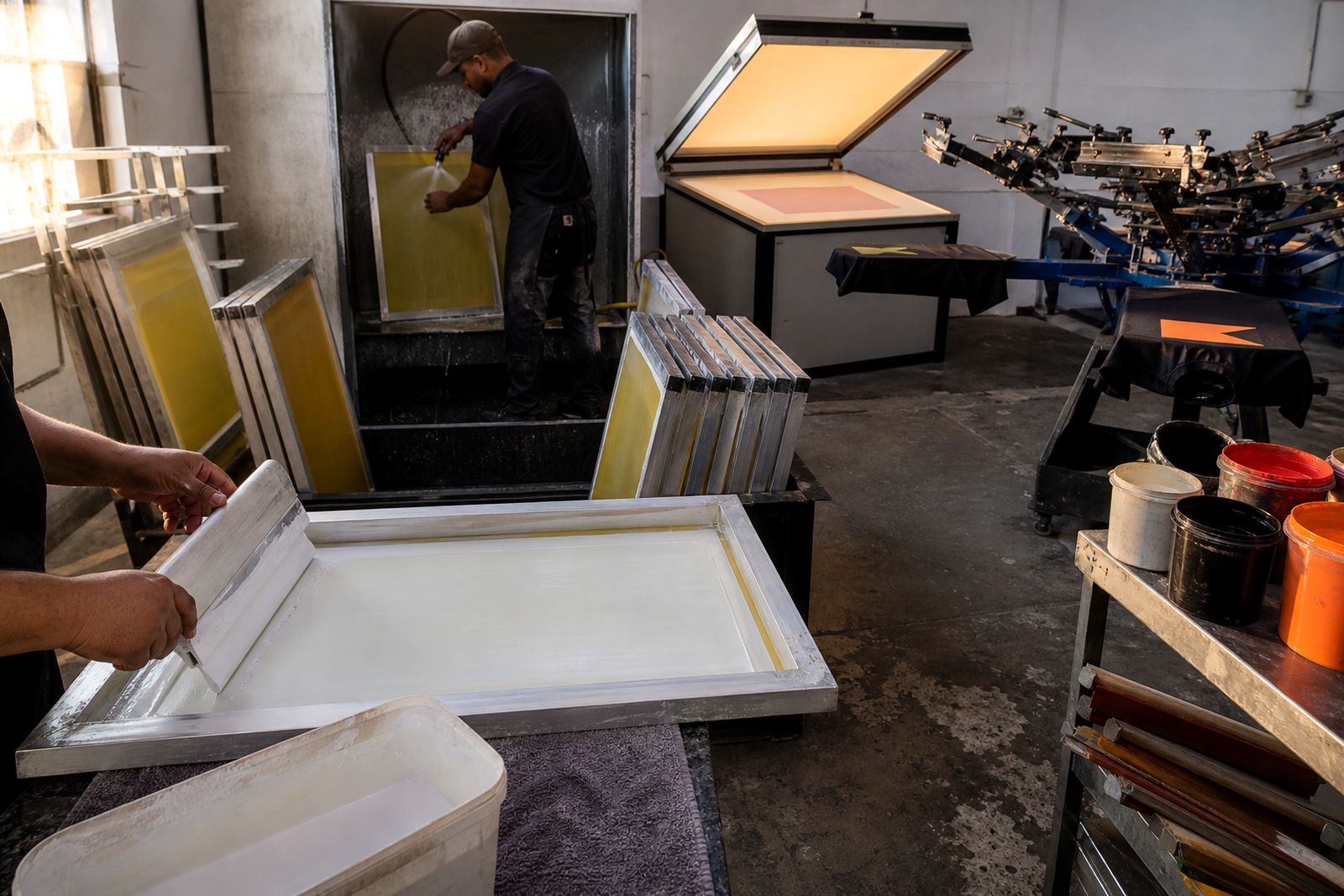
Degrease for tooth
Leaving tooth on the mesh without a greasy film.
Read more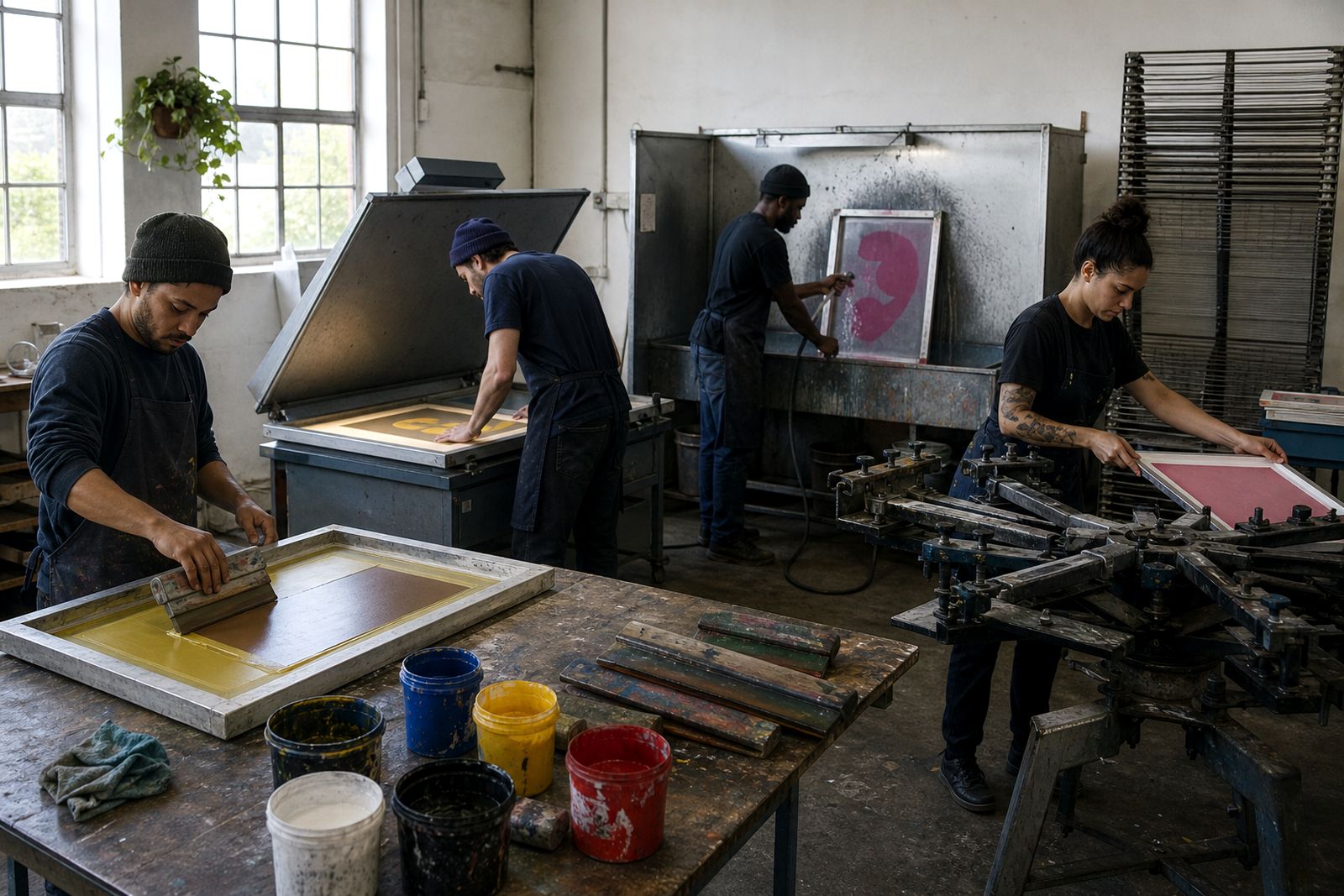
Diazo open time
Teaching studios and the quiet joy of a long open-time coat.
Read more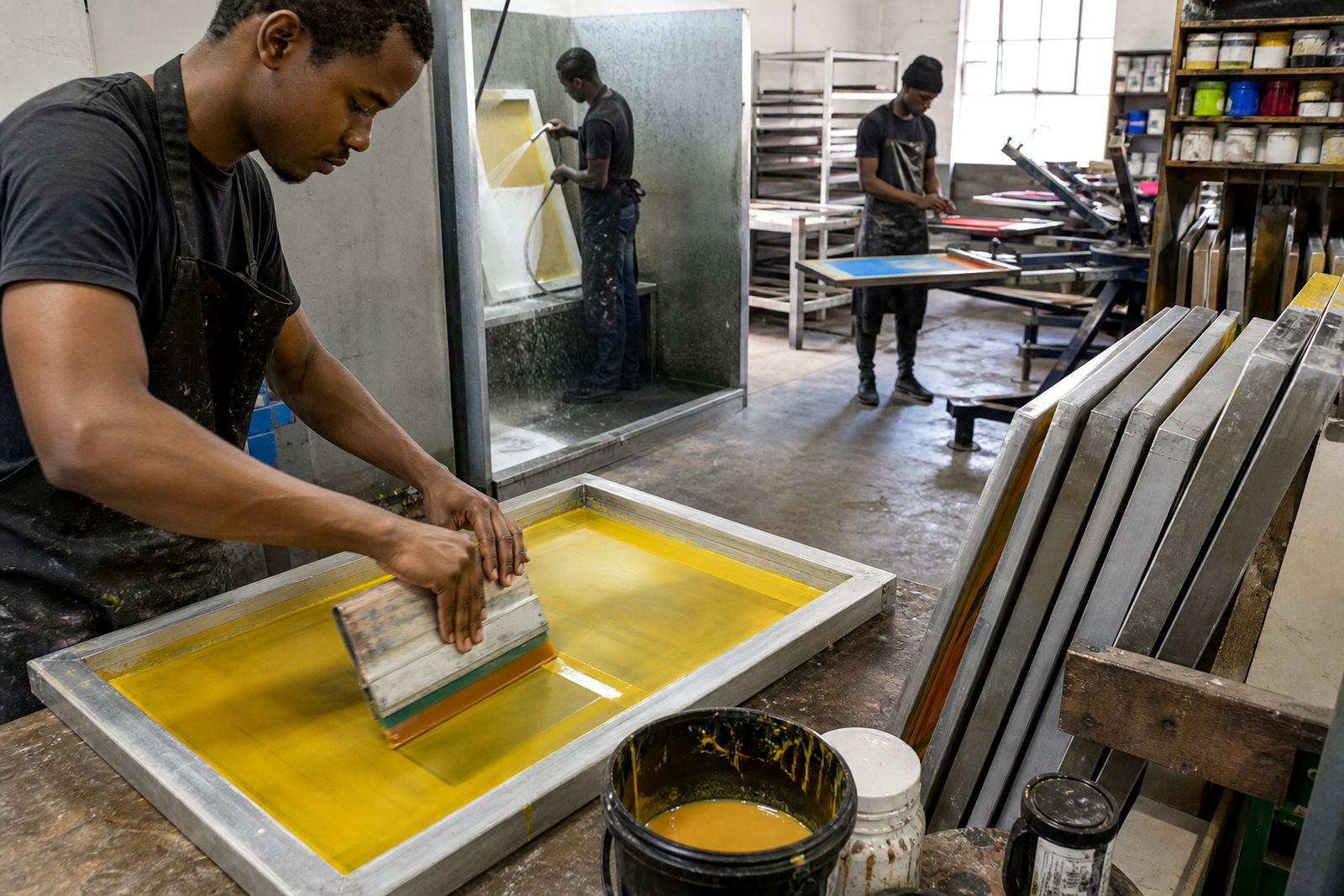
Dual cure window
How dual-cure stays forgiving when the lamp is older than the floor lead.
Read more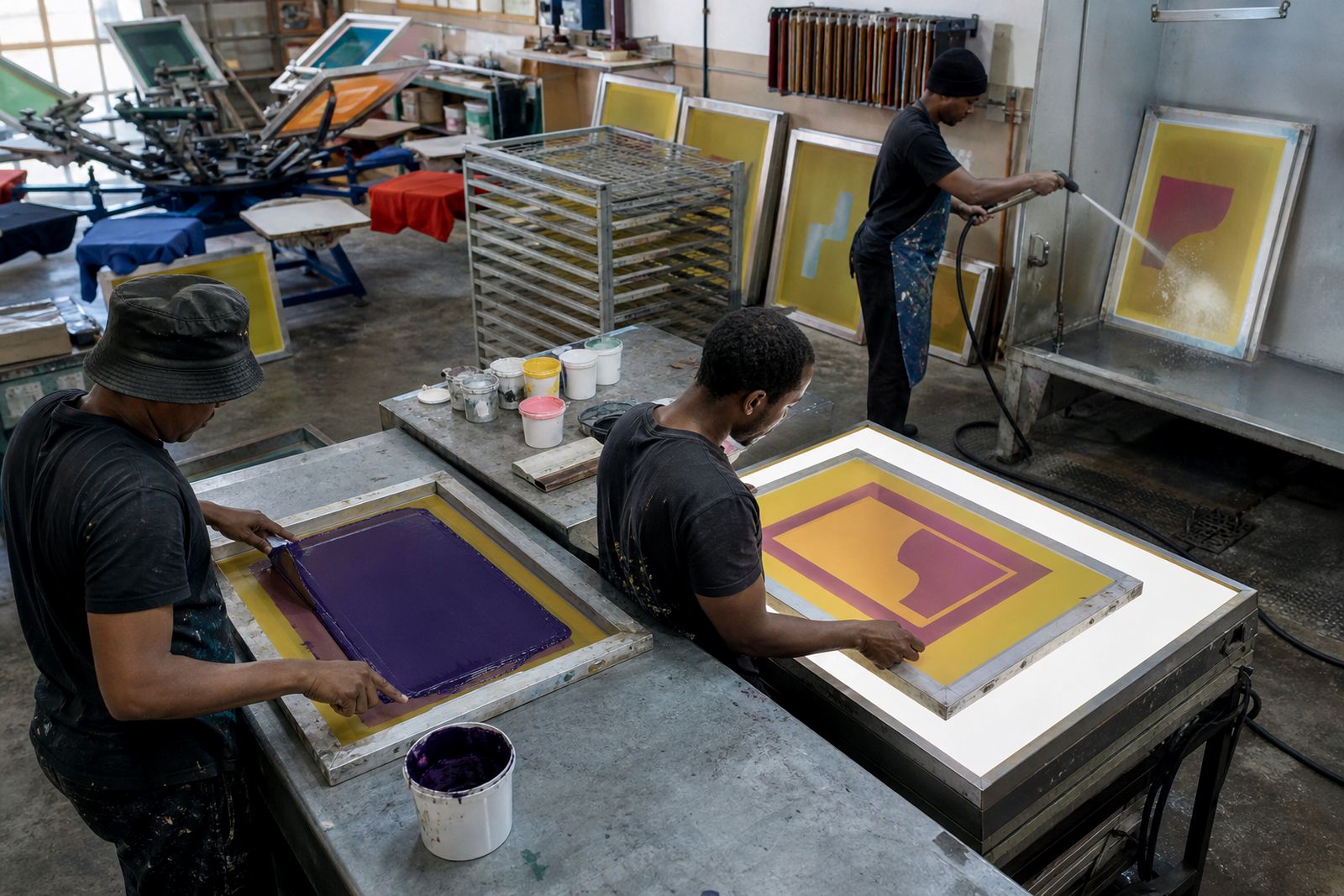
Export mark edge
Stencil art that still reads on corrugated export marks.
Read more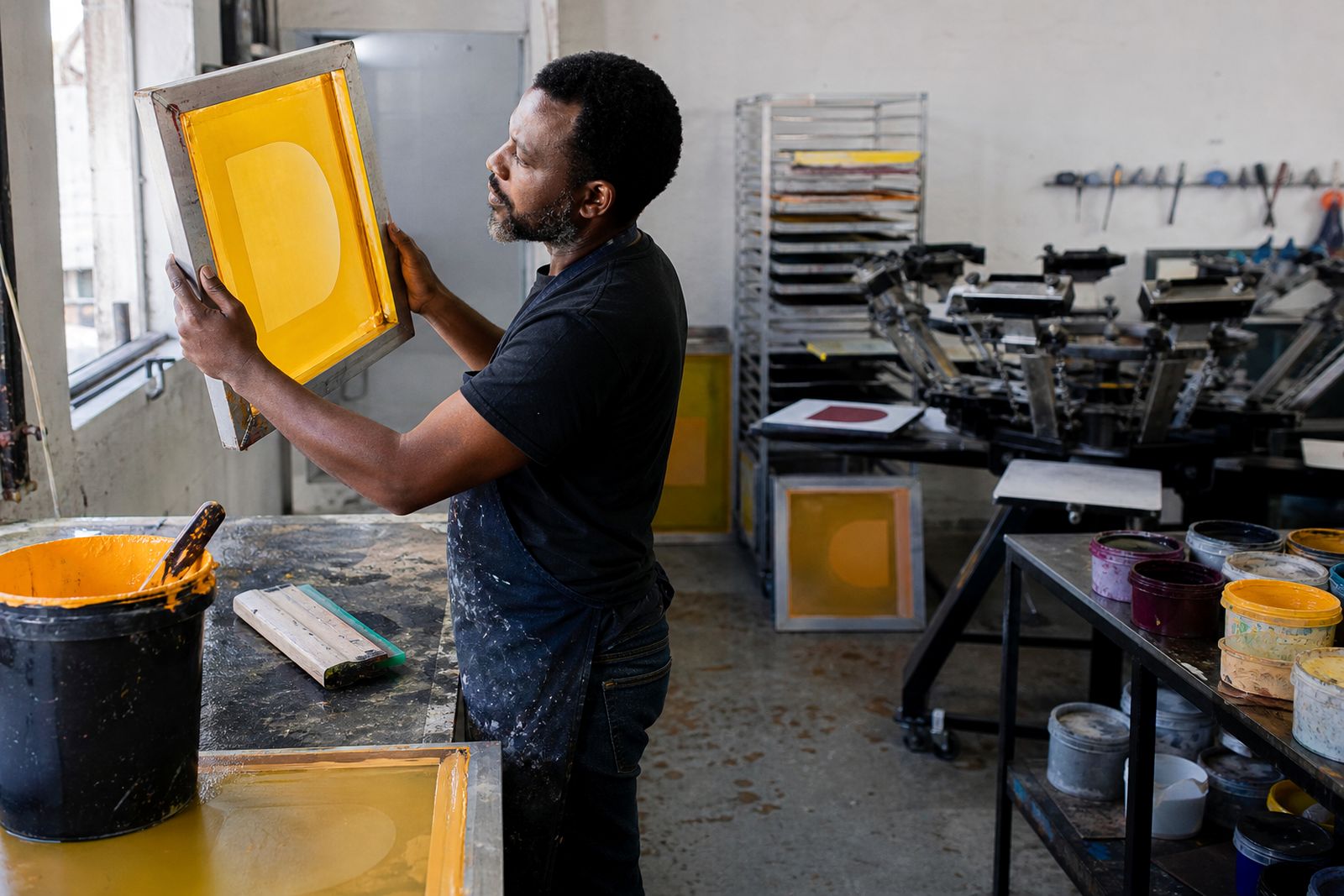
First coat photo
Why every coating day starts with one honest photo of the wet face.
Read more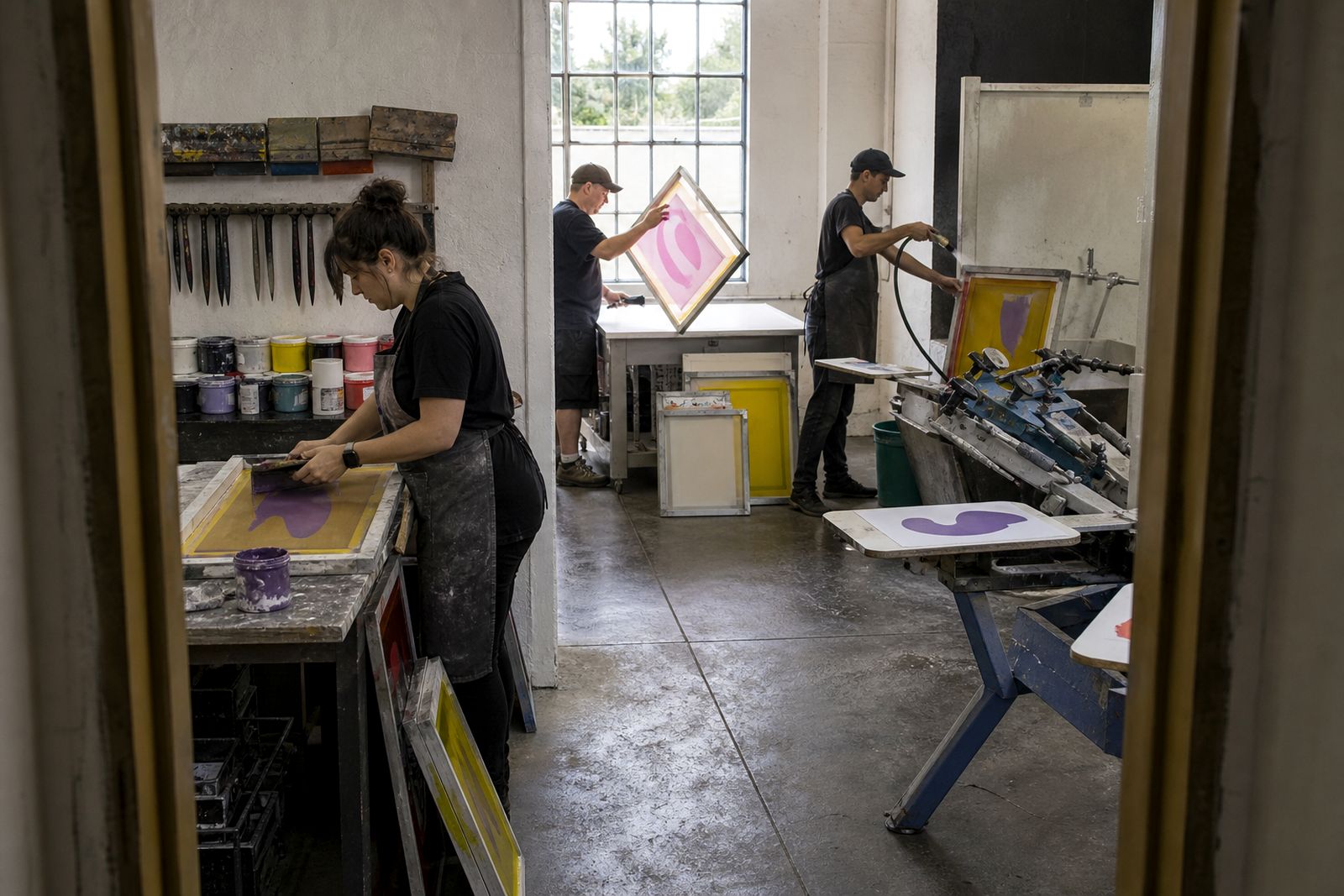
Gallery transfer craft
Stencil art transfers for editions that still feel hand-made.
Read more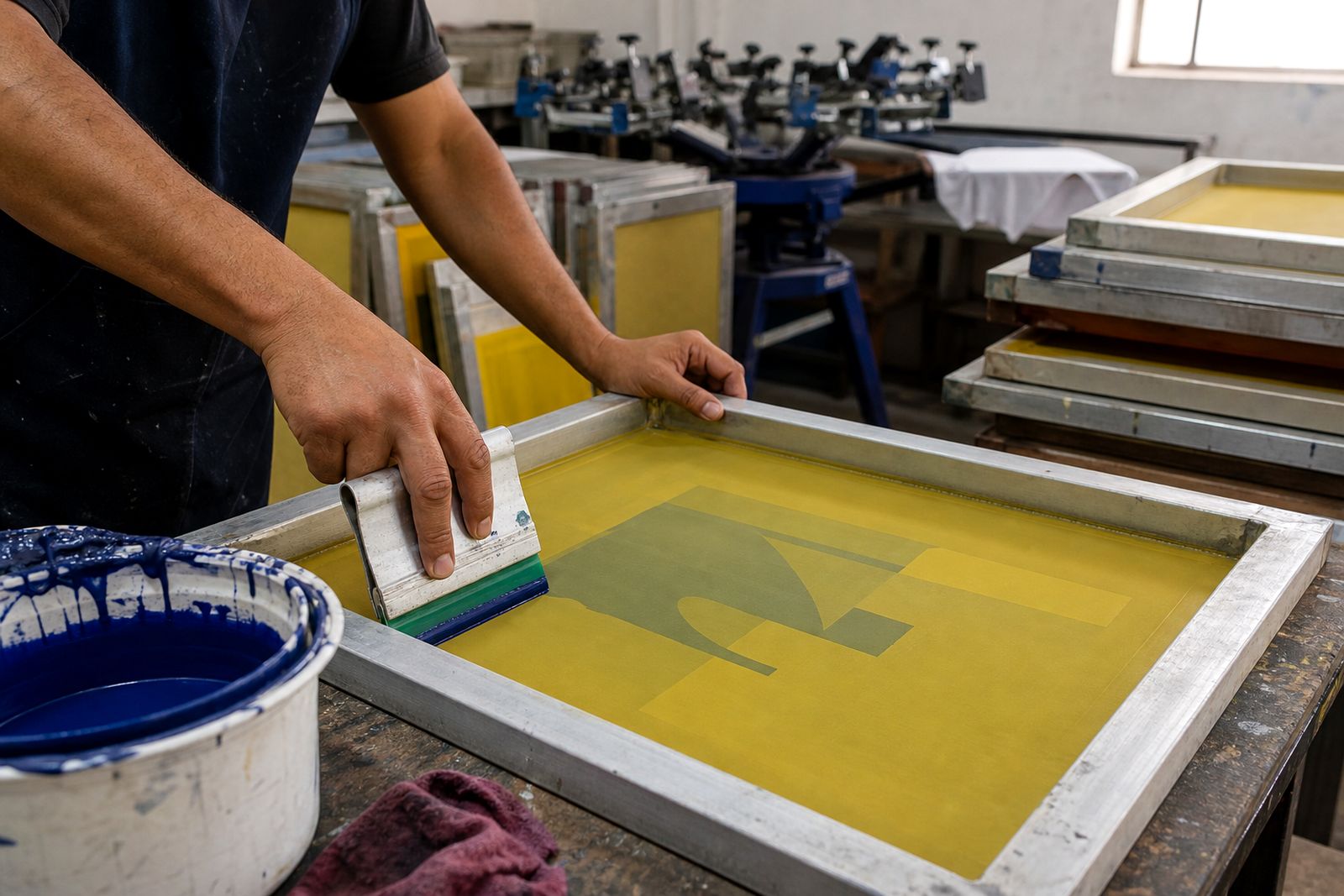
High mesh thin coat
Thin viscosity on 140+ mesh without pinholes in the halftone.
Read more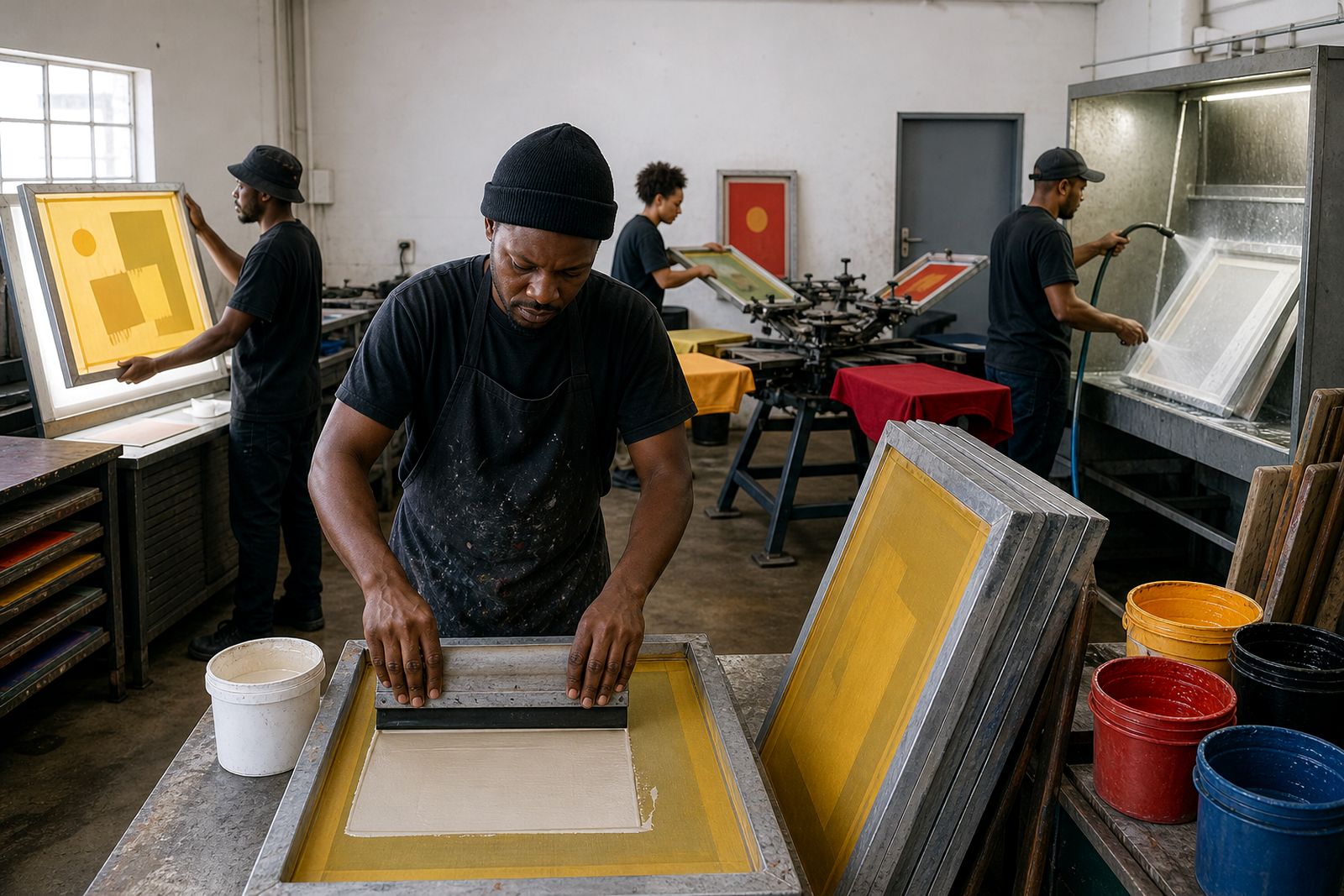
Highveld dust wipe
Dust on glass and mesh, and the weekly wipe that actually happens.
Read more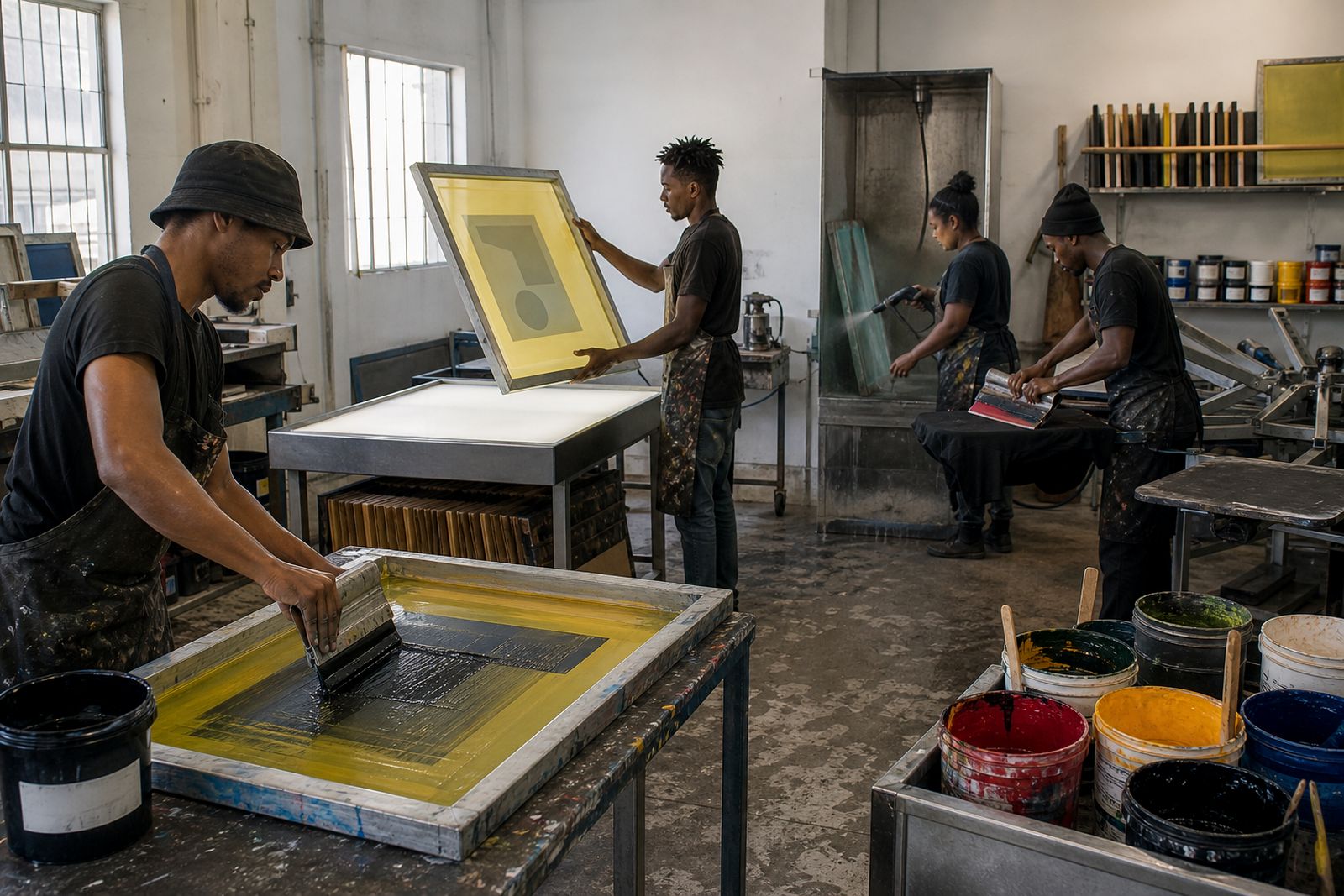
Lamp age truth
Old lamps, honest calc cards, and when to stop guessing.
Read more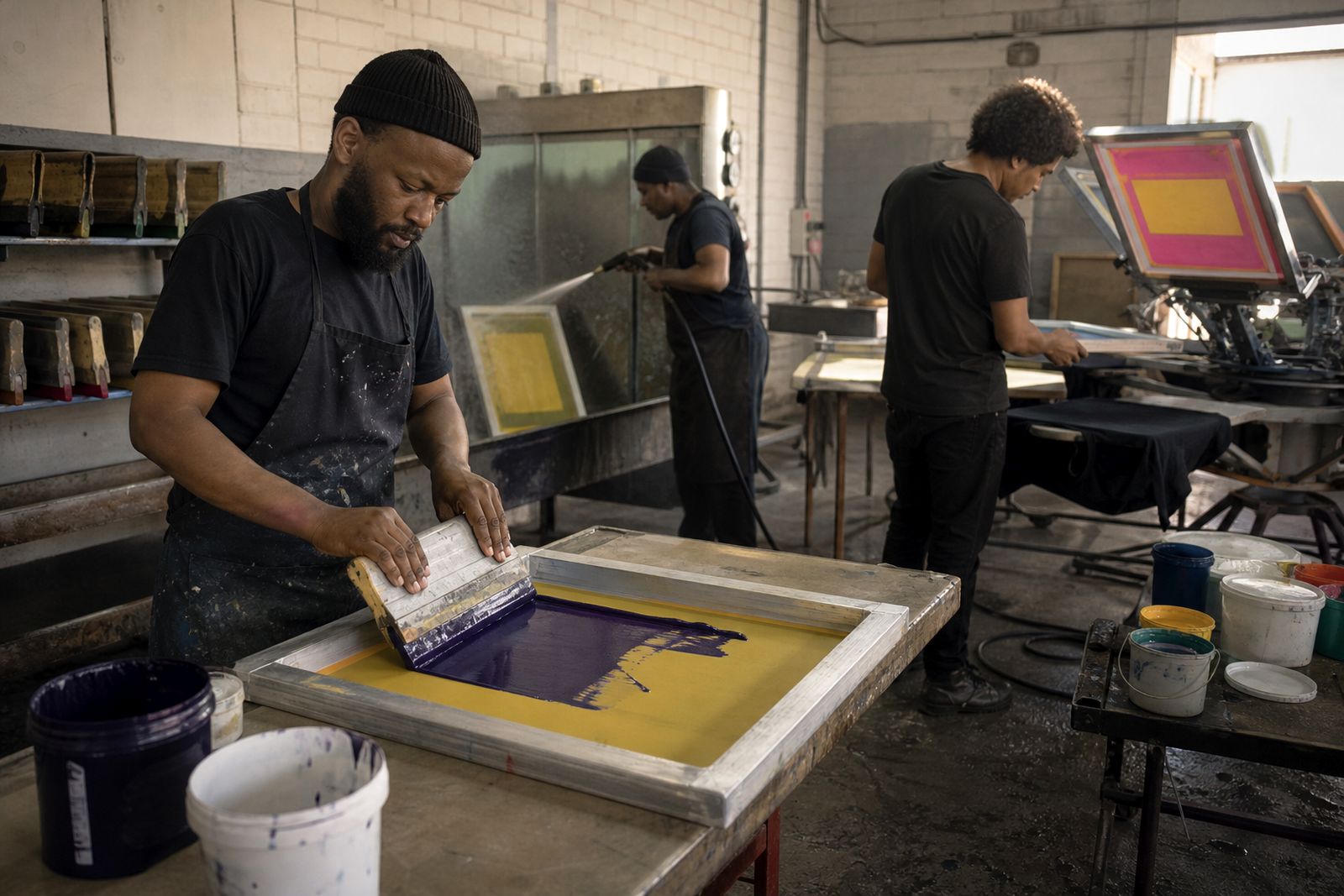
Merch SKU swap
Fast reclaim between band merch SKUs on a short week.
Read more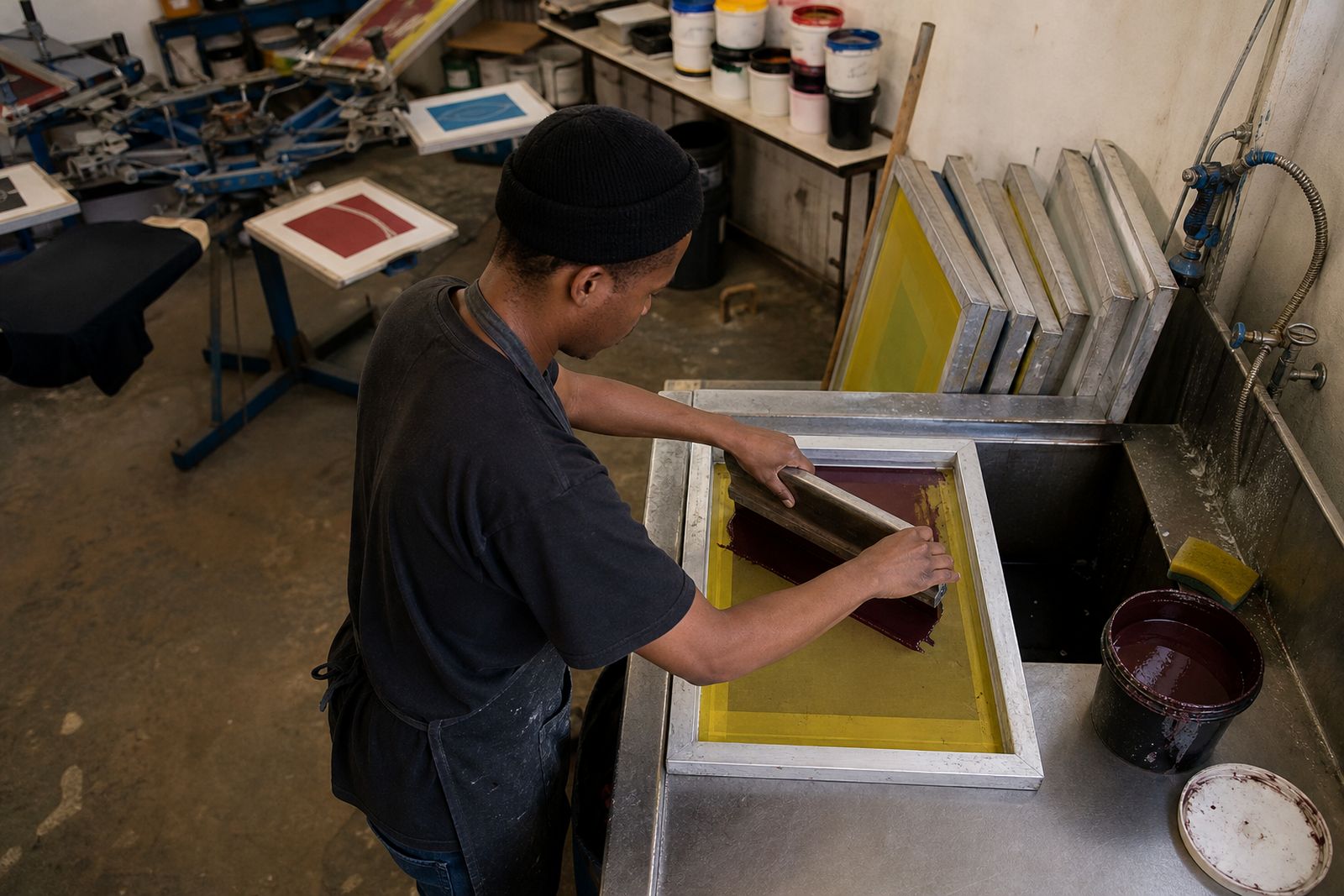
Night reclaim card
What the night shift pins above the sink.
Read more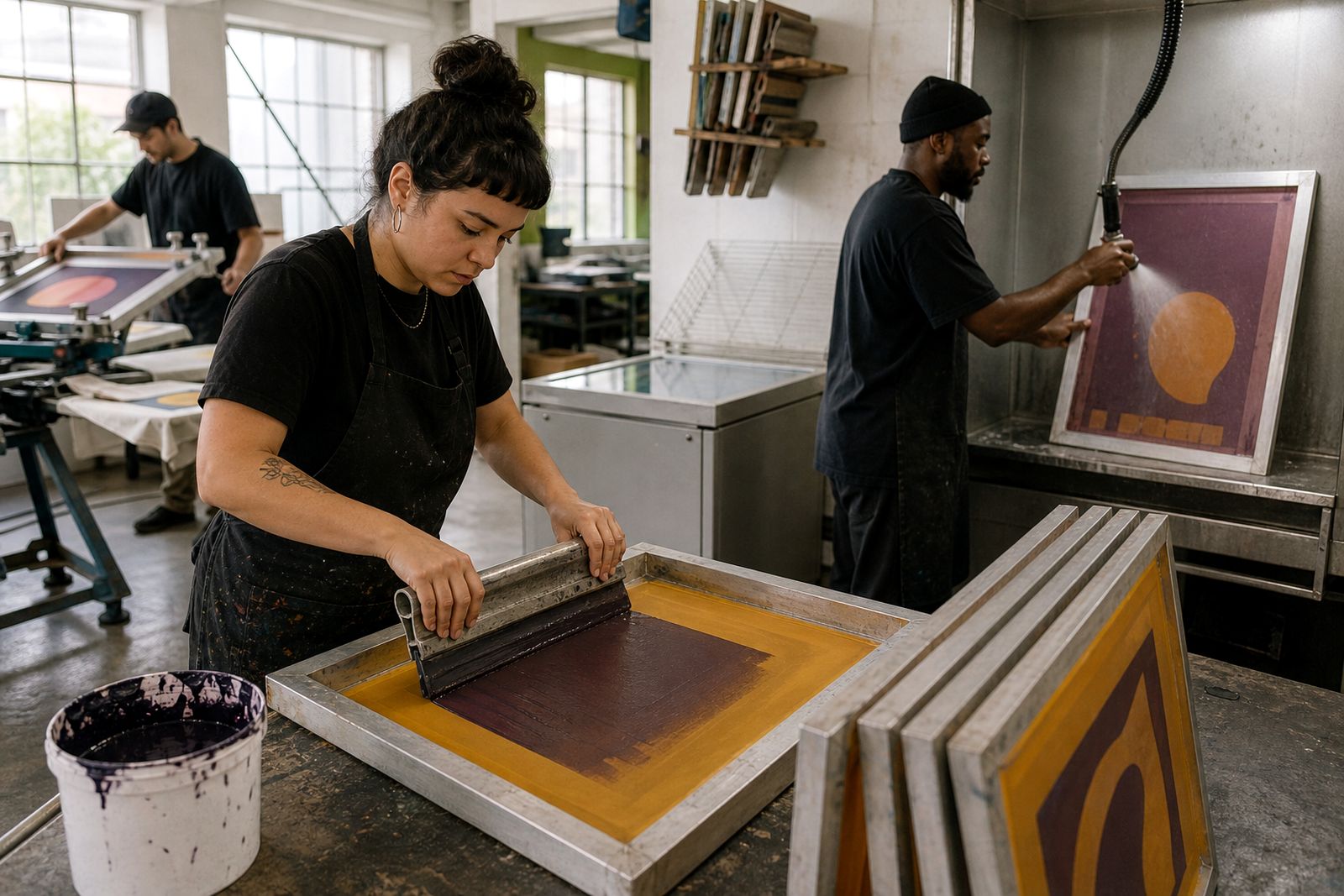
Poster registration
Edition registration when soft edges meet hard solids.
Read more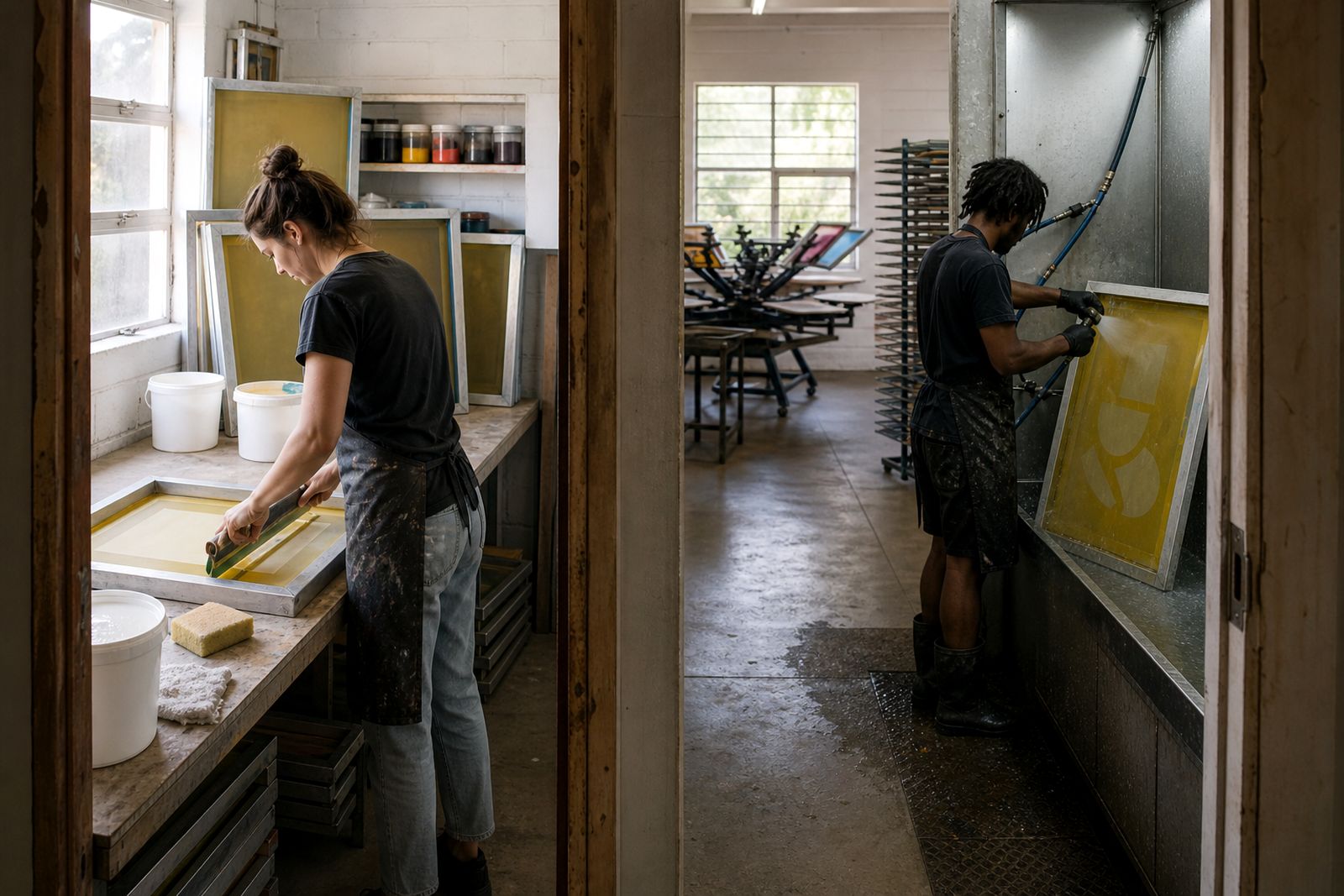
Gentle reclaim
Soft reclaim that clears emulsion and still respects the weave.
Read more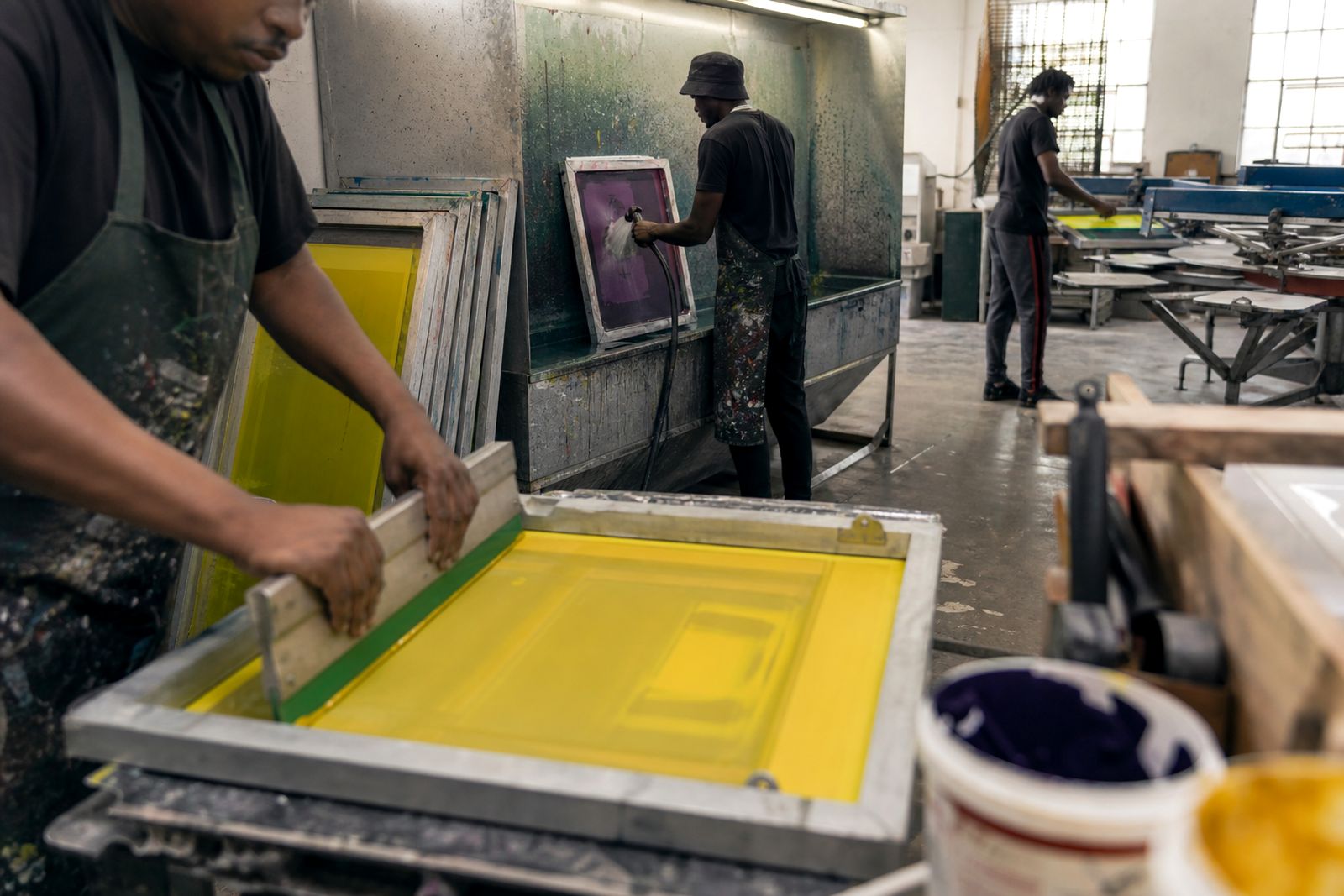
SBQ rush burn
Festival weeks when SBQ speed matters more than romance.
Read more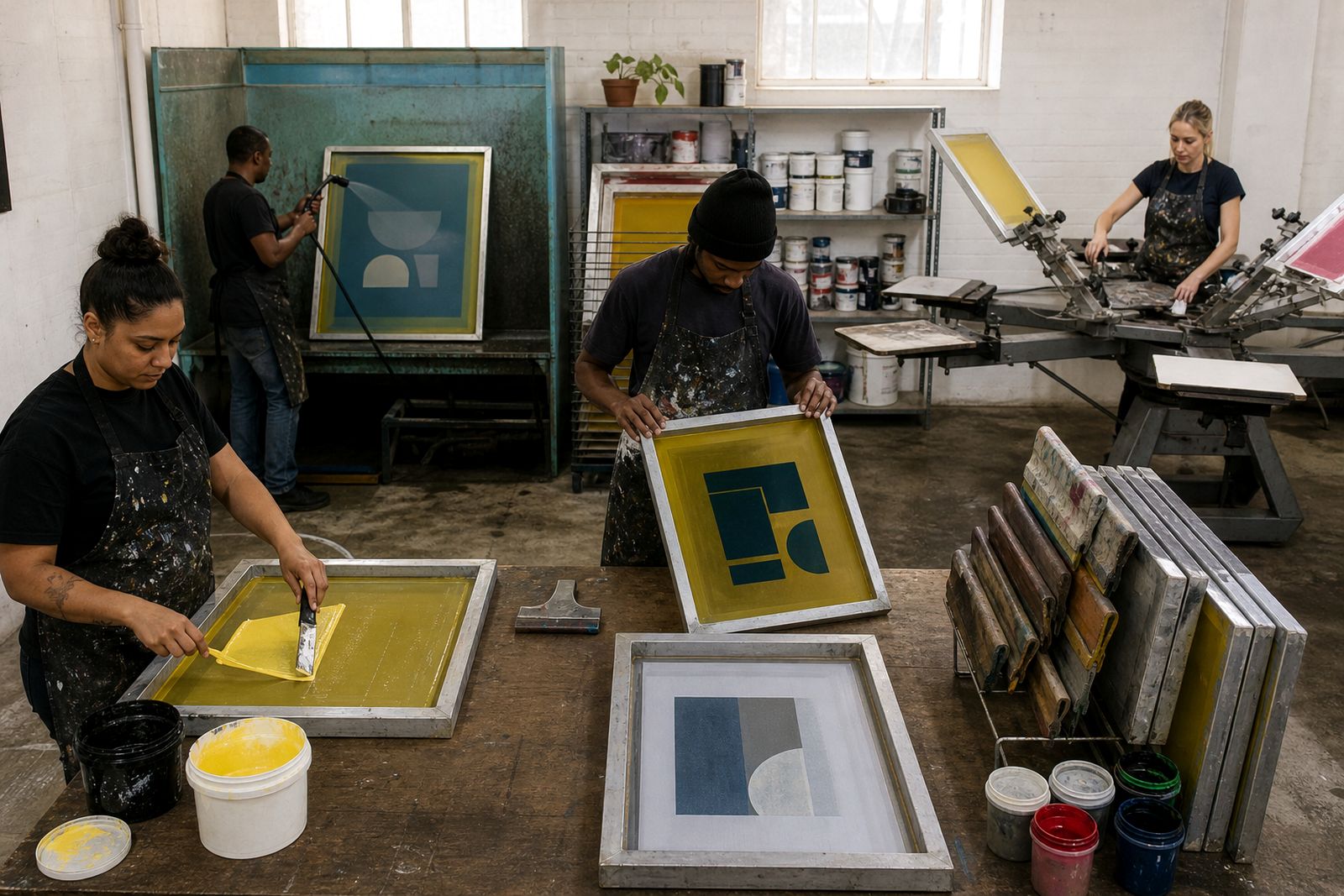
Coating demo hour
What we demo in an hour at Clearwater and Cresta.
Read more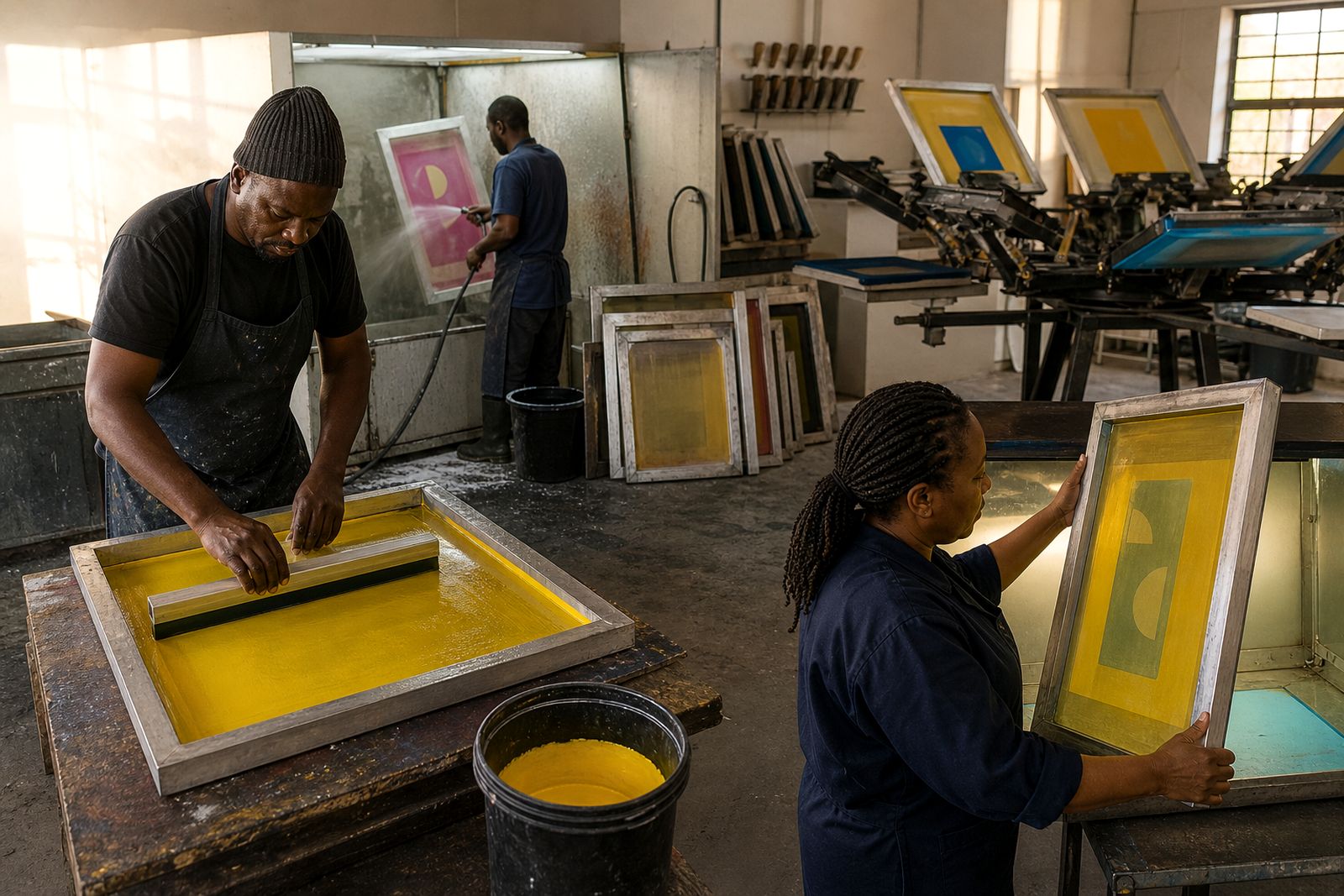
Sleeve pinhole hunt
Finding pinholes before they print on a bottle wrap.
Read more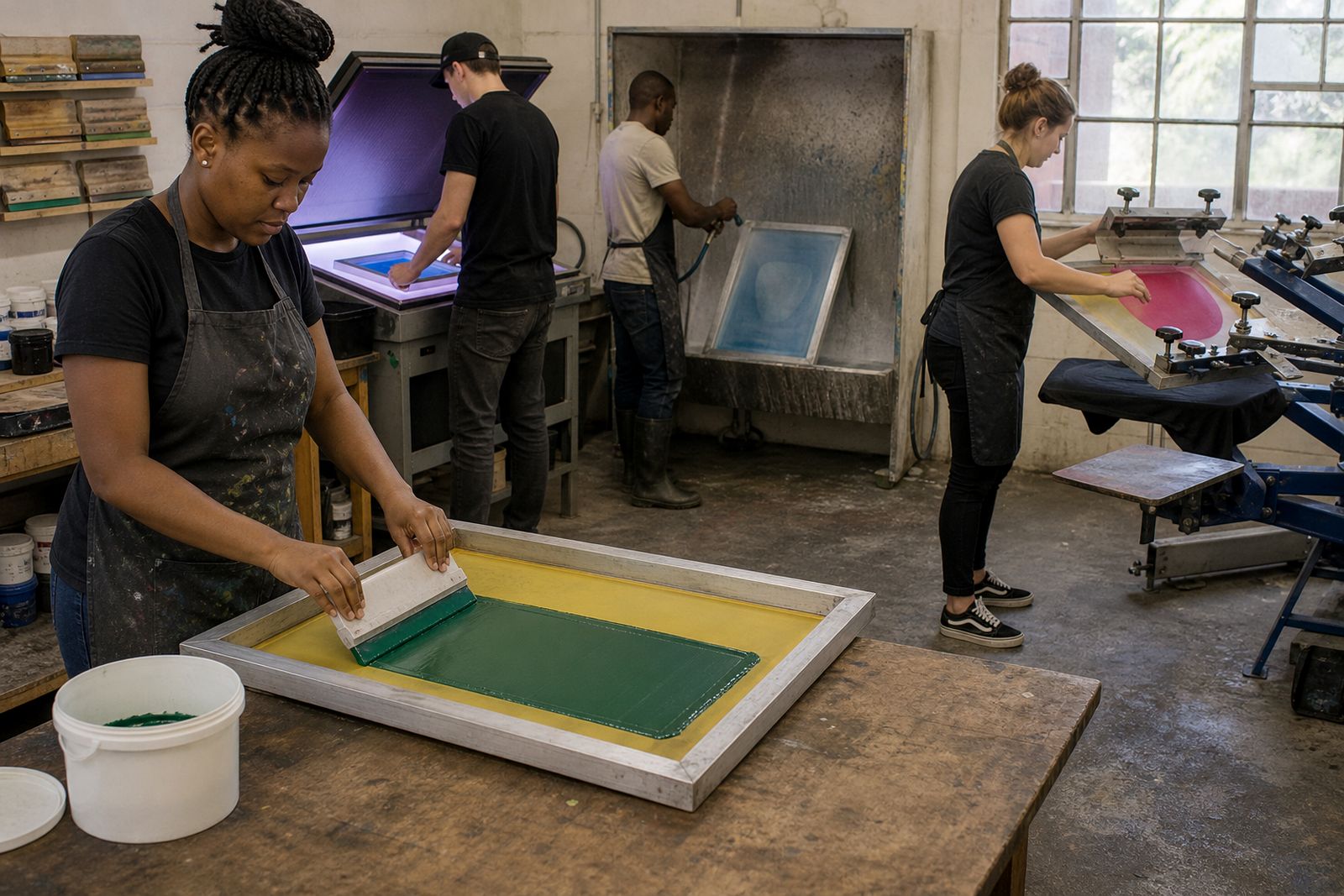
First burn lesson
Classroom burns without scaring the first-time printer.
Read more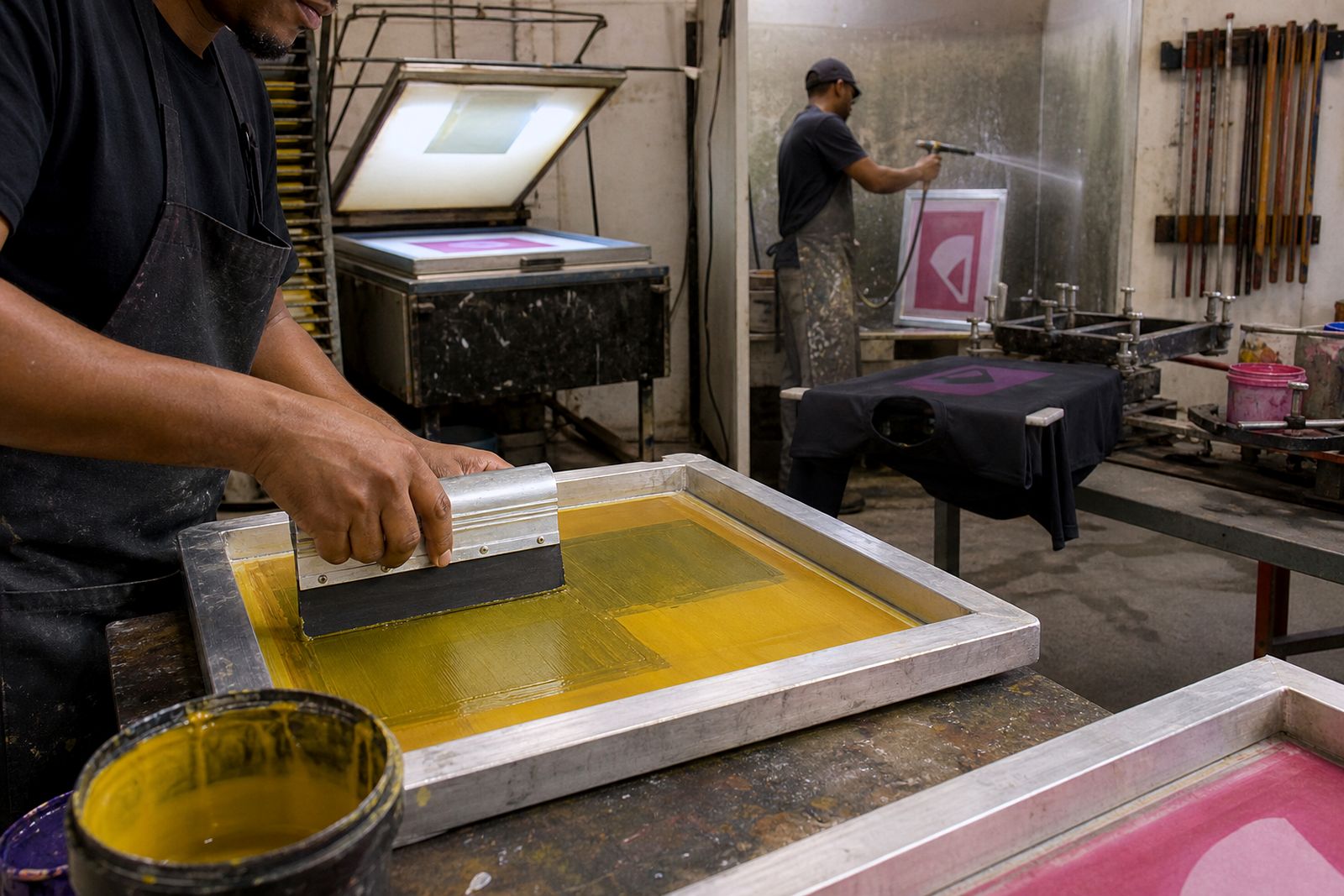
Mesh tension in newtons
Reading N/cm so frames print true across a week.
Read more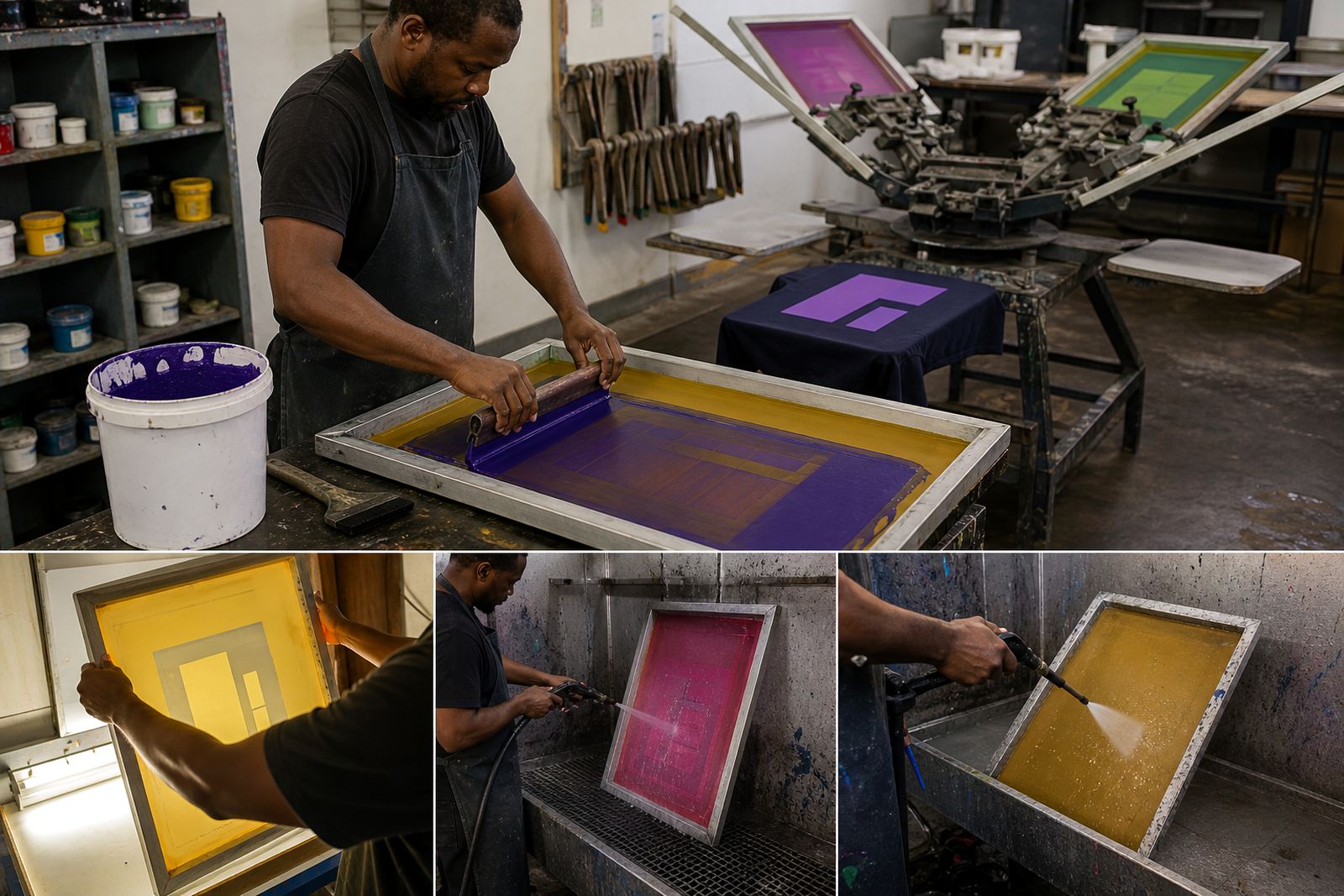
Waterbase resist habits
Water-resist habits for discharge and soft-hand waterbase.
Read more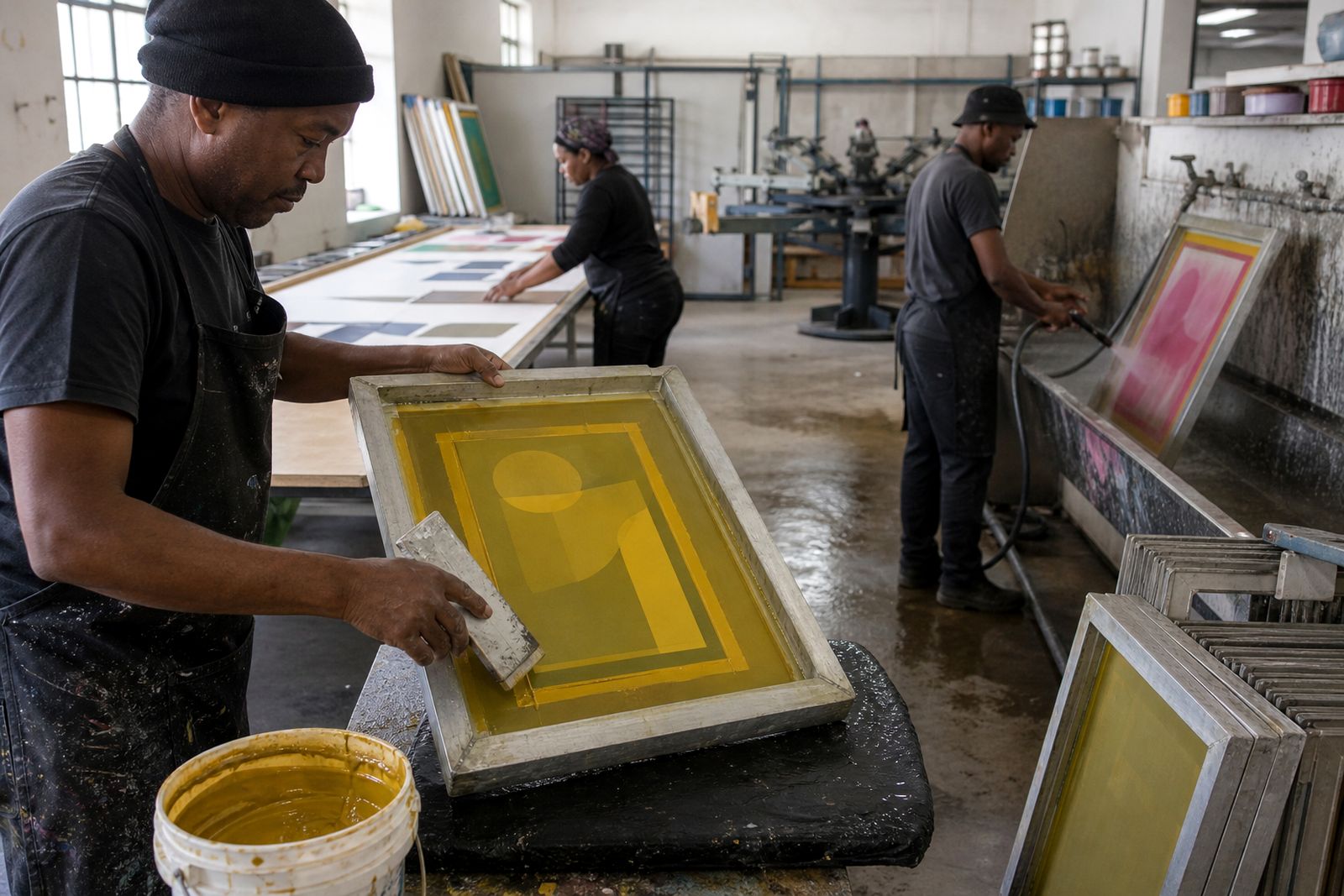
Yardage repeat calm
Mesh tension and soft shoulders on long textile tables.
Read moreWhat our Screen Stencil customers say
Verified Google reviews
Tell us what you are printing
Send a note through our contact form with the inks and substrates you print, your mesh counts and frame sizes, your exposure unit and your town, and we will come back with practical advice and a quote.
Open the contact form