

Capillary Film Soft Edge coat notes
Use this coat brief to note mesh count, stencil thickness, and which side receives the film first. A soft-edge capillary setup benefits from clear wet-side handling before the screen reaches the coating bench.

Coating notes for capillary film soft edge
Capillary film soft edge brief covers the checks needed before laminating film onto a prepared mesh. Set the job reference, selected mesh, and target deposit so the coater matches the print room plan. In Cape Town winter and inland dry conditions, film behaviour changes enough that the first setup note matters.
Choose the film grade to suit the mesh actually stretched on the frame, not the one written on an old ticket. Fine detail on high mesh counts needs even contact, while heavier ink laydown on lower counts needs careful edge support. Mark the frame with job name, side to apply, and exposure note before the screen leaves prep.
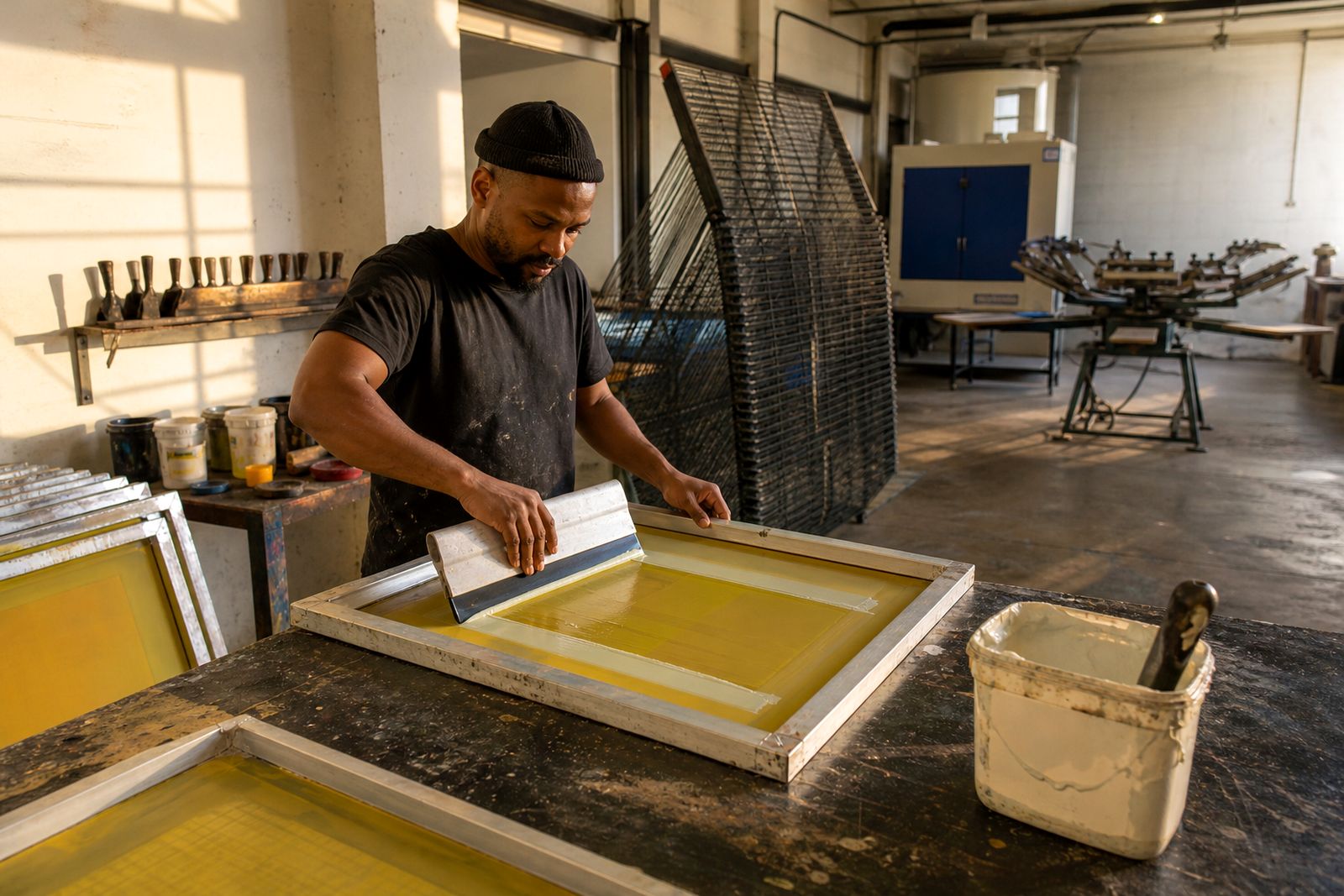
Take a photo of the laminated screen while the surface is still visibly wet and flat. Keep the frame number in view so the next operator can compare coating quality, bubbles, and corner contact. A pinned sample near the washout area often helps more than a long note.
Soft-edge film coating checks
This brief is for coat-stage decisions that affect edge hold, ink release, and stencil durability on press. Textile rooms printing white on dark garments may want a different build from a water-based poster run. Large solids, half-tones, and pocket-size branding each ask for their own mesh and exposure balance.
- Mesh count written on frame
- Film applied to wet emulsion
- Air bubbles pressed from centre
- Frame tagged with job reference
Use this brief together with the matching screen guide and the correct mesh note for the frame being coated. If your artwork, ink system, or screen size falls outside the normal print-room range, send the details through our contact form before coating starts.
Signs the coat must change
Change method if the film lifts at the corners, silvering shows under the sheet, or the stencil edges break after washout. Press issues such as saw-tooth edges, excess deposit, or poor release can start with the wrong capillary choice at coating stage. It is usually cheaper to recoat one frame than to lose time across a full run.
Print rooms in Johannesburg, Durban, Cape Town, Gqeberha, Bloemfontein, and Pretoria often keep different washout pressure, humidity, and drying-room temperatures. Write those conditions on the brief when they are outside the normal shop range, especially during cold fronts or very dry inland weather.
What our Screen Stencil customers say
Verified Google reviews
Also worth a look

Tell us what you are printing
Send a note through our contact form with the inks and substrates you print, your mesh counts and frame sizes, your exposure unit and your town, and we will come back with practical advice and a quote.
Open the contact form