

Dual-cure emulsion pro
Dual-cure emulsion for crisp edges on mid to high mesh across SA print rooms.
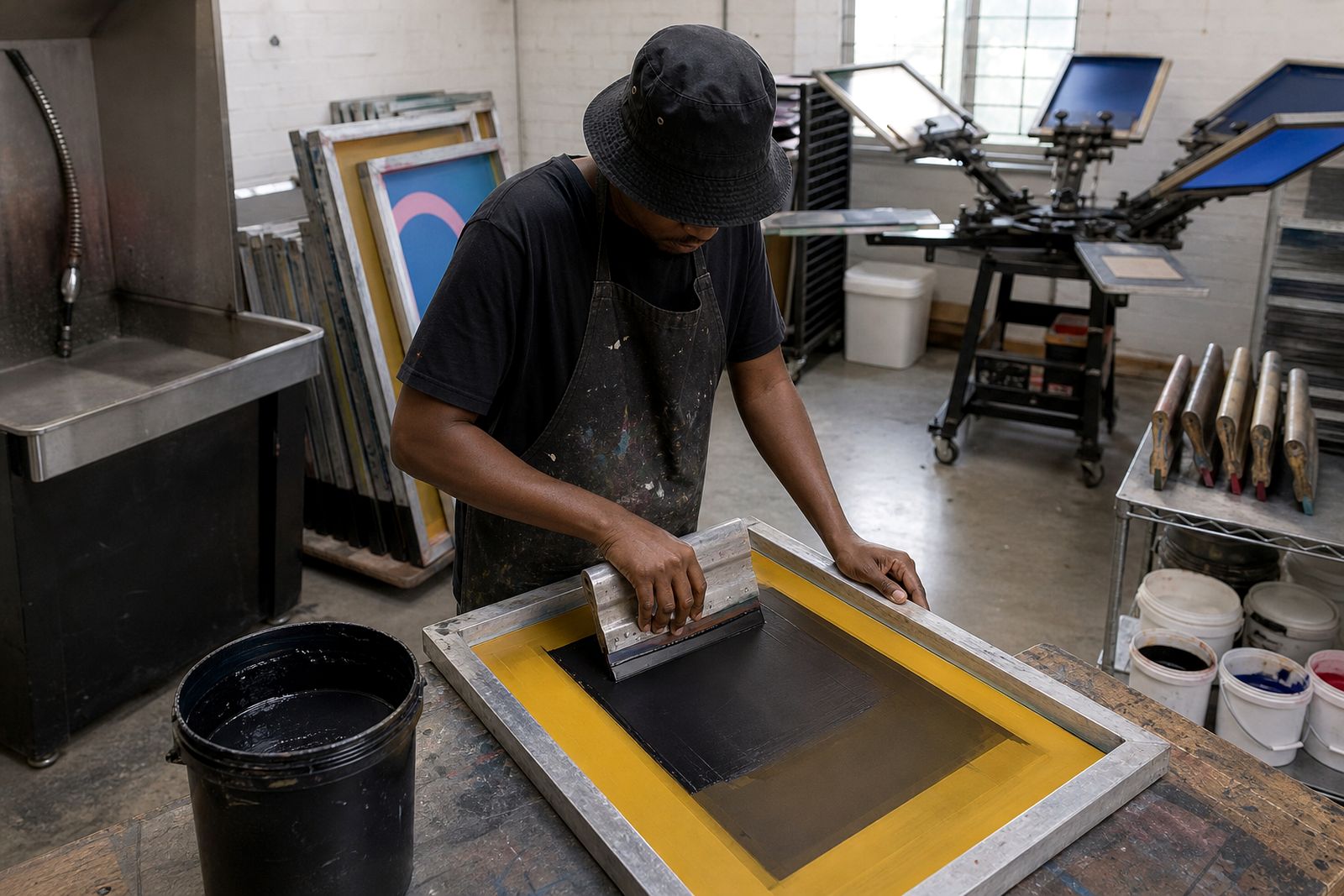
Mid to high mesh stencil control
Dual-cure emulsion pro is a diazo plus photopolymer emulsion built for cleaner image edges on finer mesh. In South African print rooms it is a useful choice for textile, flat stock, and decal work where detail retention matters more than heavy deposit. It performs best when mesh is properly degreased, dried right through, and coated evenly before exposure.
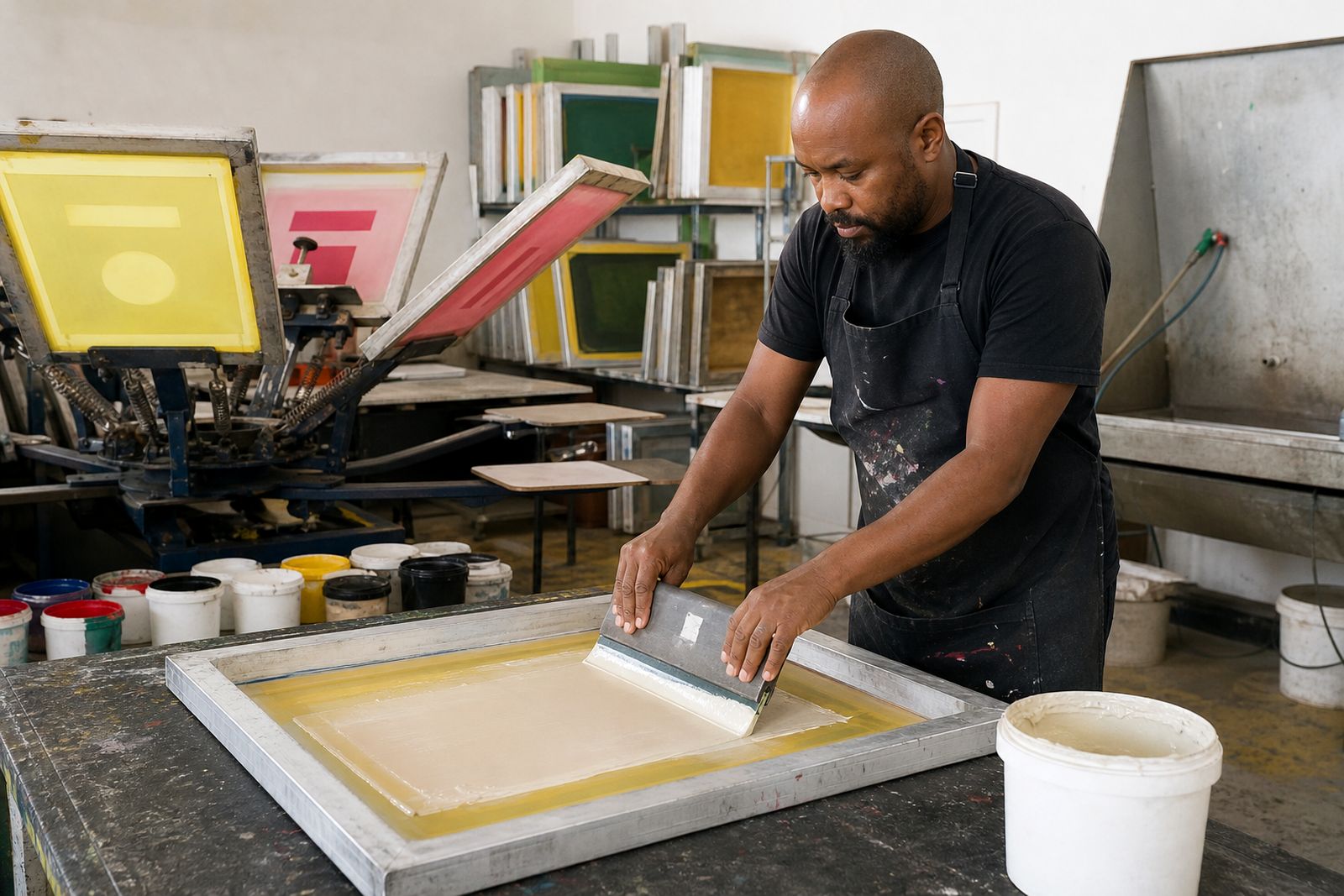
For a reliable stencil, start with the mesh count and the print detail you need to hold. A 90T to 140T setup asks for different coating control than a lower mesh used for thick laydown. Keep scoop coater pressure consistent, dry print side down in a dust-free cabinet, and note lamp type before setting exposure.
Check the first screen after washout while the stencil is still wet. Fine lines should stay closed where intended, and open areas must rinse free without slime or soft shoulders. That early look tells you if the coat was too heavy, the exposure too short, or the humidity too high.
Mid to high mesh detail
This product is suited to shops that need a harder-working stencil with good edge definition on finer fabrics and papers. It is commonly chosen when the artwork includes small text, tighter traps, or halftone work that would suffer on a softer coating. If your job needs a broader mesh conversation, see Screens alongside the emulsion choice.
Before coating, match the stencil plan to the mesh and frame condition. Read the note under Mesh if you are deciding between detail hold and ink deposit, then use our contact form with your mesh count, print substrate, and exposure unit details. Mention whether you run in Durban humidity or a drier inland room, as that changes drying and reclaim behaviour.
- Best on mid to high mesh
- Sharp edges for fine detail
- Diazo plus photopolymer stencil system
- Related: screens and mesh pairing
South African print room conditions to watch
Highveld dryness and coastal moisture affect this emulsion very differently during drying and storage. Johannesburg rooms often need stricter dust control before exposure, while Cape Town and Durban operators usually watch for slower drying and softer washout behaviour. Keep coated screens away from stray light and let them dry fully before burning.
Winter mornings can lengthen drying time even when the cabinet feels warm. Summer humidity near the coast may call for longer dry-down before exposure and a careful check for tackiness on the print side. During power cuts, protect coated screens from light leaks and avoid half-finished prep that leaves moisture trapped in the stencil.
Formats and setup checks
| Formats | Litre · 5 L pail |
|---|---|
| Notes | Diazo + photopolymer |
Dual-cure emulsion pro is listed in litre and 5 L pail formats, which suits both shorter production runs and busier print rooms. When briefing through the contact form, include mesh count, frame size, ink system, and your current exposure unit so the starting advice fits the job. A note on reclaim chemicals also helps if you are checking stencil durability against your normal wash process.
What our Screen Stencil customers say
Verified Google reviews
Tell us what you are printing
Send a note through our contact form with the inks and substrates you print, your mesh counts and frame sizes, your exposure unit and your town, and we will come back with practical advice and a quote.
Open the contact form