

Burn wedge pack
Step wedges and lamp notes for mixed rooms.
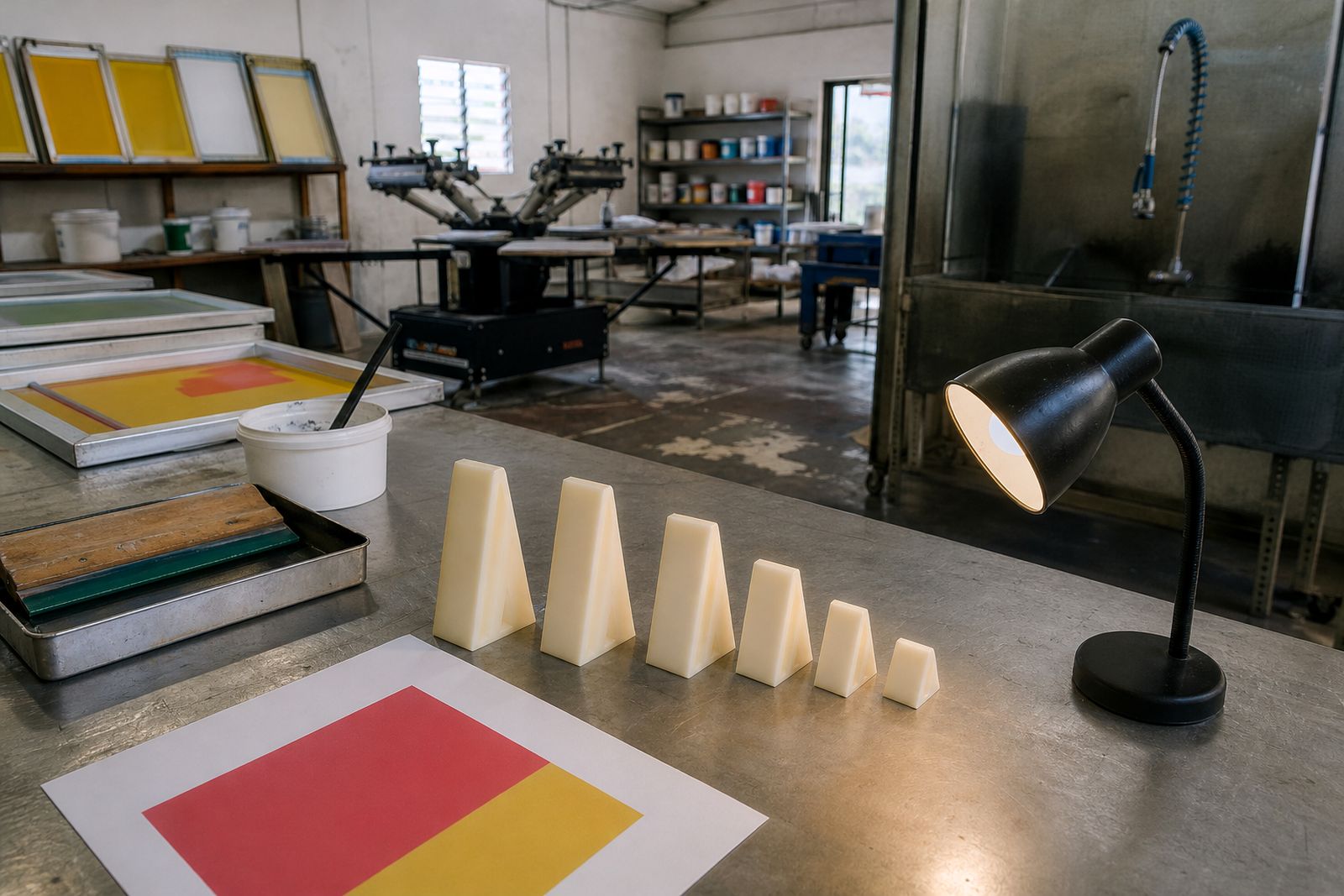
Step wedges for exposure checks
Use the burn wedge pack to read exposure across the stencil before a full run starts. Each pack suits screen rooms checking emulsion response, lamp strength and vacuum contact, with notes that help staff compare results on the same mesh count from shift to shift. Pair it with an stencil product and a ticket when the room logs settings for repeat work.
Cape Town winter moisture, coastal air and mixed lamp ages can all shift a burn result, so a printed wedge gives the room a fixed reference. Keep one set near the exposure unit and another with reclaim records, then send questions through our contact form if you need the pack matched to your current stencil setup.
Checks done before coating
Start with a degreased screen, even coat and a dry stencil before laying down the wedge. Then expose the same mesh and emulsion you use on production frames, compare the held detail after washout, and note the lamp distance, glass condition and vacuum pull. See Mesh if you are matching the burn note to a specific fabric count.
- Step wedge kept by exposure unit
- Lamp distance written on the sheet
- Mesh count recorded with results
What the pack contains
The burn wedge pack is a practical check set for screen rooms that want a steadier read on exposure before a full run. It suits work with dual-cure, diazo and SBQ emulsions, and it is useful when a room needs a simple way to compare stencil response across different shifts or lamp conditions.
- Step wedges for comparing held detail across the stencil
- Lamp notes for recording exposure settings and lamp age
- Room notes that help match results to mesh count, tension and vacuum contact
It fits mixed print rooms handling garment, poster and sign work, especially where exposure outcomes can shift with humidity, dry Highveld air or power cut interruptions.
Who it suits
This kit suits screen printers, shop managers and production teams who need a repeatable way to check burn consistency before going into a live run. It is a sensible add-on for rooms working with aluminium or timber frames, scoop coating, capillary film, or stencils that need clean washout and fewer pinholes.
It is also useful when the room is balancing different ink systems, including plastisol, waterbase and discharge, because a consistent exposure read supports better stencil durability during print and reclaim work.
For rooms near the coast, or anywhere lamp output and drying time may vary, the notes help keep records steady and easier to compare later.
How to use and store it
Start with a properly degreased screen, even coating and a dry stencil. Use the wedge on the same mesh and emulsion you plan to print with, then expose, wash out and check the held detail. Record lamp distance, glass condition, vacuum pull, mesh count and any change in the result.
Keep the pack near the exposure unit and store the notes with reclaim records so staff can compare one run with the next. If a result looks uneven, check coating technique, lamp age, vacuum contact and whether humidity or power cuts may have affected timing.
For help matching the notes to your setup, use the contact form and ask for a quote via the contact form.
What our Screen Stencil customers say
Verified Google reviews

Tell us what you are printing
Send a note through our contact form with the inks and substrates you print, your mesh counts and frame sizes, your exposure unit and your town, and we will come back with practical advice and a quote.
Open the contact form