

Bellville sleeve screens
Bottle sleeve screens without pinholes on wrap day.
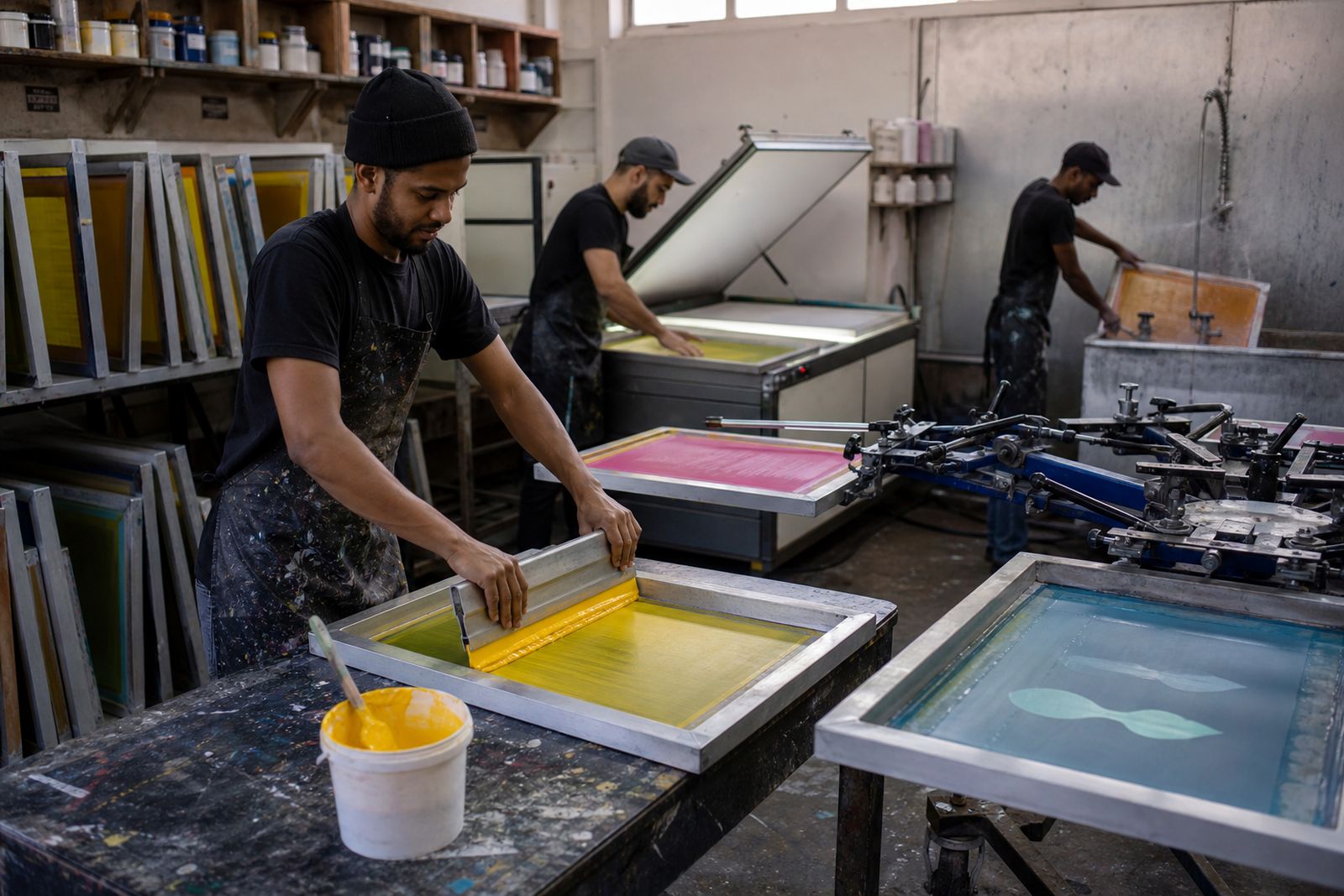
Bellville bottle sleeve handoff
For a sleeve brief like this, use our contact form and note Bellville sleeve so the artwork, mesh count and bottle size stay tied to one job card. A phone photo of the printed sleeve helps us check wrap position, trap gaps and any fine type that may close on press.
What shipped
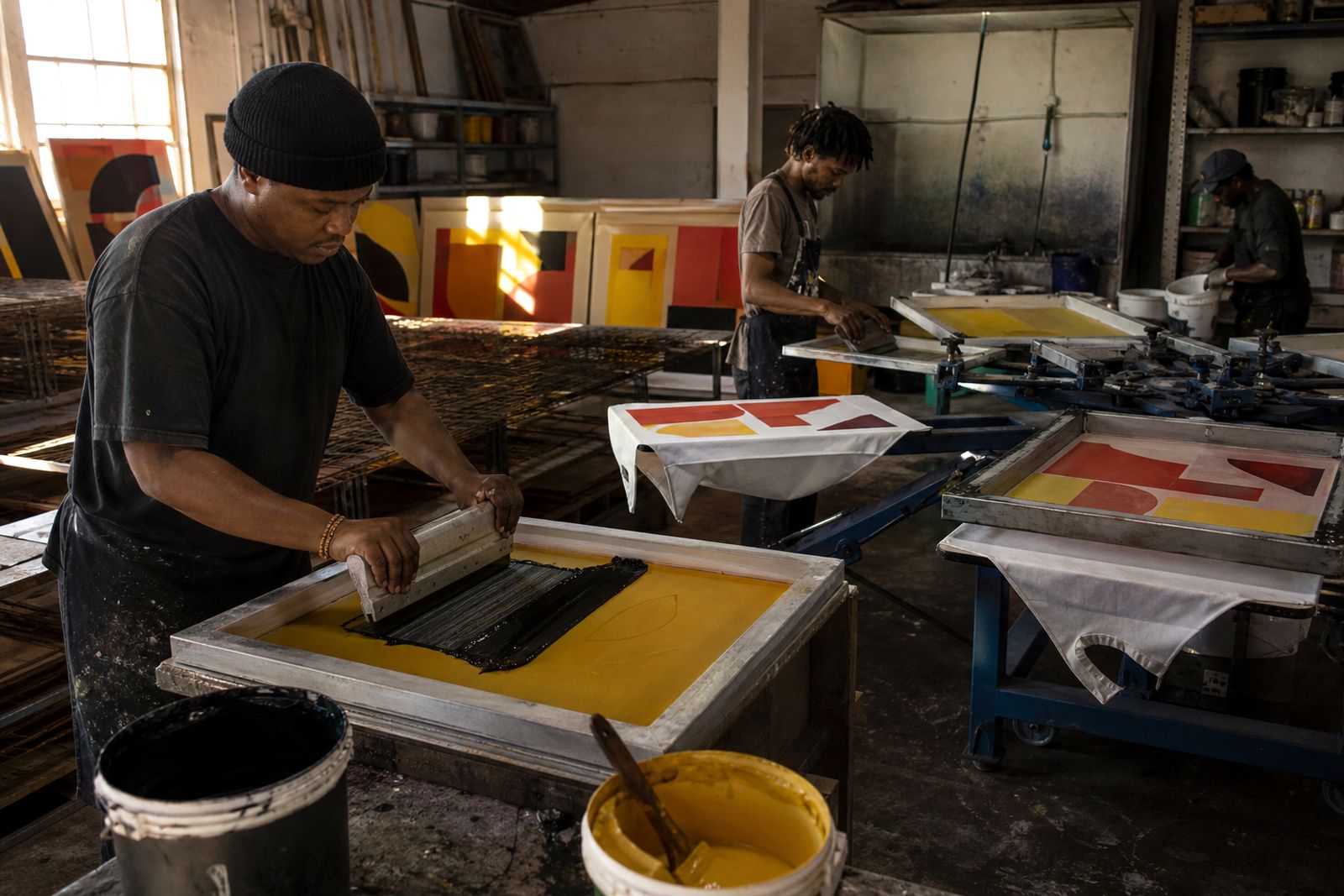
This job record follows the screen set used for a bottle sleeve where pinholes had to be kept out before wrap day. In Gallery, the proof image sits next to the finished item so print-room staff can compare edge hold, solid fill and registration marks. Water resist emulsion matters here because sleeve work often meets wet handling, while Bottle sleeve print shows the print format and handoff used on the same kind of brief.
- Stencil choice noted on the job card
- Proof photo filed
- Proof photo stored with sleeve job
What a sleeve brief needs
A bottle sleeve job needs more than a clean image. It needs a screen that holds detail, a stencil that clears properly, and a print room process that keeps the artwork stable when the job moves from proof to press. On sleeve work, pinholes, haze and soft edges can all show up fast, so the screen set must be sound before the first pull.
Screen Stencil works with South African print rooms on the practical side of the job: choosing between dual-cure, diazo and SBQ emulsions, checking mesh counts and tension, and matching the coating method to the stencil and exposure setup. If a sleeve brief is running in coastal humidity or under power cut pressure, those details matter even more.
How the screen room stays ready
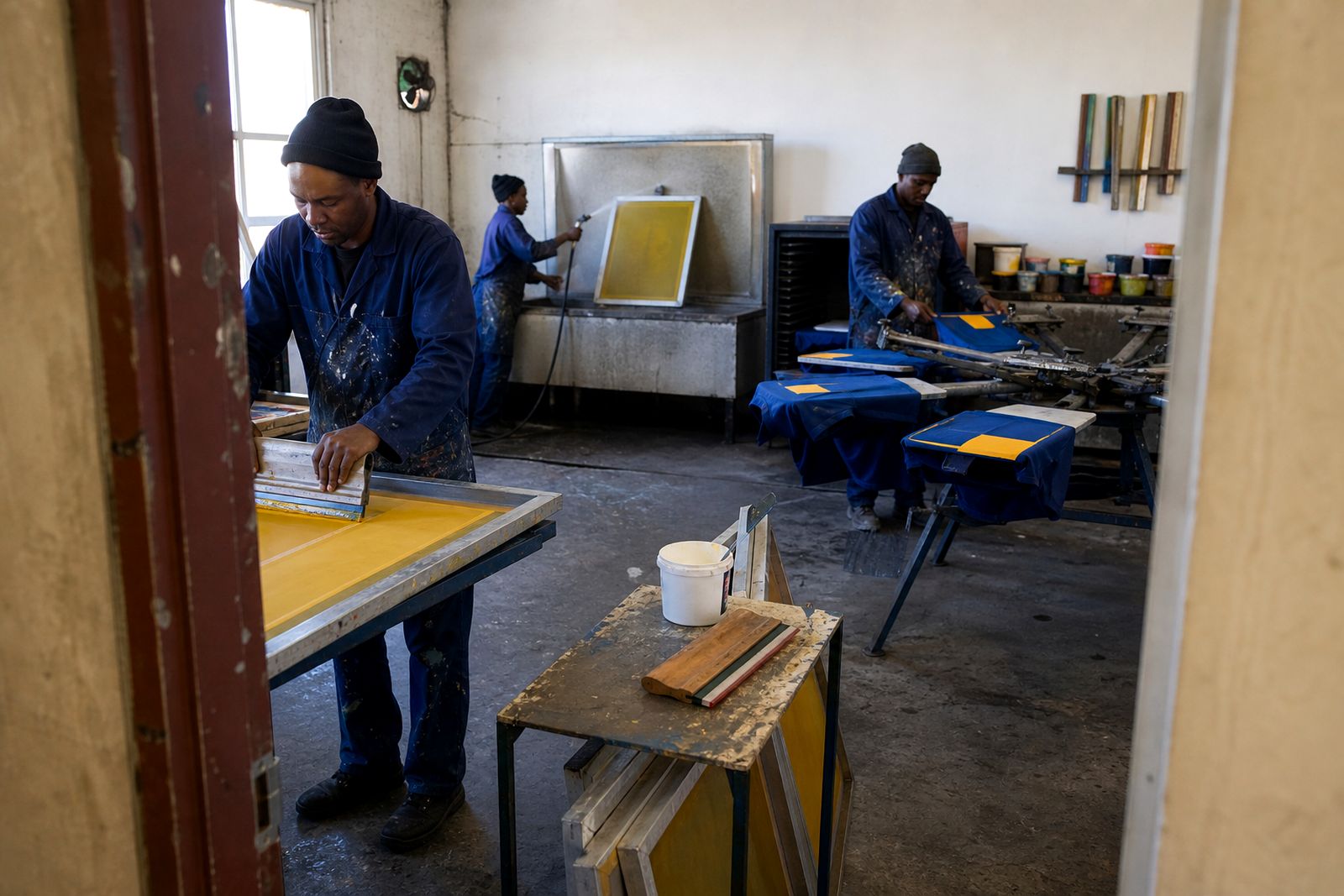
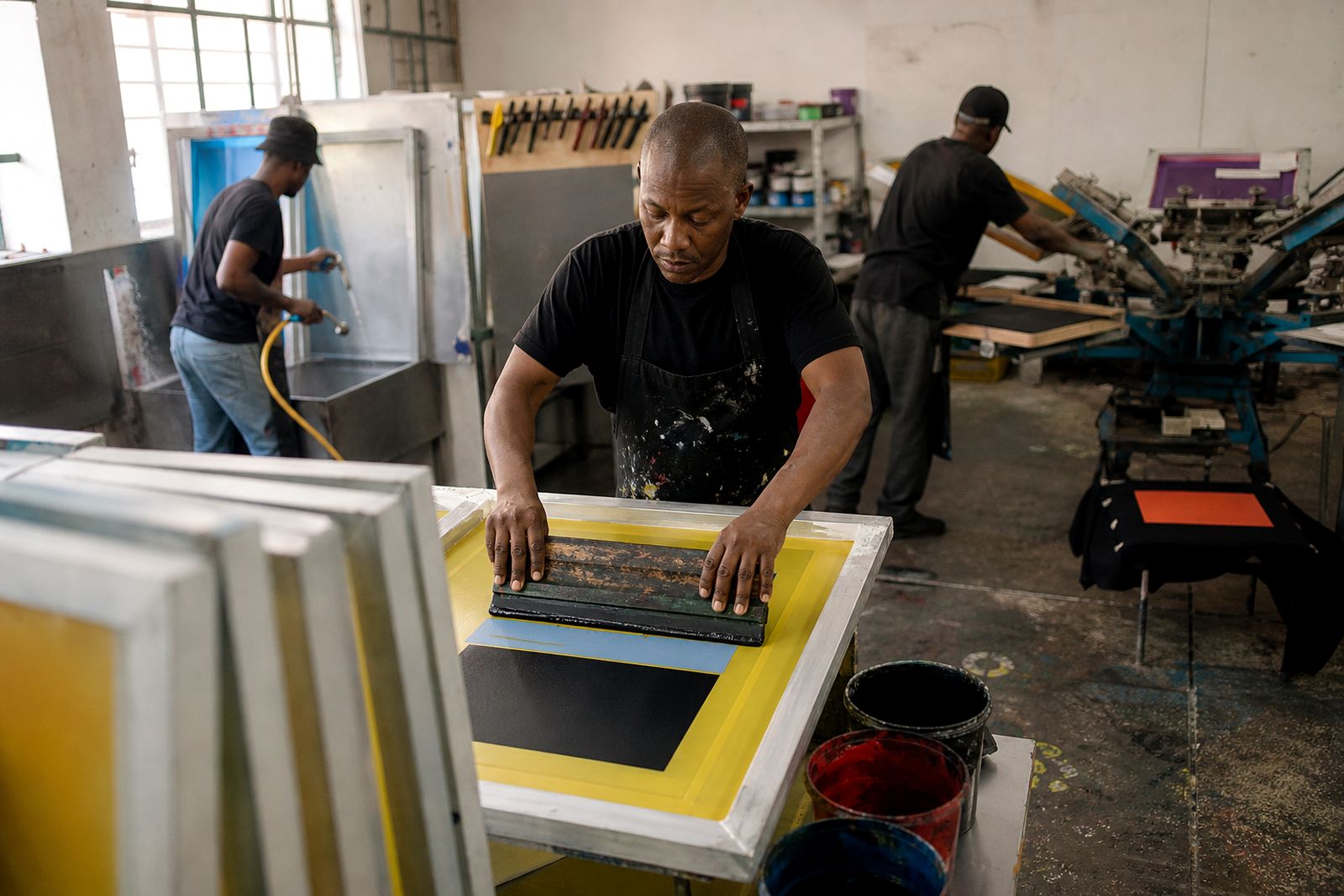
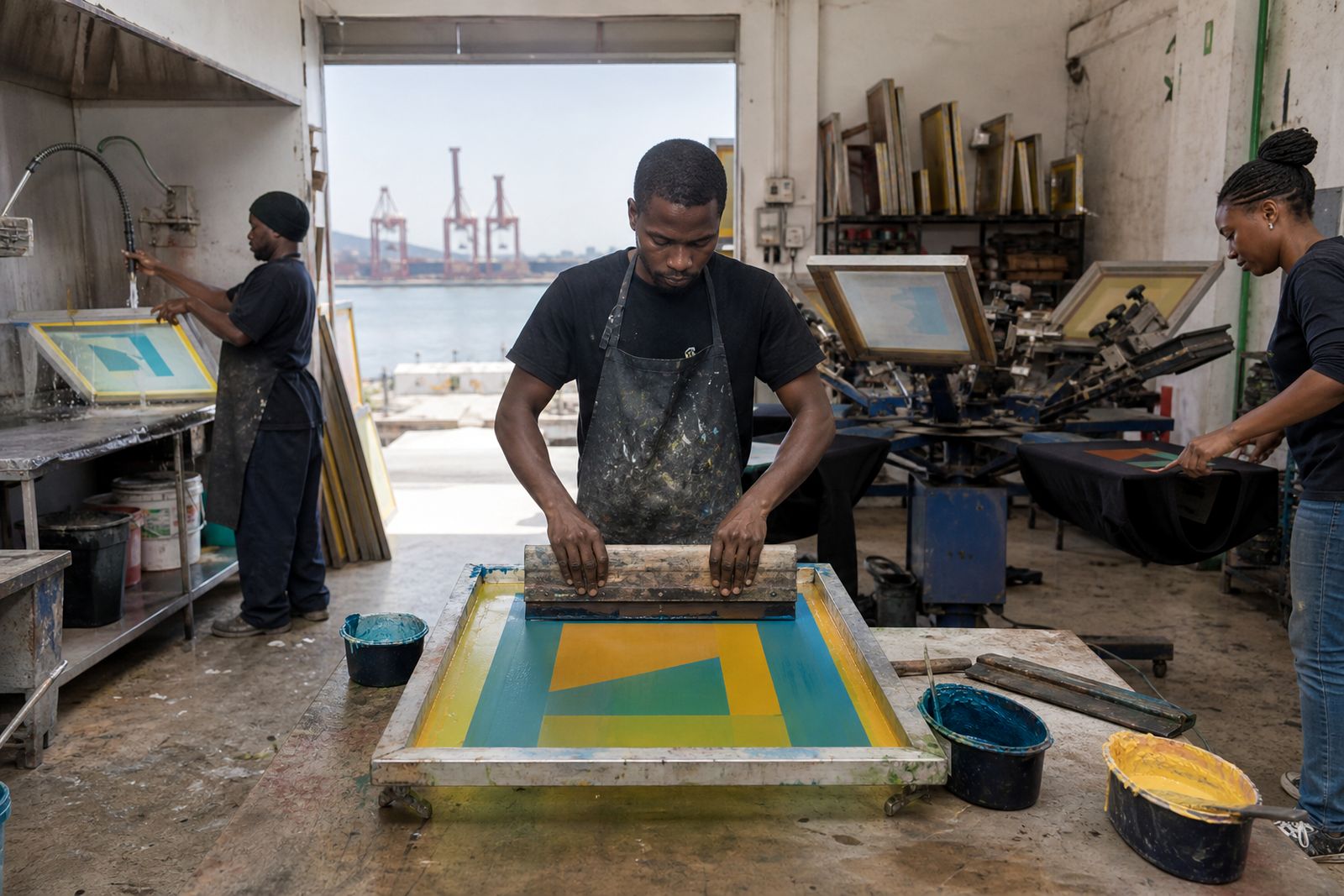
A good sleeve screen starts with the frame, mesh and coating routine. Aluminium and timber frames each need the right prep. A scoop coater must leave an even stencil, and the exposure unit has to suit the emulsion, the lamp age and the way the art is built. If the washout is rushed, pinholes can stay behind. If reclaim leaves haze, the next job carries the problem forward.
- Capillary film can help when the brief needs a controlled stencil thickness
- Washout and touch-up keep fine detail open for bottle sleeve work
- Reclaim and haze removal help the next job start clean
- Mesh tension affects how the print behaves on press
Talk through the job with the right details
For sleeve work, the useful conversation is simple and specific. Send site photos or a phone photo of the printed sleeve, and note the mesh count, frame type, ink system and the kind of finish the job needs. That helps the team match the stencil advice to the real brief, whether the print run is for plastisol, waterbase or discharge inks, or for garment, poster and sign work.
Screen Stencil operates from a stencil studio in Salt River, Cape Town, with showrooms at Tyger Valley, Clearwater, Cresta, Pavilion, Baywest, Mimosa and Riverside. If you want to discuss a sleeve brief, use the contact form and ask for a quote.
What our Screen Stencil customers say
Verified Google reviews
Tell us what you are printing
Send a note through our contact form with the inks and substrates you print, your mesh counts and frame sizes, your exposure unit and your town, and we will come back with practical advice and a quote.
Open the contact form