

Dust wipe cadence
Highveld glass and mesh wipe rhythm.
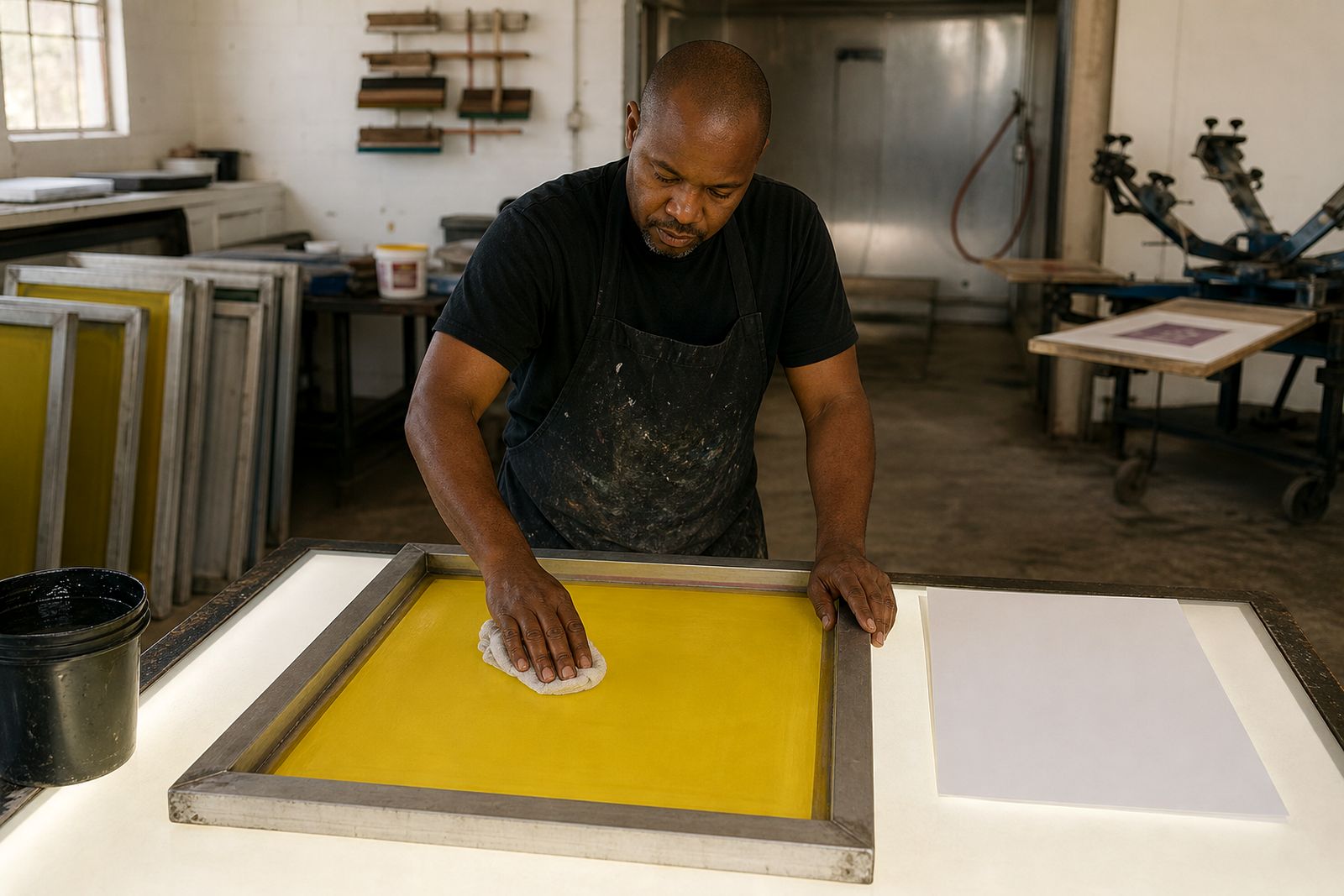
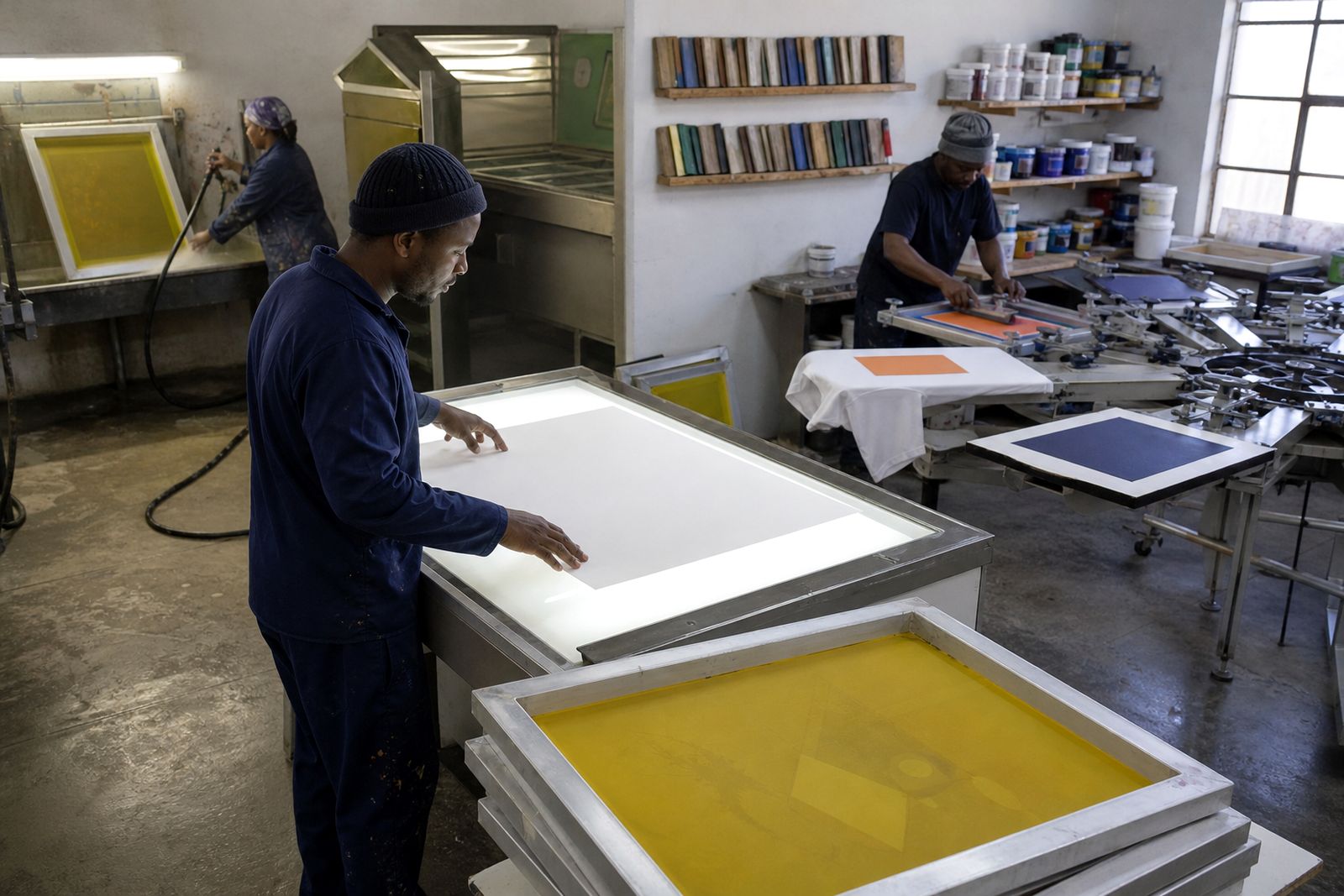
Use this card to set a dust wipe rhythm at the glass, exposure unit, and mesh rack when dry Highveld air starts lifting lint. Pin it where operators load screens so the date, shift, and wipe interval stay visible during changeovers. If your room needs a different layout for counts, materials, or station names, send it through our contact form.
- Date, shift, and interval fields
- Email us for reprints
Set the wipe rhythm
Dust control matters most where lint lands first: the glass, the exposure unit, and the mesh rack. In dry Highveld conditions, a steady wipe rhythm helps keep dust off coating areas, screens, and handling points before it becomes a pinhole or washout problem.
Keep the routine simple enough for every shift to follow. Wipe the key surfaces before loading screens, after busy changeovers, and again if the room has been open while pallets, garments, posters, or sign material moved through. If the room is also dealing with humidity changes or power cut interruptions, check the same surfaces again before exposure work resumes.
What to check at each shift
Use the same short check each time so the habit stays visible in the studio.
- Wipe the exposure glass and the screen loading area before coating or exposing
- Check the mesh rack for dust, fibres, and loose coating flakes
- Look for lint near the scoop coater, reclaim sink, and drying area
- Confirm the date and shift on the card when the wipe interval changes
If screens are being coated with dual-cure, diazo, or SBQ emulsions, a cleaner room gives you a better start before exposure and washout. The same discipline helps when using capillary film, especially on finer mesh counts or tighter tension where small defects show early.
Keep it practical in the room
This is a working reminder, not a training course. Pin it where operators can see it while loading screens, checking lamp age, or setting up for garment, poster, and sign work. If your studio uses aluminium or timber frames, or different mesh counts for different jobs, keep the dust wipe habit tied to the same station where the screens are handled.
For related room notes, see stencils, screens, and mesh. If you need a version with your own station names, ask for a quote via the contact form.
What our Screen Stencil customers say
Verified Google reviews
Tell us what you are printing
Send a note through our contact form with the inks and substrates you print, your mesh counts and frame sizes, your exposure unit and your town, and we will come back with practical advice and a quote.
Open the contact form