

Export mark spec
Stencil art size bands for cartons.
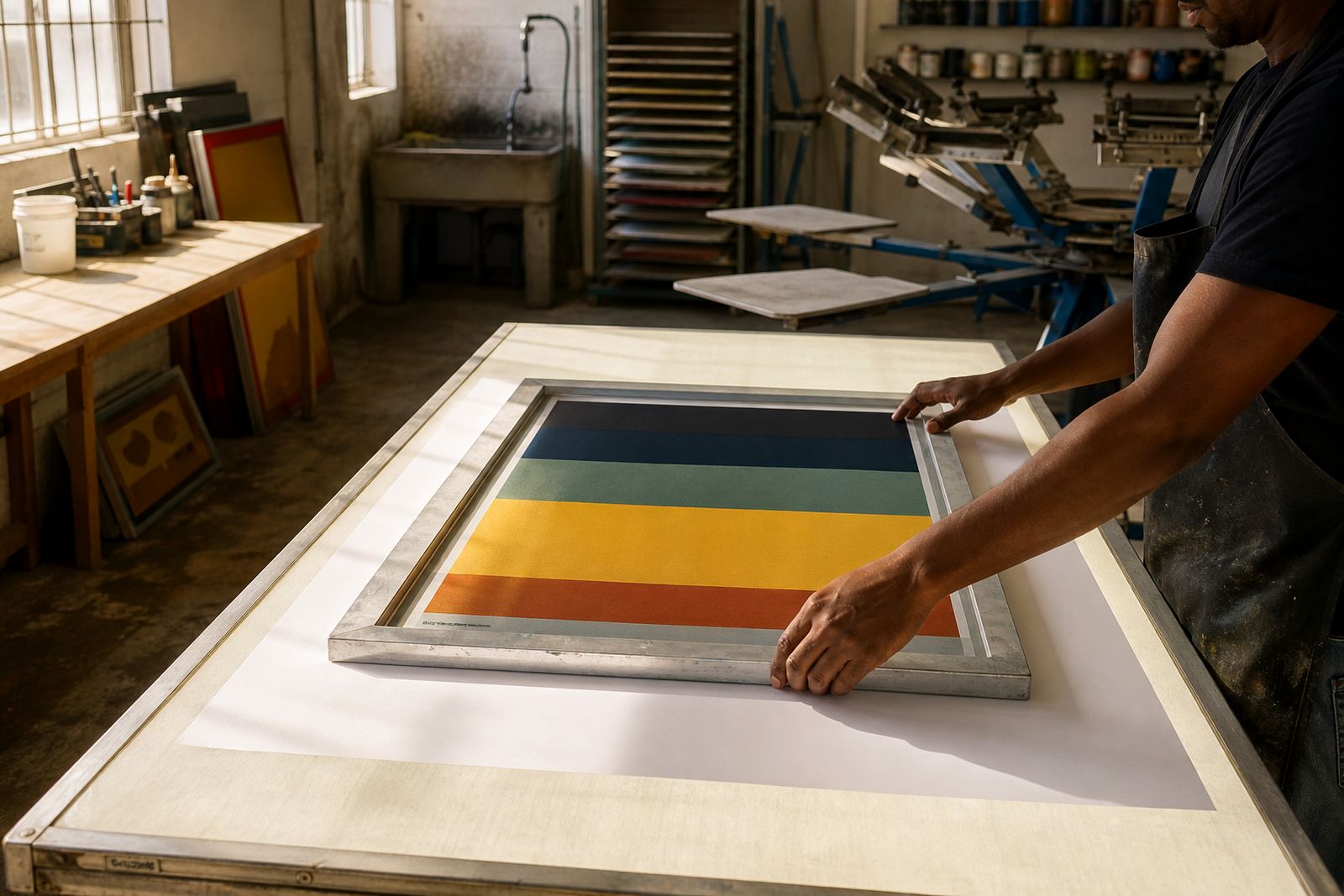
Use this card when carton artwork needs the export mark sized to the right stencil band before exposure. It notes the art-size ranges that suit common carton panels, so the mark holds shape through mesh, ink deposit, and packing line handling. If you need a reprint or a revised card for your room, send it through our contact form.
- Art bands matched to carton panels
- Email us for reprints
Size the export mark before exposure
Export carton marks need to sit in the right art band before you commit the stencil. Keep the artwork clean, measured and simple so the image holds through mesh count, stencil thickness, ink deposit and pack line handling.
For room-ready results, check the mark size against the carton panel, then match the stencil choice to the job. That is useful for dual-cure, diazo and SBQ emulsions, and it also helps when you are using capillary film on routine carton work.
- Confirm the carton panel size and the final mark size before setting artwork.
- Check that mesh tension and frame condition suit the detail you need.
- Use a coating method that gives an even stencil edge for exposure.
- Keep exposure timing consistent, especially if lamp age or power cuts change your routine.
If your room is in coastal humidity or dry Highveld air, note it on the card and adjust your stencil process accordingly. A small change in coating, drying or exposure can save time later in washout and touch-up.
Keep the stencil sharp in the room
Once the art size is set, the next check is how the stencil behaves in the room. Aluminium and timber frames can both work well when they are sound, square and matched to the mesh count in use.
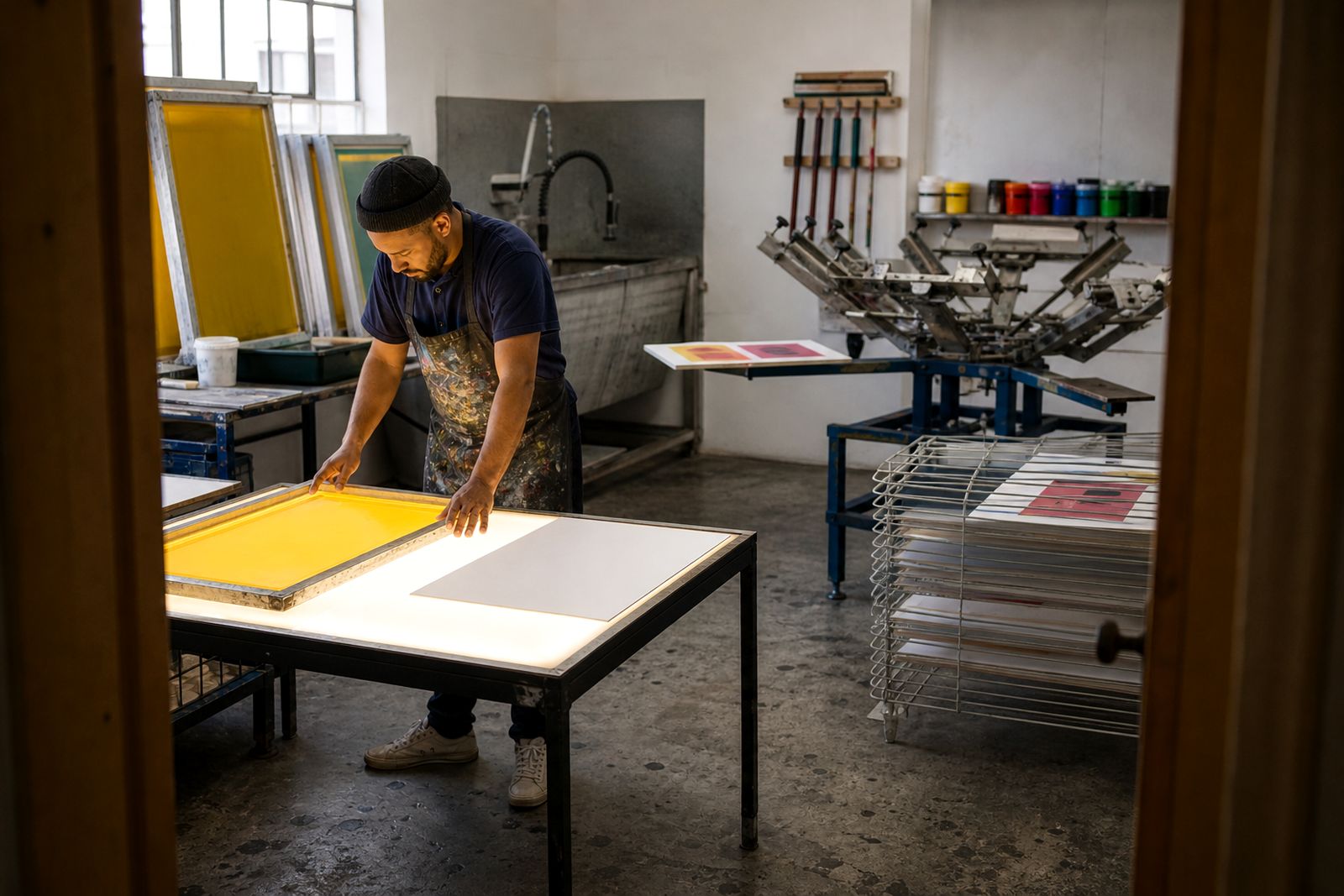
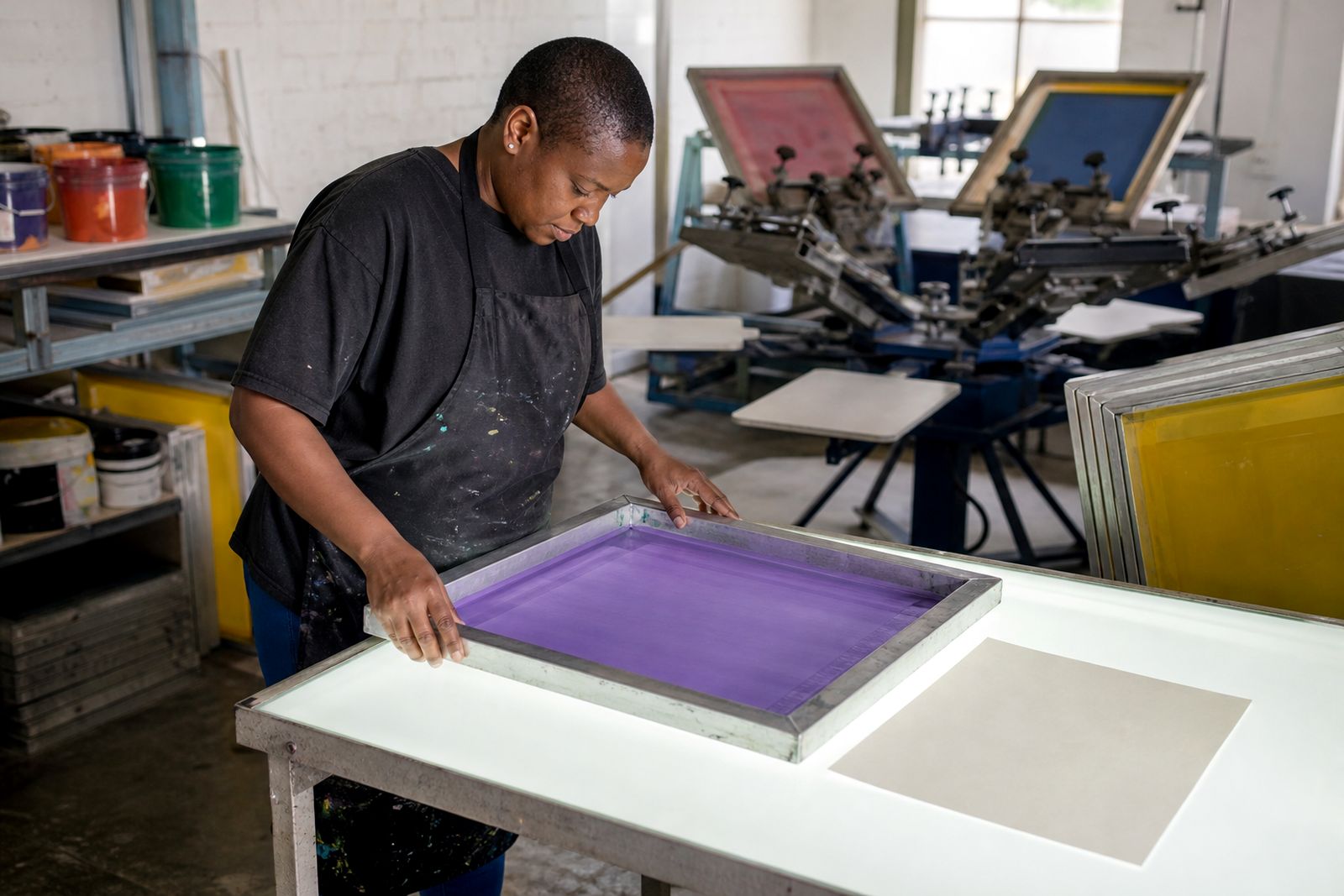
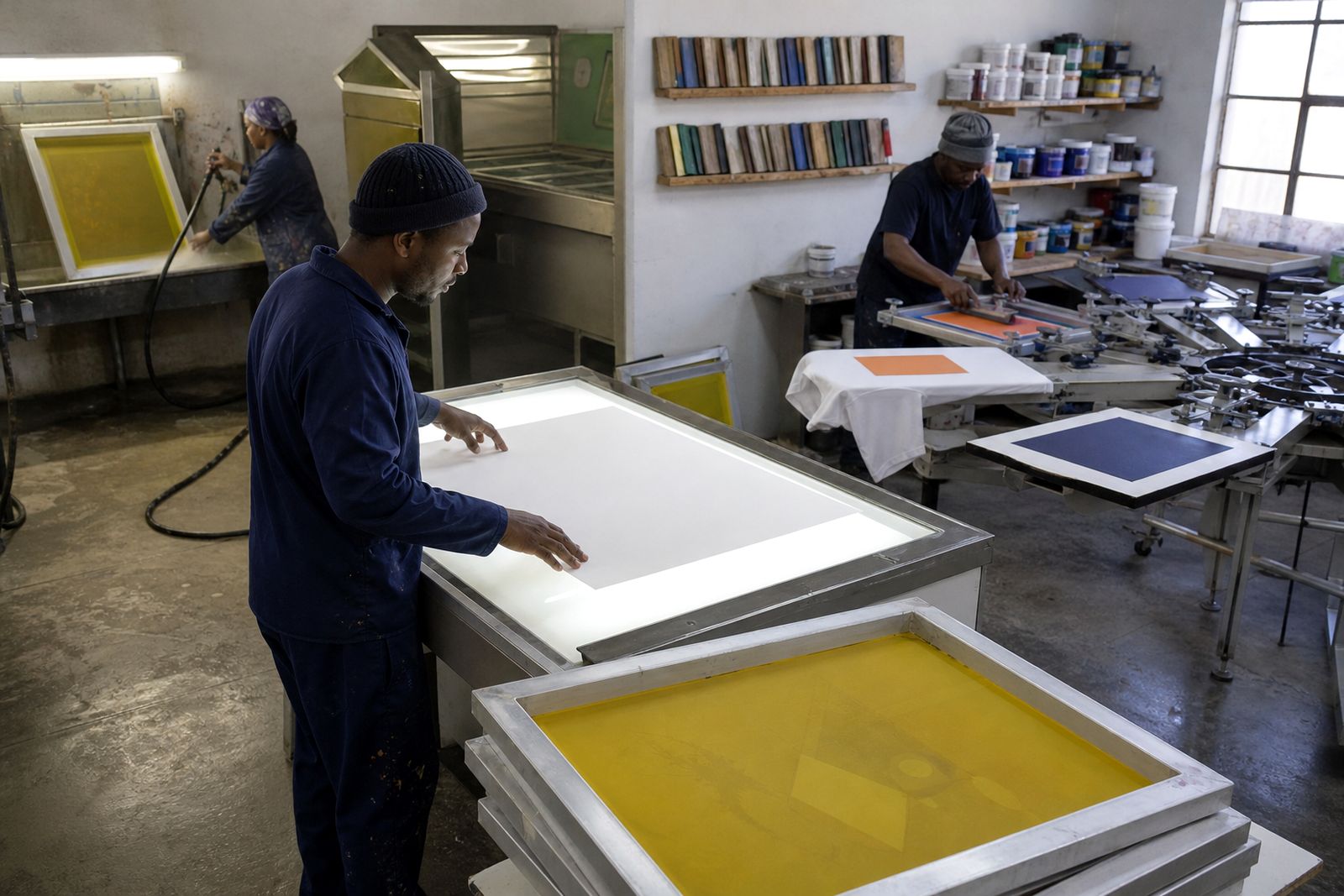
Screen rooms handling garment, poster and sign work often need a steady method for scoop coating, drying and exposure. A careful coating pass helps reduce pinholes, while a proper washout routine protects the fine edges of the export mark.
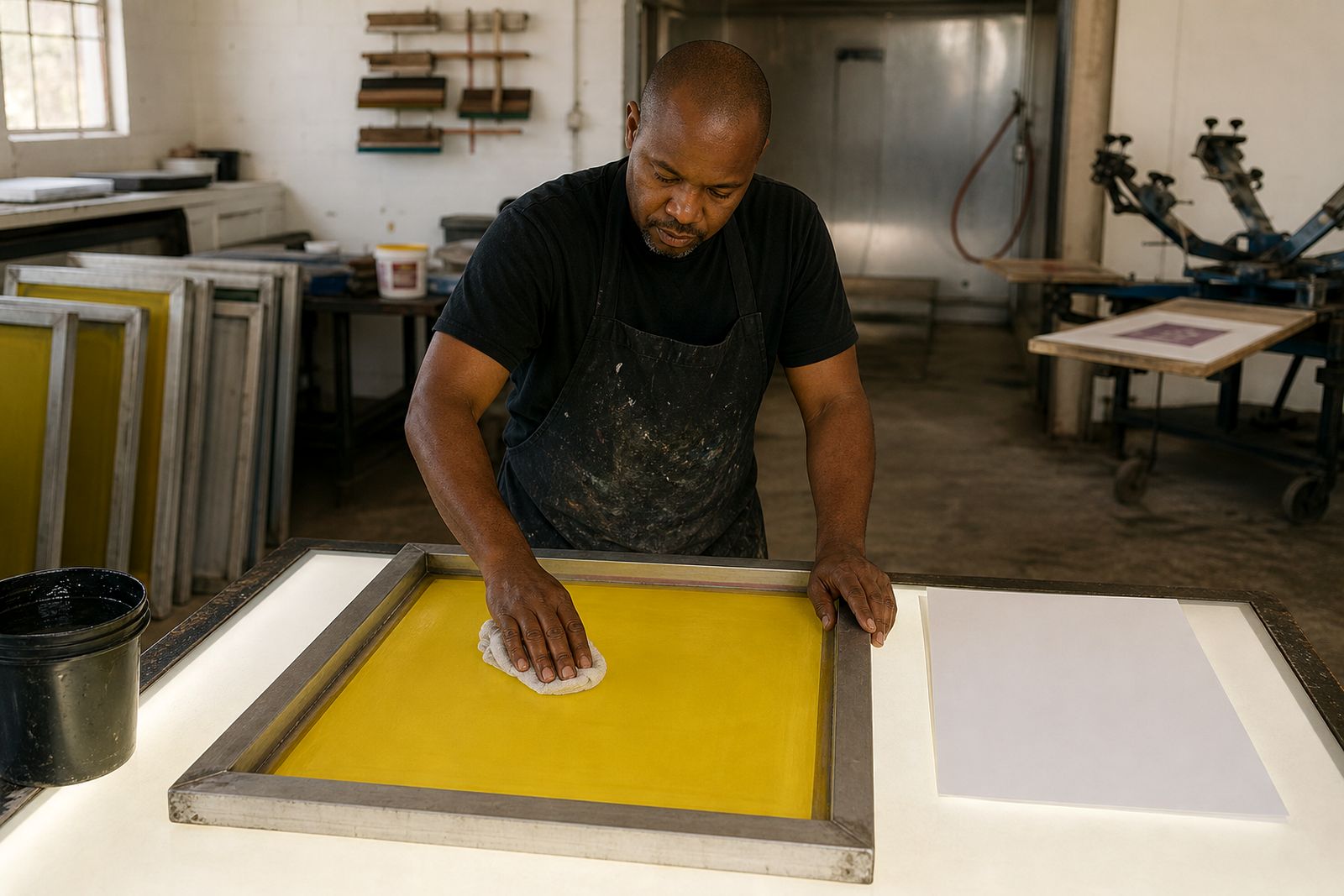
If you see haze after reclaim, clean it off before the next stencil. Clear screens give better detail, and they also make it easier to judge whether the problem came from the artwork, the mesh or the exposure unit.
Keep the card near your other room notes
This is a practical studio card for screen print rooms that want a quick reference for carton artwork. Keep it with your notes on emulsions, mesh and exposure so the team can use the same size bands from one job to the next.
It is also a useful reminder when you are switching between plastisol, waterbase and discharge inks, or when a job moves from cartons to other print work. The aim is not theory. It is a neat, repeatable result that holds up in the room.
Need revised copy for your stencil room or a reprint for the studio wall? Send a request through the contact form and ask for a quote. Screen Stencil works from Salt River, Cape Town, and serves screen print rooms through its branches in Tyger Valley, Clearwater, Cresta, Pavilion, Baywest, Mimosa and Riverside.
What our Screen Stencil customers say
Verified Google reviews
Tell us what you are printing
Send a note through our contact form with the inks and substrates you print, your mesh counts and frame sizes, your exposure unit and your town, and we will come back with practical advice and a quote.
Open the contact form