

Blockout edge seal
Edge seal and pin-hole blockout that stays put through long runs.
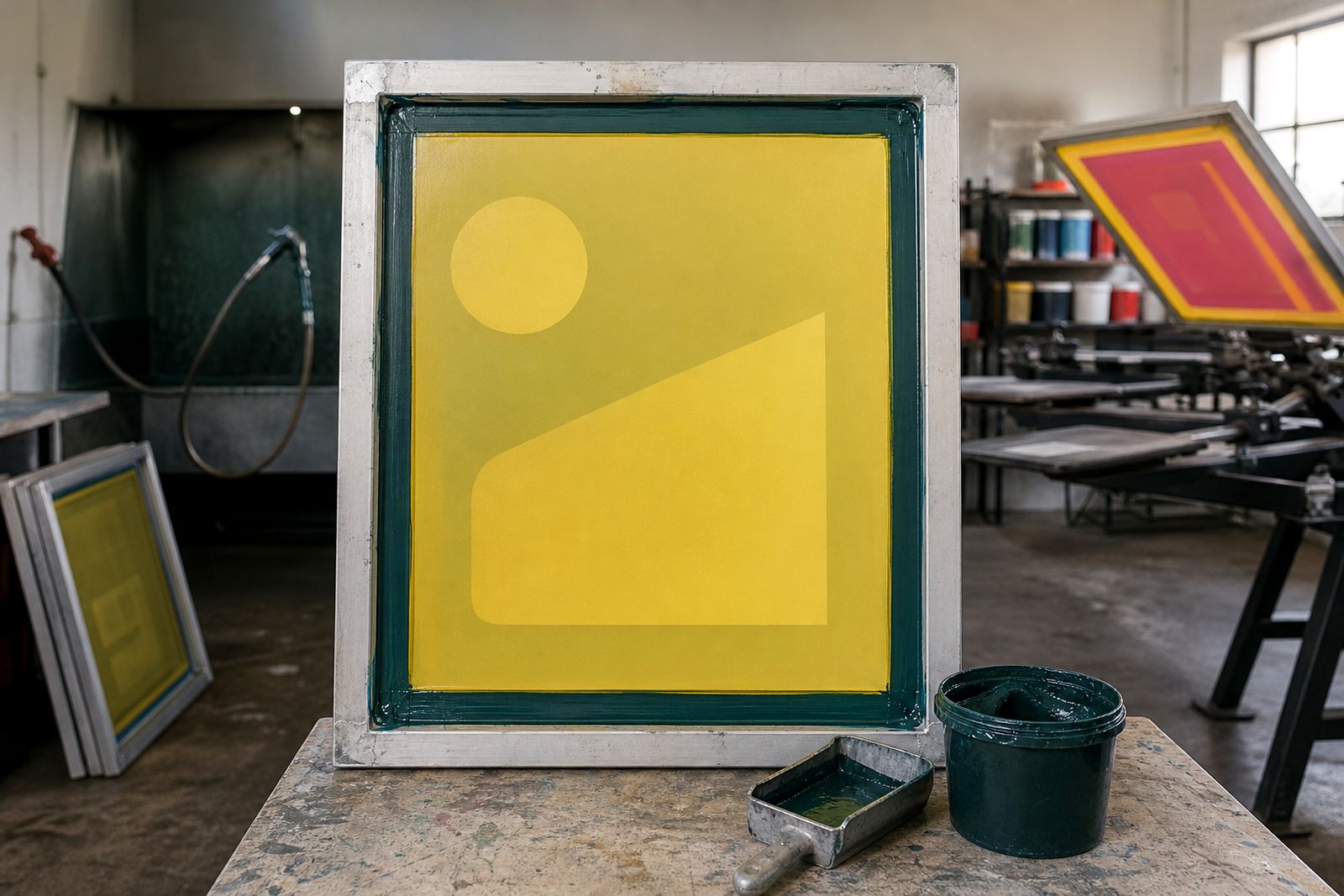
Where edge seal earns its keep
Blockout edge seal earns its place when the image area is sound but the frame edge, tape line, or pinholes start leaking ink into the run. In South African print rooms this is common on long textile jobs, bottle and jar work, and screens stored through dry Highveld dust or coastal humidity. The product is used to close the perimeter neatly, cover tiny breaks, and keep stray ink out of the squeegee route without remaking the stencil.
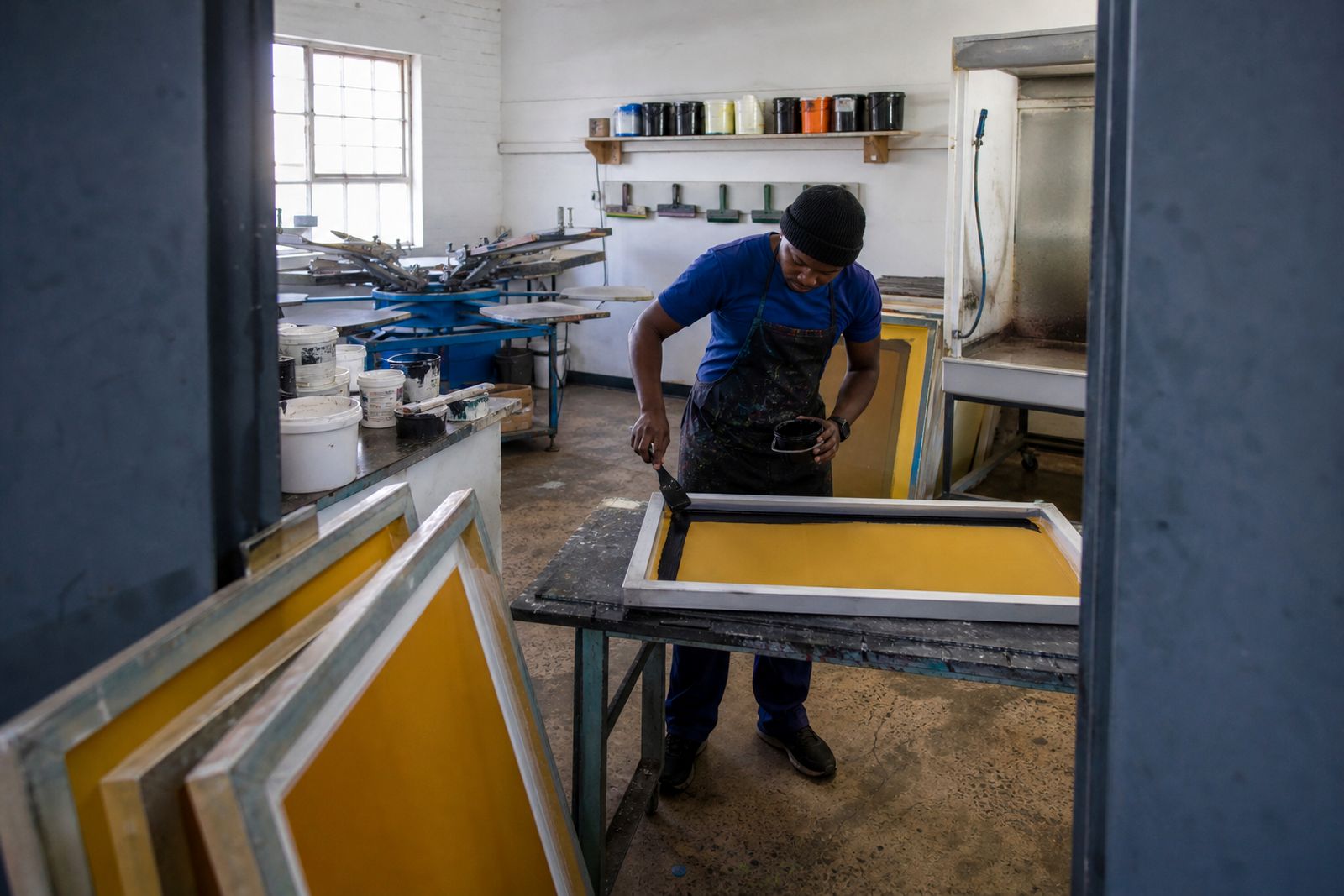
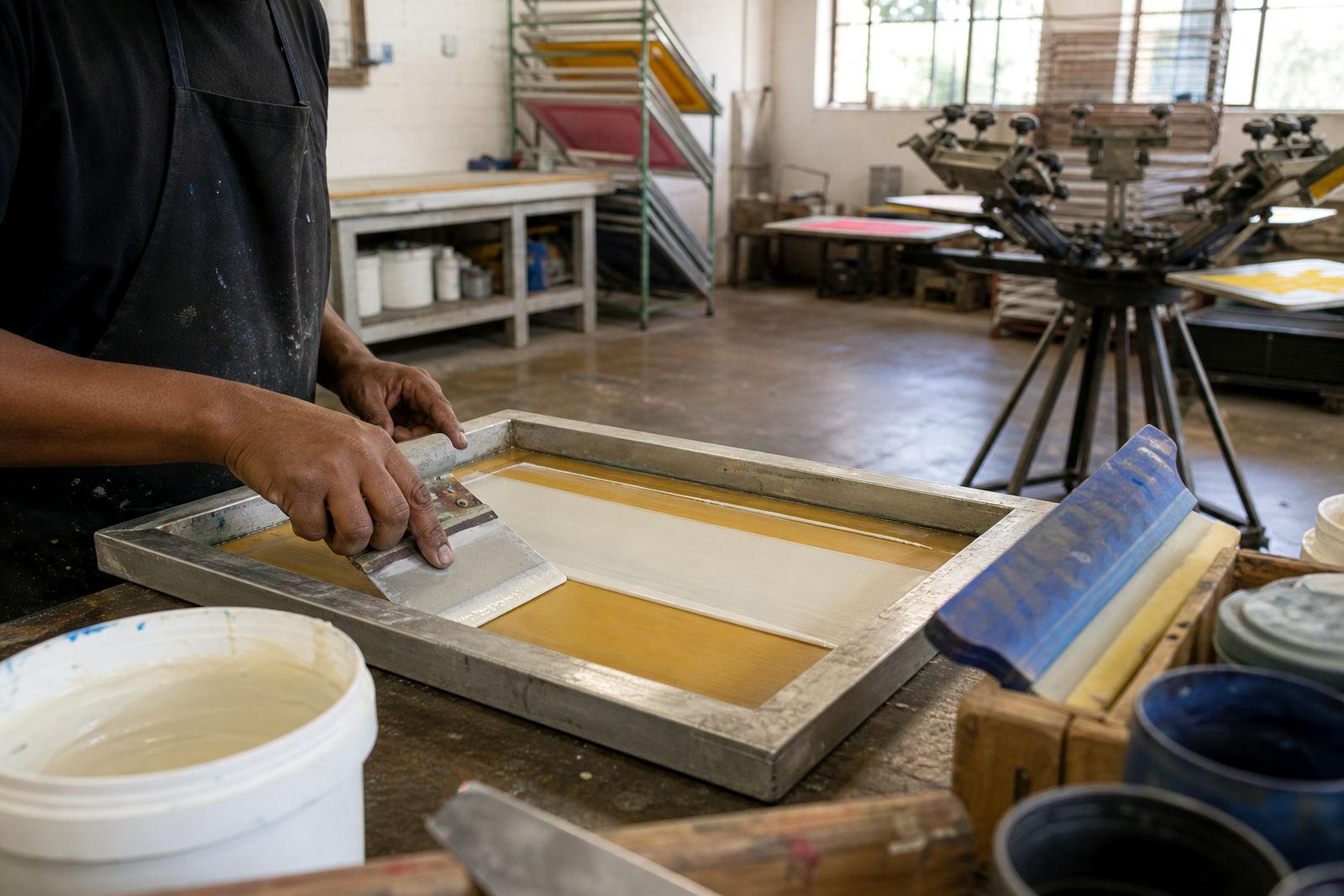
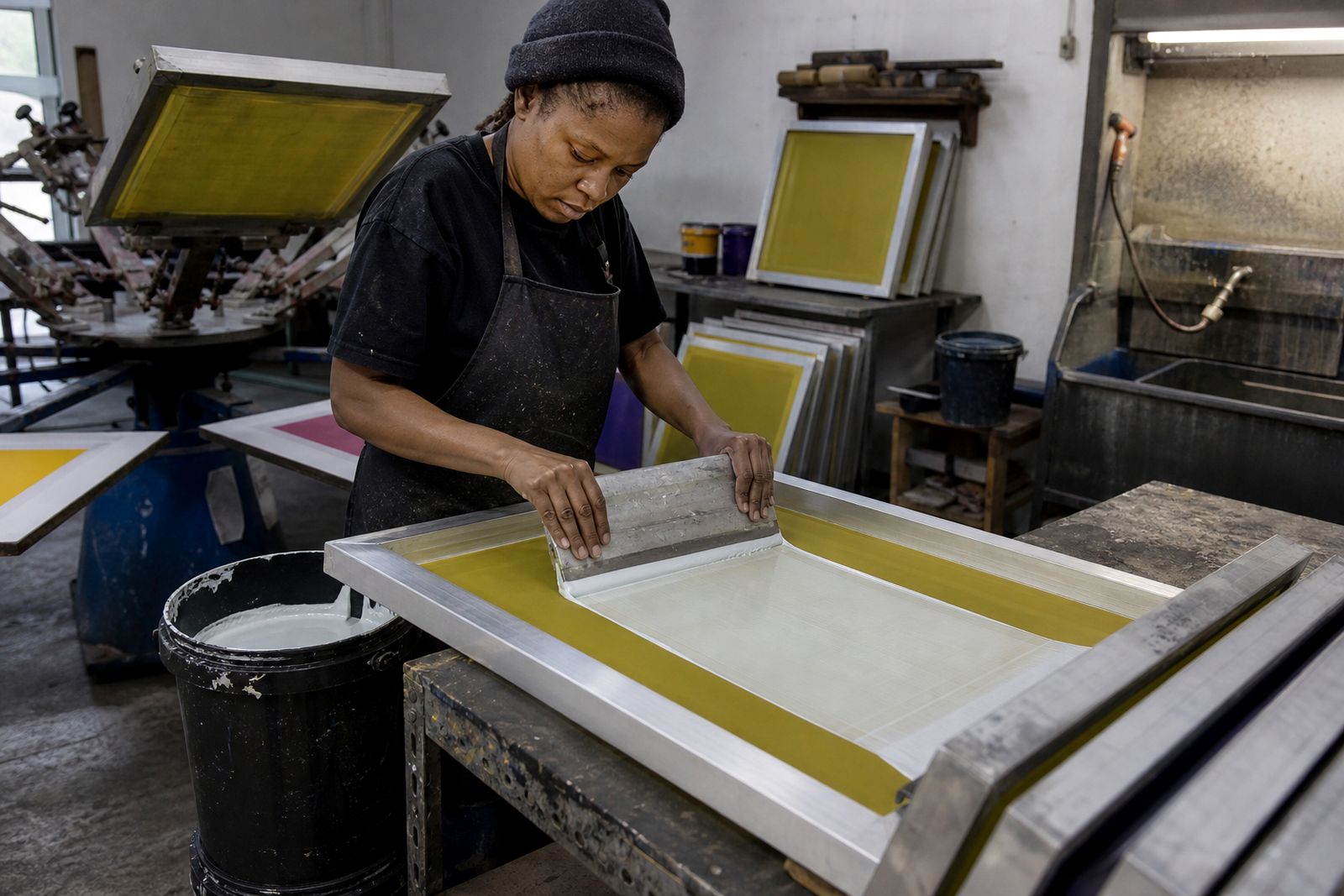
Apply it only once the mesh is fully dry and free of ink stain, degreaser residue, or loose lint. A small brush works for pinholes, while a plastic card gives a neater band along the frame line. Keep the coat thin and even so the screen still sits flat and the blocked areas do not crack when the frame is handled.
Before the first production pull, hold the screen to the light and inspect corners, mesh joins, and any repaired spots. Then do a short test print with flood and print pressure at running level, not a soft bench pull. That check usually shows whether the edge band is holding or whether another pass is needed.
What goes out with this product
Blockout seals edges and closes tiny open areas that should not print. It suits stencil rooms that need a dependable edge band without building a thick ridge on the mesh. If the job needs new screens rather than touch-up material, see Screens.
Match the sealant to the mesh condition before the frame goes back into production. Check the note under Mesh if you are working with a finer count, a worn screen, or a fresh reclaim. When you use our contact form, include the ink type, mesh count, and whether the issue is pinholes, frame edge seepage, or both.
- Seals frame edge against ink creep
- Closes pinholes after washout
- Brush or card application
- Related: Screens and Mesh
South African print room conditions
Highveld dust, coastal humidity, and frequent screen handling all affect how well edge blockout stays put. A damp screen or dirty frame lip can cause lifting long before the image area fails. In Cape Town and Durban shops, drying time and storage matter more than many operators expect during humid spells.
Reclaimed screens need extra checking around old ghost images, mesh repairs, and corners where tape adhesive has built up. Inland shops often battle fine dust settling on wet blockout, while coastal rooms see slower curing in muggy weather. During power cuts, keep drying racks ventilated and avoid stacking frames before the seal has properly set.
Checks before the run
| Formats | Bottle · jar |
|---|---|
| Notes | Brush or card |
Confirm the mesh is dry, the frame edge is clean, and the blocked band does not intrude into the printable area. Use the contact form if you need the right product for bottle work, jar work, or general flat-bed screen printing.
What our Screen Stencil customers say
Verified Google reviews
Tell us what you are printing
Send a note through our contact form with the inks and substrates you print, your mesh counts and frame sizes, your exposure unit and your town, and we will come back with practical advice and a quote.
Open the contact form