

Blockout Edge Seal burn notes
Before release, each blockout edge seal screen needs a final handover against the job card. The print room should note mesh count, edge tape condition, and any pinhole touch-ups so the next operator does not guess at setup.
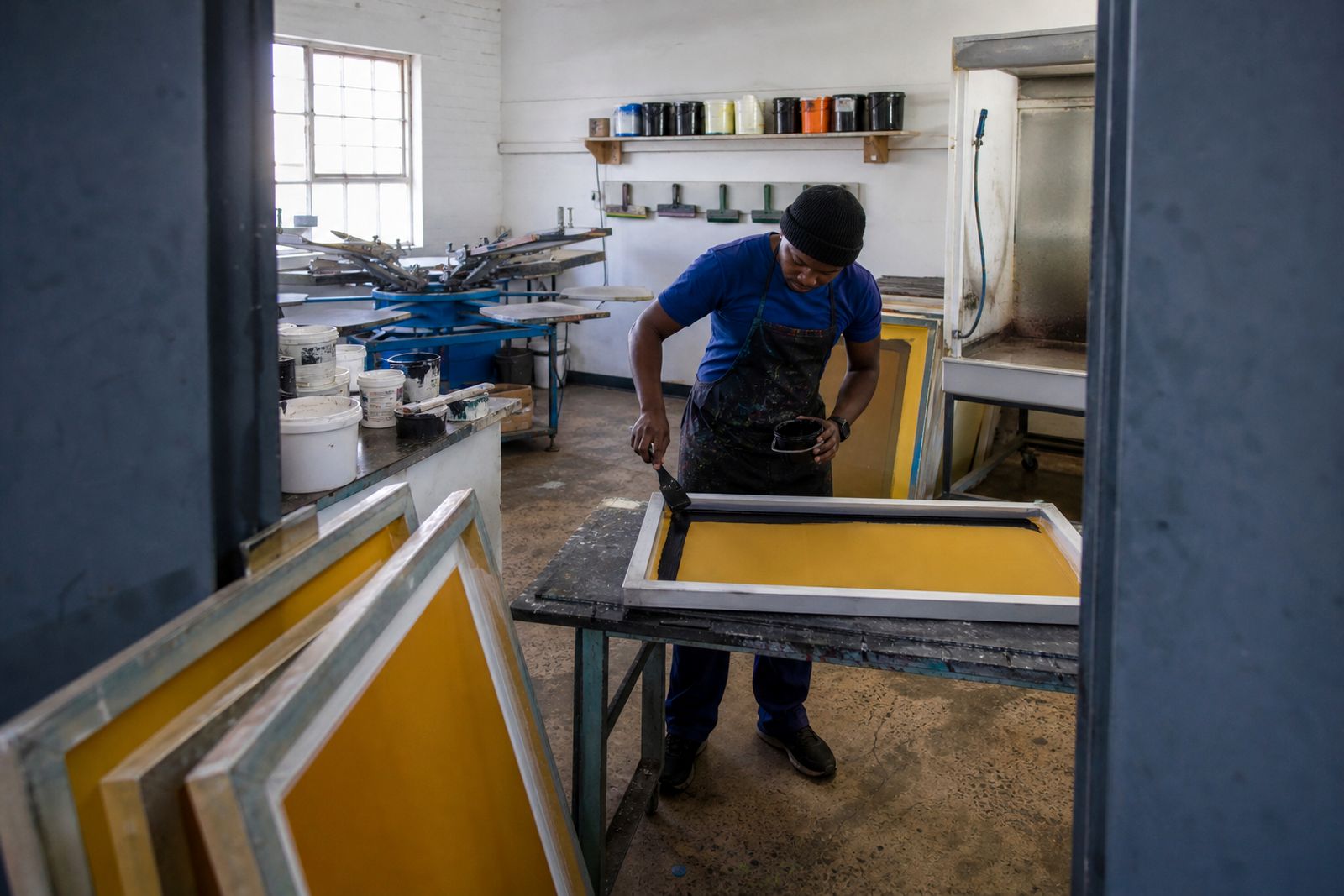
Burn cadence for blockout edge seal
Before a blockout edge seal leaves the print room, inspect the edge coating right around the frame and look for pinholes near the corners. Record the mesh count, stencil name, and ink set used so the next setup matches what was burned and blocked out. Good delivery notes matter in South African shops where dust, humidity, and mixed reclaim routines can change how a screen behaves on press.
Inland shops often battle fine dust settling onto coated areas before packing. Near the coast, higher moisture can slow curing on edge seal products and make wrapped screens sweat if stacked too early. A simple wipe card beside dispatch helps staff inspect corners, tape lines, and pallet labels before the bakkie leaves.
Dispatch checks for edge seal
Pull a screen from service when the edge seal lifts during washout or starts flaking into the image area. Replace reference cards when colour names, frame numbers, or mesh notes no longer match current production. Keep Kits near dispatch for mesh labels, reclaim tags, and packing sheets used with blockout edge seal jobs.
If the screen handoff needs a second look, tell us about it through our contact form. Include the frame size, mesh specification, and where the edge seal is failing so the next step can be assessed against your print room conditions.
What our Screen Stencil customers say
Verified Google reviews
Also worth a look
Tell us what you are printing
Send a note through our contact form with the inks and substrates you print, your mesh counts and frame sizes, your exposure unit and your town, and we will come back with practical advice and a quote.
Open the contact form