

Direct Emulsion High Mesh coat notes
Use this brief to note the mesh count, emulsion coat plan, and which side receives the first pass. Include the stencil size and frame type before coating starts so the print room can match the screen to the job.
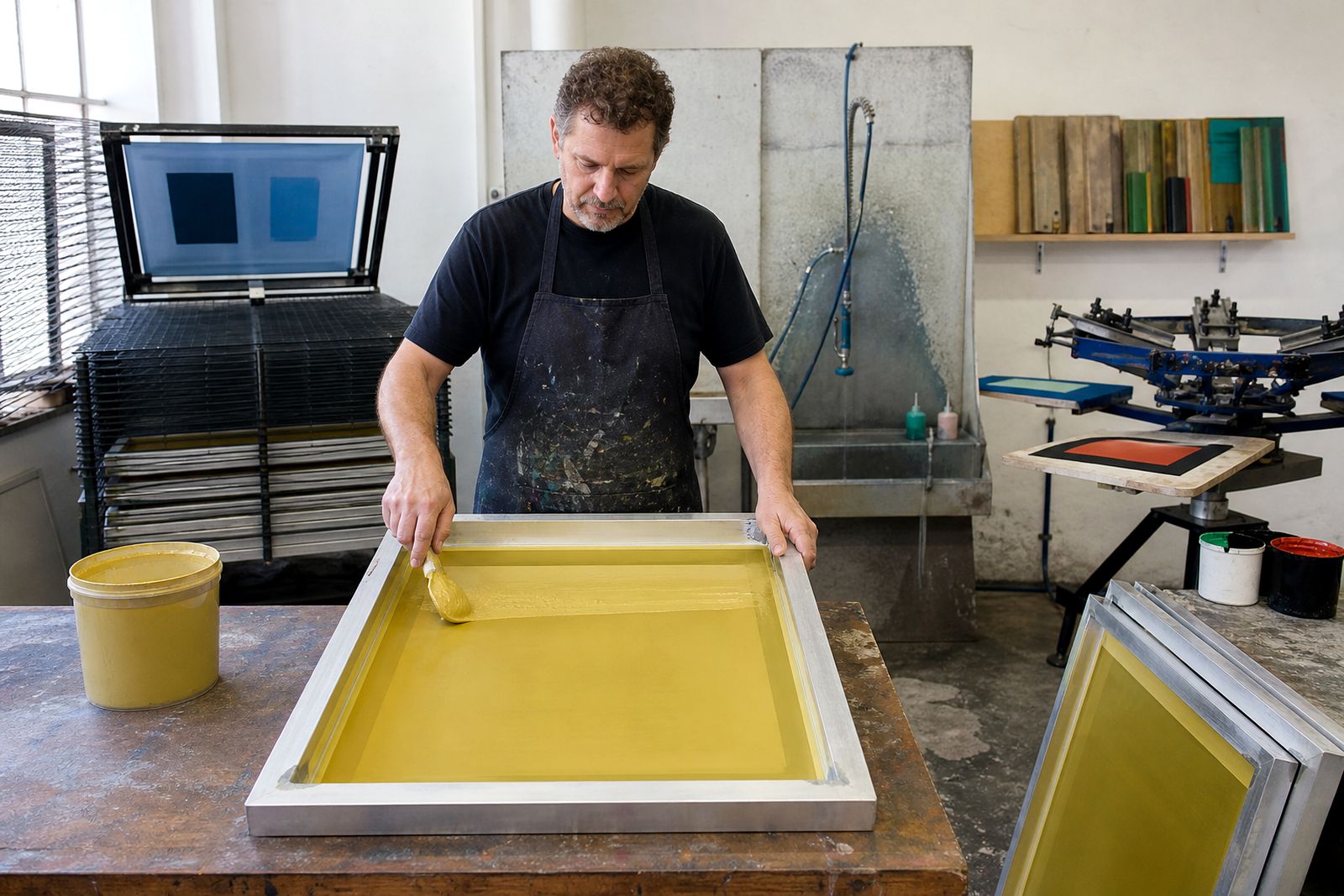
Coat notes for direct emulsion high mesh
Direct emulsion high mesh needs a short, exact handover because fine meshes react quickly to coating thickness. Record the artwork reference, target deposit and whether you are coating print side first or squeegee side first. In winter inland workshops, especially on the Highveld, colder screens can hold moisture longer and change how the emulsion levels out.
Check that the selected mesh suits the ink and image detail on the ticket. Fine halftones, small type and tight line work usually need a higher mesh than bold spot coverage. If the job was moved from a lower mesh screen, note that in the brief so exposure and washout checks are not done on old assumptions.
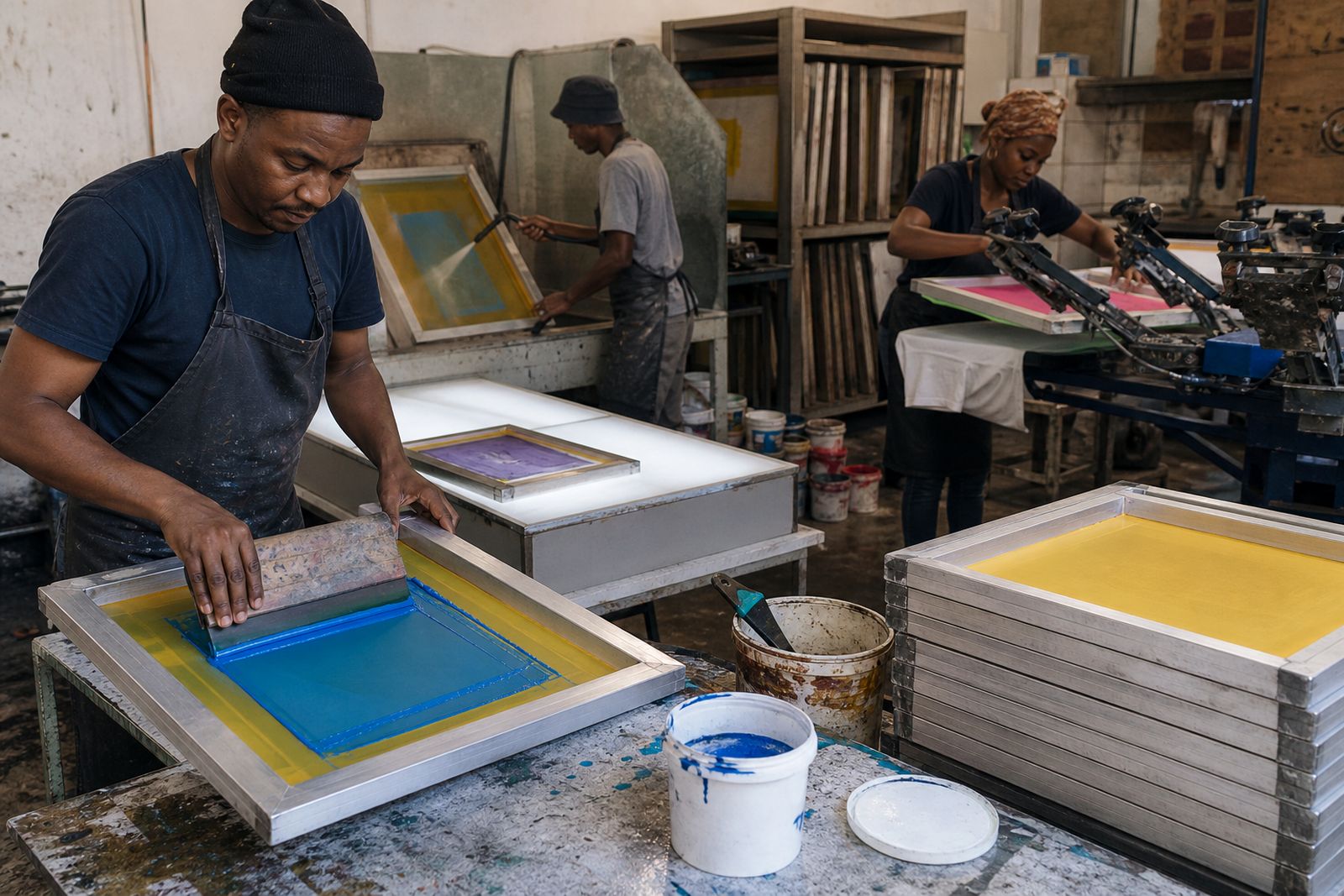
Take a clear photo after coating while the screen is still wet and level, with the frame edge visible for orientation. Save that image with the job card or clip a printout near the drying cabinet. When a later shift sees pinholes, ridges or uneven shoulders, there is a visual record of the first coat condition.
High mesh coating checks
A high mesh stencil behaves differently from a coarse textile screen. The coat must stay even across the image area, with no heavy build-up near the rails or corners. Fine deposit work on paper, decals or detail graphics benefits from a controlled emulsion layer rather than a thick general-purpose coat.
- Mesh count written on job sheet
- Screen warmed to room temperature
- Edges checked for heavy emulsion lines
- Drying rack tagged with ticket number
Keep this brief with the matching screen note and the required mesh note for the screen being coated. If your frame size, print area or coating setup falls outside the usual print room range, use our contact form and include the mesh count, stencil dimensions and intended ink system.
Signs the coat must stop
Pause the run if the emulsion beads instead of laying flat, if the scoop coater leaves repeated lines, or if the mesh shows grease marks after degreasing. Fine mesh screens do not hide coating faults well, and those faults usually appear later during exposure or washout. Screen stencil would rather see the screen cleaned and recoated than have weak stencil edges carried into production.
Print rooms supplying centres such as Clearwater, Cresta, Pavilion, Tyger Valley, Baywest, Mimosa and Riverside often pass screens between shifts or branches. A brief that states the emulsion type, mesh count and coating sequence helps the next operator continue without guessing what was done at the first bench.
What our Screen Stencil customers say
Verified Google reviews
Also worth a look
Tell us what you are printing
Send a note through our contact form with the inks and substrates you print, your mesh counts and frame sizes, your exposure unit and your town, and we will come back with practical advice and a quote.
Open the contact form