

Direct emulsion high mesh
Thin direct emulsion for high mesh and fine halftone work.
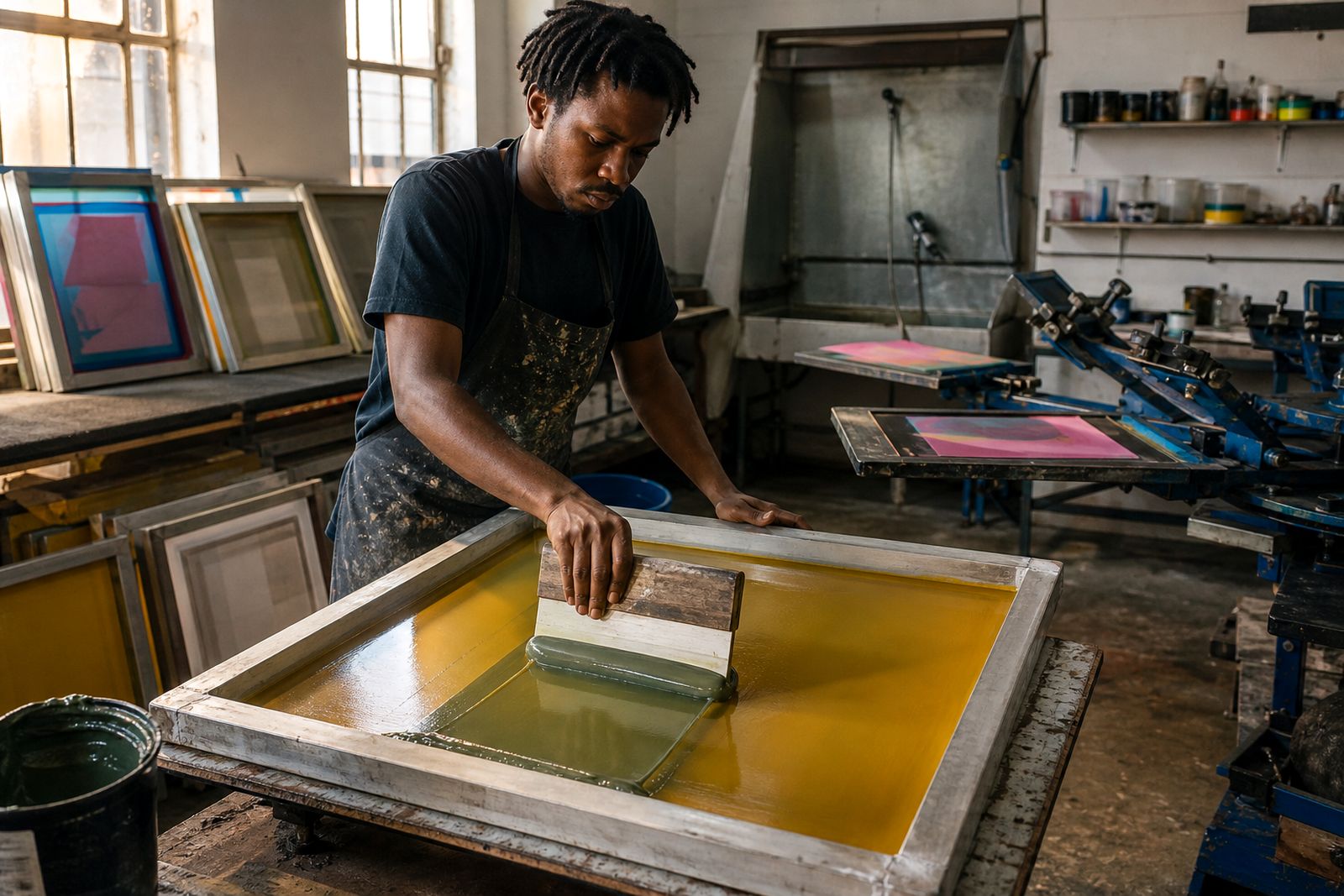
High mesh coating behaviour
Direct emulsion high mesh is formulated for fine detail on high mesh counts where a heavy stencil would choke the opening. It suits halftones, small type, and close register work on manual and semi-automatic screen printing setups. In South African print rooms, it is commonly chosen where sharper edge definition matters more than heavy ink laydown.
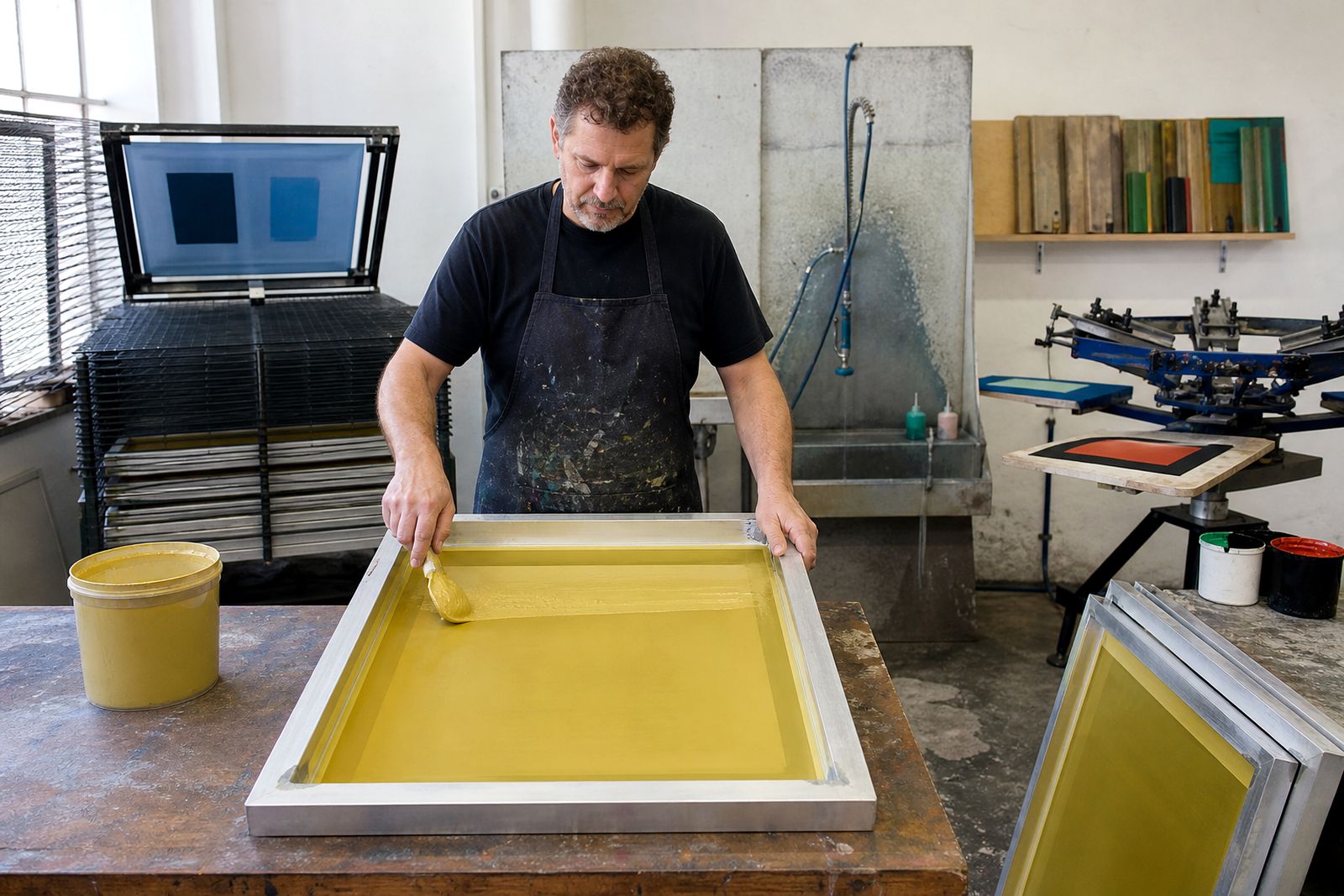
Use this emulsion when the screen specification calls for a thin stencil profile and clean ink release through finer mesh. One controlled coat on the print side and a balanced coat on the squeegee side are typical starting points, but the final method depends on mesh, trough edge, and drying conditions. Check that the mesh is fully degreased and evenly tensioned before coating, especially after reclaim in busy production rooms.
The first coated screen tells you plenty. Look for an even wet film with no ribs, pinholes, or dry bands near the frame edge, then confirm the screen dries level before exposure. In humid coastal air, extend drying time and keep the cabinet air moving so the emulsion does not hold moisture before imaging.
What this emulsion is used for
This product is intended for printers running high mesh for finer graphic work rather than bold deposit printing. It supports detail retention on halftone dots, line art, and tighter image areas where thick stencil build becomes a problem. If your job needs a heavier deposit or coarser mesh setup, see Screens for a more suitable stencil route.
Before ordering, match the emulsion to the mesh count, artwork type, and exposure unit in use. Read the note under Mesh if you are balancing stencil thickness against open area, and use our contact form if you need to confirm compatibility with your reclaim and exposure process. Include screen size, mesh count, and whether the work is solvent, water-based, or UV so the recommendation fits the print room.
- Thin stencil build for high mesh
- Clean edges on halftones and fine text
- Coats evenly after proper degreasing
- Related options for Screens and mesh
South African print room conditions
Drying and exposure shift with climate, especially between inland winter air and coastal humidity. Johannesburg shops may find screens dry quickly but attract dust before exposure, while Cape Town and Durban rooms need stricter moisture control in the drying cabinet. Direct emulsion high mesh performs best when the coated screen is protected from both airborne contamination and damp storage.
Power cuts can interrupt drying, so avoid coating more high mesh screens than you can dry and expose properly in one cycle. In reclaim areas with hard water or inconsistent washout pressure, check that residue is fully removed before recoating because fine mesh shows contamination quickly. Separate fresh coating from ink mixing and haze removal zones to reduce fisheyes, dust nibs, and edge defects on detailed work.
High mesh coating brief points
| Formats | Litre |
|---|---|
| Notes | Thin viscosity |
When briefing this product, include mesh count, frame size, ink system, and the level of detail on the image. Use the contact form and name direct emulsion high mesh if you need guidance on coating method, drying conditions, or exposure starting points for your screens.
What our Screen Stencil customers say
Verified Google reviews
Tell us what you are printing
Send a note through our contact form with the inks and substrates you print, your mesh counts and frame sizes, your exposure unit and your town, and we will come back with practical advice and a quote.
Open the contact form