

Reclaim kit soft burn
Before the kit leaves the print room, match the soft reclaim kit bottle, dilution note, and mesh count sheet to the job pack. Mark anything that must stay with the frame, especially mesh that still carries ghost image risk after washout.
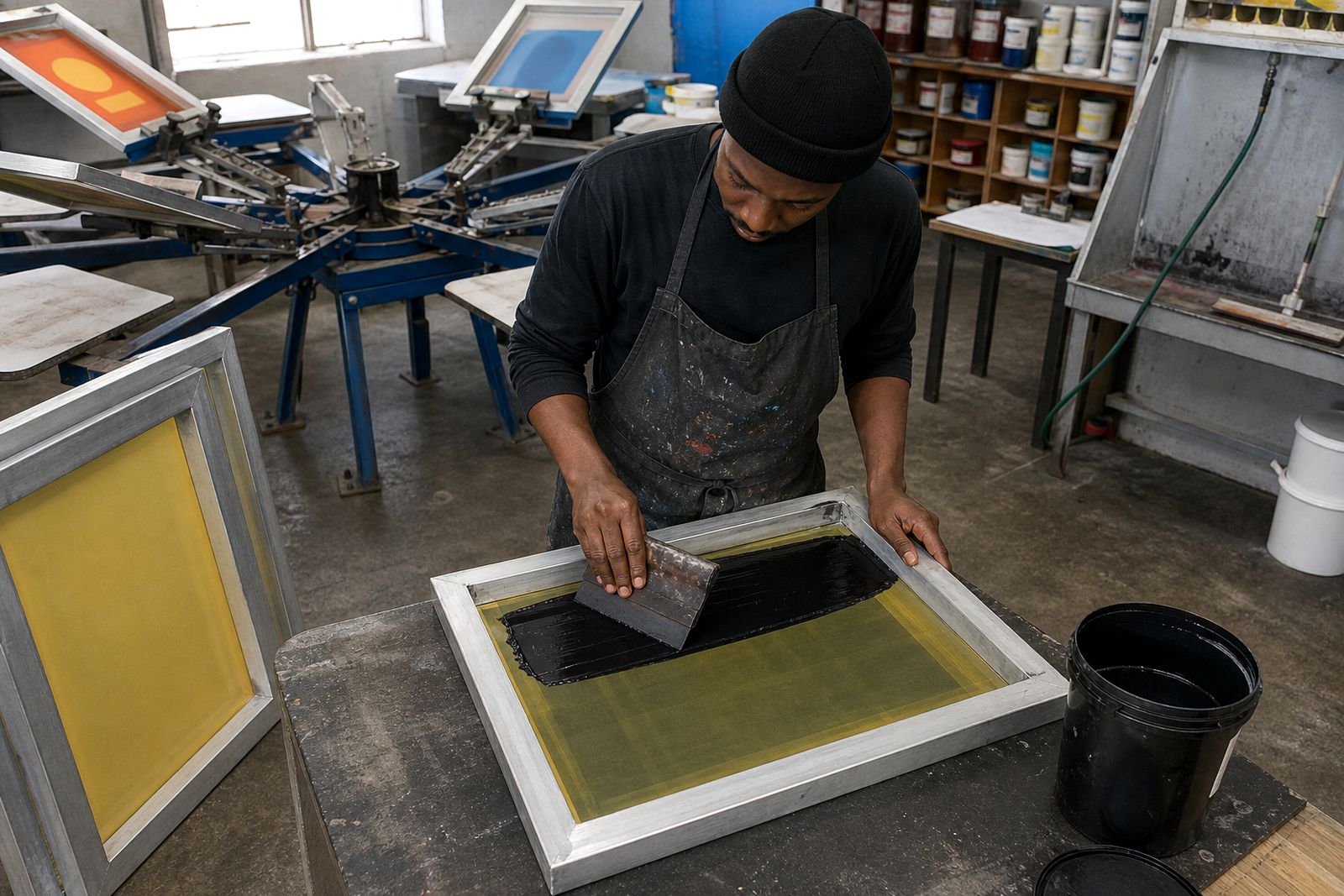
Burn cadence for reclaim kit soft
Delivery for Reclaim Kit Soft should include the used-line note, not only the product. Add the mesh numbers, exposure result, and whether ink was plastisol or water based so the next operator knows what the screen has been through. In busy South African print rooms, that small record helps prevent over-scrubbing and premature mesh damage.
Inland shops often hand over screens with dry dust sitting on the clamp side, while coastal rooms must watch for extra moisture before wrapping. Put a wipe card with the delivery stack and check that the frame edges are dry enough for storage. A soft reclaim product works best when residue is removed before it bakes on during the next shift.
Handover checks for reclaimed mesh
Move a screen out of circulation when haze remains visible after the soft reclaim cycle and rinse. Replace the label card when ink names or job codes no longer match the frame rack. Keep a spare note set from the Kits range near dispatch so mesh condition, squeegee side, and reclaim status travel with the screen.
Use our contact form when a delivered frame looks recoverable but not production ready. Include the mesh count and the chemistry used on press so the next step can be assessed against the actual reclaim condition.
What it suits
Reclaim Kit Soft suits screen print rooms that need a careful clean-down between jobs, especially where screens move from garment work into poster or sign work, or where jobs change between plastisol, waterbased and discharge inks.
It is a practical fit for dual-cure, diazo and SBQ emulsions on mesh that still needs to be protected during reclaim. Keep the operator note with the screen so the next person knows whether the frame came off press from a high-ink run, a light coat, or a long hold in the rack. That helps with the next washout and with judging whether haze removal will need extra attention.
- Use on screens that must be reclaimed without rough handling
- Suitable for routine turnaround in busy South African print rooms
- Useful where mesh condition must be tracked before the next coating
Coating and exposure care
For stencil work, keep coating and exposure records simple and consistent. Note the mesh count, the tension where known, and whether the screen was coated with a scoop coater in one smooth pass or built up in layers. Uneven coating can show up later as pinholes, poor washout or weak stencil edges.
When the stencil has been exposed, record the result clearly before reclaim begins. That includes whether the image held, whether touch-up was needed, and whether the lamp age or power cuts affected exposure timing. In rooms where power cuts interrupt the day, it helps to keep exposure notes beside the screen so the next operator can judge what needs adjusting.
- Check exposure before reclaim so failures are not mistaken for washout issues
- Keep frames dry at the edges before coating or storage
- Watch for haze after reclaim and do not rush the next coat
Storage and handoff
After reclaim, store screens where they can dry fully before the next coat or press run. Coastal humidity can leave moisture in the frame and on the mesh, while dry Highveld air can leave dust on the clamp side. A simple label note on the frame rack helps the next operator see what the screen has been through.
For safe handoff, keep the used-line note with the screen and include mesh count, exposure result and ink type. That makes it easier to spot whether the frame needs more reclaim, a fresh coat, or a rest before the next run. If a screen still shows haze, send a note through the contact form so the next step can be assessed against the actual condition.
- Store flat or upright where the mesh can stay clean and dry
- Keep a spare note set near dispatch for quick screen handoff
- Replace old labels when job codes or ink details no longer match
What our Screen Stencil customers say
Verified Google reviews
Also worth a look
Tell us what you are printing
Send a note through our contact form with the inks and substrates you print, your mesh counts and frame sizes, your exposure unit and your town, and we will come back with practical advice and a quote.
Open the contact form