

Screen degreaser mesh coat
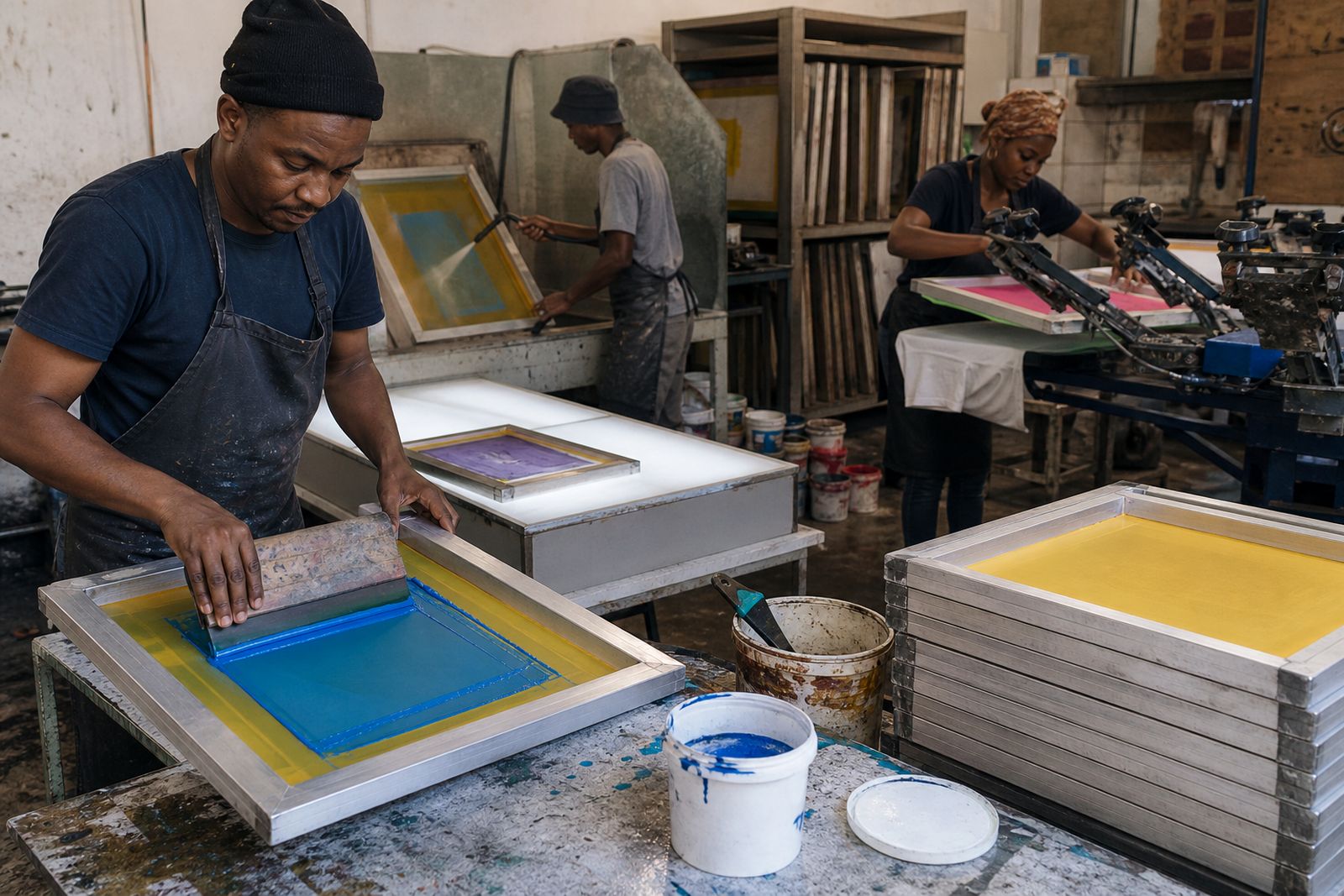
Before coating starts, note the mesh count, frame size, and the degreaser mix used on this screen. Include whether the mesh is new, reclaimed, or has stood in a Cape Town print room long enough to pick up dust and hand oils. Add the first wet-face check so the coater can see how the water breaks across the mesh.
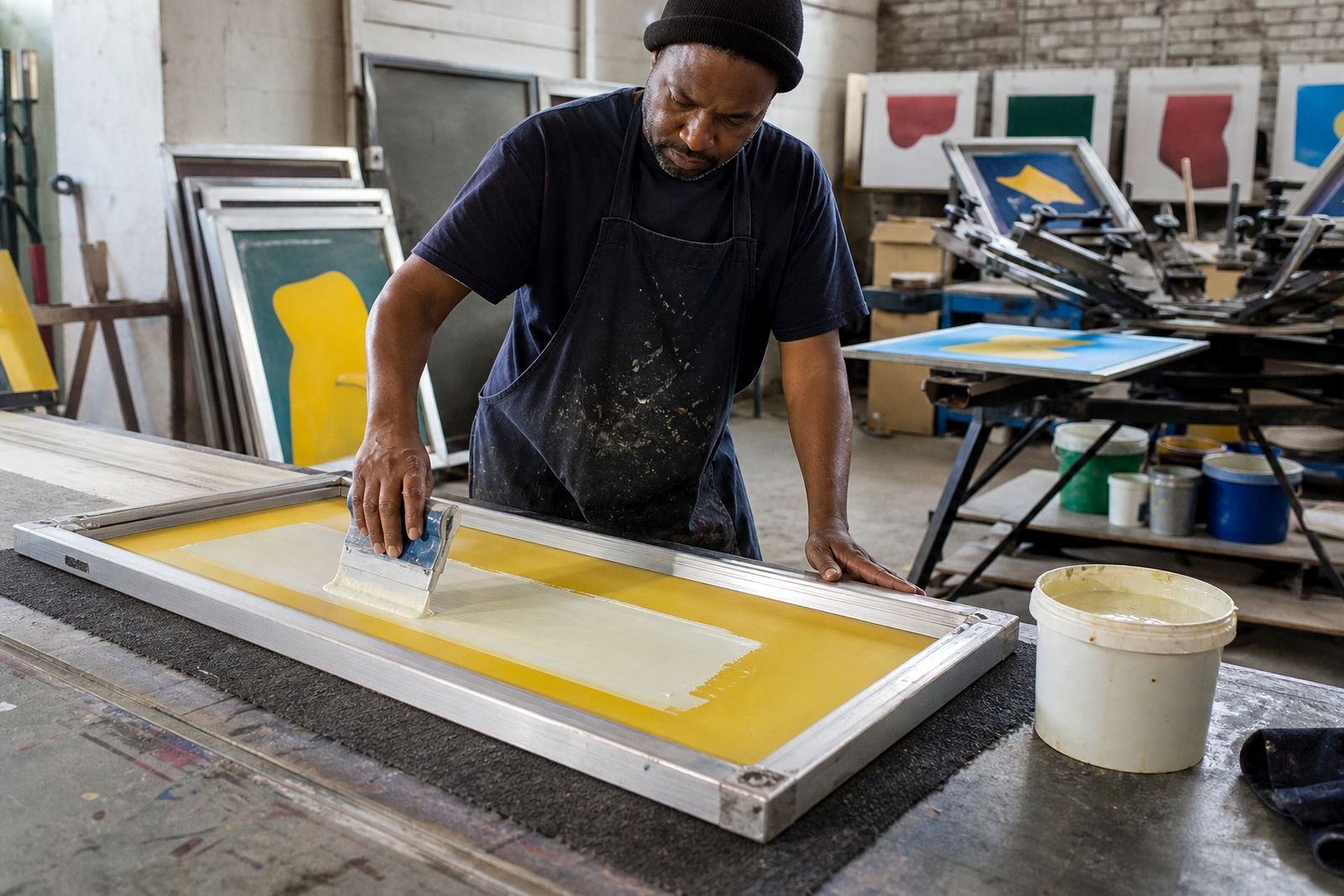
Coating notes for screen degreaser mesh
A mesh degreaser brief should note the mesh type before any chemical touches the screen. Write down whether the frame carries white or dyed mesh, the count in threads per centimetre, and whether the screen came back from reclaim with visible haze. In Cape Town winter, cold water slows wetting, so crews often note water temperature and dwell time as part of the brief.
The brief must match the mesh that is actually being cleaned for production. Fine counts used for halftones need a lighter scrub than coarse textile mesh, otherwise the fibres can trap residue along the knuckles. If the screen is headed for plastisol, water based, or discharge ink, record that too because each setup shows contamination differently on press.
Take a photo of the mesh after rinse and before coating if any fisheyes, pinholes, or greasy patches remain. That image helps the next operator see whether the problem came from washout, reclaim, or handling at the drying rack. A short note on frame number and bay location is usually more useful than a long email.
Mesh prep before coating
Degreasing is checked against the stencil system, not by guesswork. Dual cure emulsions often show contamination quickly, while capillary film work depends on a very even water break across the mesh. Large textile frames also need attention on the inside corners where ink splash and tape adhesive tend to build up.
- Frame number logged before wash
- Water break checked across mesh
- Corners scrubbed for tape residue
- Mesh count marked on brief
Keep this brief with the matching screen route and the latest mesh note for that frame set. If your workshop is running an unusual count, oversized frame, or mixed ink system, send the details through our contact form so the notes can match the press conditions.
Signs the wash must restart
Start again if water beads on the mesh, if degreaser dries before rinsing, or if fingerprints reappear while the screen is drying. Those signs usually point to silicone contamination, reclaim residue, or oil from handling the frame sides. It is cheaper to rewash one screen than expose emulsion onto a dirty mesh and lose the stencil later in the print run.
Print rooms in Johannesburg, Durban, and Cape Town often note different drying conditions on the same brief because humidity and water temperature change how the mesh behaves after degreasing. A handoff note should therefore include the site, the chemical used, and whether the screen dried in a cabinet or on an open rack.
What our Screen Stencil customers say
Verified Google reviews
Also worth a look
Tell us what you are printing
Send a note through our contact form with the inks and substrates you print, your mesh counts and frame sizes, your exposure unit and your town, and we will come back with practical advice and a quote.
Open the contact form