

Mesh degreaser
Mesh degreaser that leaves tooth for emulsion without greasy film.
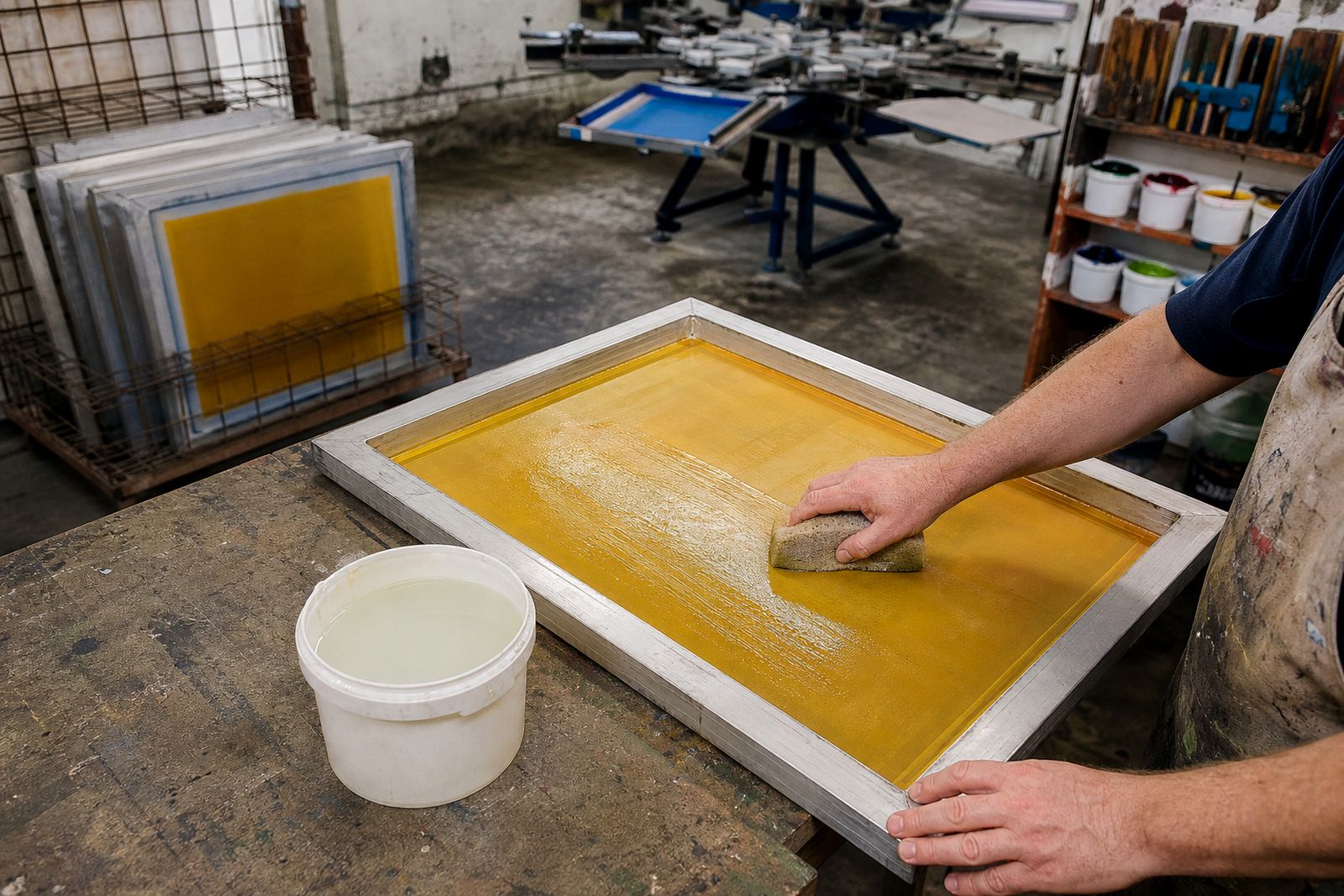
Clean mesh before coating
Mesh degreaser is used on polyester screen mesh to remove grease, finger marks, tape residue and workshop dust before emulsion goes on. A proper degrease leaves the surface water-break free so coating lays evenly across the open area and over the frame edge. In South African print rooms, that matters after reclaim, after long storage, and after screens have picked up powder from the bench or rack.
Wet both sides of the mesh first, then work the degreaser in with a soft brush or dedicated pad. Rinse from the print side until the water runs clear, with no slippery feel left on the mesh. For new mesh, re-stretched screens, or screens handled heavily during taping, a second pass is often worth doing before coating.
Check the water sheet before emulsion. When rinse water spreads evenly across the mesh instead of beading, the screen is ready for the drying cabinet or dust-free rack. Beads, patches, or fisheyes usually mean grease is still present.
Where degreaser helps most
This prep chemical suits manual and automatic screen rooms running textile, paper, board and general flat-stock work. It is especially useful after reclaim chemicals, pressure wash cleaning, and long periods on the rack when mesh collects airborne contamination. Pair it with the right mesh count and exposure routine, then move through to Screens once the surface is properly prepared.
Order the quantity that matches your washout area and weekly screen volume. Smaller rooms often keep 5 L on hand, while busier reclaim lines may move through 25 L faster, especially where Mesh is cleaned after every job change. If you use our contact form, include mesh counts, ink type, and whether the room is inland or coastal, as rinse behaviour can differ.
- Removes grease before emulsion coating
- Useful on new or reclaimed mesh
- Rinses clear without oily residue
- Related: screens, mesh and prep chemicals
Print room conditions in SA
Dry Highveld air, dusty benches and heavy handling can contaminate cleaned mesh before coating starts. Along the coast, moisture in the room can slow drying after rinse-down, so screens need a clean rack and good airflow before emulsion is applied. These conditions change prep discipline far more than most operators expect.
Water quality also affects screen prep. Hard water can leave deposits if rinsing is rushed, while dirty washout bays can put contamination straight back onto the mesh. During power cuts, many rooms batch their wash and coat sequence, so keeping degreased screens covered from dust becomes important. Separate degreasing from stencil removal chemicals and do not let reclaim residues sit in the mesh before the final rinse.
Pack sizes and use checks
| Formats | 5 L · 25 L |
|---|---|
| Notes | Rinse clear |
Available formats are 5 L and 25 L for regular screen room prep. Use the contact form if you need the degreaser matched to your mesh cleaning routine, reclaim steps, or coating method.
What our Screen Stencil customers say
Verified Google reviews
Tell us what you are printing
Send a note through our contact form with the inks and substrates you print, your mesh counts and frame sizes, your exposure unit and your town, and we will come back with practical advice and a quote.
Open the contact form