

Stencil art transfer coat
Before coating or exposing, note the transfer finish, final size, and which side will take the first ink contact. Include the fabric or stock, expected print count, and any fine detail that could close up on a higher mesh. A short, accurate brief at this stage prevents rework when the stencil moves from art prep to the print room.
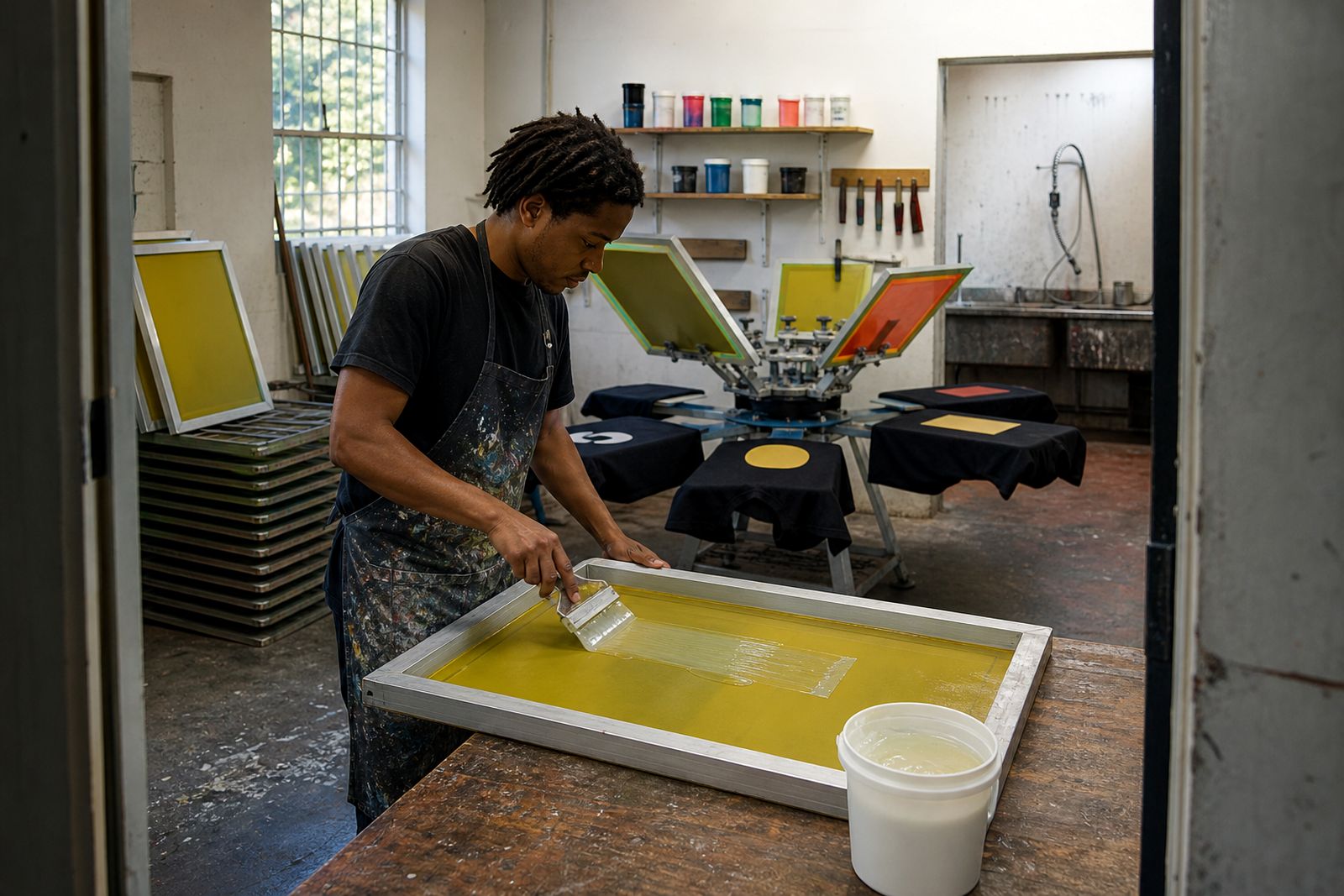
Coat notes for stencil art transfer
A Stencil art transfer brief should travel with the artwork before mesh is coated or film is output. Start with the job reference, print dimensions, and garment or stock colour, then record any fine detail that may close up on smaller text or halftones. In Cape Town and Gauteng print rooms, that detail matters when humidity, dust, or a rushed remake can affect exposure quality.
Write the mesh count and stencil type against the design you are actually printing. A transfer with thin lettering on the wrong mesh can lose edges, while heavy block shapes may hold too much ink if the coating is too open. Mark trap areas, knockout details, and any reversed text before the artwork goes to film.
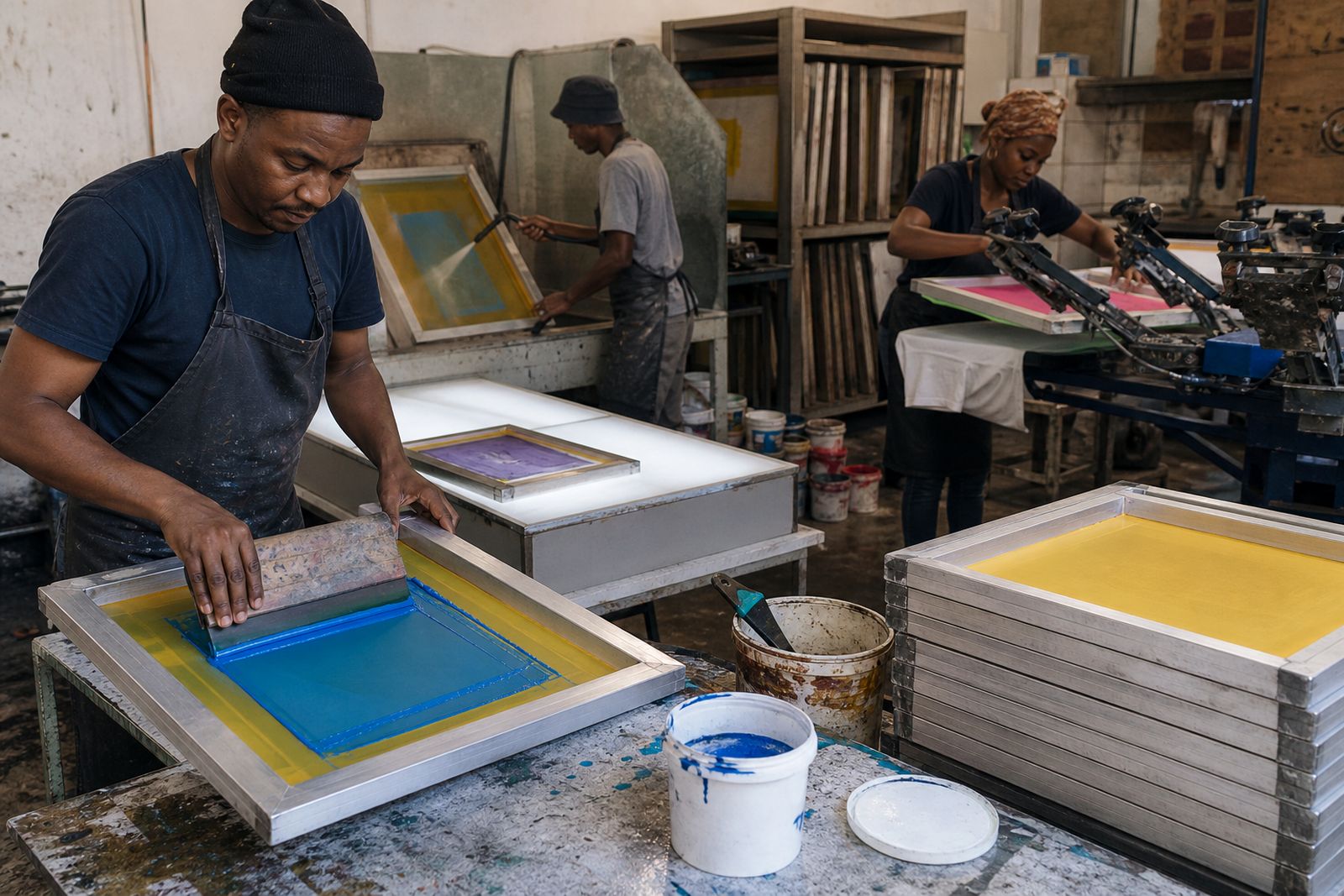
Take a photo of the first coated screen and keep the image with the job record. Add one shot of the exposed stencil after washout so pinholes, undercut edges, or weak detail can be checked against the brief. That record helps the next operator see what changed without paging through a long email chain.
Coating notes for transfer screens
Coating depends on the print result, not on habit in the room. Fine art transfers often need a more controlled stencil edge than bold event graphics, while coarse stock may call for a different deposit. Multi-colour work benefits from a check on registration marks before any screen is passed to press.
- Artwork checked before coating begins
- Mesh count matched to ink deposit
- Small text cleared for exposure
- Job card marked with branch city
Keep this brief with the matching screen route and a mesh note so the exposure team and press team read the same information. If the art size, substrate, or print condition falls outside your normal spec, send the details through our contact form.
Signs the brief needs updating
Change the brief when the stencil breaks down in washout, when the line weight will not hold on the chosen mesh, or when the transfer art arrives altered from the approved file. It is better to revise coating, mesh, or exposure notes early than to remake a full set of screens after press setup. Screen stencil jobs moving across different stocks in one print room often need that adjustment written clearly on the ticket.
Print rooms serving Clearwater, Cresta, Pavilion, Tyger Valley, Baywest, Mimosa and Riverside should note which brief version went out with the screen set. A clear handover note helps the next branch keep track of mesh choice, coating side and artwork revision without repeating prepress checks.
What our Screen Stencil customers say
Verified Google reviews
Also worth a look
Tell us what you are printing
Send a note through our contact form with the inks and substrates you print, your mesh counts and frame sizes, your exposure unit and your town, and we will come back with practical advice and a quote.
Open the contact form