

Stencil art transfer
Transfer films and art packs for stencil craft and gallery editions.
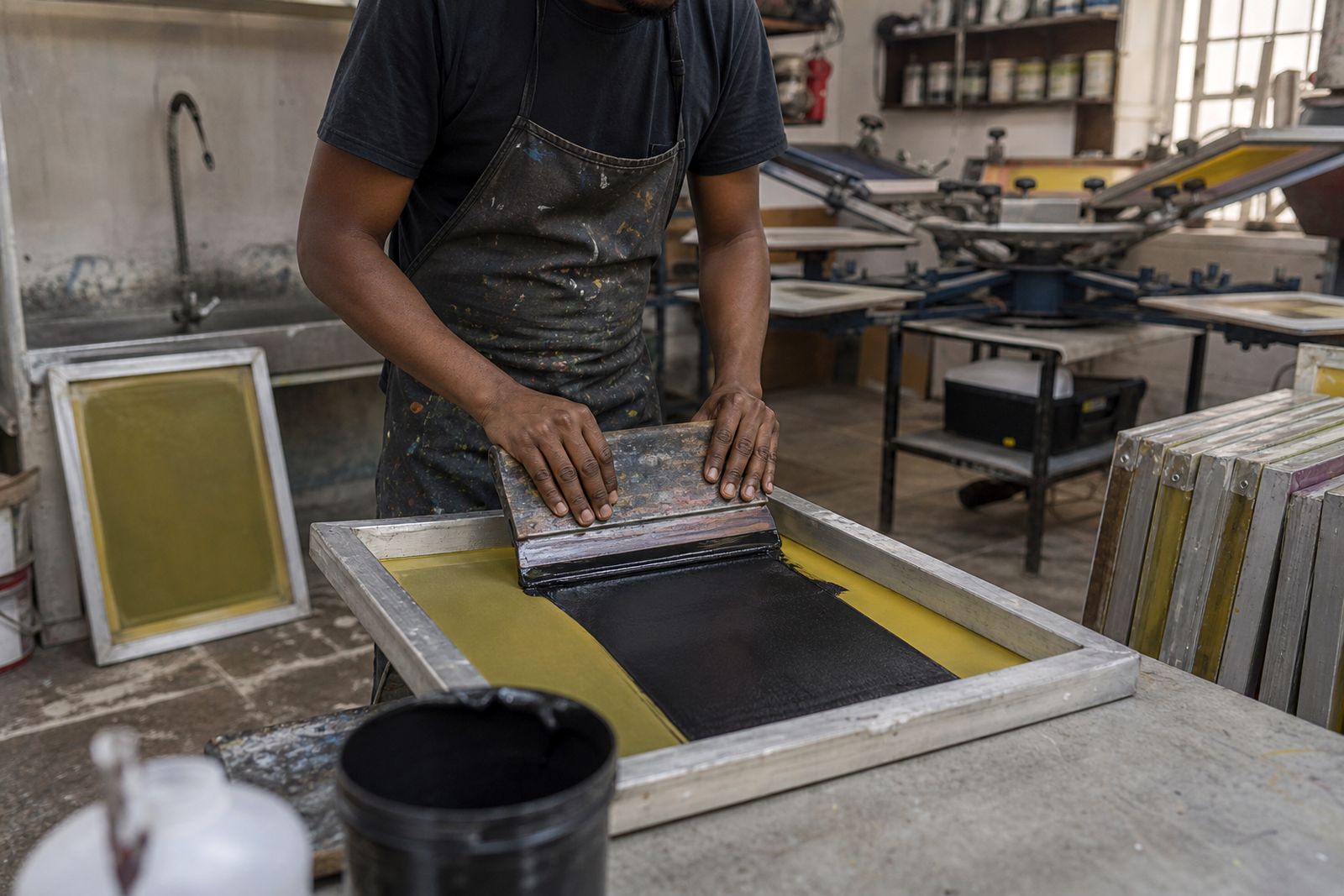
From sketch to transfer film
Stencil art transfer is for taking drawn artwork, scanned marks, and supplied logos into transfer-ready film for screen stencil work. Fine pencil grain, brush edges, and blocked black areas need different handling before output.
The job starts with the print method and the stencil material being used. A transfer for hand-cut stencil craft is not set up like film for coated mesh in a production room. We check line weight, filled areas, and edge clarity so the art suits exposure, washout, and the mesh count planned for the image.
Keep a first pull record once the stencil is on press. Photograph the sheet beside the exposed screen so pinholes, blocked detail, or weak edges can be traced back to the film stage. That single check matters when humidity shifts in Durban or dusty workshop air affects handling in Gauteng.
Included in the transfer pack
Artwork for transfer film needs clean black areas, checked sizing, and notes for stencil output. Where tiny detail will not hold on the chosen mesh, the file should be adjusted before coating starts. If the job is moving straight into exposure planning, see Screens for the screen side of the process.
Read the note under Mesh if halftones, fine type, or open counters are involved, because those details affect stencil hold on press.
- Solid black areas checked for film density
- Transfer sized to actual print image
- Broken lines repaired and islands secured
- Related: screens and mesh for exposure
Transfer work for South African shops
Stencil art transfer must account for the way artwork reaches print rooms here. Johannesburg jobs often arrive as dusty scans or compressed files, while coastal work can come from curled paper with softened contrast. Film output needs enough density and edge definition to hold up when the screen is coated, exposed, and rinsed under everyday workshop conditions.
Heat, damp, and power cuts all affect how artwork is prepared and stored before exposure. In Cape Town winters, paper originals can buckle; in KZN humidity, film handling needs extra care to avoid marks and curl. Save final files clearly, separate hand-drawn texture from solid fills, and note if the stencil is for craft editions, textile sampling, or a longer press run.
Details to send with artwork
| Formats | Sheet packs |
|---|---|
| Notes | Gallery grade |
For this route, the useful brief includes finished image size, number of colours, substrate, and whether the art must remain hand-drawn in character. Send those details through the contact form, with a sample of the art where you have one. That gives the transfer work a clear starting point for film and stencil preparation.
What our Screen Stencil customers say
Verified Google reviews
Tell us what you are printing
Send a note through our contact form with the inks and substrates you print, your mesh counts and frame sizes, your exposure unit and your town, and we will come back with practical advice and a quote.
Open the contact form