

Water resist emulsion coat
For this coating note, record the intended print use, mesh count and the first side to be coated while the screen is still clean and dry. Include whether the stencil will face water-based ink, discharge, or plain washout, as coating thickness and drying time differ in a South African print room.
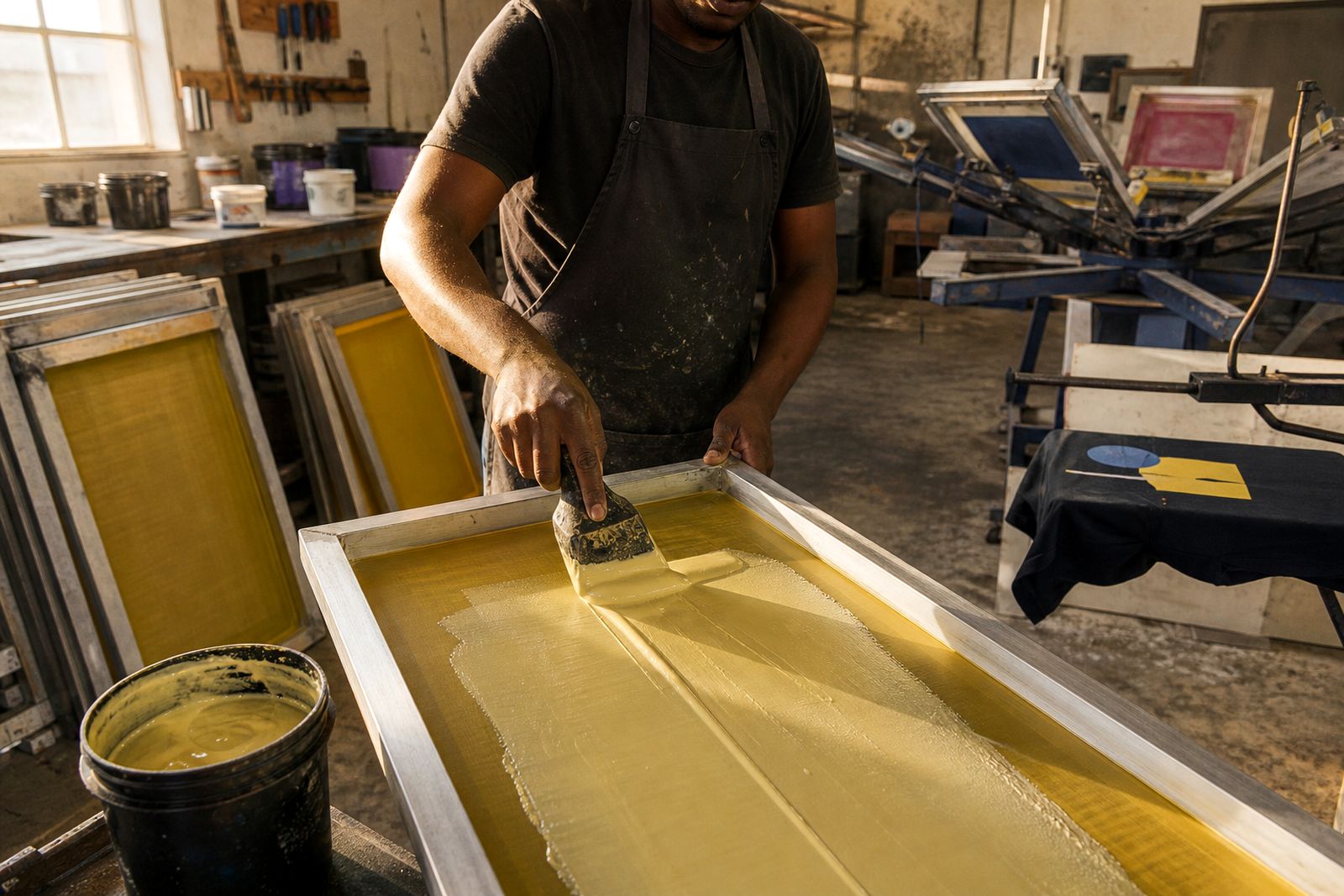
Coat notes for water resist emulsion
Record the key details before coating a screen with water resist emulsion. Start with the mesh count and frame size, then note the scoop coater width and whether you are coating print side first or squeegee side first. In Cape Town winter and on drier Highveld days, room temperature and drying time can shift enough to affect the stencil build.
Choose the coating approach to match the job on press, not the label on the shelf. Fine halftones and small text usually need a more controlled deposit than bold spot work on thicker substrates. Check that the mesh is fully degreased and tension is stable before emulsion goes on, otherwise pinholes and uneven exposure become far more likely.
After the first coat, inspect the wet surface under clean light with the full image area in view. Look for lines from the scoop edge, dry bands near the frame, or heavier pooling at the bottom of the screen. Keep that record with the job card so the next coating run uses the same stencil thickness and drying setup.
Water resist coating checks
For this coating note, the key details must cover intended ink system, mesh count, and drying conditions in the room. Water based printing often needs a stencil that stands up to longer runs and repeated flood and print cycles. If the job is headed for textile tables, flat stock, or general print room sampling, record that use before exposure settings are chosen.
- Mesh count written on job card
- Coat edge checked for lines
- Drying cabinet airflow kept clean
- Frame tagged with emulsion type
Keep this brief with the matching screen route and mesh note so coating, exposure, and reclaim stay aligned across the job. If your frame depth, mesh count, or print room setup falls outside the usual range, send the details through our contact form.
When coating must be redone
Strip and recoat if the emulsion fisheyes on the mesh, if one side dries with visible ridges, or if dust lands in the stencil area before exposure. A poor coat usually shows up later as weak washout detail, broken edges, or premature stencil failure on press. Screen stencil would rather see the coating corrected early than have a South African print room lose time on a preventable remake.
Print rooms supplying work into Johannesburg, Pretoria, Durban, Cape Town, and Gqeberha often note seasonal changes because water resist emulsion can dry differently between coastal humidity and inland winter air. A short handover note with mesh, coats, and drying time helps the next operator repeat the stencil build without guessing.
What our Screen Stencil customers say
Verified Google reviews
Also worth a look

Tell us what you are printing
Send a note through our contact form with the inks and substrates you print, your mesh counts and frame sizes, your exposure unit and your town, and we will come back with practical advice and a quote.
Open the contact form