

Water resist emulsion
Water-resist emulsion for waterbase and discharge ink systems.
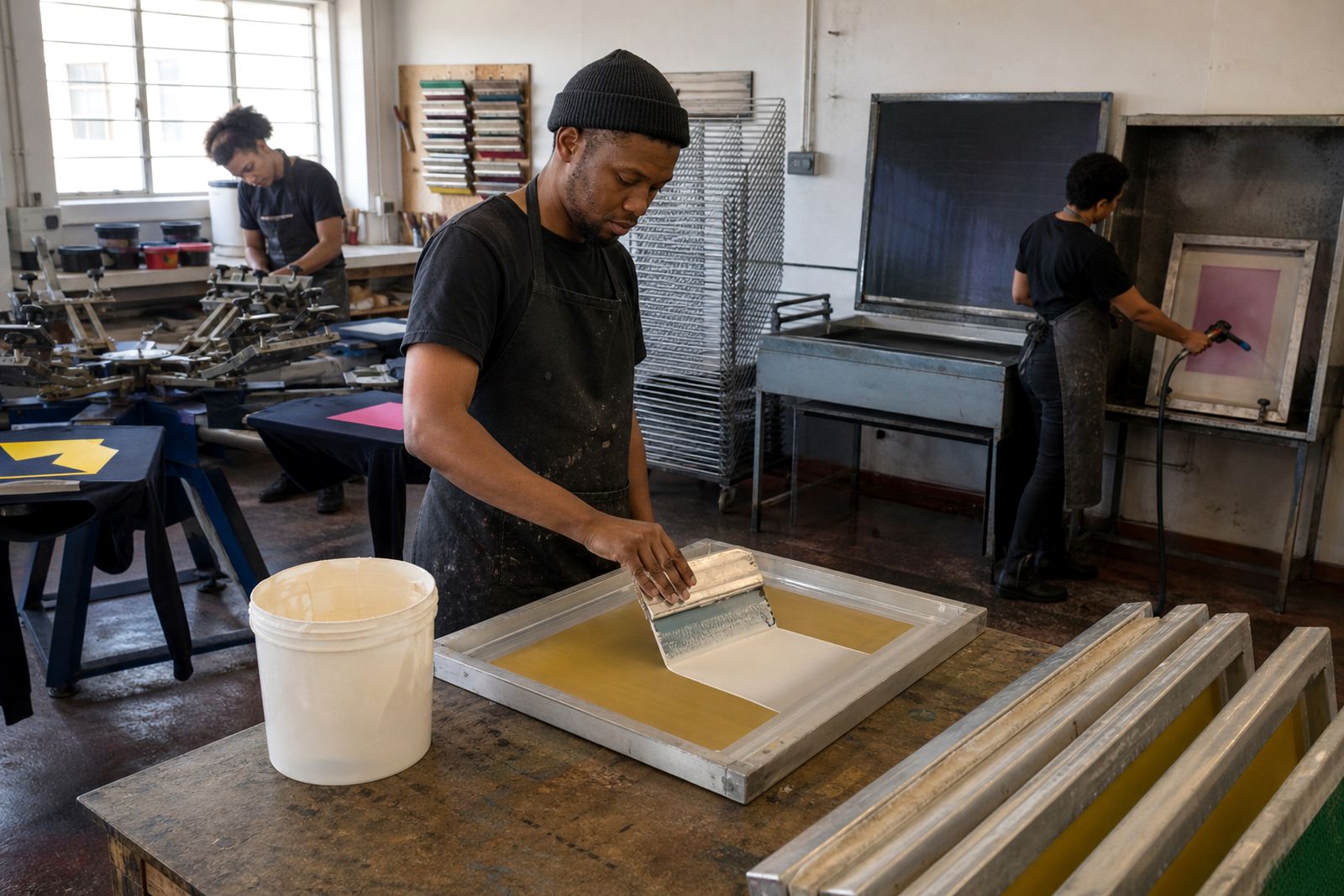
Waterbase and discharge stencil use
Water resist emulsion is built for print rooms running waterbase and discharge inks where the stencil must stand up to a wet print cycle. It suits textile work that needs good edge hold on fabric graphics, repeats, and fine type. In South African shops, that matters when long runs meet humid coast air or a hot inland afternoon.
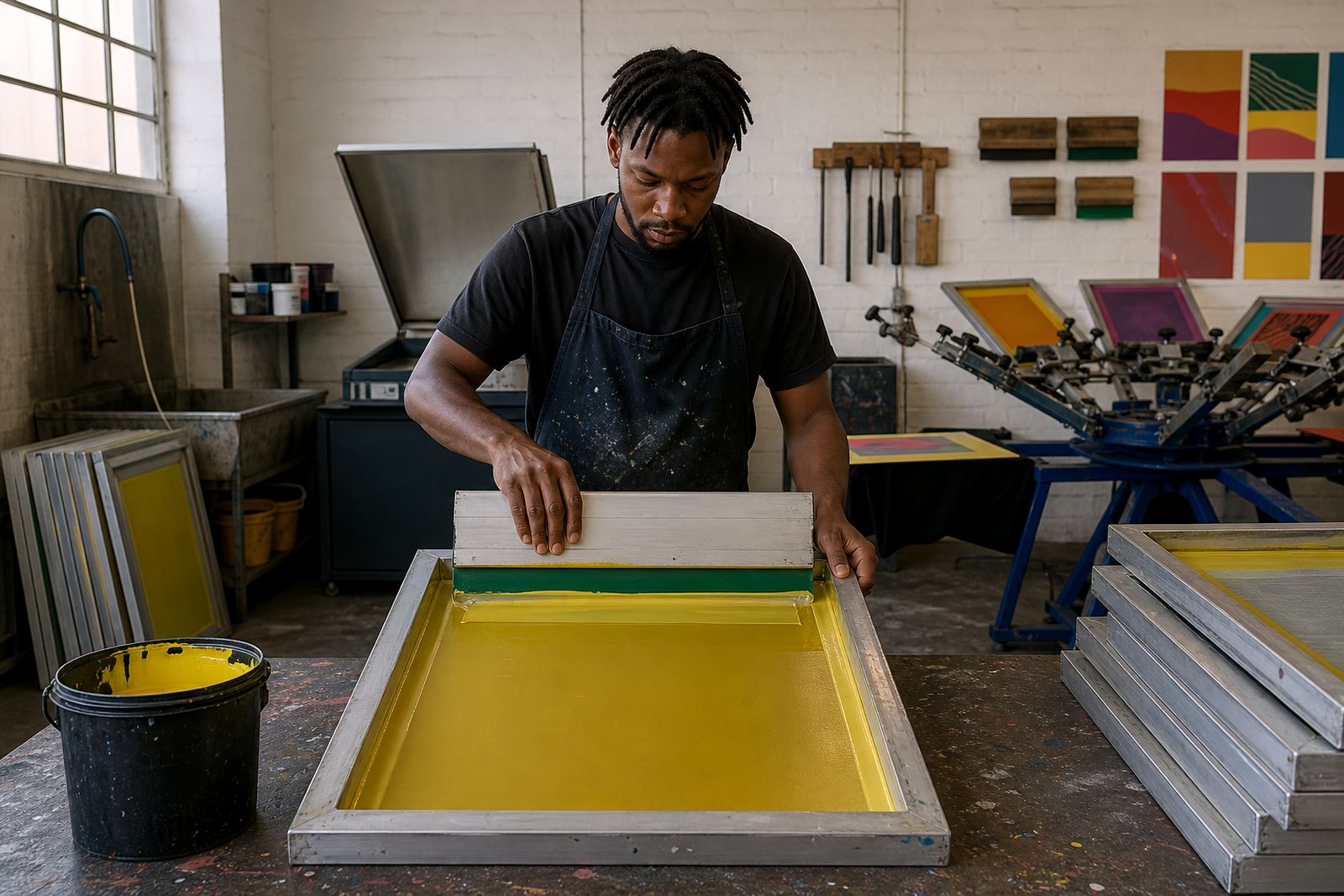
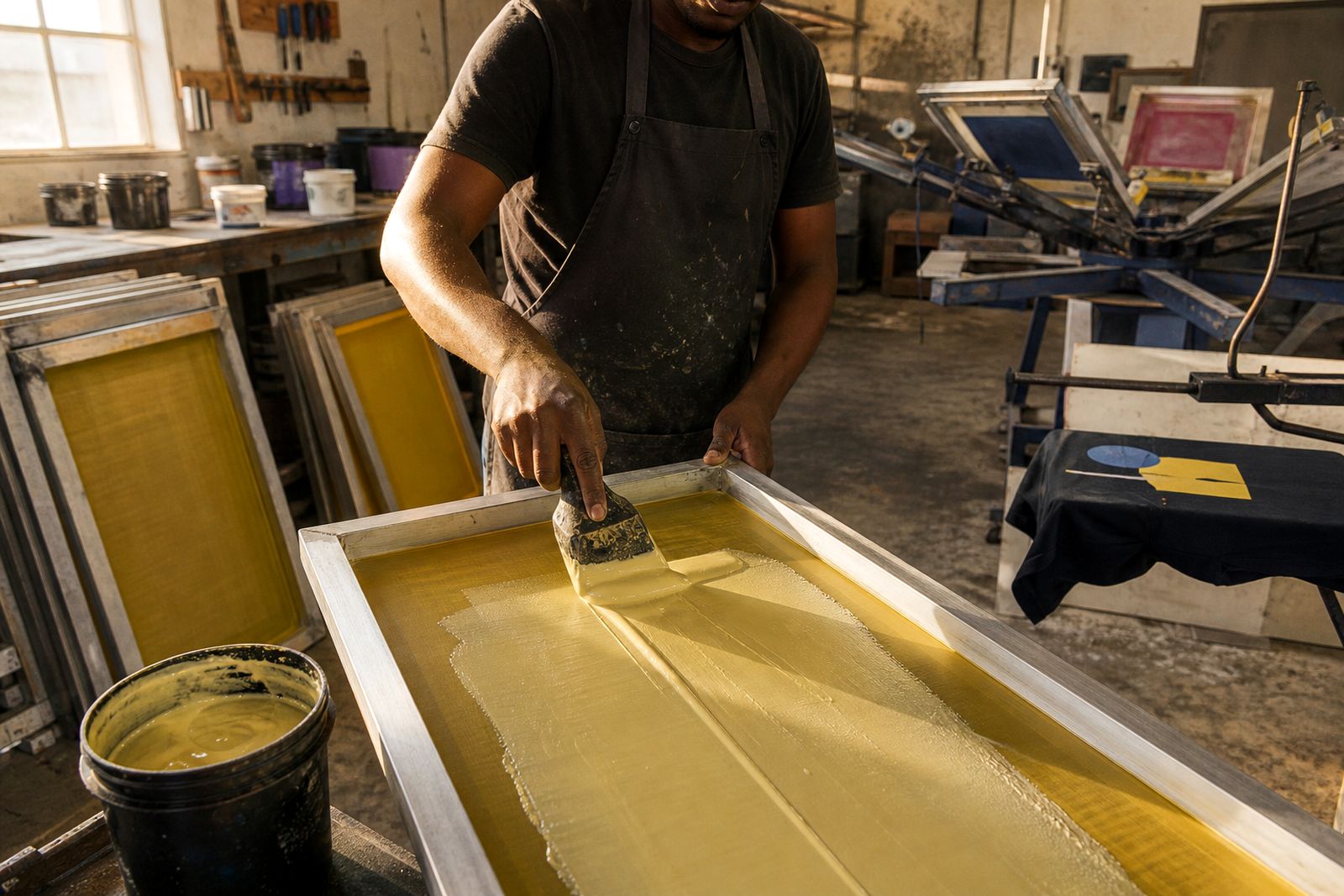
Start with a clean, fully degreased mesh and apply an even coating on both sides. Dry the screen dust-free before exposure, then check that the image washes out cleanly without soft edges. If the job will carry more moisture or a tougher ink load, the optional hardener can be added to improve water resistance.
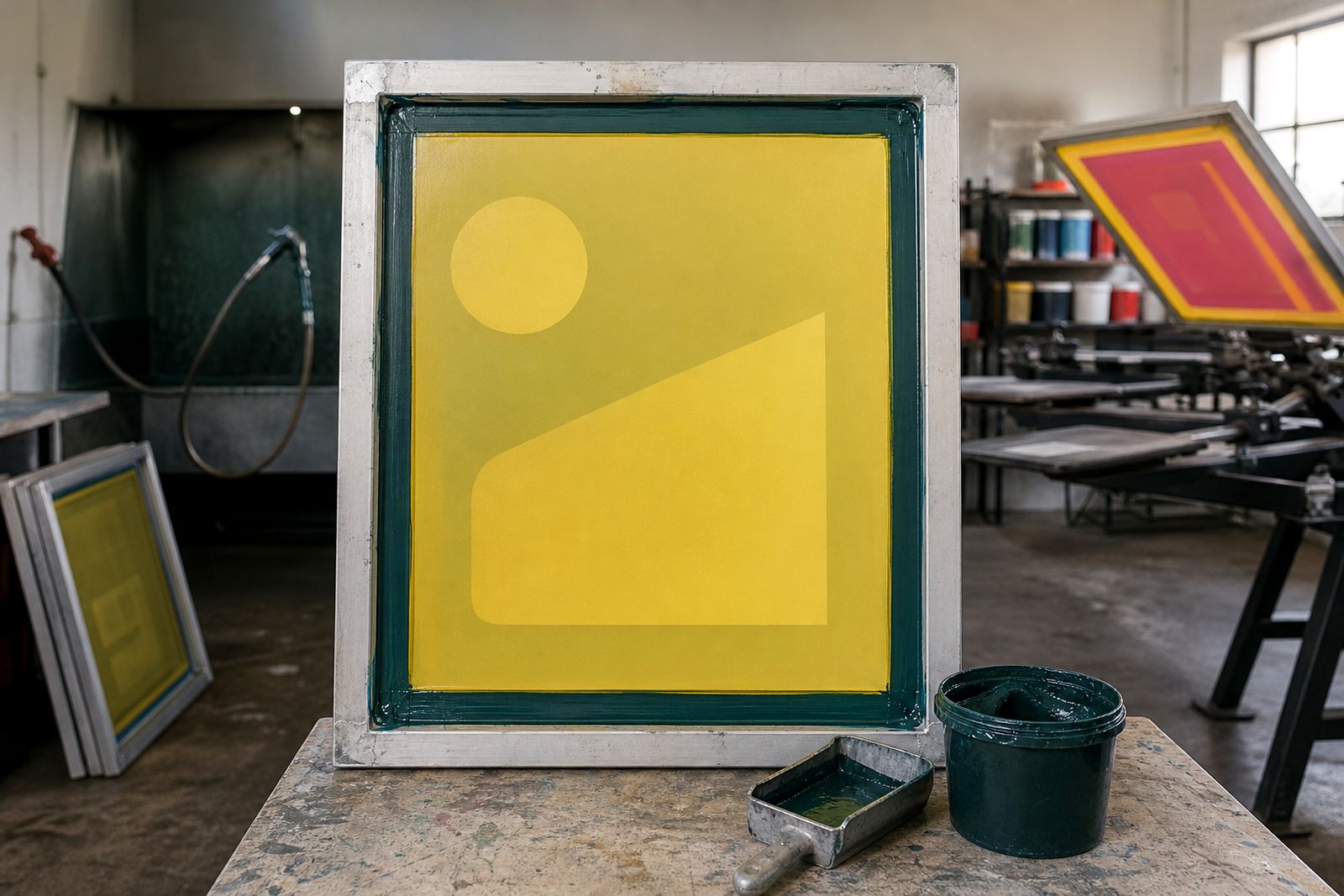
Check the first reclaimed screen for ghosting and pinholes before coating again. A quick inspection under good light saves wasted exposure time and helps prevent breakdown during the run. This is especially useful on discharge work where stencil weakness shows up fast.
Stencil handover for waterbase
Use this emulsion where the screen must resist repeated contact with water-rich ink systems. It is a strong fit for textile printers needing dependable stencil build on production meshes used in waterbase work. If your job also depends on the correct frame and fabric setup, see Screens for the rest of the screen package.
Before ordering, match the emulsion to the mesh count, artwork detail, and press conditions. Read the note under Mesh if you need to line up stencil choice with the fabric on hand. For supply questions through our contact form, include the ink type, frame size, and whether the screen will be hardened after exposure.
- For waterbase and discharge ink systems
- Optional hardener for extra stencil resistance
- Use on clean, degreased mesh only
- Related: screens and mesh for textile printing
Highveld and coastal exposure points
Cape humidity affects drying, while Highveld heat can shorten working comfort during coating and exposure prep. Water resist emulsion should be dried and stored away from dust, as airborne lint and powder can mark the stencil face. These routine checks matter in busy garment print rooms from Cape Town to Johannesburg.
Coastal shops often need extra care with drying cabinets and storage because moisture in the air can slow the emulsion before exposure. Inland rooms may fight dust, which makes degreasing and drying discipline more important. During power cuts, keep coated screens protected from stray light and return them to controlled drying as soon as power is back. Separate reclaim, coating, exposure, and washout steps properly when several jobs are moving through the room on the same shift.
Brief details for the right pack
| Formats | Litre |
|---|---|
| Notes | Hardener optional |
When you use the contact form, send the litre requirement, mesh type, ink system, and whether you need hardener with the order. That makes it easier to match water resist emulsion to the screens being prepared in your print room.
What our Screen Stencil customers say
Verified Google reviews
Tell us what you are printing
Send a note through our contact form with the inks and substrates you print, your mesh counts and frame sizes, your exposure unit and your town, and we will come back with practical advice and a quote.
Open the contact form