

Pinhole hunt card
Light-table checklist before the first pull.
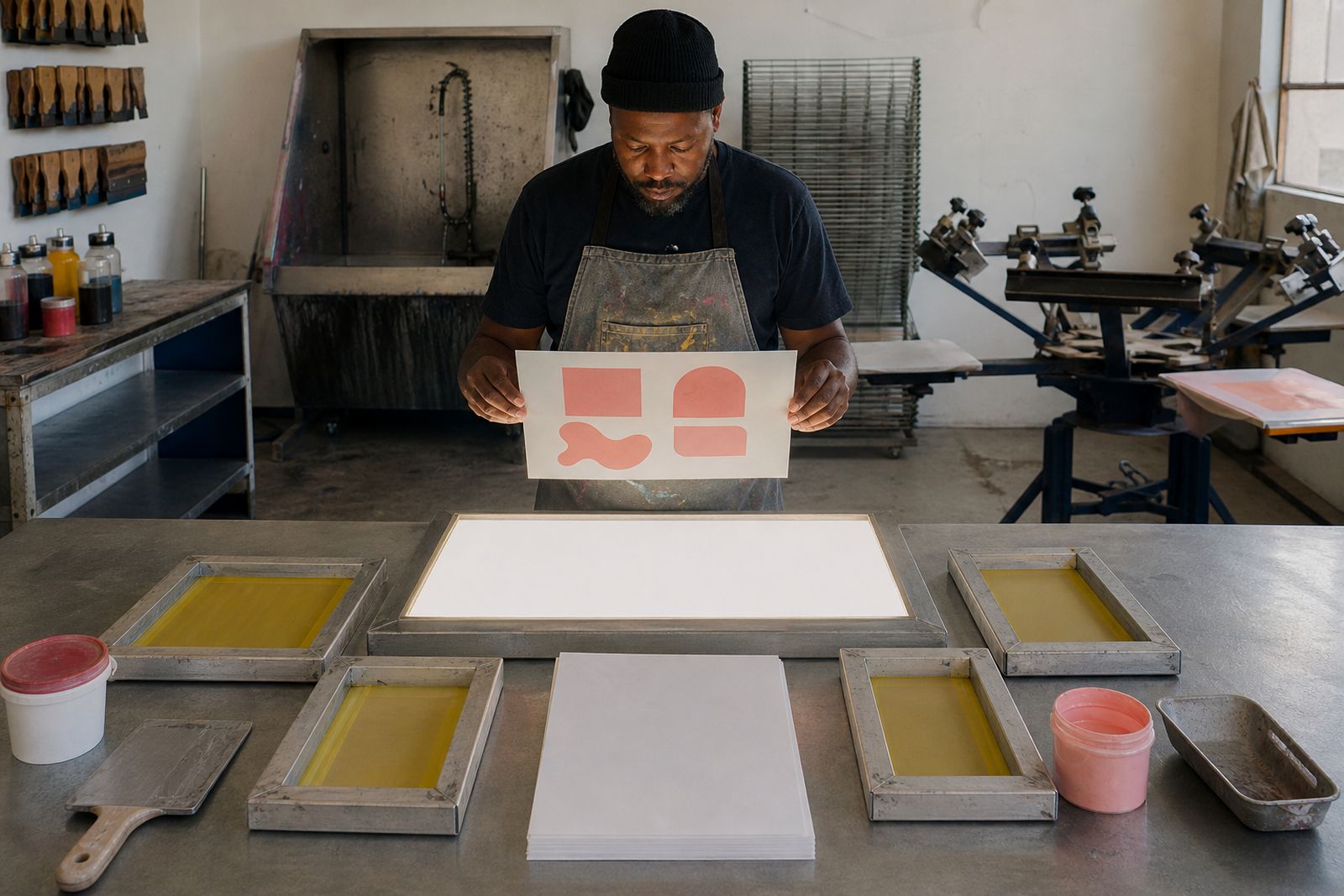
Pinhole checks at the light-table
This card is meant for the exposure bench, reclaim bay, or any station where pinholes are picked up before tape and press set-up. It gives the team one quick reference for checking open mesh, tiny breaks in emulsion, and edge flaws around the image. Keep the same wording tied to the job stencil product and the production ticket so notes on remake screens stay clear.
In South African print rooms, dust, dried ink specks, and worn washout areas often show up only once the screen is on a lit surface. This card works as a simple pre-run prompt for spotting those marks before the first pull on garment, board, or flat stock. If you need a copy added to your kit request, send it through our contact form.
What the card helps catch
Use it while the stencil is on the light-table, not after the screen reaches the press. Operators can run through image edges, halftone areas, registration zones, and mesh corners in the same order every time. For screen specs and matching mesh choices, see Mesh alongside this kit.
- Check image edge breaks first
- Mark pinholes near fine detail
- Replace worn copies in the room
What is in the kit
The pinhole hunt card is a simple print room check tool for spotting tiny image faults before screens go to press. It suits teams working with dual-cure, diazo and SBQ emulsions, capillary film and coated mesh, especially when you need a quick visual pass after exposure or reclaim.
- Use it at the light-table to inspect open mesh, edge breaks and fine-detail areas
- Keep it near exposure, washout and reclaim stations for a consistent check routine
- Pair it with your job ticket so notes stay tied to the right screen and remake
Who it suits
It is useful for screen print rooms handling garment, poster and sign work, where pinholes can affect solid areas, halftones and clean edges. It also helps teams working in South African conditions where humidity, dust, power cuts and lamp age can all affect stencil checks and exposure timing.
If your room runs plastisol, waterbase or discharge inks, the card gives operators one shared reference before the first pull. It is a practical fit for small teams and busy production rooms alike, from coastal environments to the dry Highveld.
How to use and store it
Place the card at the light-table and run the same order each time: image edges, halftone areas, registration zones, then mesh corners. Mark any pinholes, worn washout areas or tiny breaks in the emulsion before tape-up and press set-up. If a screen needs touch-up or remake, note it clearly against the job.
Store the card with your exposure and reclaim tools so it stays easy to reach. Keep it clean and flat, away from washout water, dried ink and excess handling. If you need to add it to a kit request, use the contact form and ask for a quote. For related room setups, see mesh and kits.
What our Screen Stencil customers say
Verified Google reviews
Tell us what you are printing
Send a note through our contact form with the inks and substrates you print, your mesh counts and frame sizes, your exposure unit and your town, and we will come back with practical advice and a quote.
Open the contact form