

Tension log book
Newton log for frames across a print week.
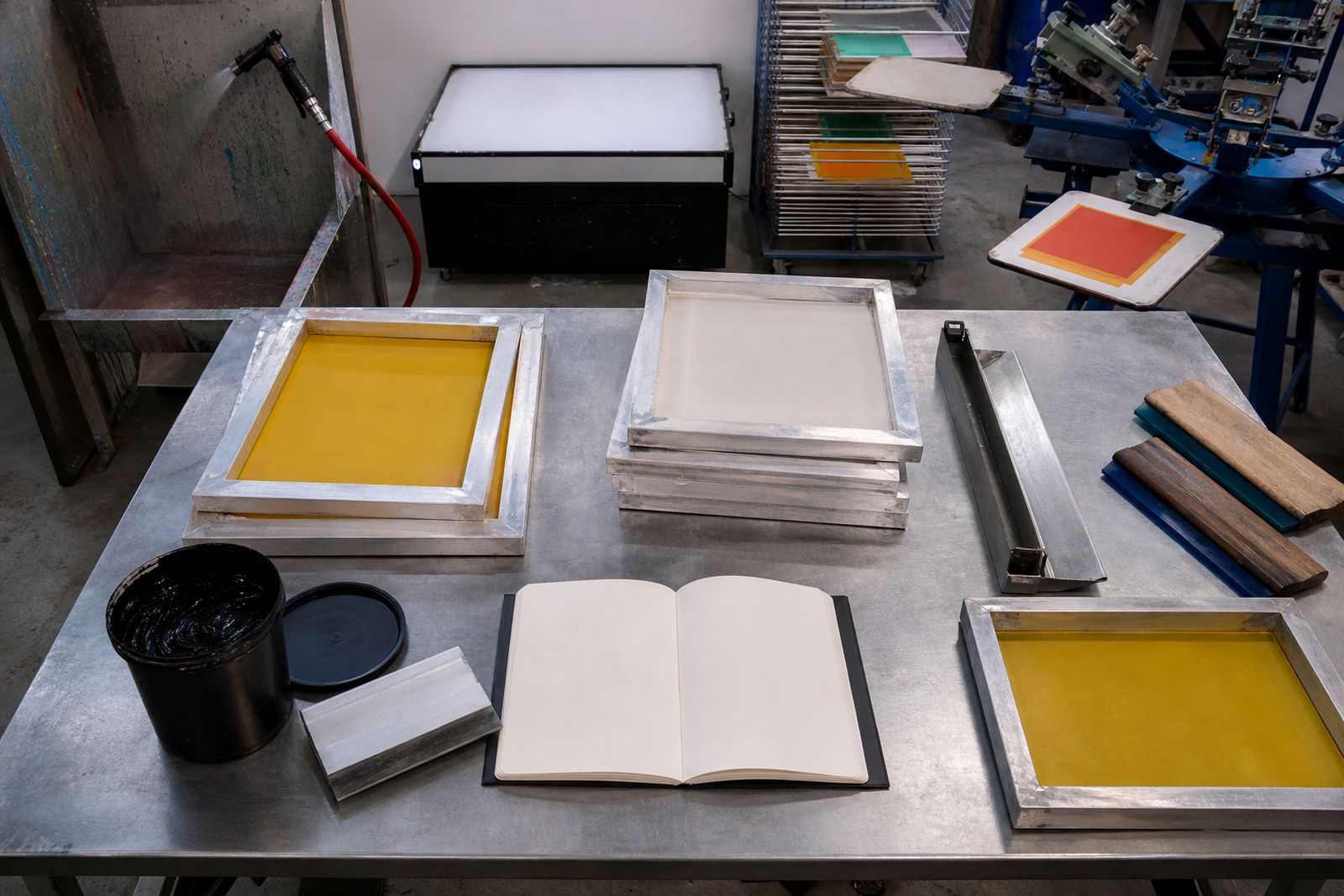
Frame tension records for print rooms
This log book gives each frame a place for Newton readings, mesh count, date stretched and operator notes. Keep it next to the tension meter so checks are written down at the press, not from memory later. It also helps link frame history to the matching stencil product and production ticket when repeat work comes back.
In South African print rooms, winter mornings and hot afternoons can shift mesh readings more than expected. A written record makes it easier to spot frames that are dropping off between reclaim, coat and press setup. Use our contact form if you need this kit added with other stencil room items.
Checks logged across the week
Record tension after stretching, after imaging and again before a repeat run so the crew can compare like with like. Many rooms also note mesh colour, frame size and whether the stencil was for water-based or plastisol work. For related setup items, see Mesh.
- Frame number and mesh count
- Newton reading by date
- Press note for reprint checks
What is in the kit
The kit is a practical log book for screen print rooms that want a simple, paper record of frame tension. It suits teams using aluminium or timber frames, and it keeps the important details in one place for day-to-day checks.
- Space for Newton readings across the week
- Fields for mesh count, date stretched and operator notes
- Room to note frame history, reprints and press checks
- Useful alongside a tension meter, exposure notes and reclaim records
Who it suits
It suits garment, poster and sign work where frame condition affects print consistency. If your room works with dual-cure, diazo or SBQ emulsions, capillary film, or a mix of plastisol, waterbase and discharge inks, written tension records help keep setup clear. It is also useful where humidity changes, coastal air or dry Highveld conditions can affect mesh behaviour through the week.
Screen rooms that manage power cuts, variable exposure timing or frequent frame reuse will find it helpful for keeping a steady record between coating, imaging, washout and press setup. If you need guidance on related items, see mesh, stencils or kits.
How to use and store it
Keep the log book near the stretching area or with your press notes so readings are written down while the frame is still in use. Record the mesh count, tension reading, date stretched and any comments about pinholes, haze, washout or touch-up after imaging. Add notes about lamp age, exposure changes or scoop coating technique if those affect the result.
Store it with other room records in a dry place away from reclaim chemicals, ink spills and direct light. A clean, written trail helps the crew compare repeat jobs and spot frames that are slipping before they reach the press. If you want to add it to a larger stencil room order, ask for a quote via the contact form.
What our Screen Stencil customers say
Verified Google reviews
Tell us what you are printing
Send a note through our contact form with the inks and substrates you print, your mesh counts and frame sizes, your exposure unit and your town, and we will come back with practical advice and a quote.
Open the contact form