

Blockout on the edge
Pinholes and frame edges that ruin a sports kit run.
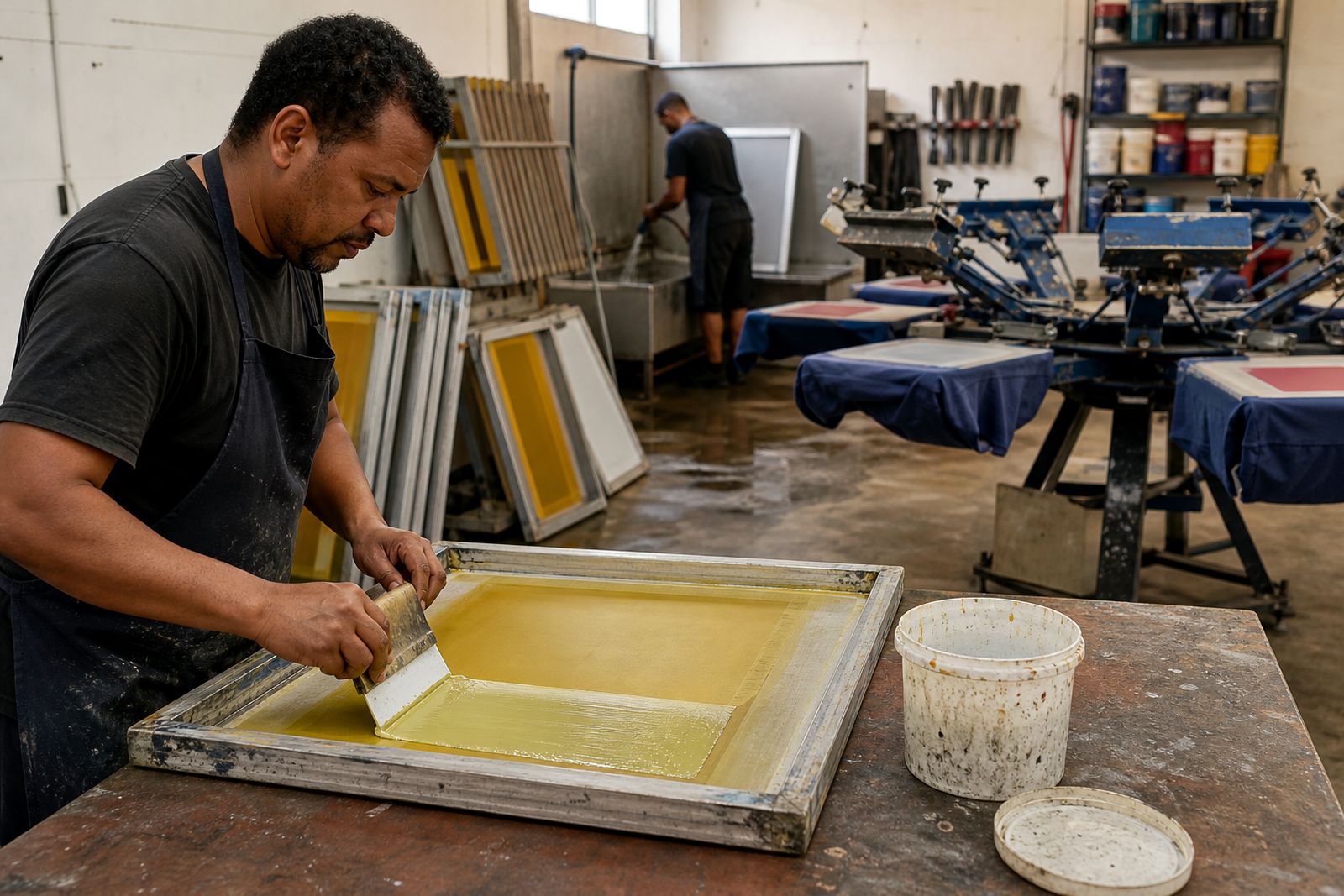
Edge checks before first pull
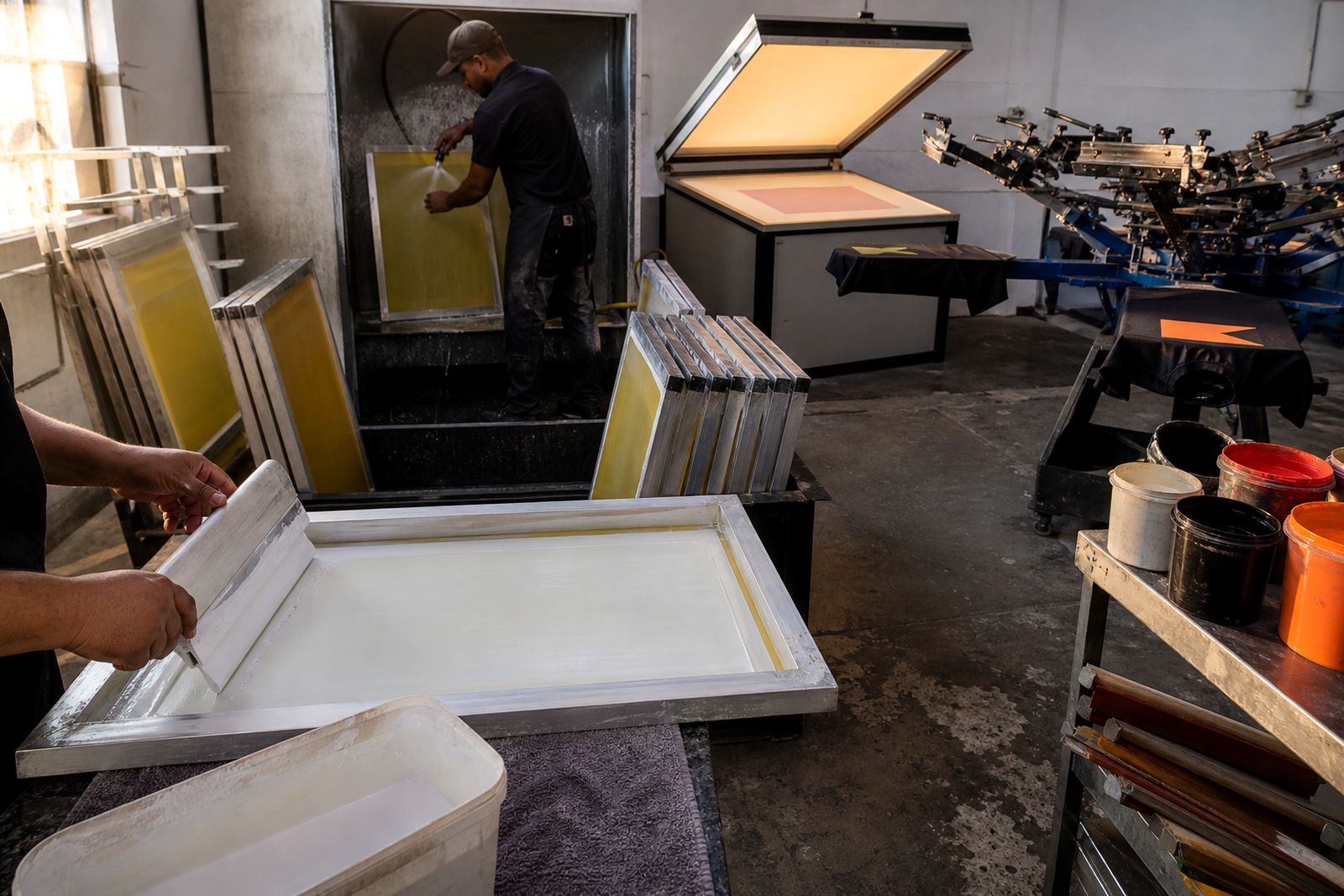
Frame-edge blockout is the unglamorous step that saves a kit run when ink starts creeping past tape lines. On busy South African print room tables, the weak spots are usually the inside frame edge, old adhesive ridges, and tiny open areas left after washout.
Coastal humidity can lift edge tape during a long pull, while Highveld dust often settles where blockout should bond cleanly. A screen that looked fine at exposure can still leak once flood pressure reaches the corners. Checking the perimeter before the first dozen garments costs less than reprinting numbered sportswear.
Keep the note next to the mesh count, frame size, and stencil record before the screen goes to press. If the blockout mark on the job card does not match the treated side of the frame, stop and correct it there. In Salt River rooms, that small check prevents night shift from inheriting a leaking edge with no history.
Mark the sealed edge on the ticket and match it to the stencils under Stencils and the prepared screen under Screens. Where the job is a team strip or numbered bundle, confirm the related part in Kits before print starts. That way the blockout note follows the same language as the rest of the run.
- Corners sealed after final washout
- Inside frame edge wiped dry
- Blockout coat clear of image
- Leaking side marked on ticket
- Pinholes checked under proper light
When a note does not match your setup, send it through our contact form so we can rewrite the card.
Small habits keep blockout at the edge useful after the first reading.
Why frame margins matter
Most edge failures do not begin in the centre of the image. They start where mesh meets adhesive, where old tape leaves residue, or where reclaim was rushed before coating. A short note works here because the inspection points are physical and easy to miss when the press is waiting.
Shops sending work from Clearwater, Cresta, Pavilion, Tyger Valley, Baywest, Mimosa, and Riverside often send screens with mixed frame histories. One frame may hold fresh mesh while the next still carries hardened blockout near the bar. Bring the used sample if possible, because edge contamination shows better on the actual screen than on a phone photo.
Print rooms use stencil and mesh guidance beside the wash booth or exposure unit. The focus stays on edge sealing, pinhole control, and the frame perimeter that affects press performance.
What our Screen Stencil customers say
Verified Google reviews
Also worth a look
Tell us what you are printing
Send a note through our contact form with the inks and substrates you print, your mesh counts and frame sizes, your exposure unit and your town, and we will come back with practical advice and a quote.
Open the contact form