

Calc card honesty
Step wedges that keep Salt River and Joburg lamps comparable.
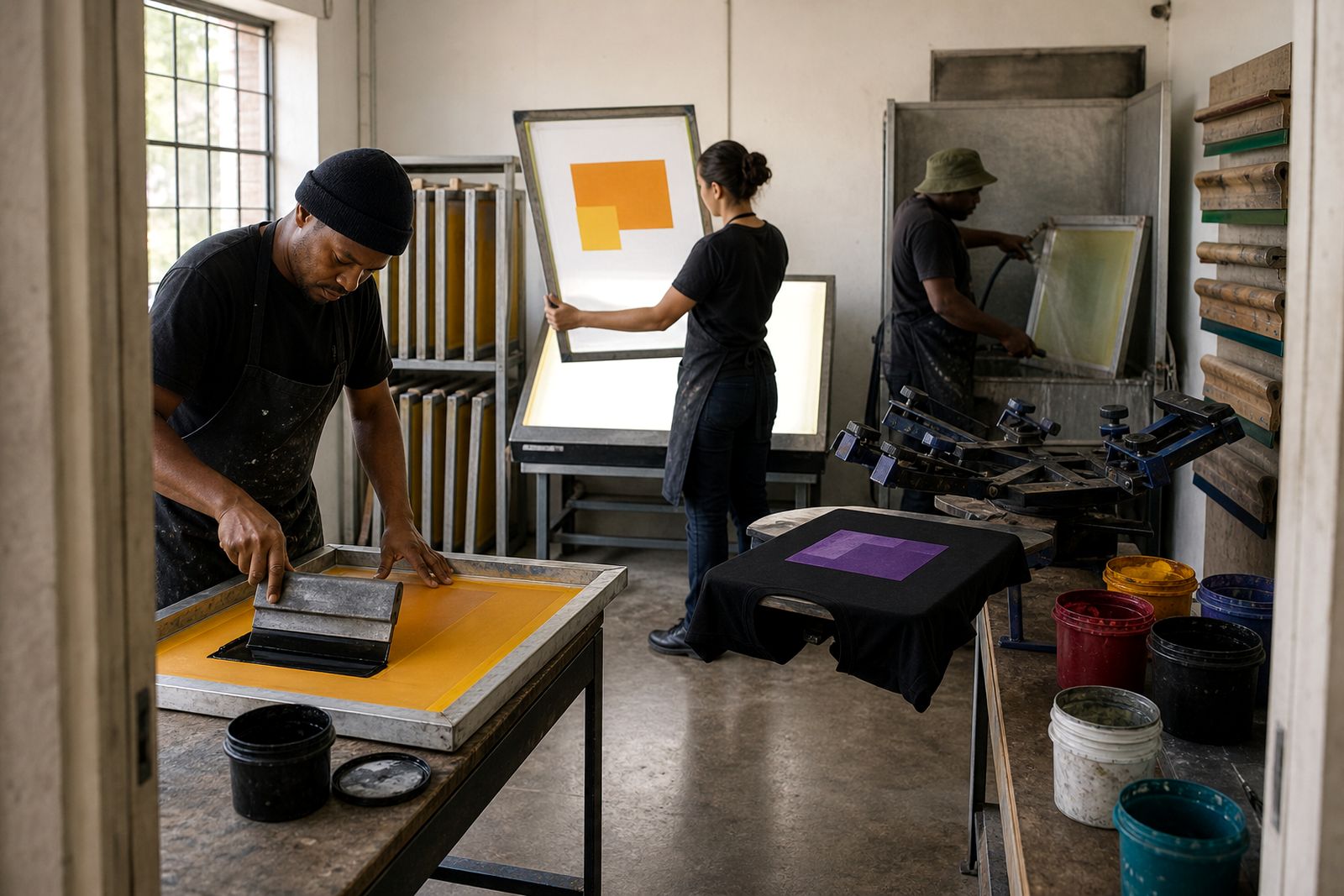
Bench checks before exposure
A calc card is only useful when the reading can still be trusted by the next shift. This note is for exposure benches where step wedges, lamp hours, mesh count, and emulsion build all affect the same decision. In South African print rooms, that often means comparing a Salt River screen room with a Johannesburg bench without pretending the conditions match.
Coastal humidity, dusty glass, and tired paper stock can all distort what a card appears to say. Write down the lamp used, the date on the card, and whether the vacuum blanket sealed cleanly before anyone blames the stencil file.
Check the calc card against the exposure sheet, the frame tag, and the mesh note before coating another screen. If the card was read under one lamp but the job moved to another unit, mark that change on the ticket at once. Salt River crews often keep the latest accepted wedge near the bench so day and night teams compare the same reference instead of memory.
Clip the calc card to the job ticket and keep the matching links together. If a screen spec sits under Stencils and the frame or mesh record sits under Screens, read both before you expose. When the note refers to degreaser, scoop coater size, or reclaim items, open Kits and match the consumables used on that bench.
- Date written on each accepted wedge
- Lamp unit named on the ticket
- Mesh count matched to frame tag
- Paper fade noted before re-testing
- Glass wiped before judging detail loss
When a note does not match your setup, send it through our contact form so we can rewrite the card.
Small habits keep calc card honesty useful after the first reading.
Short notes for night leads
Long explanations rarely survive a busy exposure room. A brief line that says card faded, lamp changed, or dust on glass helps more than a page of theory. The aim is a note that can be read between proofs while the coater, frame, and vacuum bed are still in use.
Shops working out of Salt River, Johannesburg, Durban, and Pretoria do not all age cards in the same way. Coastal rooms may see paper soften and yellow faster, while Highveld rooms fight fine dust settling on the exposure glass. Bring the last accepted test strip with the sample screen if you need the comparison to mean anything.
Screen Stencil supplies stencil and mesh guidance for print rooms that still rely on exposure cards to keep repeat work consistent.
What our Screen Stencil customers say
Verified Google reviews
Also worth a look
Tell us what you are printing
Send a note through our contact form with the inks and substrates you print, your mesh counts and frame sizes, your exposure unit and your town, and we will come back with practical advice and a quote.
Open the contact form