

Isando carousel
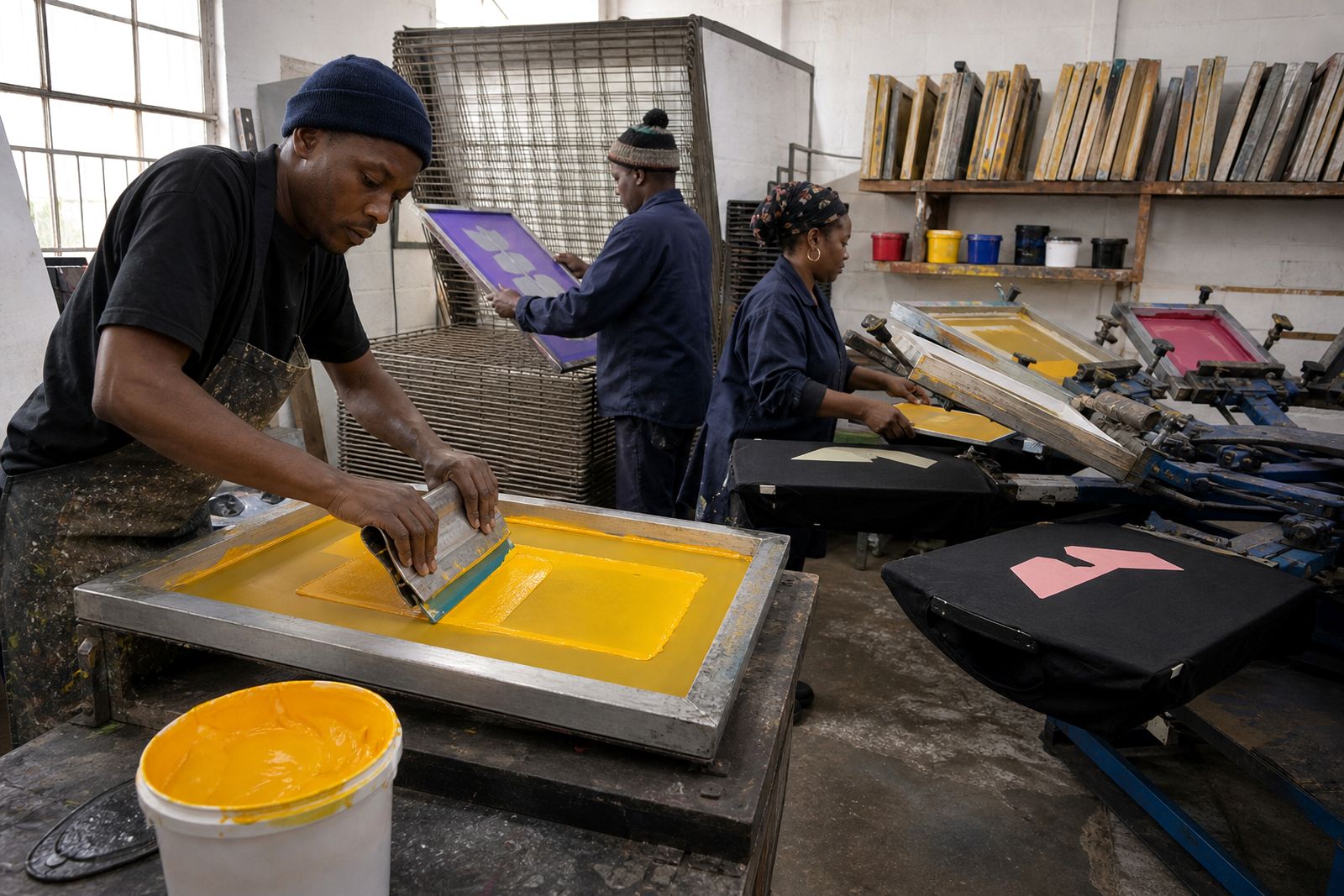
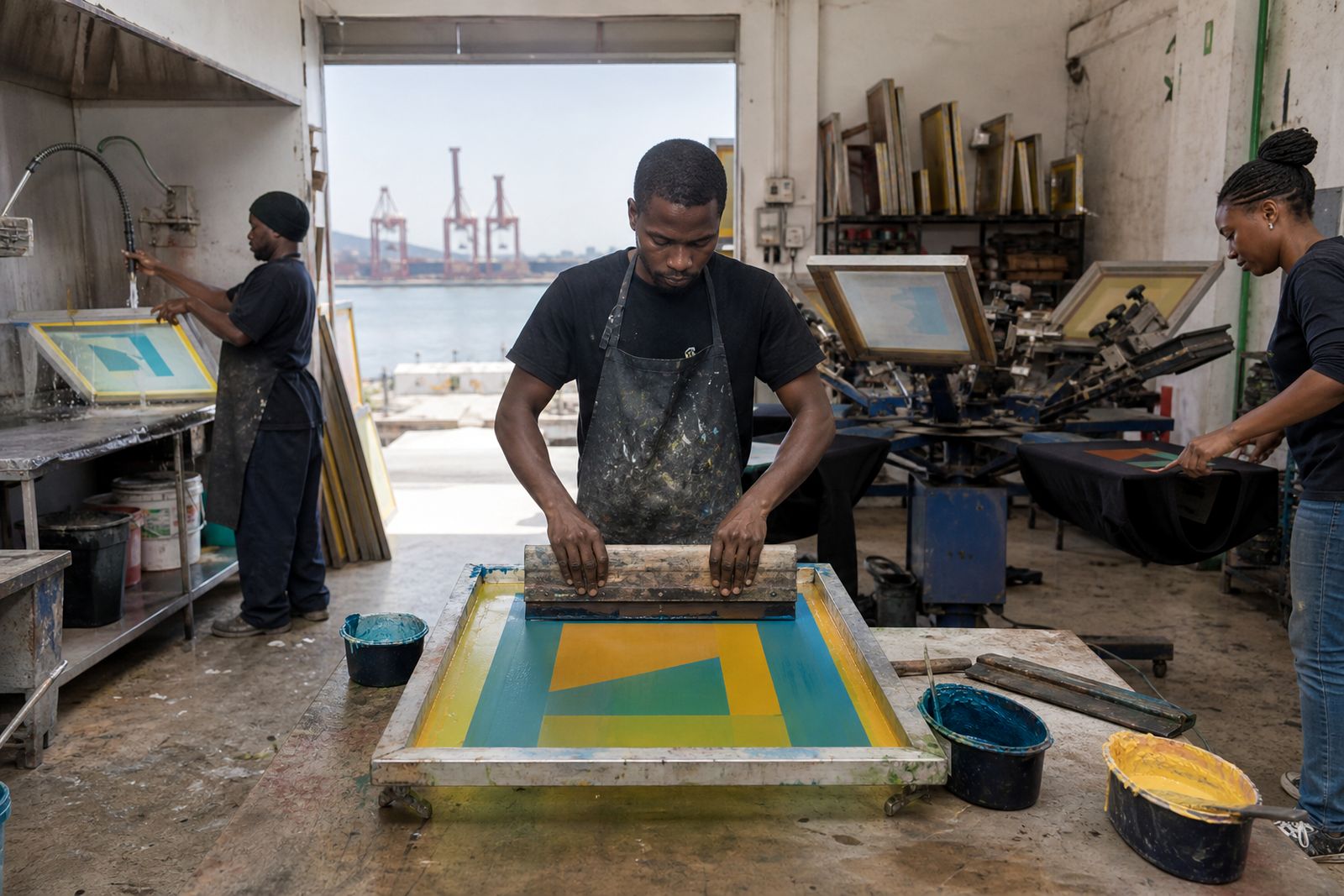
Isando carousel shows a garment print job using dual-cure materials through a four-colour production day.
Isando four-colour carousel brief
At Isando, the sample pack ties the carousel ticket to the stencil spec so the print room can match image position, mesh choice and the intended garment finish before exposing. Use our contact form when you need a similar set, and add your platen notes if you have them.
Shipped items
This project centred on a dual-cure setup for a garment job moving through an Isando print room, with the proof photo filed against the ticket for handover. Under Gallery, the image trail sits beside Dual-cure emulsion pro and Garment print house so the viewer can trace how stencil choice, exposure, and job paperwork stayed aligned on one South African production brief.
- Proof photo matched to production ticket
- Proof photo filed
- Four-colour carousel handoff noted clearly
How the carousel ticket travels
At Isando, the work starts with a clear handoff: the carousel ticket, the stencil note and the print-room aim all sit together before exposure. That makes it easier to check mesh count, tension, image position and the finish the garment team wants on press.
For a brief like this, we look at the practical stencil choices that suit the room rather than making it complicated. That can mean a dual-cure route when the job needs a steady, durable stencil, or a diazo or SBQ route when the setup calls for a different balance of working time and exposure.
If you are moving a similar garment brief through a South African print room, send photos and notes through the contact form and keep the ticket details close to the sample pack.
What the print room checks first
Before a screen goes to press, the same small checks usually decide how smoothly the job will run. We talk through frames, scoop coating and coating technique, then match that to the artwork, the mesh and the ink system. Garment work often needs a different conversation from poster or sign work, especially when plastisol, waterbase or discharge inks are part of the run.
Exposure also matters. Lamp age, washout, pinholes and touch-up all affect what happens after coating, so a careful setup saves time later. If a screen is being reclaimed, haze removal and a clean finish on the mesh help the next stencil sit properly.
- Check the mesh and frame condition before coating
- Match exposure to the lamp and the emulsion choice
- Watch for washout issues, pinholes and haze before press time
South African showroom support
Screen Stencil works from a stencil studio in Salt River, Cape Town, and supports screen print rooms through showrooms at Tyger Valley, Clearwater, Cresta, Pavilion, Baywest, Mimosa and Riverside. That reach helps keep advice close to the realities of local production, from coastal humidity to dry Highveld air and the interruptions of power cuts.
Whether the job is a garment run or a poster and sign brief, the aim is the same: help the print room choose a stencil route that fits the work, the room and the timing. If you need a similar setup, ask for a quote via the contact form.
What our Screen Stencil customers say
Verified Google reviews
Tell us what you are printing
Send a note through our contact form with the inks and substrates you print, your mesh counts and frame sizes, your exposure unit and your town, and we will come back with practical advice and a quote.
Open the contact form