

Observatory merch run
Band merch SBQ swaps on a short stage week.
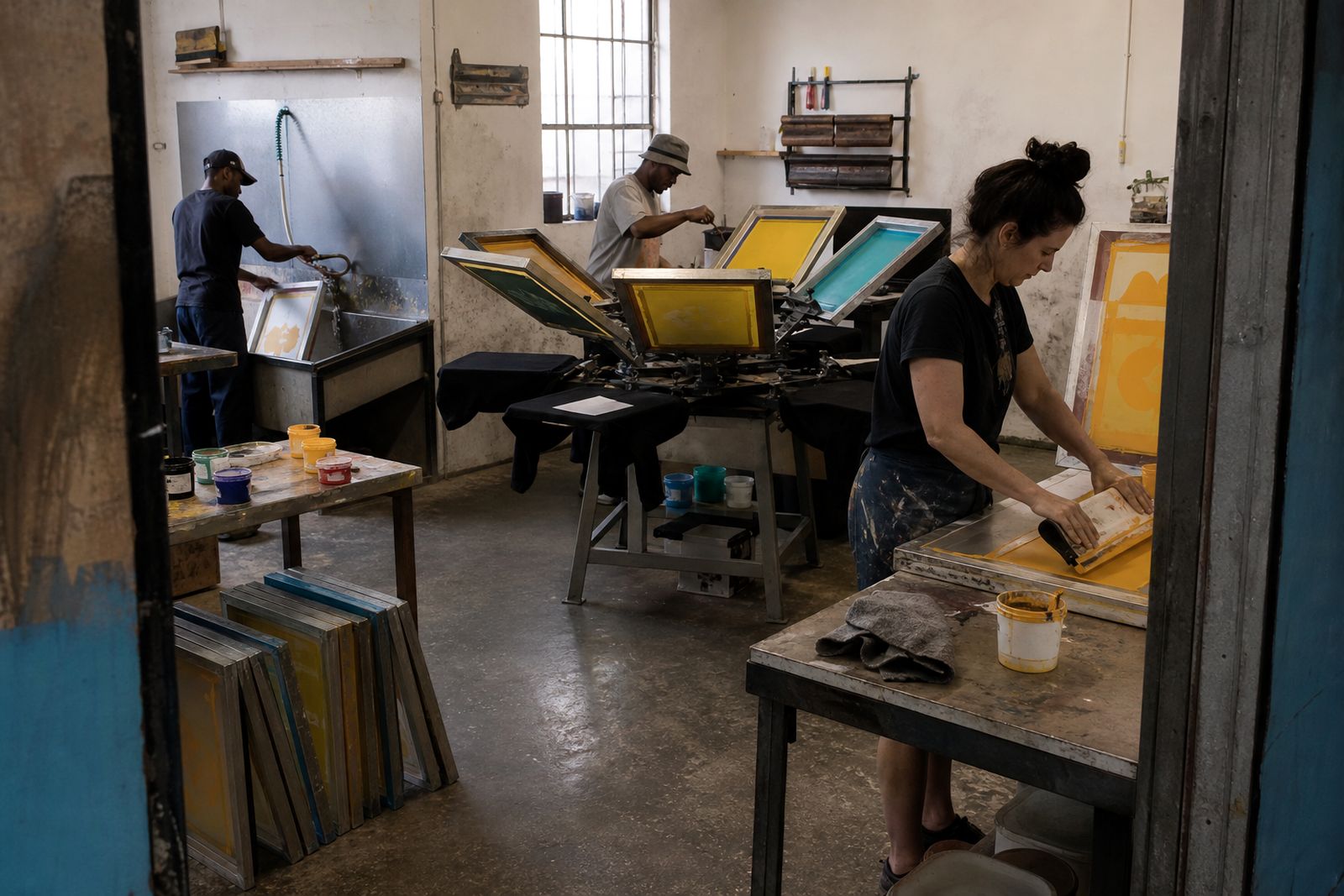
Observatory band merch handoff
For an Observatory merch pack, use our contact form and name the artwork, garment colour, and print size you need matched. A clear phone snap of the last approved shirt helps when we check line weight, trapping, and whether the mark will hold on a short merch run.
Shipped items
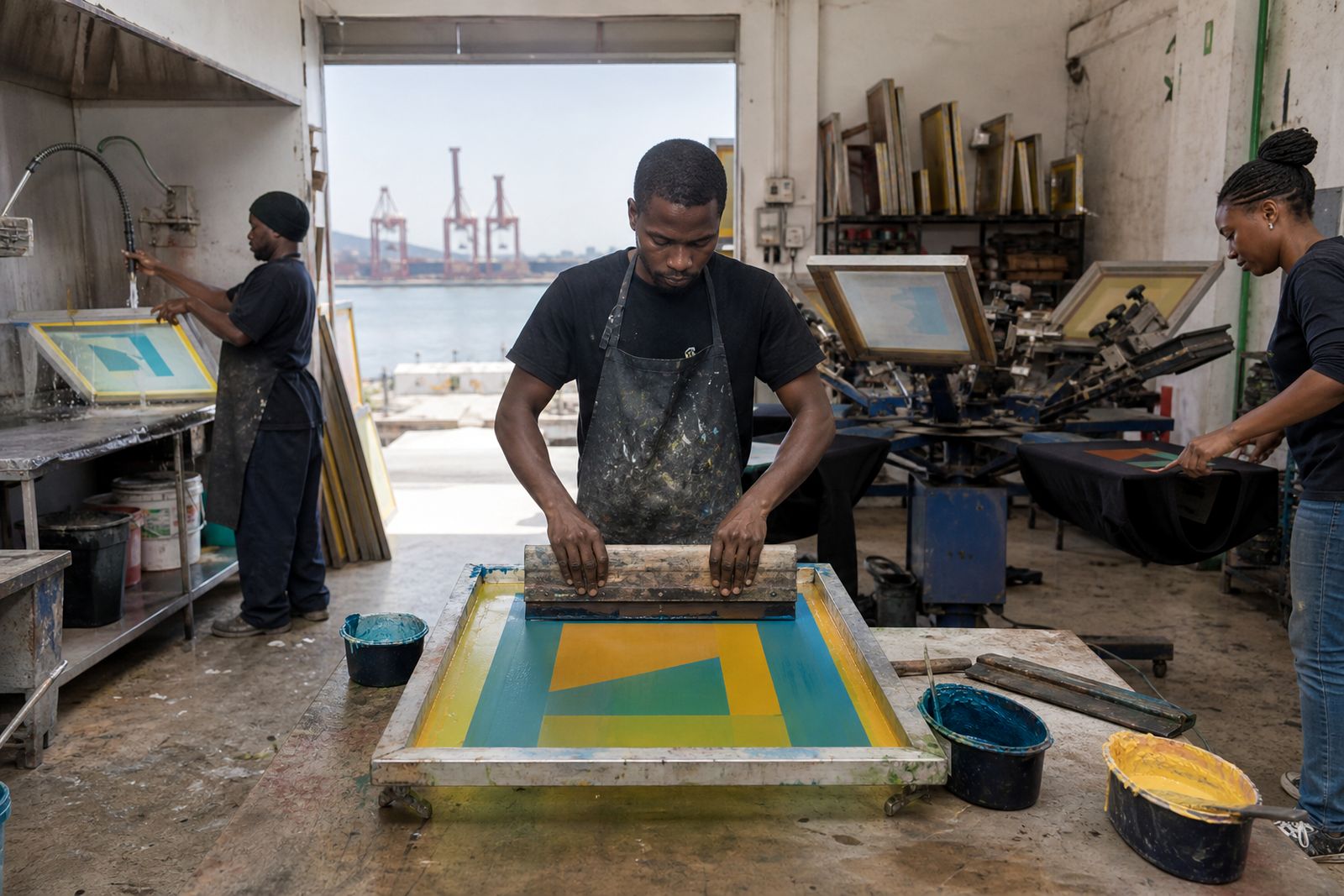
This job centred on what a print room must check before ink hits fabric. The pack referenced closed mesh where the image needed hold, included a colour card for the approved look, and filed the proof photo against the job record. Gallery can sit beside the visual history, while SBQ Photopolymer Fast and Merch short run show the stencil and run context used on this South African brief.
- Stencil and job card matched before burning
- Proof photo filed
- Proof photo filed with merch job
Choose the right stencil system
For merch work, the stencil has to suit the artwork, the mesh, and the run. We can talk through dual-cure, diazo and SBQ photopolymer emulsions so the coating matches the detail needed on garments, posters, and signs. The aim is simple: a clean stencil that exposes well, holds line detail, and washes out without drama.
If the image is fine, the mesh count and tension matter just as much as the emulsion. A tighter mesh can support sharper detail, while the wrong tension can leave a weak print or a blurred edge. We also look at whether capillary film is the better fit for the job, especially when the artwork needs a neat, even stencil build.
What print rooms check before exposure
Good results usually start before the screen goes to exposure. A proper aluminium or timber frame, a clean scoop coat, and the right coating technique all help the stencil sit evenly on the mesh. If the coat is too heavy or too light, the washout can show it later.
Exposure is another point worth checking carefully. Lamp age, exposure timing, and the condition of the unit can all affect how the image opens up. In South African print rooms, that matters even more when power cuts interrupts the rhythm of a busy day or when coastal humidity changes how a screen dries.
After washout and during the run
Once the stencil is out of exposure, the real check is whether it clears properly. Pinholes, haze, and incomplete washout can all create avoidable waste, so a quick touch-up and a careful reclaim process help keep screens ready for the next job. That matters whether the ink system is plastisol, waterbase, or discharge.
We often speak about what the print room needs next, not just what the screen looks like now. If you need help matching a stencil approach to garment, poster, or sign work, or want to ask for a quote via the contact form, send the artwork details and the mesh information you have. We will keep the advice practical and tied to the way South African print rooms actually work, from the Salt River studio and showroom network through to the final print.
What our Screen Stencil customers say
Verified Google reviews
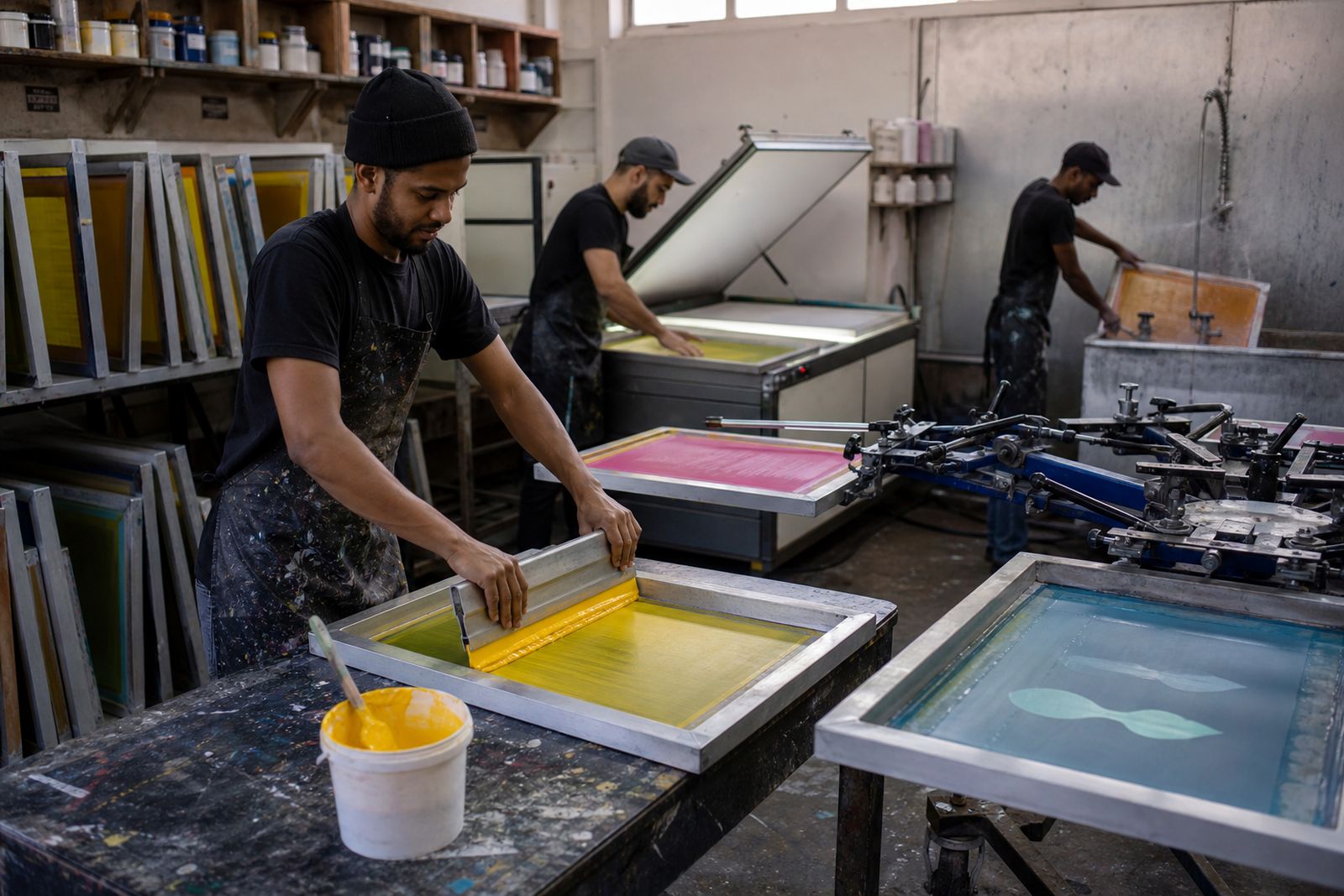
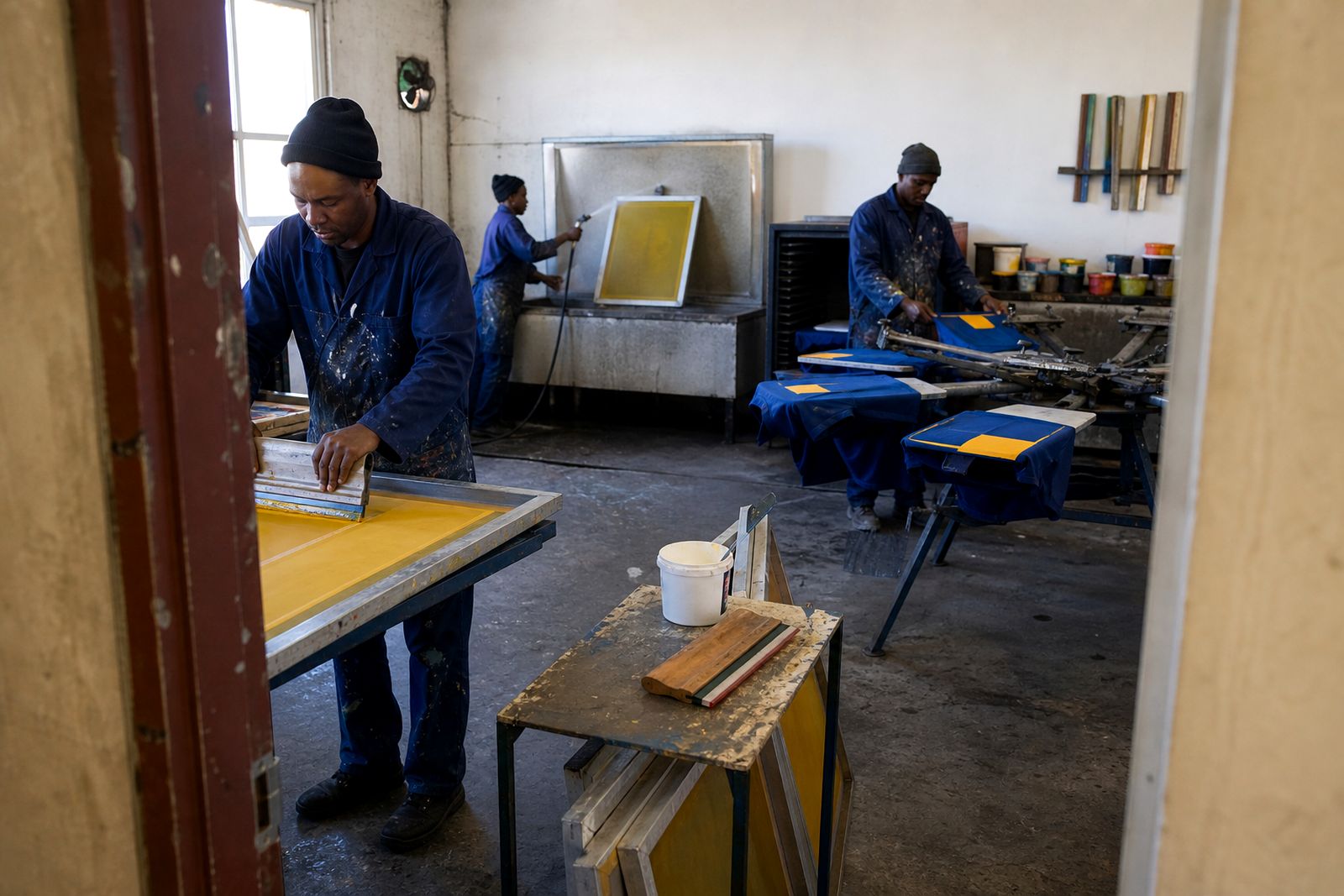
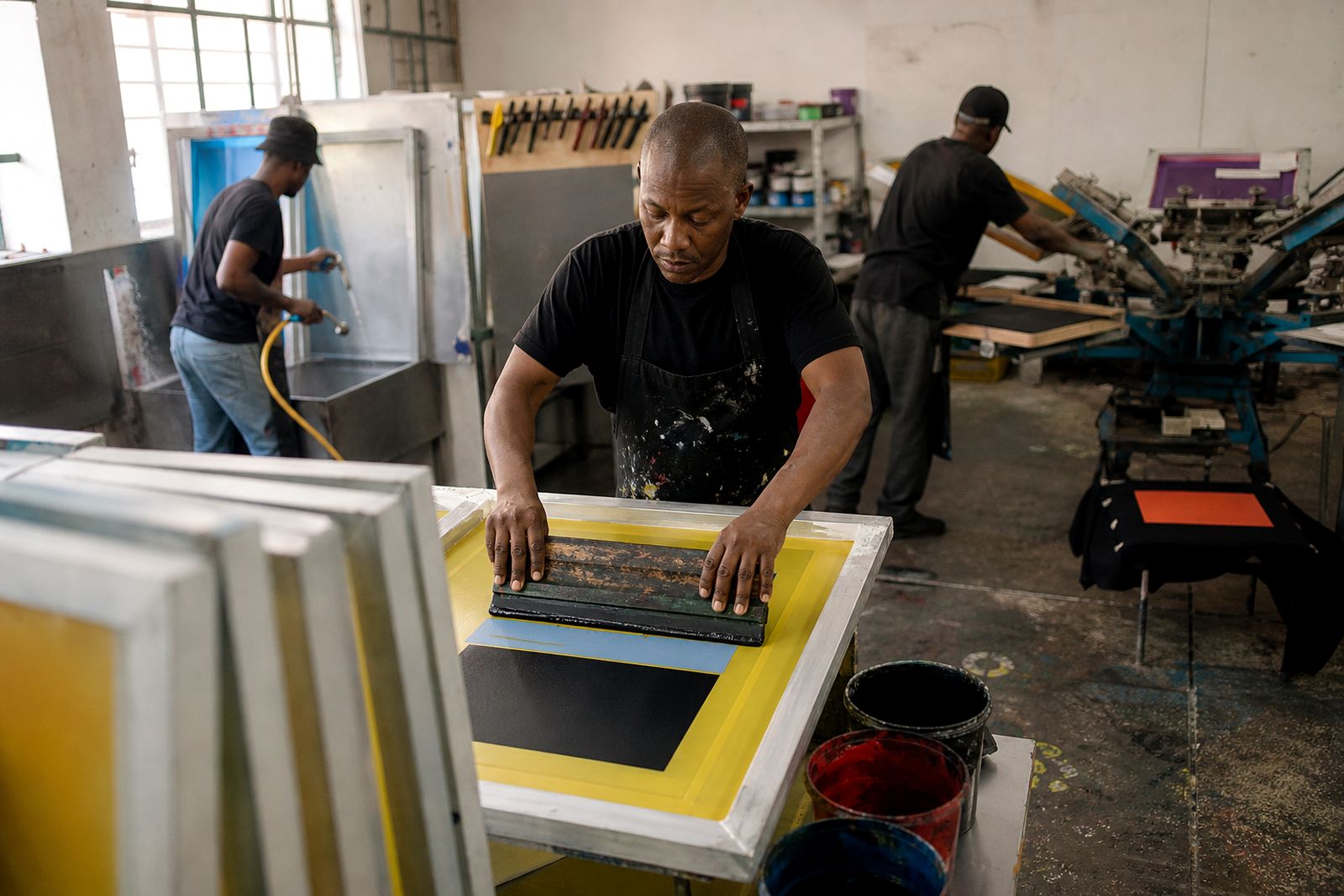
Tell us what you are printing
Send a note through our contact form with the inks and substrates you print, your mesh counts and frame sizes, your exposure unit and your town, and we will come back with practical advice and a quote.
Open the contact form