

Salt River edition
Poster edition with capillary soft edge and calc honesty.
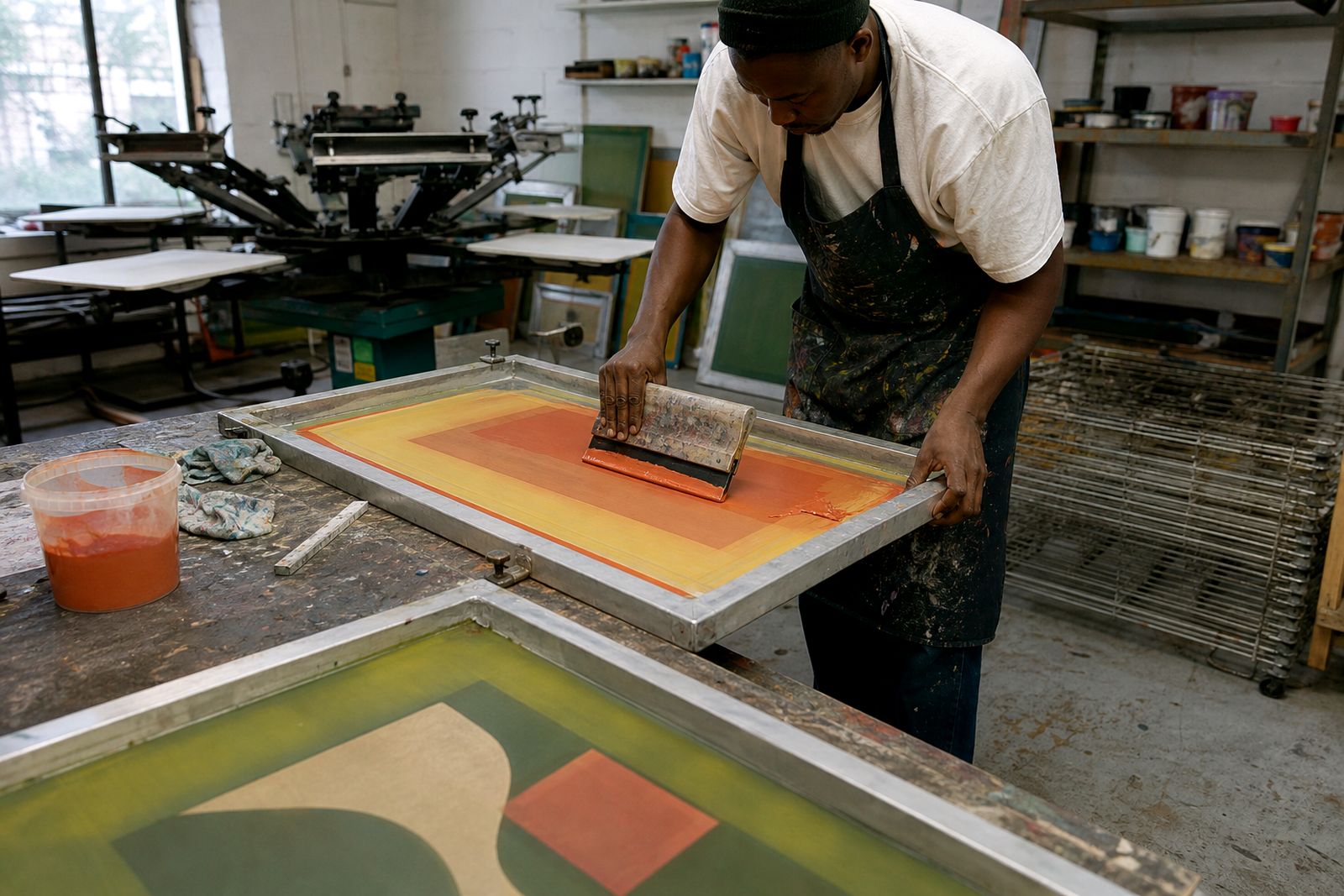
Salt River poster handoff
For a matching print-room setup, send the job name through our contact form and note the stock, size and finish used on the job. A proof photo helps when the brief includes a soft edge hold on capillary film, plus the ticket details that must read clearly at press side.
Shipped items
The pack was built around handoff checks, not display samples. Under Gallery you can compare print-facing visuals where the proof mattered, while Capillary Film Soft Edge and Poster edition studio show the two parts of the brief that had to line up before exposure and filing.
- Proof photo logged with the edition
- Proof photo filed
- Soft edge and ticket checked together
Soft edge handling for print rooms
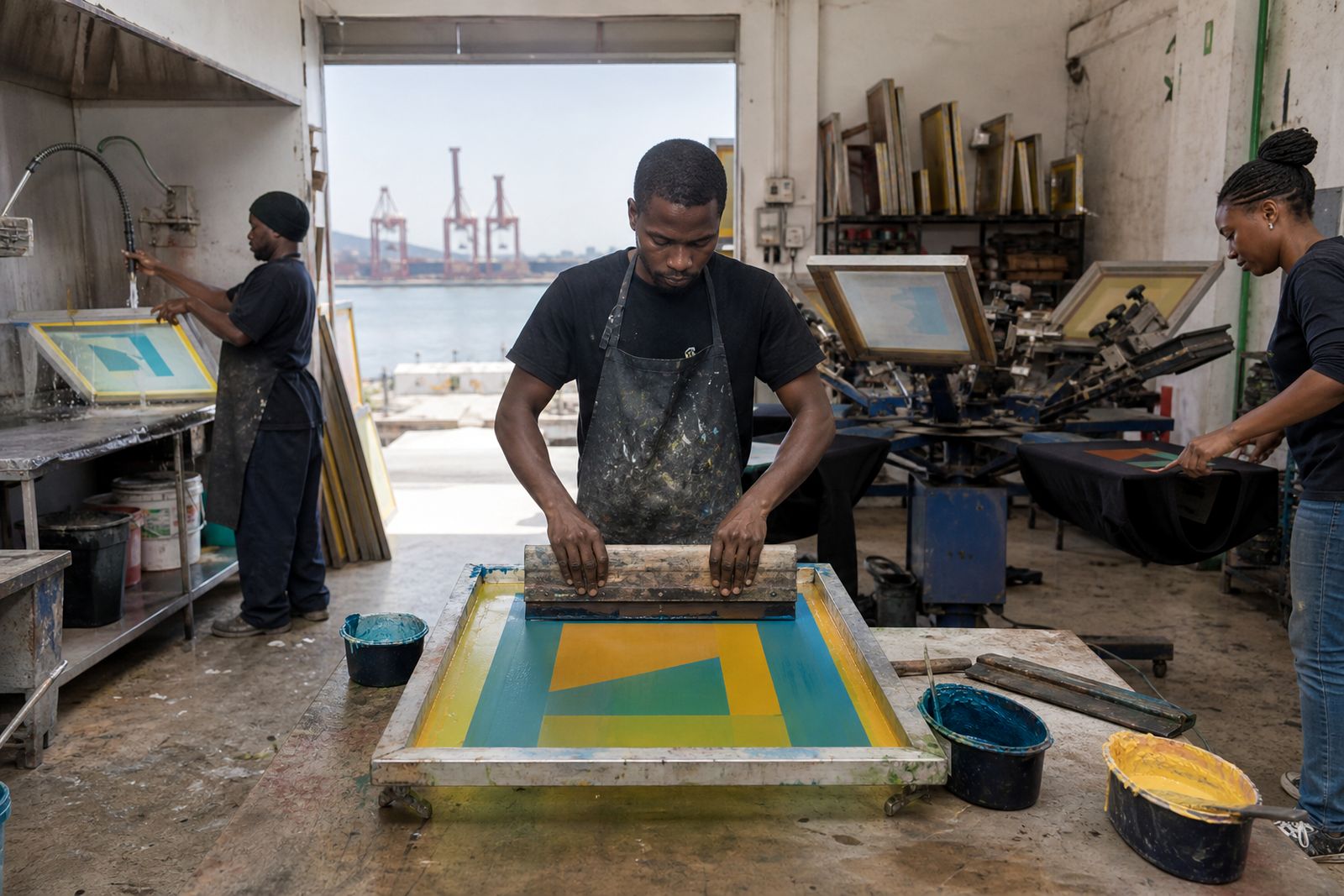
Capillary film is most useful when the stencil has to keep a clean, soft edge without losing control. In South African print rooms, that often means balancing mesh count, tension and coating technique before exposure even starts. A good setup makes the difference between a neat poster image and a stencil that feels heavy or uneven.
Use a stencil conversation to check the basics first: dual-cure, diazo or SBQ emulsions, the frame type, and whether the job is for garment, poster or sign work. Aluminium and timber frames each ask for different handling, and the scoop coater choice should match the mesh and the finish you want.
Exposure, washout, and reclaim notes
Exposure problems often come from small things that are easy to miss. Lamp age, drying time, humidity and even power cuts can change the result, so it helps to keep the brief practical. If the image loses detail, check whether washout is too aggressive or if pinholes need touch-up before the run.
- Confirm the emulsion type before coating
- Check mesh tension and frame condition
- Record exposure timing and lamp age
- Note any pinholes, haze or washout issues
When a screen is being reclaimed, haze removal matters just as much as clean washout. That keeps the mesh ready for the next job and helps the next stencil sit flatter and more predictably.
Matching the brief to inks and conditions
Screen printing in South Africa often means adjusting for the room as much as the artwork. Coastal humidity can slow drying and affect coating, while dry Highveld air can change how a stencil behaves on the screen. The same care applies when working with plastisol, waterbase or discharge inks, because each system asks for its own support at press side.
For a new brief, send the job details through the contact form and ask for a quote. Keep the note simple: stock, mesh, emulsion, finish and any exposure concerns. That gives the team a clear starting point for practical help from the Salt River studio and the showrooms in Tyger Valley, Clearwater, Cresta, Pavilion, Baywest, Mimosa and Riverside.
What our Screen Stencil customers say
Verified Google reviews
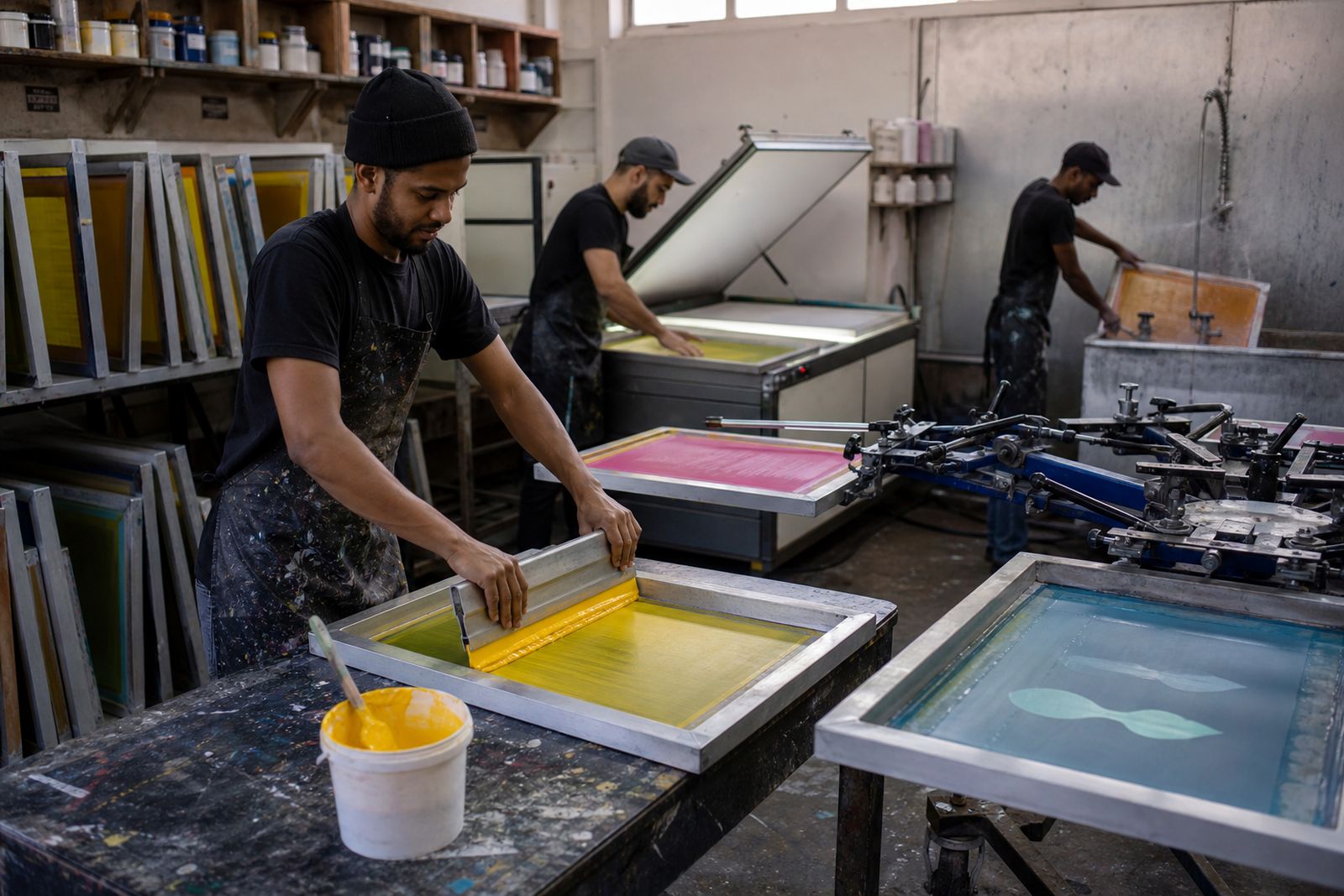
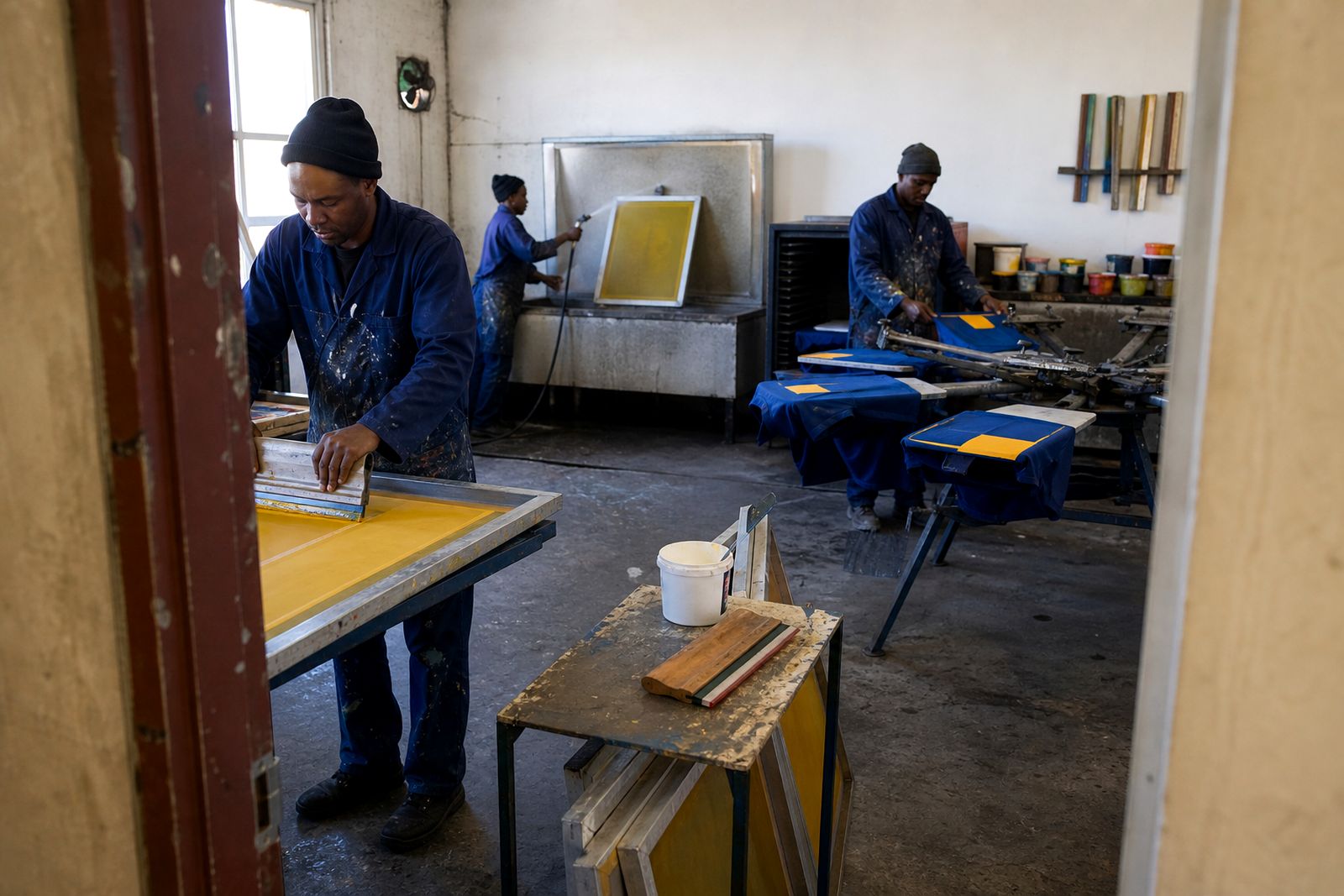
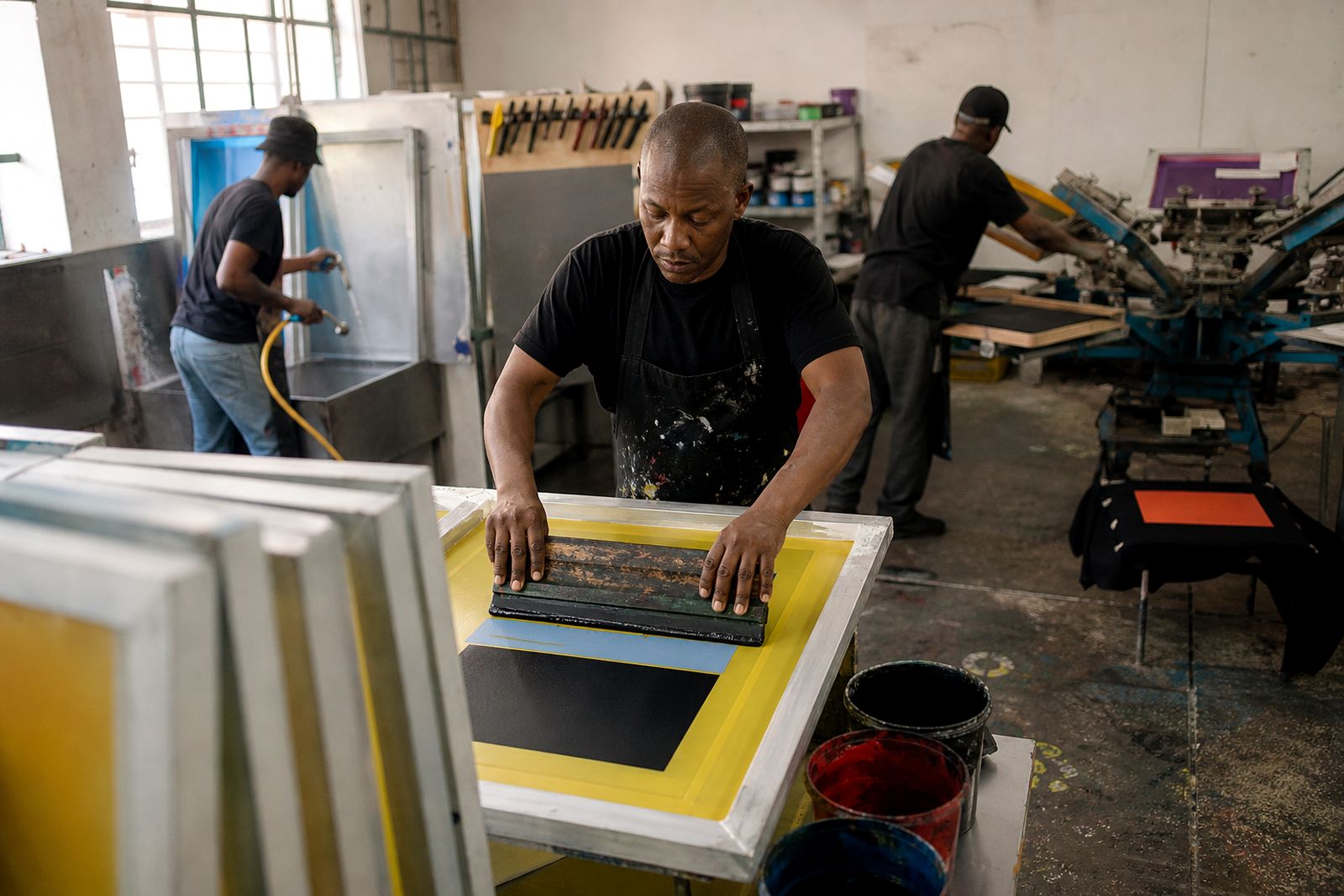
Tell us what you are printing
Send a note through our contact form with the inks and substrates you print, your mesh counts and frame sizes, your exposure unit and your town, and we will come back with practical advice and a quote.
Open the contact form