

Stellenbosch yardage
Textile yardage with high mesh thin coats.
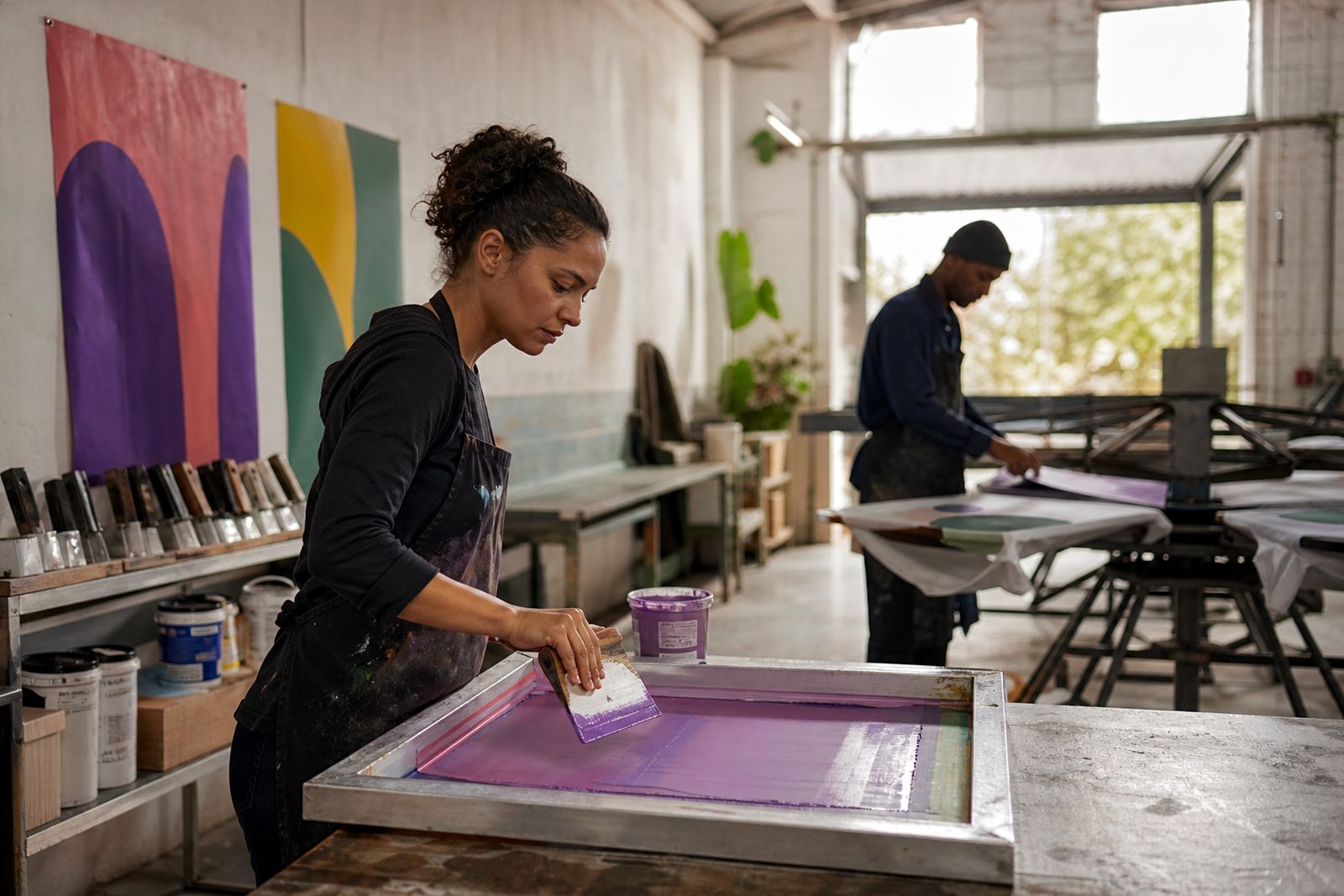
Stellenbosch textile yardage brief
The pack tied the print ticket to the actual textile repeat and proof photo so the print room could read the job without guesswork. Use our contact form if you need a matching setup, and include the artwork name, cloth type, and repeat size used on site.
Shipped items
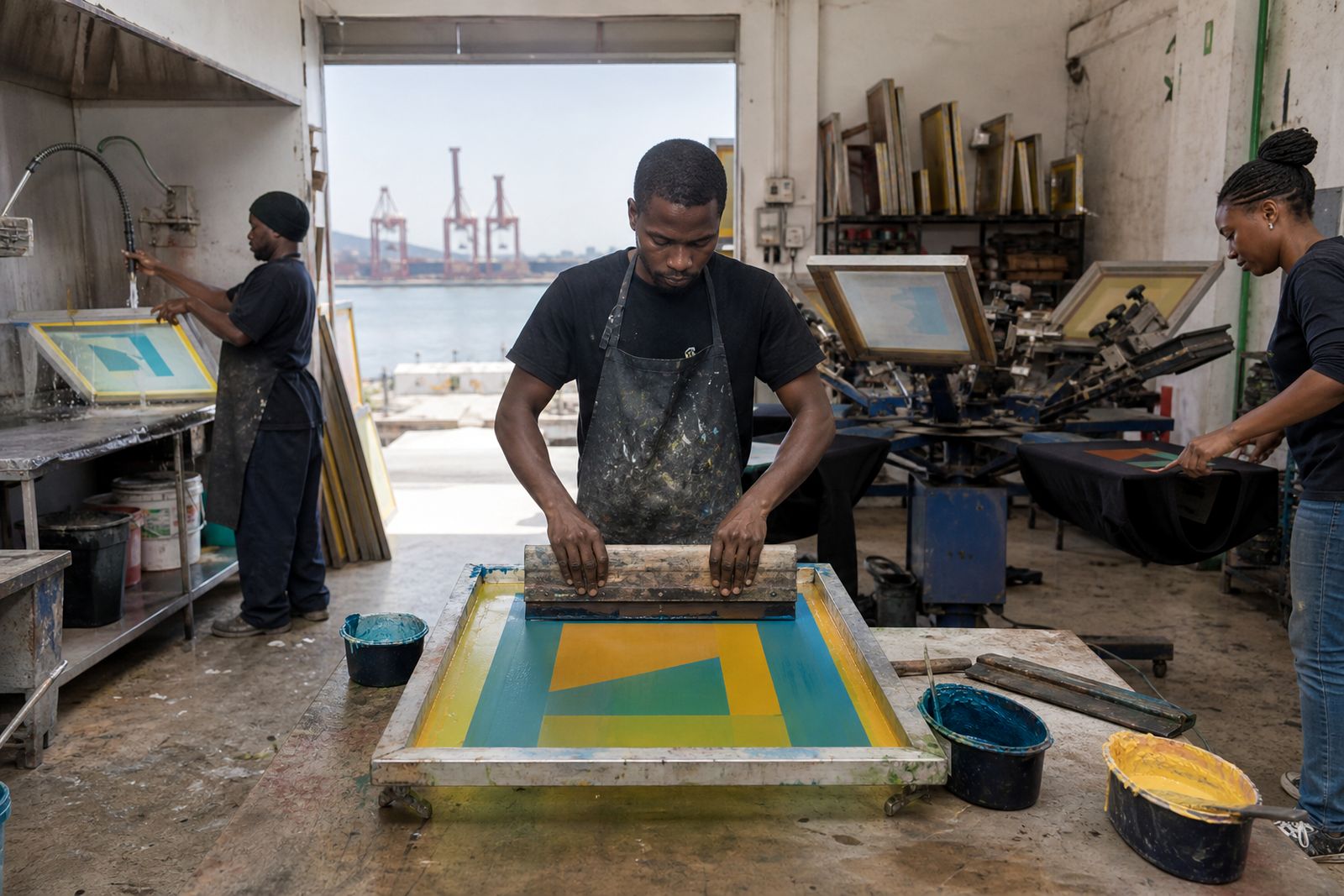
Direct emulsion high mesh was paired with Textile yardage for a South African print room handling thin coats on fine mesh. The filed proof image is listed with the mesh record, and Gallery can be checked against the visual side when artwork changes affected the yardage layout.
- High mesh thin-coat ticket logged
- Proof photo filed
- Proof photo filed with yardage notes
Thin coats on fine mesh
For textile yardage, the practical questions are usually simple: can the stencil hold a clean edge on fine mesh, and will the coat stay even from the first print to the last? That is where high mesh, thin coats matter. The setup needs the right emulsion choice, a steady coating hand, and exposure that matches the lamp and the stencil thickness.
In South African print rooms, the real check is how the system behaves under ordinary conditions. Coastal humidity can slow drying, while dry Highveld air can change coating behaviour. Add power cuts to the mix and the print room needs a plan for exposure timing, washout, and drying between steps.
- Dual-cure, diazo and SBQ emulsions for different stencil needs
- Capillary film where a controlled stencil thickness is needed
- Mesh counts and tension matched to the textile repeat
- Frames in aluminium or timber, depending on the room setup
Coating, exposure, and washout
A good yardage stencil starts with how the mesh is prepared. Scoop coating technique, coating speed, and the number of passes all affect the final edge and the amount of detail the stencil can hold. If the coat is too heavy, fine detail can close up. If it is too light, washout can become patchy and pinholes can appear.
Exposure is just as important. Lamp age, exposure unit condition, and drying consistency all influence how the emulsion cures. After exposure, washout should reveal a clean image with minimal touch-up. If haze or reclaim residue remains, the mesh may need a proper reclaim and haze removal step before the next job.
For textile work, the print room also has to match the stencil to the ink system in use, whether that is plastisol, waterbase, or discharge. The best result comes from a setup that fits the artwork, the mesh, and the way the room actually works.
What to send for a matching setup
If you need a similar setup for a textile brief, send site photos and include the artwork name, cloth type, repeat size, mesh count, and whether the room is running aluminium or timber frames. If the job has exposure issues, note the lamp age, drying method, and whether power cuts have affected timing.
Our team talks through real print room conditions in South Africa, from garment work to poster and sign jobs, and the same practical approach applies here. Use the contact form to ask for a quote and share the details that help us match the stencil method to the brief.
- Artwork name and textile type
- Repeat size and mesh details
- Ink system used in the room
- Any drying, exposure, or washout issues
What our Screen Stencil customers say
Verified Google reviews
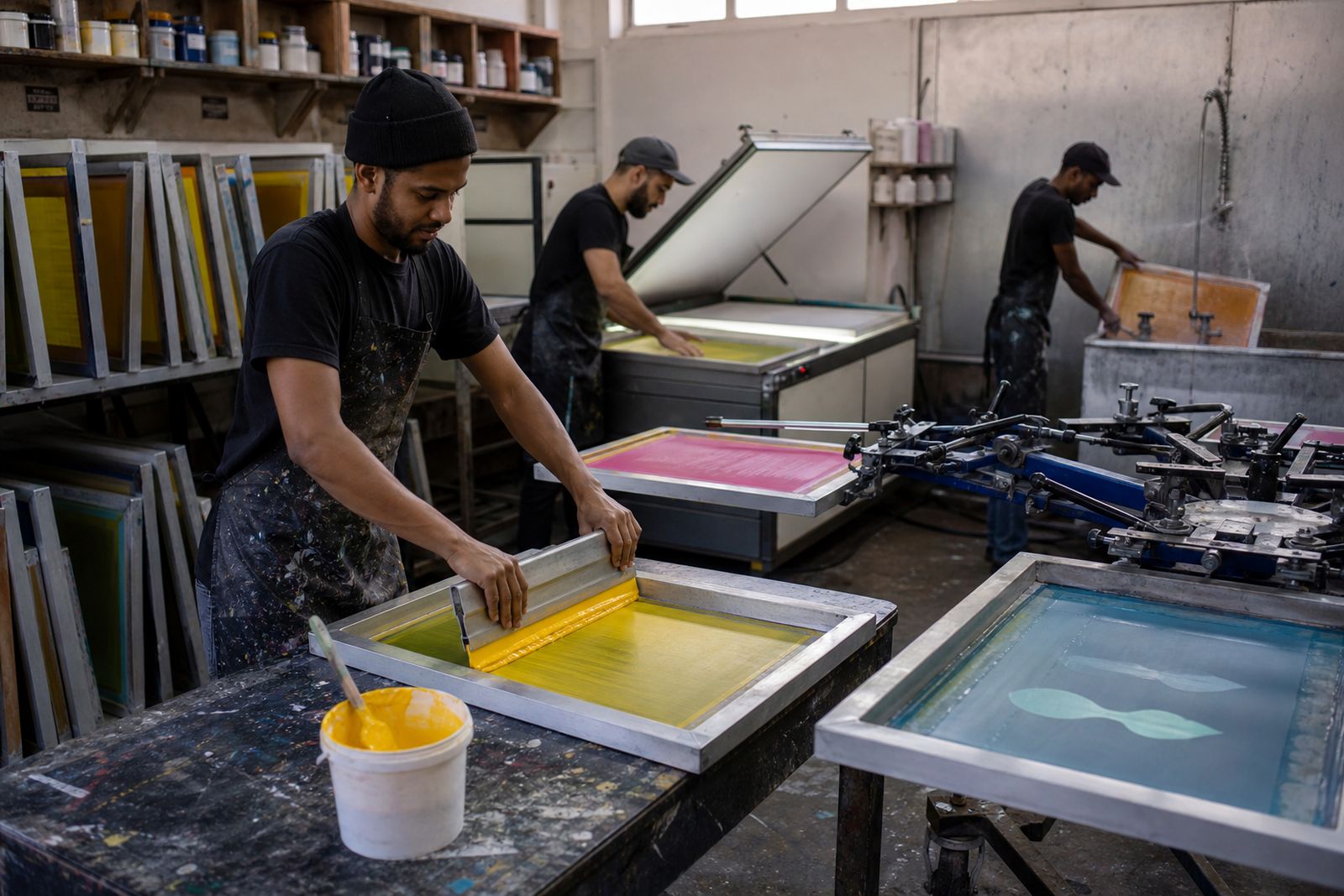
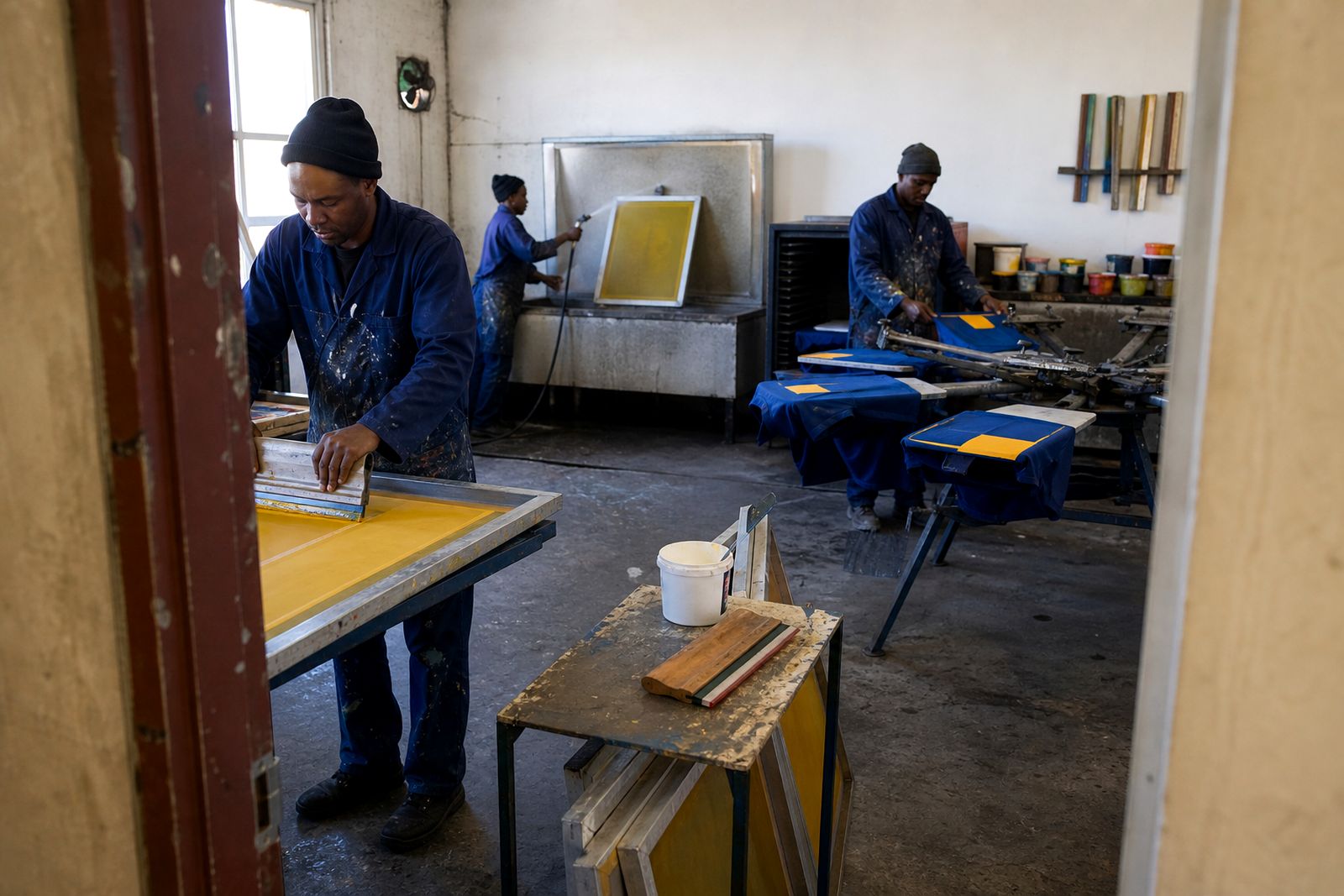
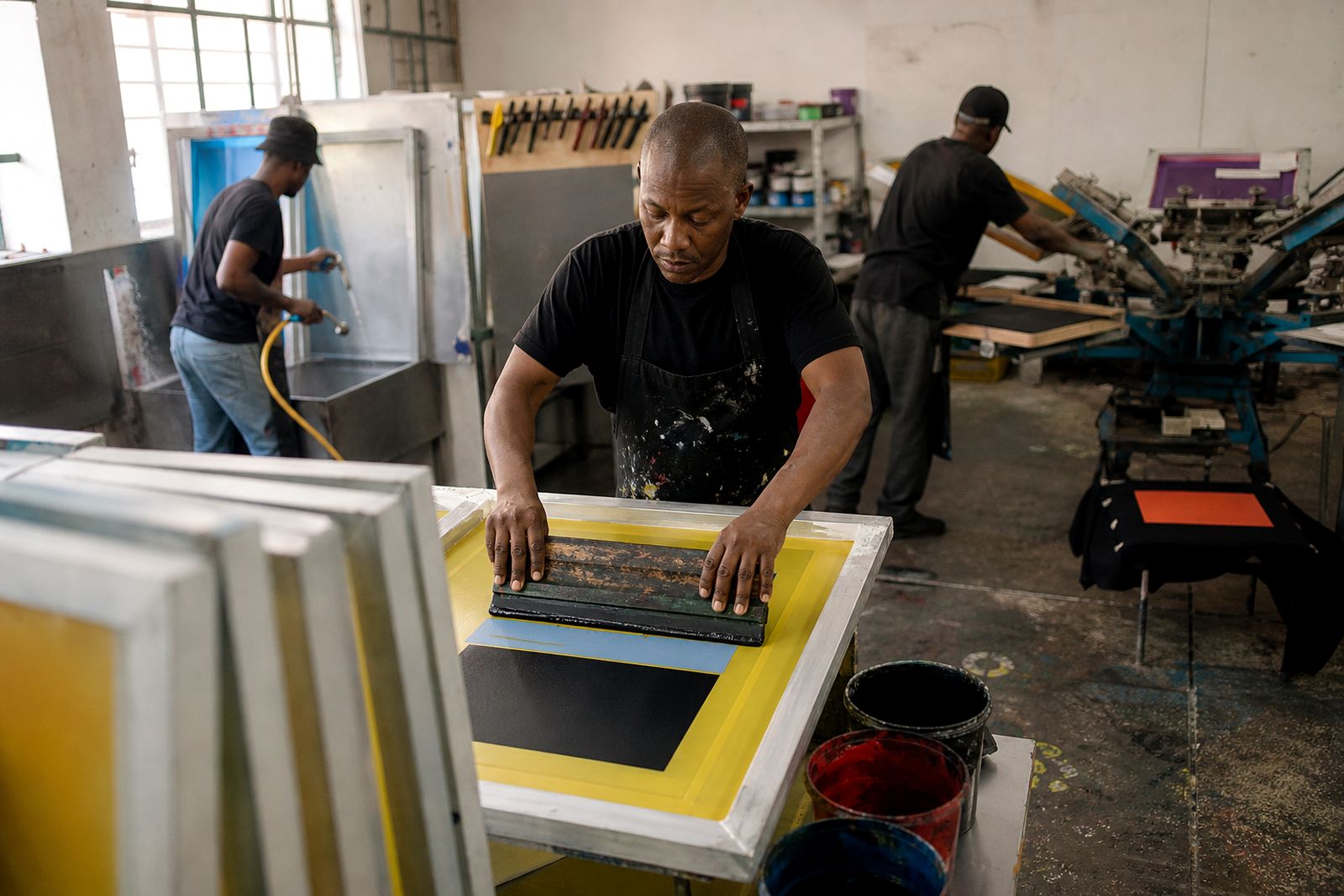
Tell us what you are printing
Send a note through our contact form with the inks and substrates you print, your mesh counts and frame sizes, your exposure unit and your town, and we will come back with practical advice and a quote.
Open the contact form