

Humidity rack note
Coastal dry-down rack spacing.
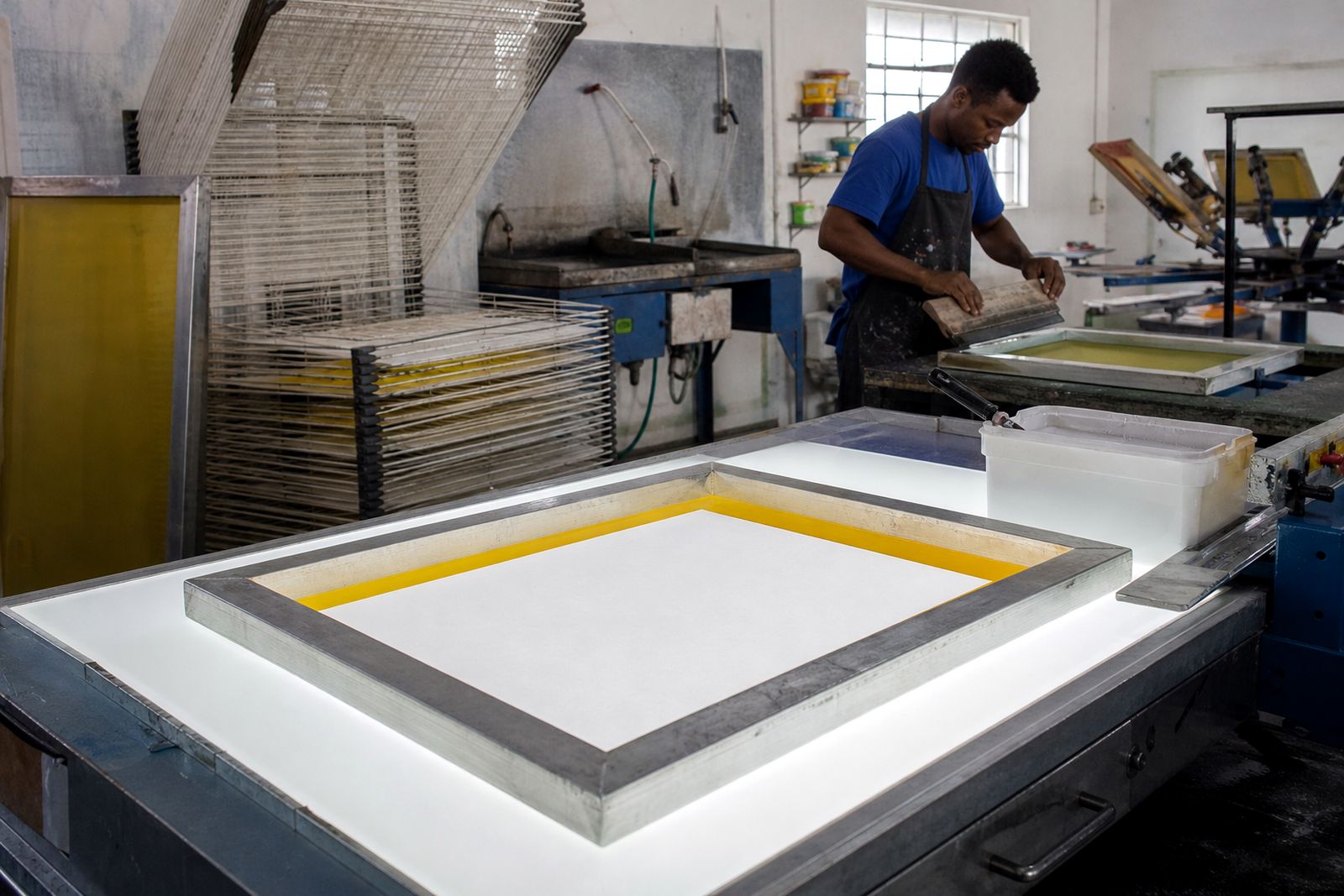
Use this card beside the drying rack when coastal air shifts through the print room. It notes spacing for wet screens after washout, with room to mark the date, mesh count, and any change in airflow. If your team needs a version matched to your rack layout or wall board, send the request through our contact form.
- Pin next to the dry-down rack
- Email us for reprints
Rack spacing in coastal air
Coastal humidity can slow dry-down, so keep wet screens spaced with enough air movement between frames. If screens are stacked too close, moisture lingers around the mesh, the stencil stays soft for longer, and reclaim work can become uneven.
Use this note as a quick studio check beside the rack. It helps keep the habit consistent when the weather shifts in Cape Town and along the coast.
What to check before screens go on the rack
- Leave a clear gap between frames so air can move around both sides.
- Check that washout water has drained before moving screens to the rack.
- Mark the date, mesh count, and any change in airflow or room setup.
- Watch for signs of slow drying, such as soft stencil edges or damp frame corners.
For screen rooms using dual-cure, diazo, or SBQ emulsions, dry-down habits matter just as much as exposure timing. The same applies after capillary film work, frame coating, and reclaim.
Keep the note tied to the room routine
Humidity rack spacing is part of the wider screen print process, from mesh tension and coating technique to washout, pinholes, and haze removal. It also helps when the room is affected by power cuts, because drying times and air movement can change quickly.
If you need a version matched to your rack layout or wall board, use the contact form and ask for a quote. Screen Stencil works from a stencil studio in Salt River, Cape Town, and supports screen print rooms across South Africa through practical, studio-ready guidance.
What our Screen Stencil customers say
Verified Google reviews
Tell us what you are printing
Send a note through our contact form with the inks and substrates you print, your mesh counts and frame sizes, your exposure unit and your town, and we will come back with practical advice and a quote.
Open the contact form