

Mesh count guide
43 to 165 mesh notes for SA ink systems.
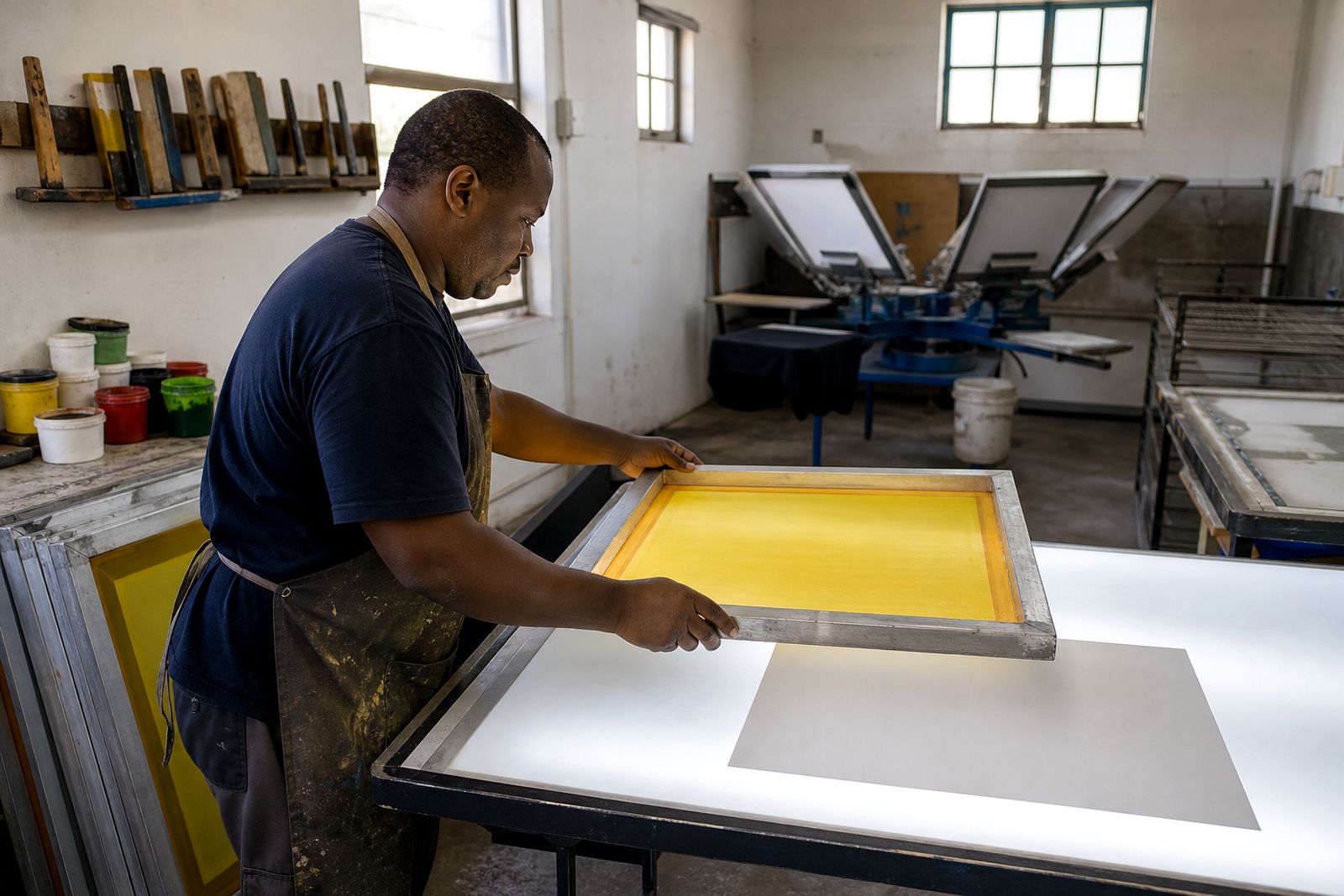
Use this card when a print room needs a quick check between 43, 77, 90, 120, 140 and 165 mesh. It notes common pairings for plastisol, water based and solvent systems used in South African shops, plus a reminder to match stencil build to ink deposit. If your wall chart needs a house version, send the request through our contact form.
- 43 to 165 mesh references
- Email us for reprints
Pick the mesh to suit the ink and detail
Mesh count is not chosen in isolation. It has to suit the artwork, the ink system and the deposit the print room needs. A higher mesh can help hold fine detail and keep the stencil thinner, while a lower mesh can move more ink for bold graphics, posters and some garment work. The right choice changes again when you move between plastisol, waterbased and discharge inks.
For South African shops, the practical question is often not only which mesh, but also how the frame, tension and stencil build behave together. Aluminium and timber frames do not always respond the same way. Tension, coating technique and exposure all affect how the screen prints after washout, especially when humidity, lamp age or power cuts have shifted the usual routine.
Use a quick check before you expose
Before a screen goes under the light, it helps to run a short check so the mesh, emulsion and coating are working as a set, not as separate guesses.
- Confirm the mesh count matches the intended ink deposit and detail level.
- Check frame tension and look for signs of slack mesh or uneven stretch.
- Match the stencil build to the emulsion choice, whether dual-cure, diazo or SBQ photopolymer.
- Inspect the scoop coating for evenness on both sides.
- Watch exposure timing if the unit, lamps or power conditions have changed.
That small routine can save time later at washout and help reduce pinholes, haze and touch-up work.
Keep the screen room notes practical
This guide works best as a working note for screen print rooms, not a theory sheet. Keep a record of what prints cleanly on garment, poster and sign work, then adjust the mesh count when the job, ink or room conditions change. Coastal humidity in places such as Cape Town and Durban can behave very differently from the dry Highveld air around Gauteng, so a setting that worked last week may need a fresh check.
If you need a stencil studio view on mesh, emulsions, capillary film, reclaim or exposure issues, speak to Screen Stencil. The team in Salt River and the showroom network can help you talk through the print room setup and decide what to test next.
What our Screen Stencil customers say
Verified Google reviews
Tell us what you are printing
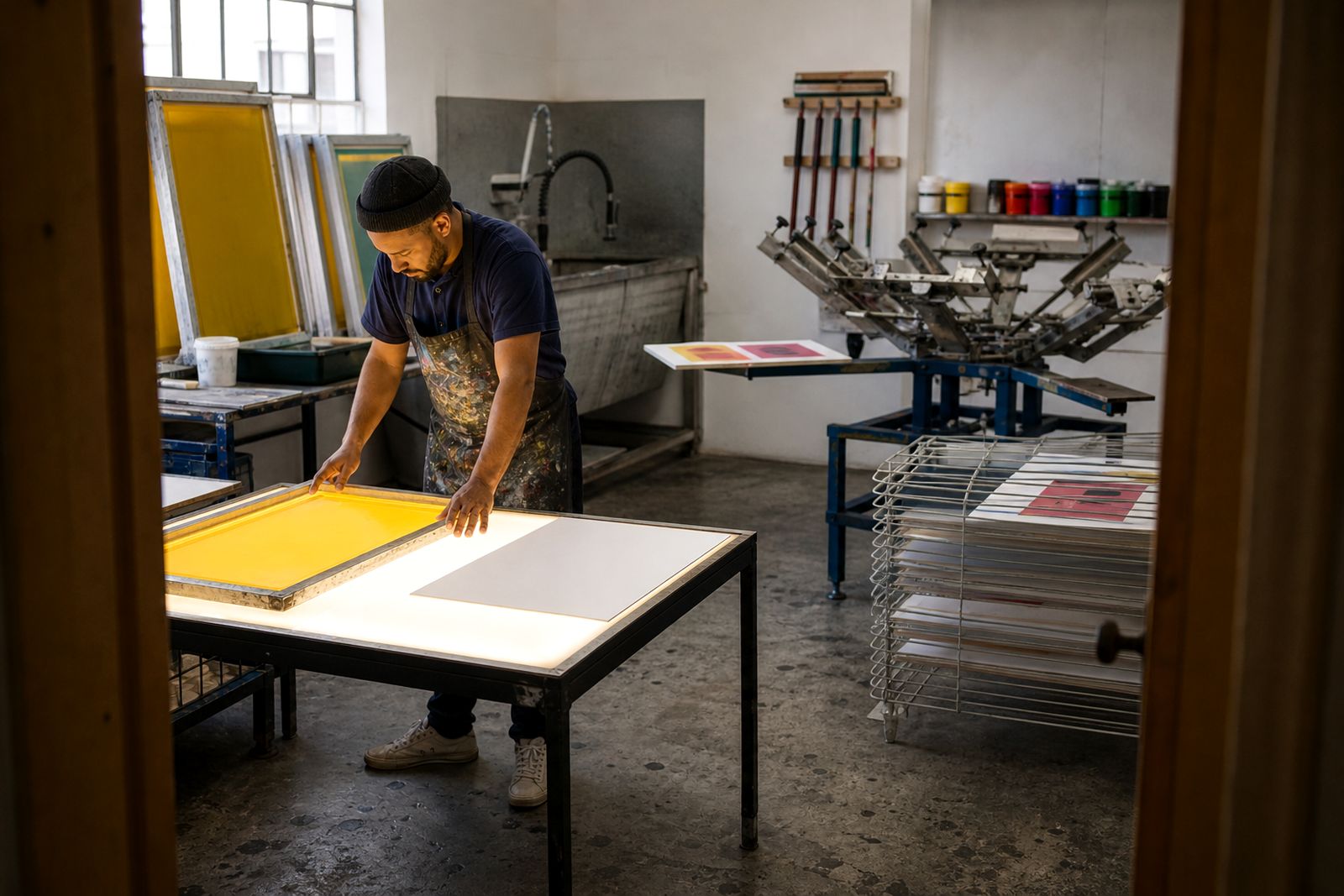
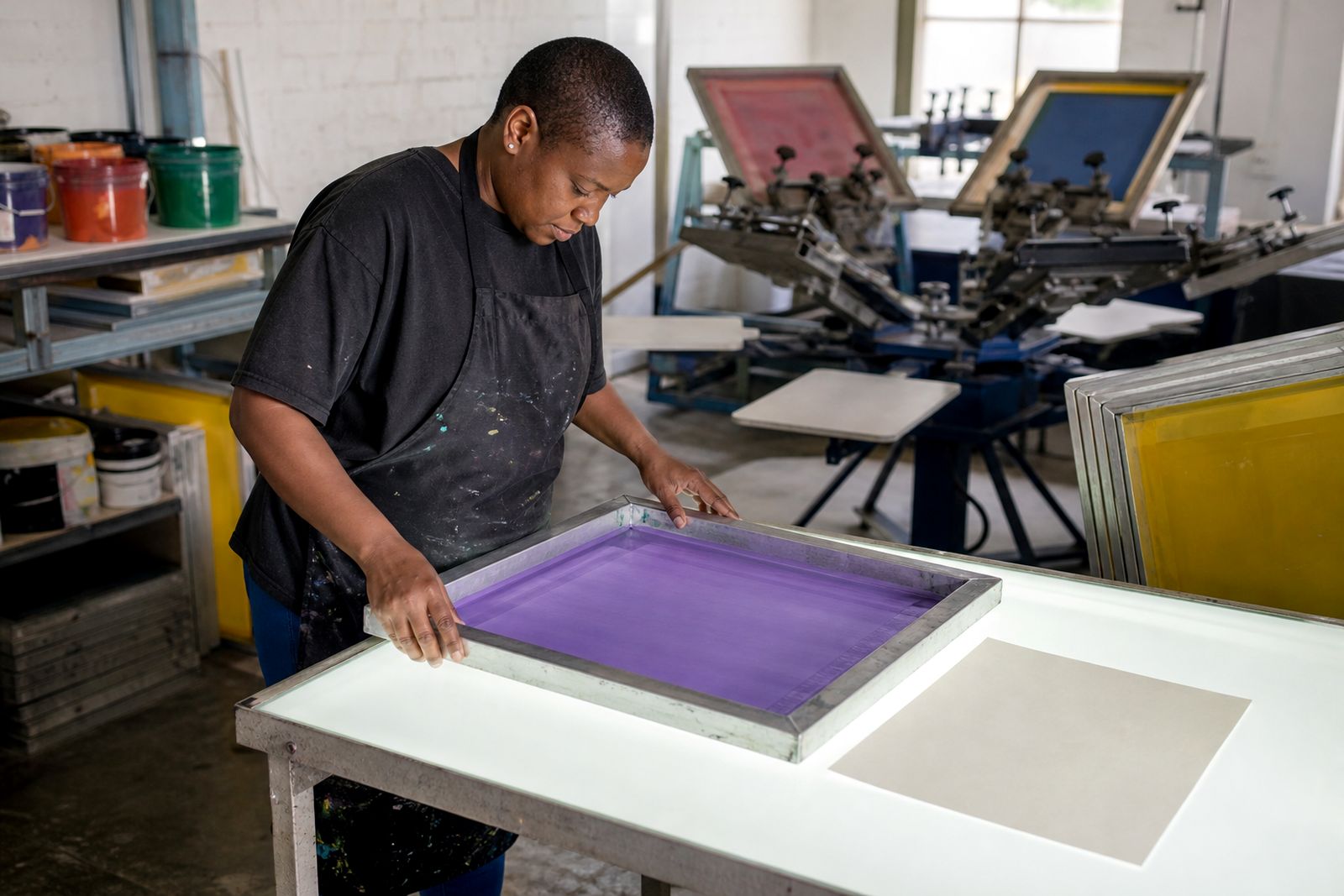
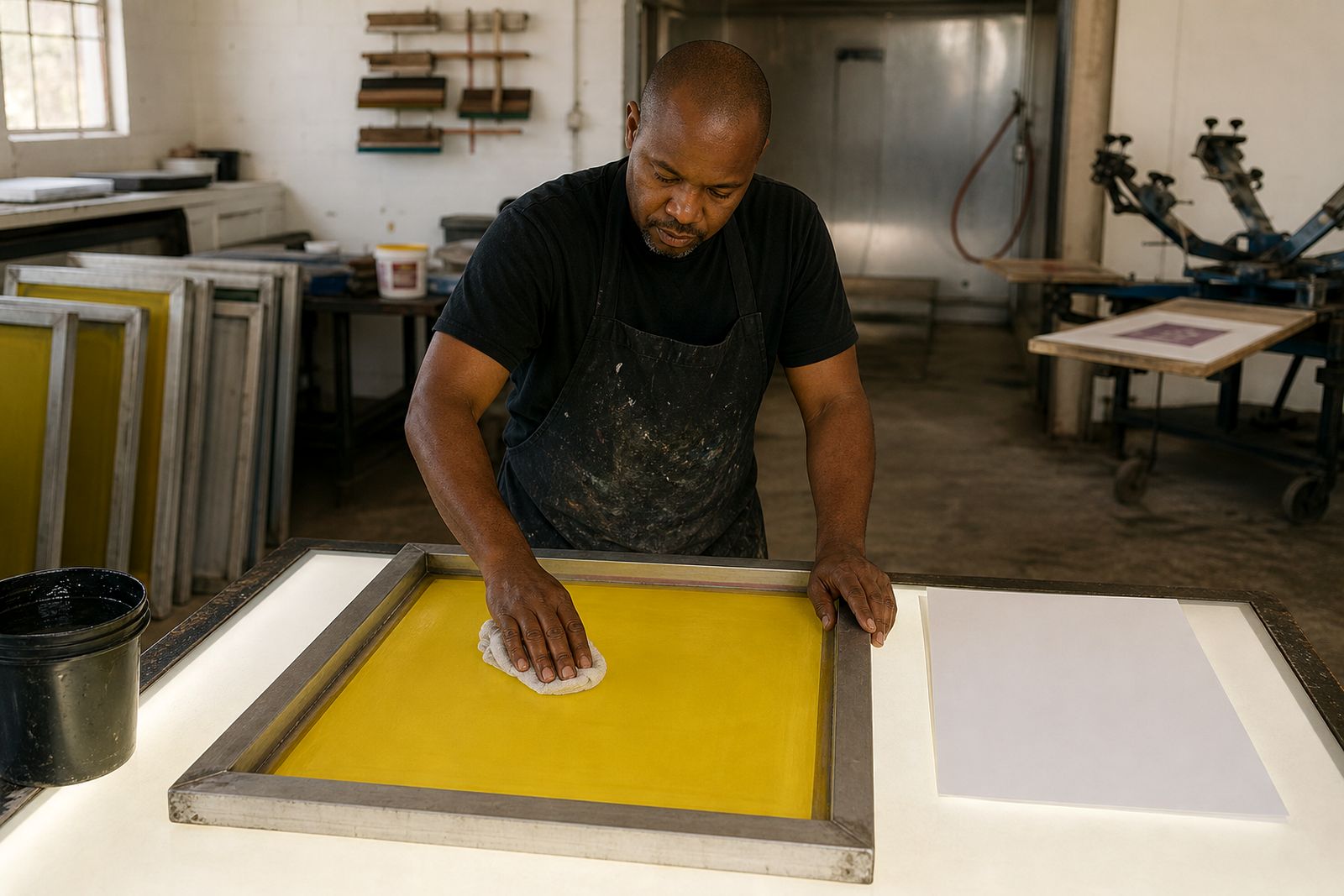
Send a note through our contact form with the inks and substrates you print, your mesh counts and frame sizes, your exposure unit and your town, and we will come back with practical advice and a quote.
Open the contact form