

Reclaim sequence
Emulsion, ink, haze, without chewing mesh.
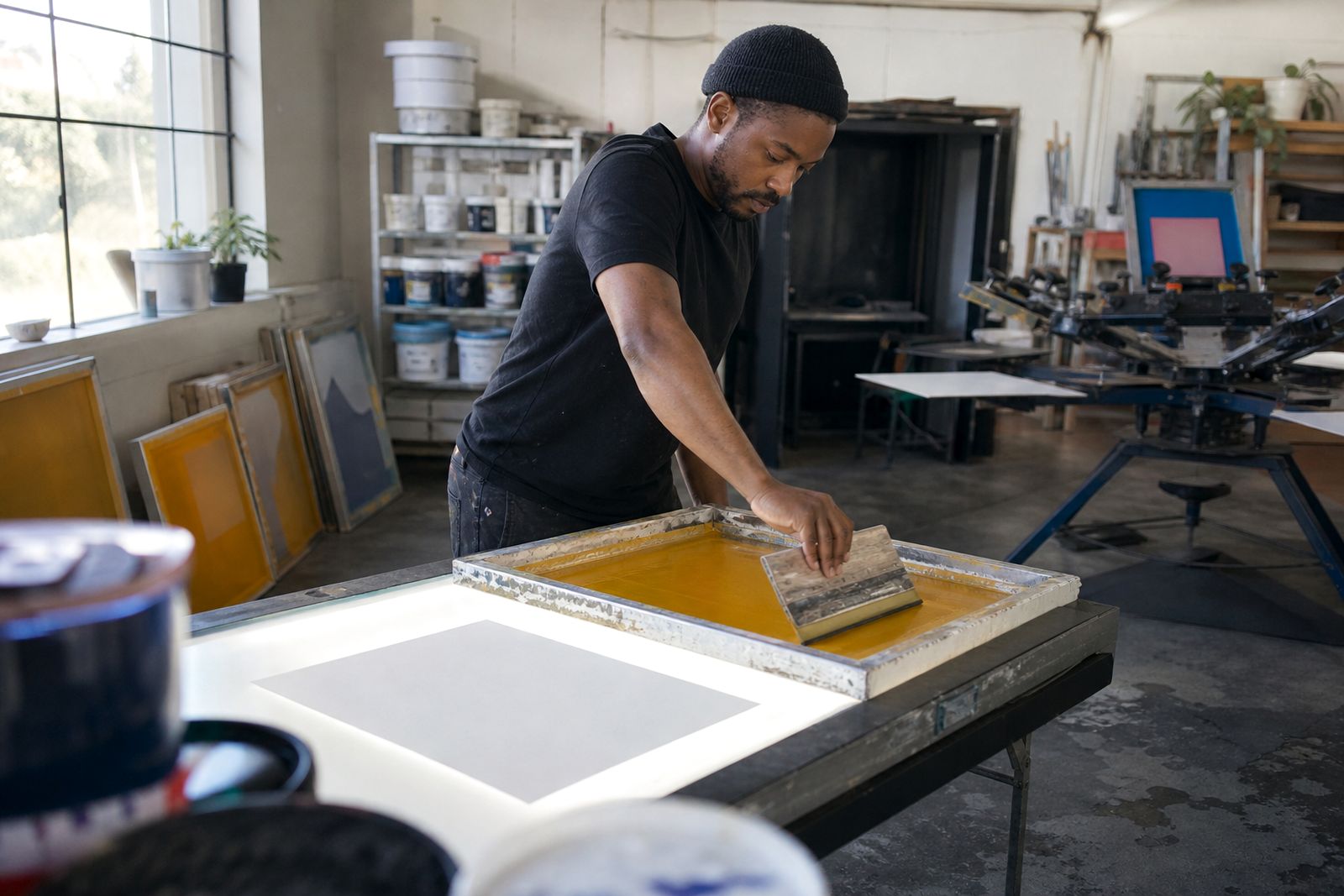
Need a reclaim card matched to your room routine? Use our contact form with the chemicals you stock, your mesh counts, and whether you strip emulsion before degreasing. Include notes on ghost images, pressure washer use, and winter drying in South African print rooms so the sequence fits the wall, not a textbook.
- Order of chemicals shown clearly
- Email us for reprints
Start with the dirty side
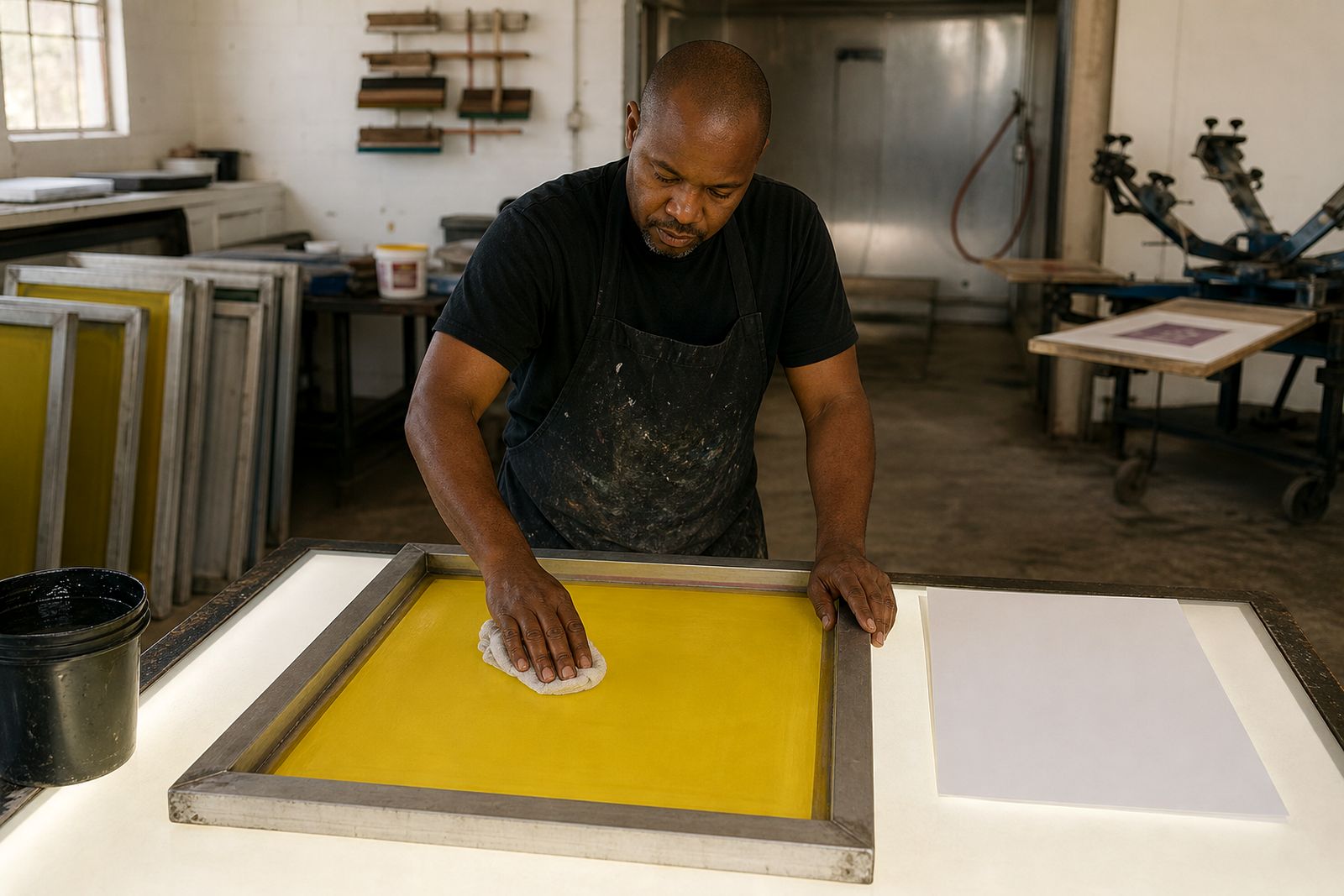
After printing, let the screen drain fully before you touch the reclaim stage. Keep the sequence simple: remove wet ink, soften the stencil, then move on to haze and residue. That order helps when you are running plastisol, waterbase or discharge work, because each system leaves a different kind of stain on the mesh.
If you are in a coastal room, give extra time for moisture to clear before you wash out or dry down. In drier Highveld air, the same screen may look ready sooner, but pinholes and stubborn haze can still show up if the washout was rushed. Keep the routine consistent with your room, your drying space, and the chemicals you stock.
Check the screen before reclaim
Before you reach for stronger cleaners, look closely at the mesh and frame. A good reclaim sequence protects both aluminium and timber frames, and it helps you spot damage before it becomes a re-mesh job.
- Check for dried ink in corners and along the tape line.
- Look for pinholes, ghost images and haze after washout.
- Confirm the mesh count and tension still suit the next job.
- Make sure the screen is fully dry before storage or re-coating.
If the stencil was difficult to expose or wash out, note the lamp age, exposure timing and coating method. Those details matter when you work with dual-cure, diazo or SBQ emulsions, or when you move between capillary film and direct coating.
Set the room routine
A solid reclaim sequence fits the way your room actually runs. That means planning for power cuts, winter drying, humidity near the coast, and the pace of garment, poster and sign work. It also means matching the process to the chemicals and tools on hand, including scoop coating technique, washout pressure and the way you remove haze.
Use the sequence as a wall card, then adjust it when your print room changes. If you need help matching a reclaim routine to your mesh, inks or emulsion system, use the contact form and send the details of your setup.
What our Screen Stencil customers say
Verified Google reviews
Tell us what you are printing
Send a note through our contact form with the inks and substrates you print, your mesh counts and frame sizes, your exposure unit and your town, and we will come back with practical advice and a quote.
Open the contact form