

Tension log sheet
Newton readings across a week.
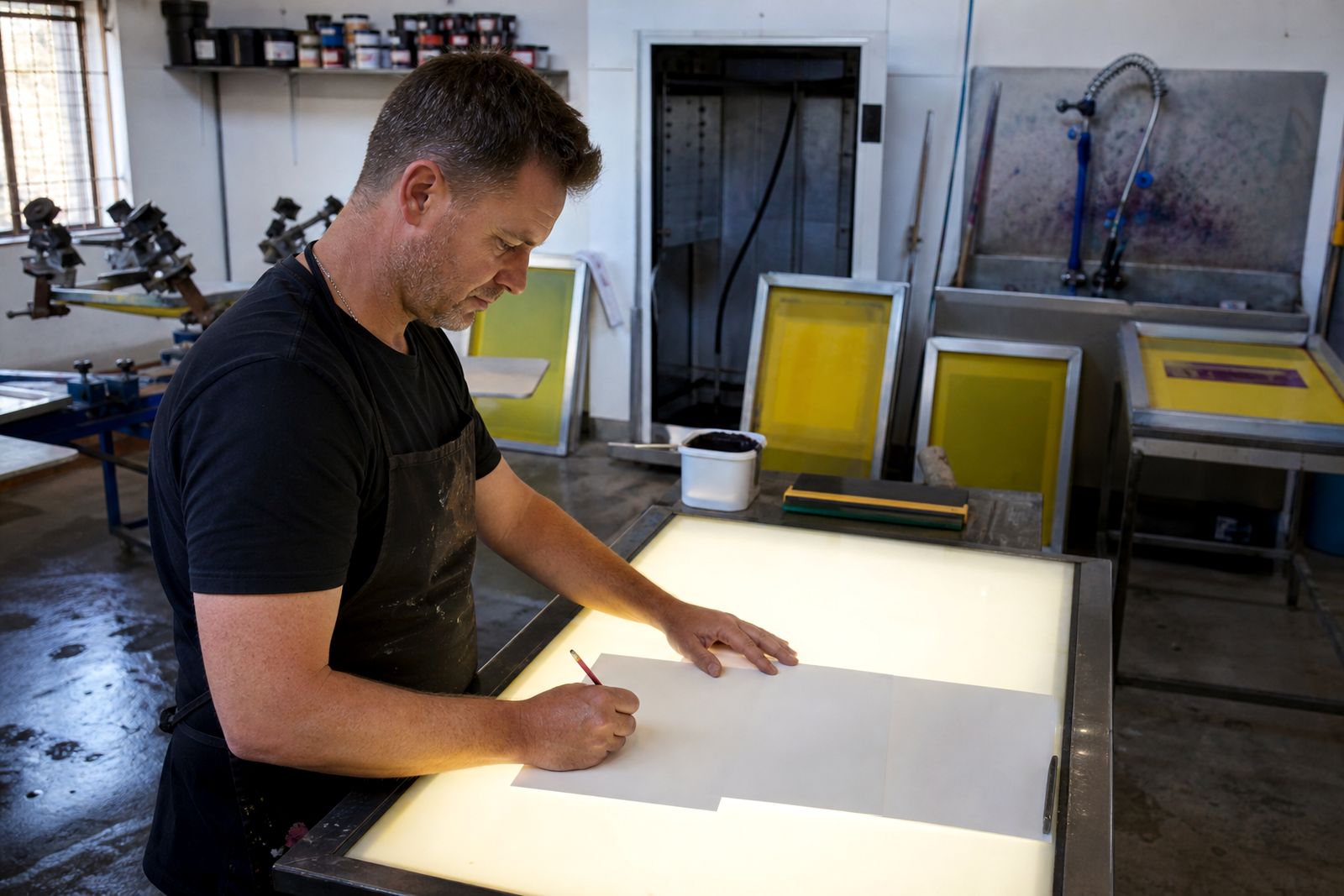
Use this printable sheet to record Newton readings on the same screen across seven days, with space for date changes and notes after washout or remesh. In South African print rooms, temperature shifts, humidity and repeated reclaiming can move tension faster than expected. If you need a version adjusted for your workshop layout or filing method, send details through our contact form.
- Tracks daily Newton drift
- Email us for reprints
Keep a steady record
Screen tension is one of those workshop details that is easy to leave until something starts to drift. A simple log helps you spot when a frame is holding steady and when readings begin to move after coating, exposure, washout or reclaim. For South African print rooms, that matters when the weather changes from coastal humidity to drier Highveld air, or when power cuts interrupt your normal routine.
Use the sheet with aluminium or timber frames, whether you are working with dual-cure, diazo or SBQ emulsions, or running capillary film jobs. It gives your team a common record for the same screen across a week, so you can compare readings alongside the work you are actually doing.
If you need help deciding how to file it with your other studio records, ask through the contact form and we will talk it through.
What to note each day
The most useful log is the one that gets filled in at the press or coating bench, not later from memory. Keep the notes short and practical, and add anything that could explain a change in tension or print behaviour.
- Record the newton reading, date and any change in mesh count or frame.
- Note coating method, exposure timing and lamp age if the screen was remade.
- Add washout comments for pinholes, touch-up, reclaim or haze removal.
- Mark any humidity shift, heat wave or power cut event that affected the day.
That kind of detail is useful whether you are printing garments, posters or sign work, especially when you are switching between plastisol, waterbase and discharge inks.
Fit it into your screen room routine
A tension log works best when it sits alongside your normal stencil habits. Use it with mesh records, scoop coating notes and exposure checks so the team can see what changed before a print problem appears. If a screen starts to underperform, the log can help you trace whether the cause was coating technique, pinholes, a tired lamp, or repeated reclaiming.
Screen Stencil supports screen print rooms from its stencil studio in Salt River, Cape Town, with showrooms in Tyger Valley, Clearwater, Cresta, Pavilion, Baywest, Mimosa and Riverside. If you want a version adapted to your workshop layout or needs, use the contact form and ask for a quote where needed for any printed materials.
What our Screen Stencil customers say
Verified Google reviews
Tell us what you are printing
Send a note through our contact form with the inks and substrates you print, your mesh counts and frame sizes, your exposure unit and your town, and we will come back with practical advice and a quote.
Open the contact form