

Diazo open time
Teaching studios and the quiet joy of a long open-time coat.
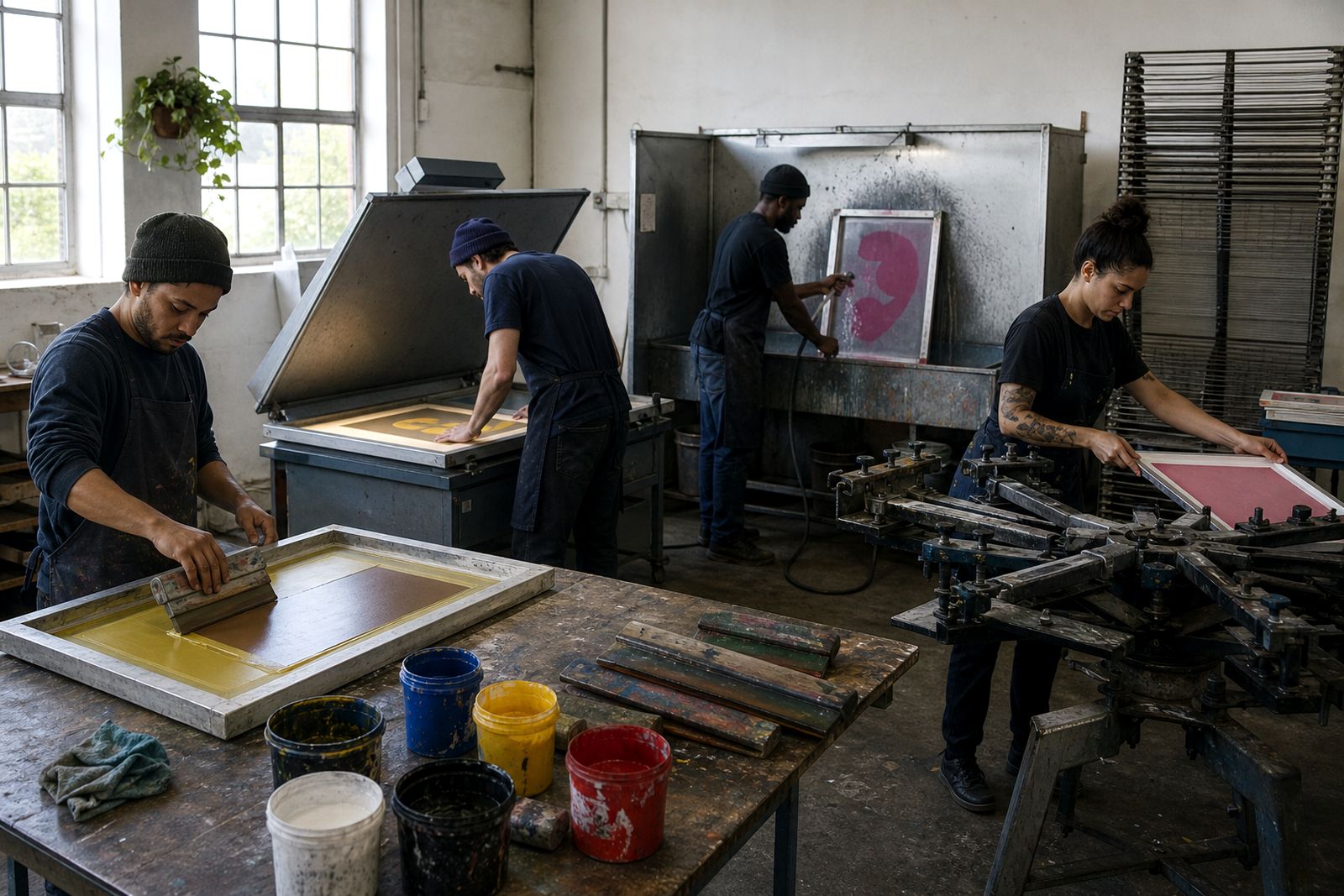
Checks before exposure starts
Diazo open time matters when coated screens must wait before exposure. In South African print rooms, heat, coastal moisture, and a dusty reclaim area can shorten that waiting window fast.
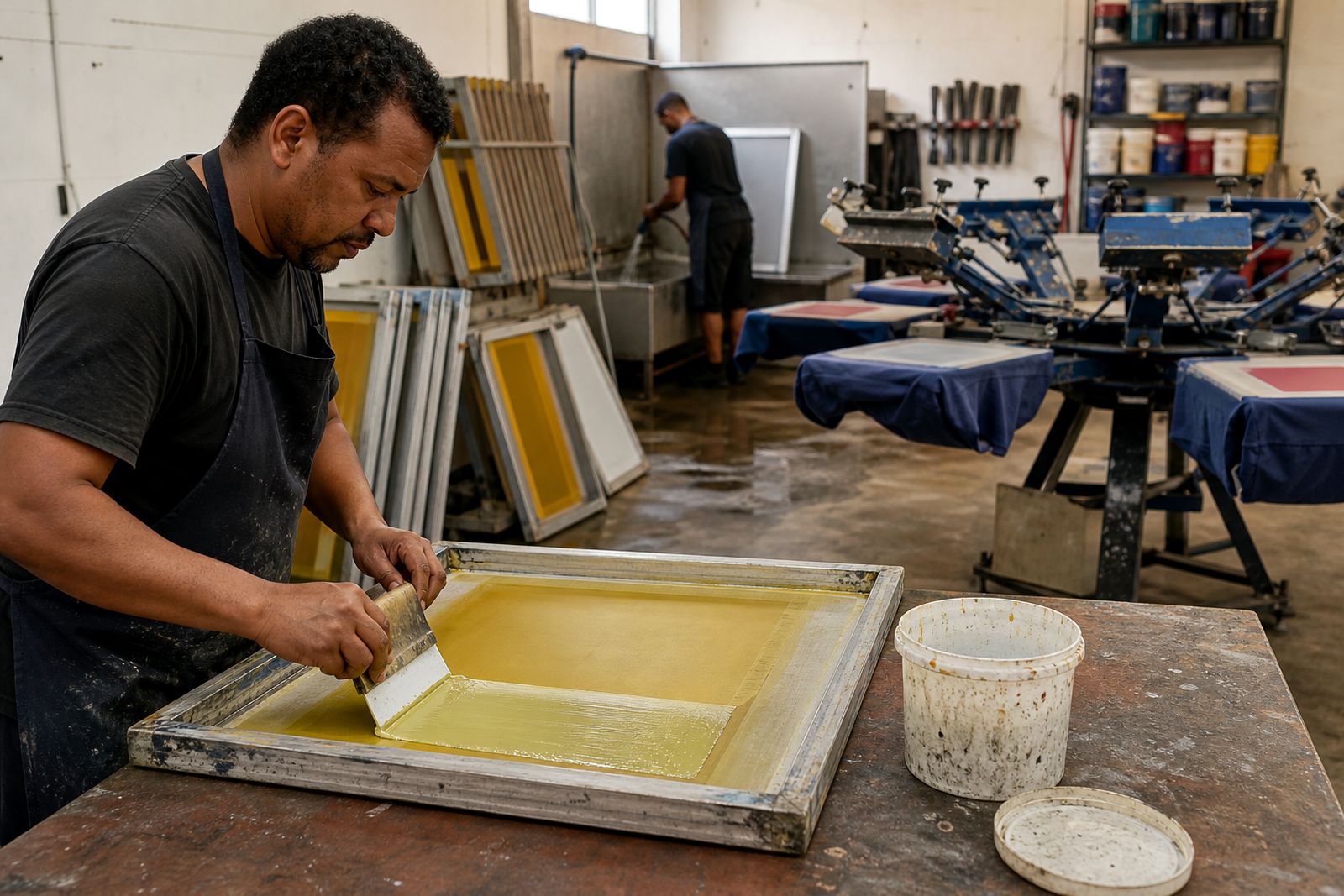
A fresh Diazo coat behaves differently on a cold Johannesburg morning than it does in Durban humidity. If the mesh picks up moisture again after drying, the stencil can soften, edge detail can lose snap, and pinholes become more likely. Good open-time notes help the team tell the difference between weak exposure and a screen that stood too long.
Read the open-time note with the mesh count, emulsion batch, and exposure record next to the frame number. When those details do not line up, stop and relabel before ink gets mixed. In Salt River shops, that small check often saves a remake on fine text or halftone work.
Mark the screen card with coating time, drying room conditions, and the latest usable exposure window. Add the related route under Stencils, note the mesh record under Screens, and point to matching reclaim or coating items in Kits. That keeps the opener, printer, and reclaim bench aligned.
- Coating time written on the frame
- Mesh count matched to the job
- Drying room light kept yellow
- Exposure note left for night shift
- Glass cleaned before test exposure
When a note does not match your setup, send it through our contact form so we can rewrite the card.
Small habits keep diazo open time useful after the first reading.
When open time starts slipping
On a rush ticket, the shorter explanation usually lands better.
Diazo emulsion does not fail in one dramatic moment. More often, the screen prints softer edges, holds tack in the image area, or washes out slower than yesterday's frame. Short notes work well here because operators can compare one symptom against one likely cause without paging through a long training sheet.
Studios sending work to Clearwater, Cresta, Pavilion, Tyger Valley, Baywest, Mimosa, and Riverside often see different storage conditions between prep and print. A sample pull, the frame tag, and the emulsion mix date tell a better story than memory after a busy handover. Bring the used screen record if faded labels or damp storage may have changed the result.
Screen Stencil supplies screen print stencils and mesh routes for South African print rooms, with notes built around actual coating, exposure, and reclaim routines.
What our Screen Stencil customers say
Verified Google reviews
Also worth a look
Tell us what you are printing
Send a note through our contact form with the inks and substrates you print, your mesh counts and frame sizes, your exposure unit and your town, and we will come back with practical advice and a quote.
Open the contact form