

Export mark edge
Stencil art that still reads on corrugated export marks.
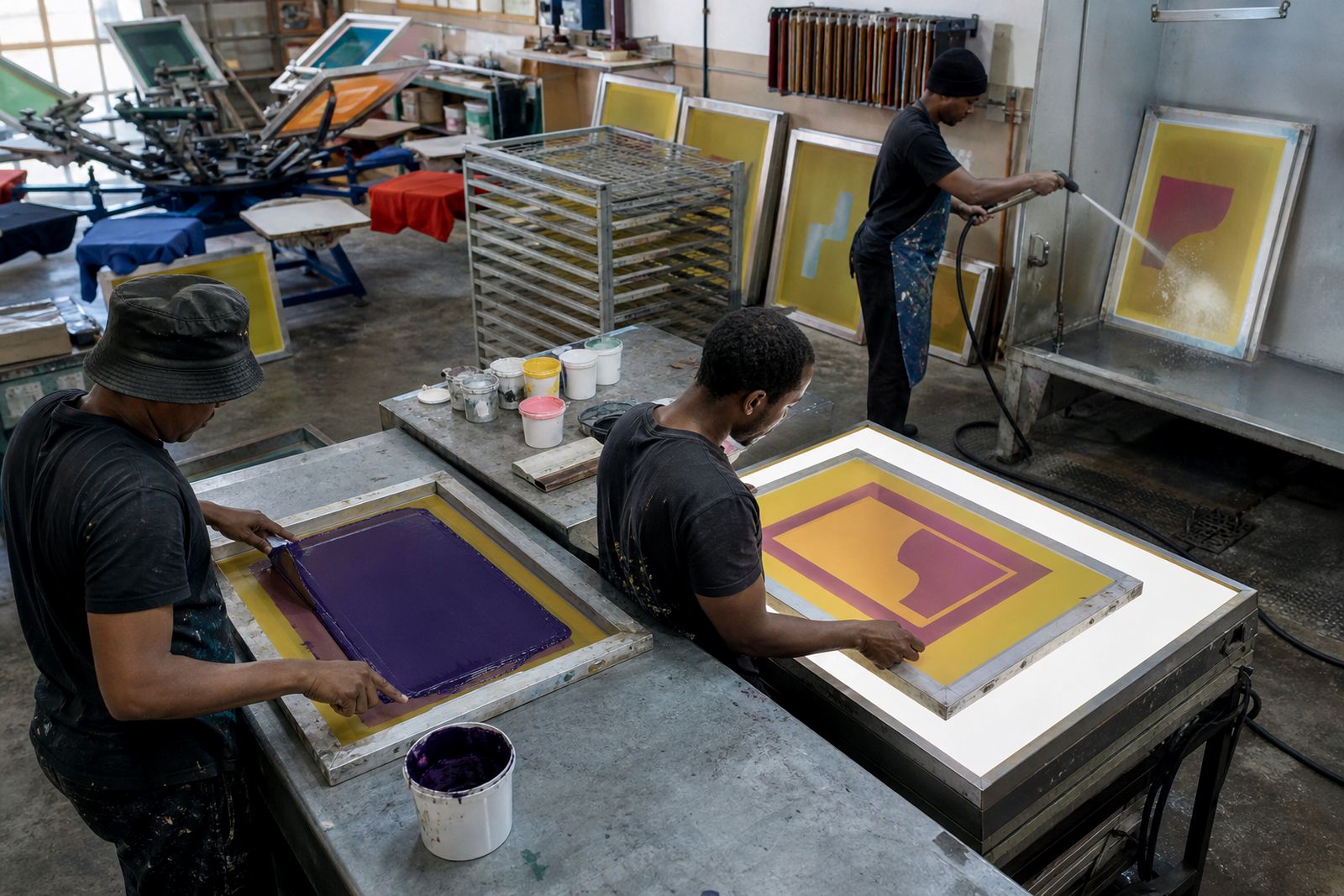
Outer border on export cartons
Export mark edge deals with the outer stroke used on crate codes, handling marks, and destination text that must remain legible after rubbing on corrugated board. It frames it for print rooms that pull stencils for rough packing lines, not for gallery walls. The note focuses on edge weight, gaps that clog, and the kind of wear seen on stock moving through depots and coastal storage.
A thin perimeter can disappear once ink sinks into kraft liner and the carton picks up scuffs. Durban humidity, dock dust, and stacked bundles can soften a sharp mark before the load reaches inspection. Export mark edge checks whether the border should open up, hold back from folds, or break at pressure points so the read survives handling.
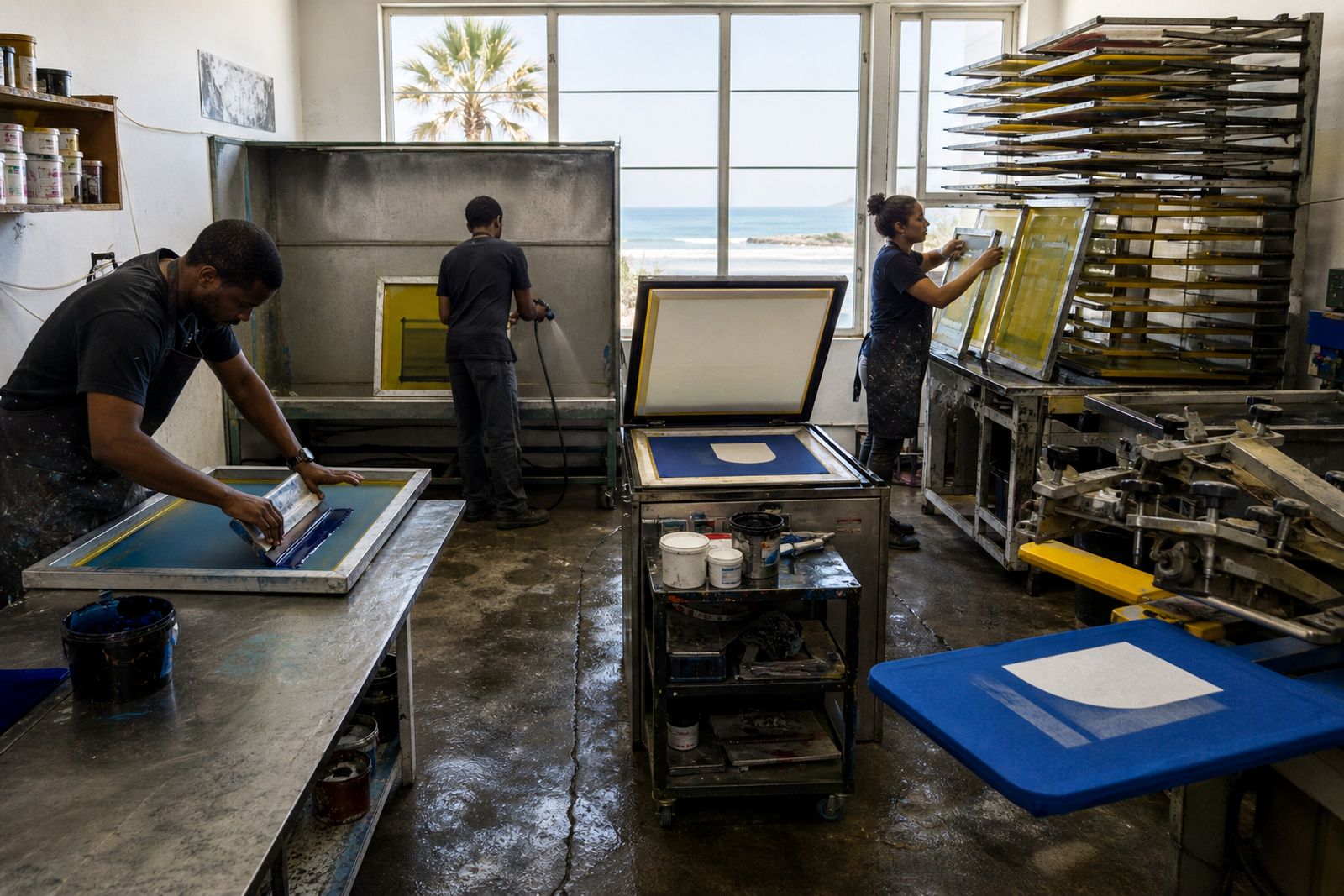
Keep the stencil file and the mesh record together before exposing the screen. If the edge width on the ticket differs from the art, stop and correct it before mesh coating and burn. In Salt River print rooms, that small check saves arguments when one shift prints a bold border and the next shift receives faded cartons from a supplier.
Mark the ticket with the final edge treatment and link the related items under both Stencils and Screens. When the job calls for a packing-line part, pull the matching note from Kits rather than guessing from an old crate sample. Export codes read best when the border, text height, and mesh choice are logged together.
- Border clear of carton fold line
- Edge width matched to absorbent board
- Breaks placed away from key letters
- Destination mark noted on job card
- Glass cleaned before judging thin detail
When a note does not match your setup, send it through our contact form so we can rewrite the card.
Small habits keep the export mark edge useful after the first reading.
Readable after dock handling
When the ticket is rushed, long explanations tend to drag.
A night lead often has to fix a shipping mark between proof pulls. Export mark edge gives the operator the border to compare against board grade, mesh count, and ink laydown. Each check fits the pace of a working print room.
Jobs heading to exporters near Durban, Gqeberha, and Cape Town often arrive on mixed corrugated stock, so the same art does not always hold the same edge. A sample from Clearwater, Cresta, Pavilion, Tyger Valley, Baywest, Mimosa, or Riverside can show how shelf handling differs from freight handling.
Screen Stencil supplies screen print stencils and mesh for South African print rooms, with job details handled by email. For export mark edge, the useful information is the carton surface, intended mark size, and whether the print sits near a crease, staple line, or taped seam.
What our Screen Stencil customers say
Verified Google reviews
Also worth a look
Tell us what you are printing
Send a note through our contact form with the inks and substrates you print, your mesh counts and frame sizes, your exposure unit and your town, and we will come back with practical advice and a quote.
Open the contact form