

First coat photo
Why every coating day starts with one honest photo of the wet face.
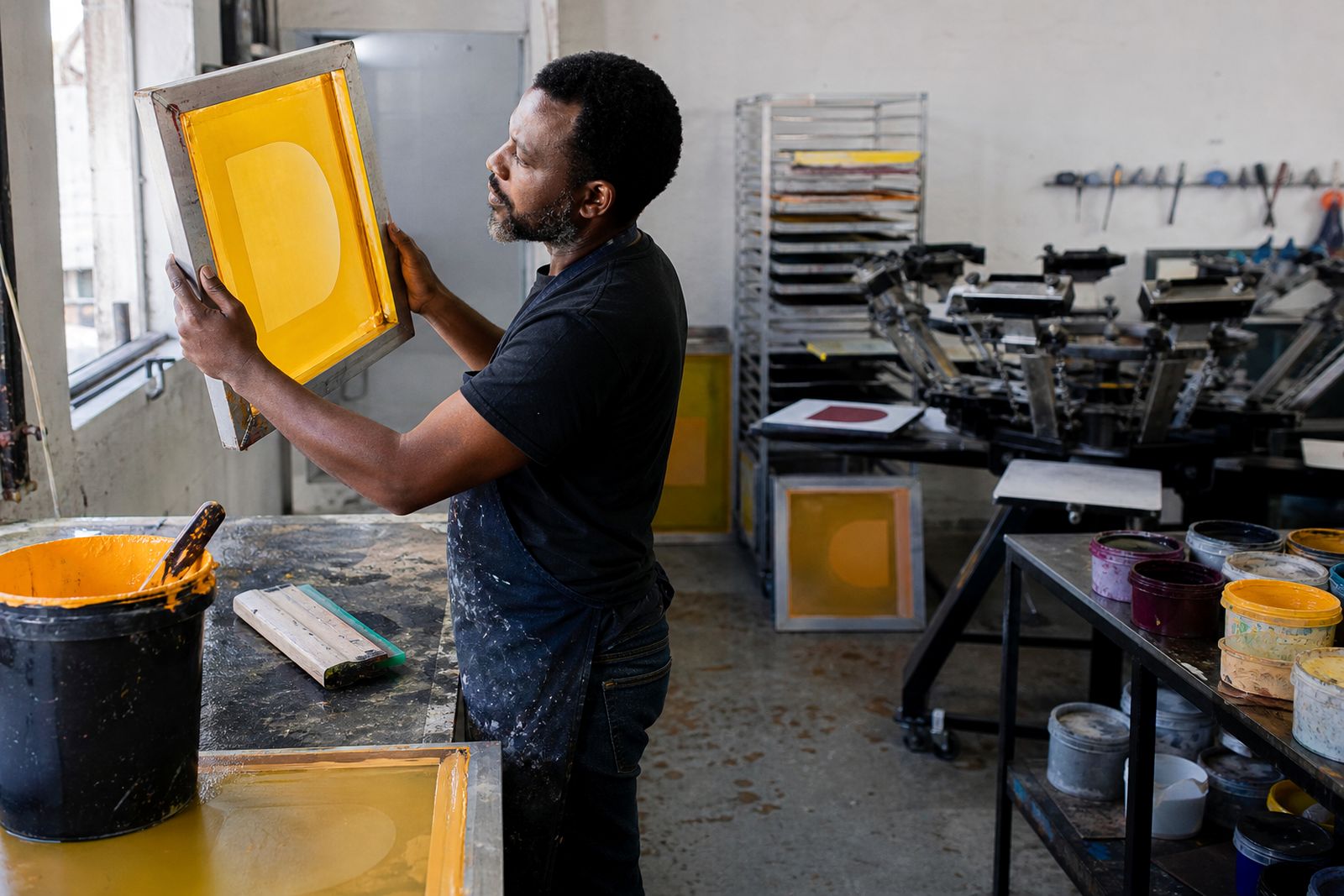
Wet-face checks before exposure
A first-coat photo belongs to production control, not office theory. It records the emulsion face while it is still wet, before fan drying, touch-ups, or pinhole spotting change what the mesh looked like at coat-out. On South African print-room benches, that one image settles later questions about edge build, streaks, and coating pressure.
Missed images usually show up later as expensive guessing. A Durban room battling humid air may read a soft edge very differently from a dry Gauteng shop, so the opening photo gives both teams the same starting evidence. When the first pass over the scoop coater leaves a rib or a thin lane, the camera catches it before exposure muddies the story.
Keep the photo beside the job card, mesh count, and stencil spec for that screen. If the frame is marked 43T but the image notes read like a finer deposit, stop and check the rack label before reclaim stock gets wasted. In Cape Town winter, the note also helps crews separate moisture issues from a poor coat on the glass side.
File the image with the actual screen record, not in a general phone album. Add the stencil route under Stencils, note the frame stage under Screens, and point to Kits only when the same scoop coater or degreaser mattered to the result. That way the next operator sees what was coated, with what, and where the screen sat before drying.
- Photo taken before the drying cabinet
- Mesh count visible on the frame
- Wet sheen even across the image area
- Scoop coater size noted on ticket
- Dust on glass marked before exposure
When a note does not match your setup, send it through our contact form so we can rewrite the card.
Small habits keep the first coat photo useful after the first look.
What the image must show
Frame the shot so the coated face, one corner, and the mesh label all read clearly. A close crop of glossy emulsion tells nobody whether the streak sat near the clamp side or across the full print width. Good records come from ordinary angles, steady light, and no filter tricks.
Shops servicing Pavilion, Tyger Valley, Baywest, Mimosa, Riverside, Clearwater, and Cresta often pass work between day and night crews, so the first-coat image needs to go with the ticket. Include the room condition if it mattered, such as coastal moisture, Highveld dust, or a colder washout area after rain. A reference pull from the previous screen can sit beside the photo when deposit thickness is under debate.
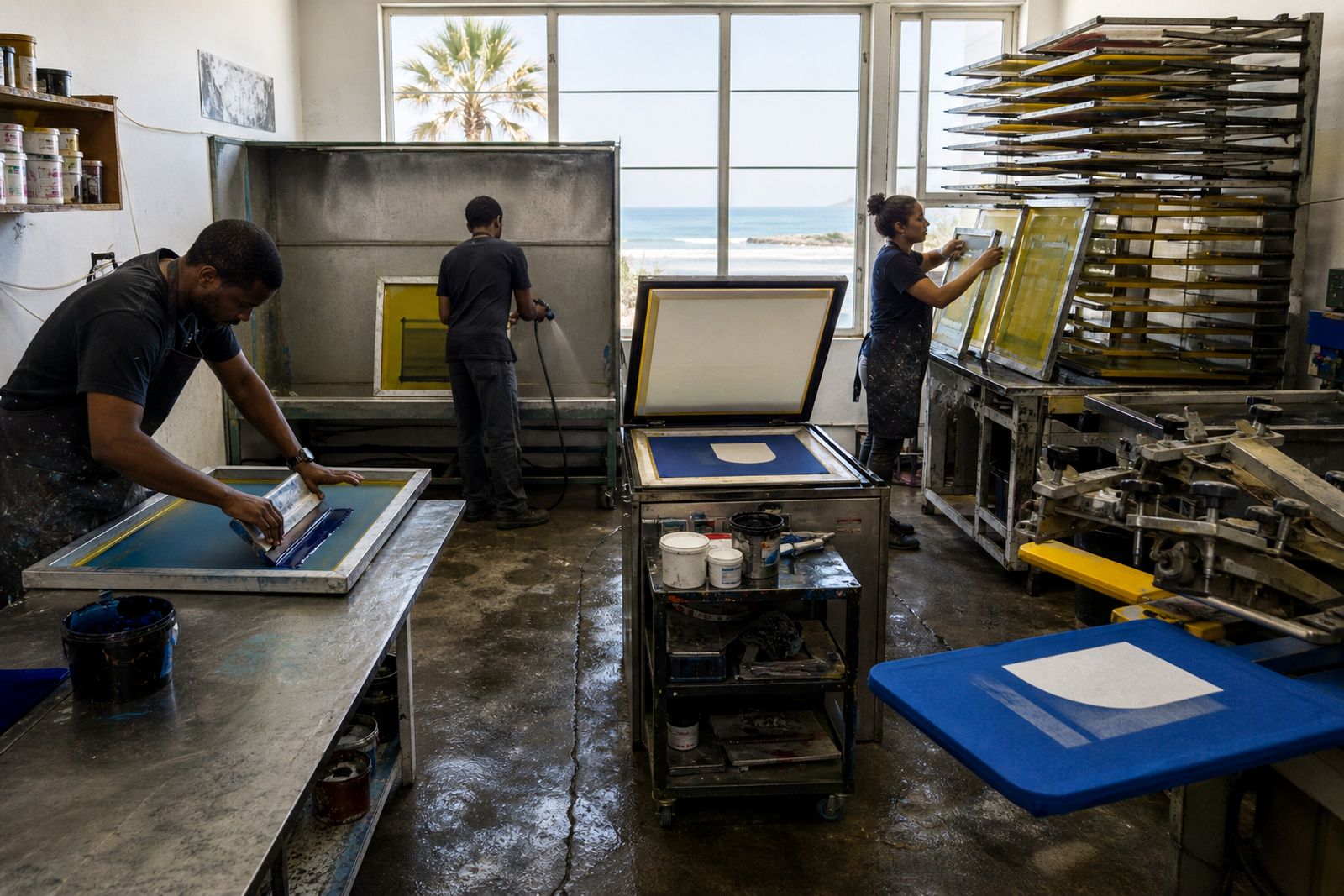
Screen rooms coat, expose, and reclaim screens for textile and flat-stock printing. The record matters most when several operators touch one job across different shifts or branches.
What our Screen Stencil customers say
Verified Google reviews
Also worth a look
Tell us what you are printing
Send a note through our contact form with the inks and substrates you print, your mesh counts and frame sizes, your exposure unit and your town, and we will come back with practical advice and a quote.
Open the contact form