

Gallery transfer craft
Stencil art transfers for editions that still feel hand-made.
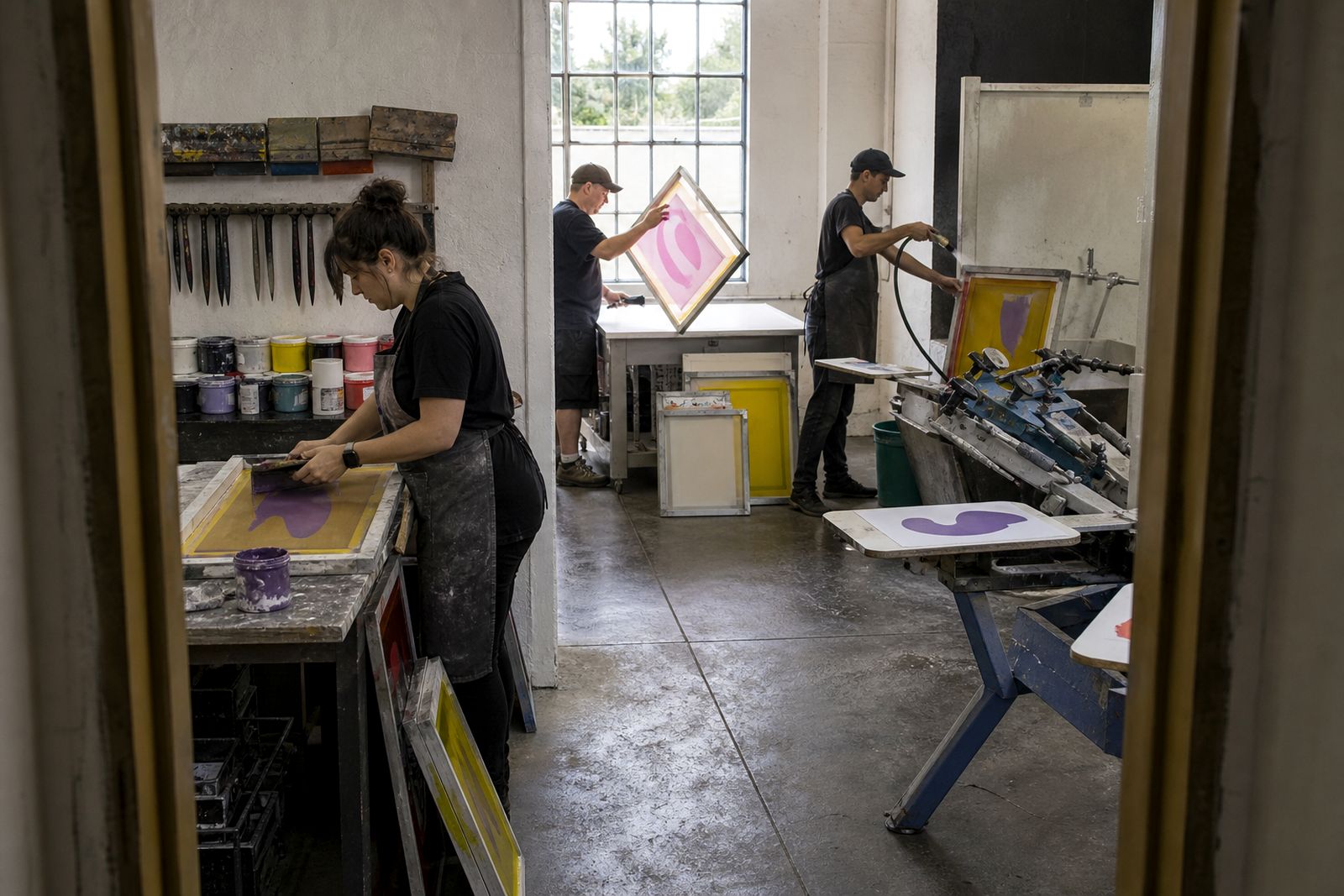
Gallery transfer checks at setup
Gallery transfer craft deals with getting artwork off a source sheet and onto a printable carrier without losing the hand-worked character collectors expect. Shanaaz Hendricks frames it for edition rooms where notes must help the person coating, exposing, registering, and packing. In South African studios, that usually means speaking plainly about paper stock, adhesive tack, and mesh choice instead of writing a long theory piece.
Transfers for gallery runs often fail at the boring stages, not the dramatic ones. A damp coastal morning can soften backing paper, while Highveld dust can sit on clear film and read like extra linework at exposure. Checking release, surface wipe, and registration marks before the pull saves more sheets than arguing over the artwork after the fact.
Keep the job card, the stencil drawing, and the mesh plan open at the same time. If one names a fine halftone and another shows a coarse screen, stop and correct the paperwork before ink hits the table. In Salt River print rooms, that single comparison often prevents a transfer being remade only because two shifts used different terms for the same edge.
Mark the transfer method on the ticket and file the matching links where the bench can see them. Put the artwork route under Stencils, the mesh decision under Screens, and any application extras under Kits. That way the next operator can trace the full job from image to pull without hunting through old messages.
- Test peel on one corner first
- Mesh count matched to image detail
- Backing paper kept dry and flat
- Registration marks visible after transfer
- Glass and film wiped before exposure
When a note does not match your setup, send it through our contact form so we can rewrite the card.
Small habits keep gallery transfer craft useful after the first look.
Short notes for busy benches
Long write-ups seldom help when a rush ticket is moving.Gallery transfer notes stay readable so a night lead can finish the job between proofs.
Edition work moves between design counter, darkroom, print bed, and packing table, so the writing has to survive handoffs. A tight note is easier to trust when someone is checking screen tension with ink on their gloves. The aim here is not polished reading but usable instruction beside a live job.
Reference material matters more in gallery transfer work than it does in volume signage. Shops and suppliers around Clearwater, Cresta, Pavilion, Tyger Valley, Baywest, Mimosa, and Riverside may each send stock with slightly different release behaviour, white point, or surface tooth. Bring the actual sample, especially when the edition must resemble a faded coastal paper piece or a cleaner Highveld print with less atmospheric staining.
Screen Stencil handles these briefs for South African print rooms that need transfer-ready stencil and mesh information recorded clearly. Most requests come through with artwork references, edition counts, substrate notes, and the site where the screens will be used.
What our Screen Stencil customers say
Verified Google reviews
Also worth a look
Tell us what you are printing
Send a note through our contact form with the inks and substrates you print, your mesh counts and frame sizes, your exposure unit and your town, and we will come back with practical advice and a quote.
Open the contact form