

High mesh thin coat
Thin viscosity on 140+ mesh without pinholes in the halftone.
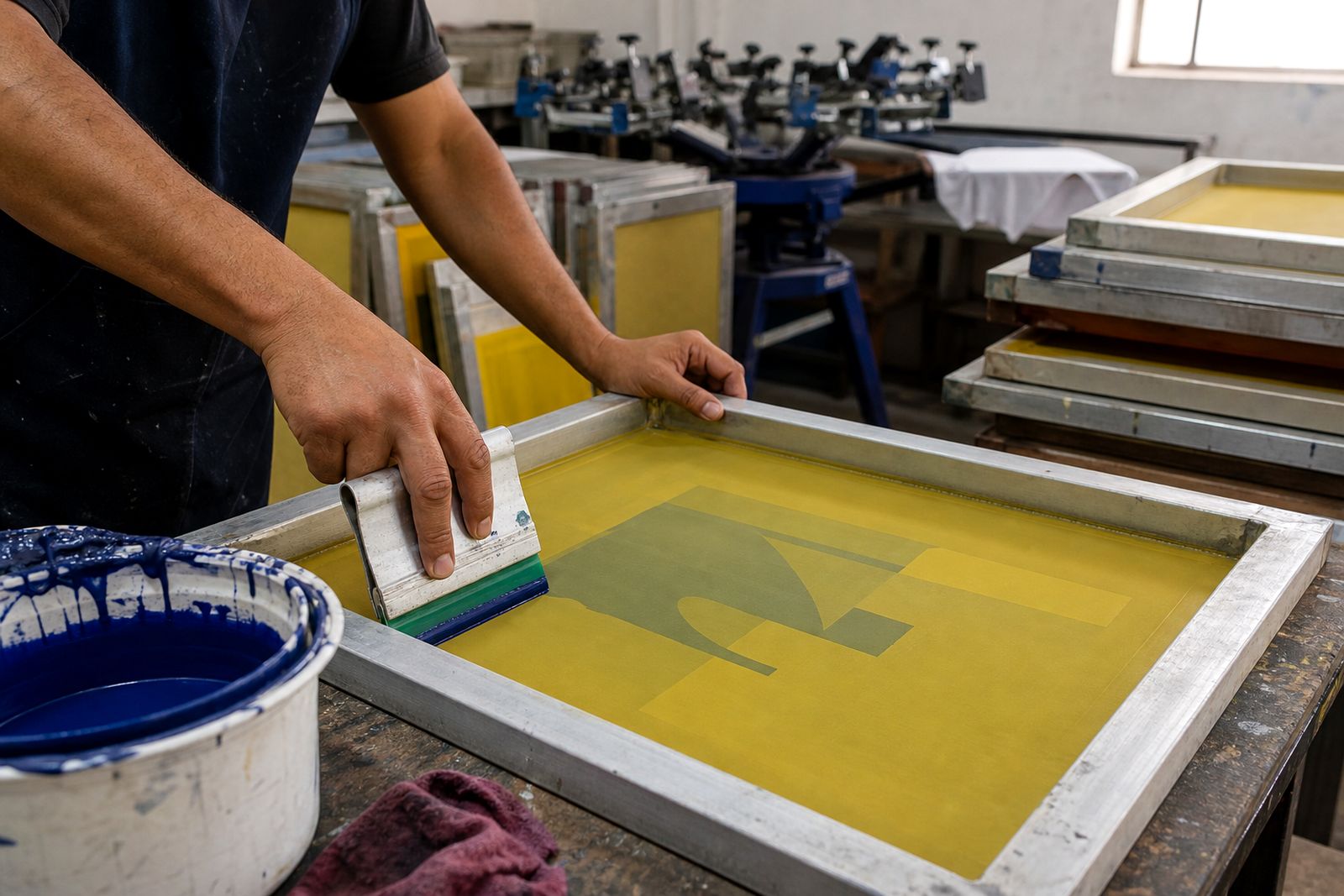
Coating checks for 140T plus
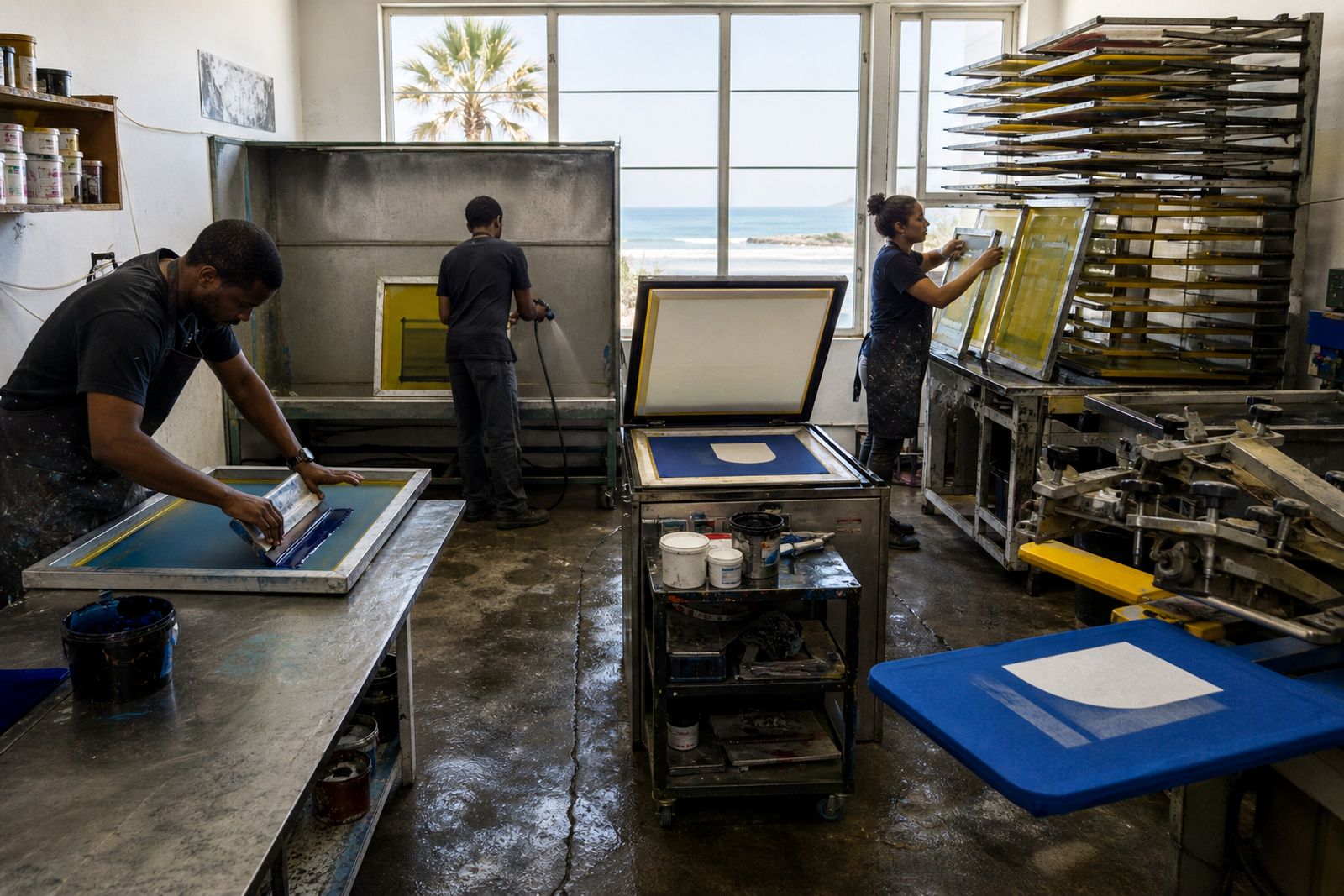
High mesh thin coat refers to a lean emulsion layer on 140T to 180T mesh where halftone dots and fine type must open cleanly. In South African print rooms, this setup is often chosen for bottle labels, small decals, instrument panels, and close-detail spot colour work. The note focuses on coating control, drying discipline, and the checks that stop pinholes before exposure.
Thin coats on high mesh react quickly to dust, salt air, and over-handling, especially in coastal shops where screens stand longer before burning. A screen that looked even in the darkroom can still fail if the mesh was not degreased properly or if the coating edge built up near the frame. Watch the first pull for peppering in solids and broken halftone bridges rather than assuming the positive is at fault.
Match the mesh count written on the frame and the emulsion note on the job card before coating starts. If the frame says 120T but the artwork expects a 150T hold, your deposit thickness and exposure target will shift straight away. In Salt River and similar busy rooms, that small check prevents rewash after the washout booth is already backed up.
Record the mesh and coat direction on the ticket, then file the stencil reference under Stencils and the frame note under Screens. Where the job needs a matched scoop coater edge, reclaim chemistry, or blockout tape, pull the right components from Kits before the screen reaches the cabinet. That keeps the thin build consistent from one frame to the next.
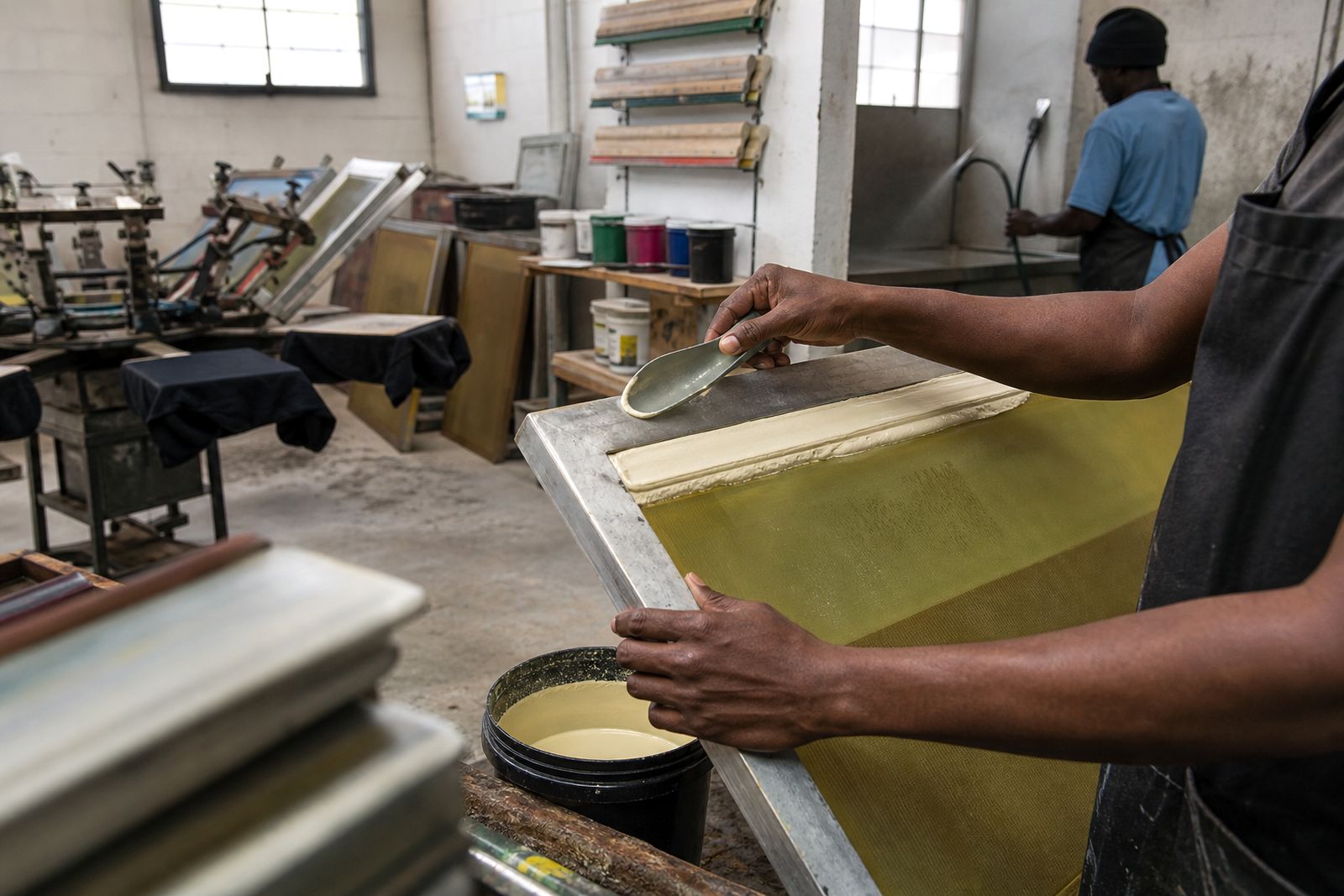
- Use sharp scoop edge on 150T
- Dry print side down in cabinet
- Check EOM before exposing fine dots
- Note squeegee durometer on repeat jobs
- Reject lint before second coat
When a note does not match your setup, send it through our contact form so we can rewrite the card.
Small habits keep high mesh thin coat useful after the first read.
Thin deposit, sharper image edge
For rush tickets, brief wording carries further than long explanation.
A high-mesh thin coat does not need long explanation because the result is visible on the screen face. Either the stencil sits flat with crisp shoulders, or it shows ridges, pinholes, and weak hold in the highlight area. Short instructions suit this topic better than broad process writing.
Print rooms supplying Clearwater, Cresta, Pavilion, Tyger Valley, Baywest, Mimosa, and Riverside often need cleaner detail for branded retail work where small text is checked at arm's length. Bring the used screen sample or a clear phone photo of the failed area when comparing mesh choices. It helps more than a rough description when the issue is halftone breakup, sawtooth edges, or ink hanging in the stencil wall.
Screen Stencil supplies stencil guidance for production environments that expose, wash out, and print under local workshop conditions.
What our Screen Stencil customers say
Verified Google reviews
Also worth a look
Tell us what you are printing
Send a note through our contact form with the inks and substrates you print, your mesh counts and frame sizes, your exposure unit and your town, and we will come back with practical advice and a quote.
Open the contact form