

Gentle reclaim
Soft reclaim that clears emulsion and still respects the weave.
Pressure and chemistry checks
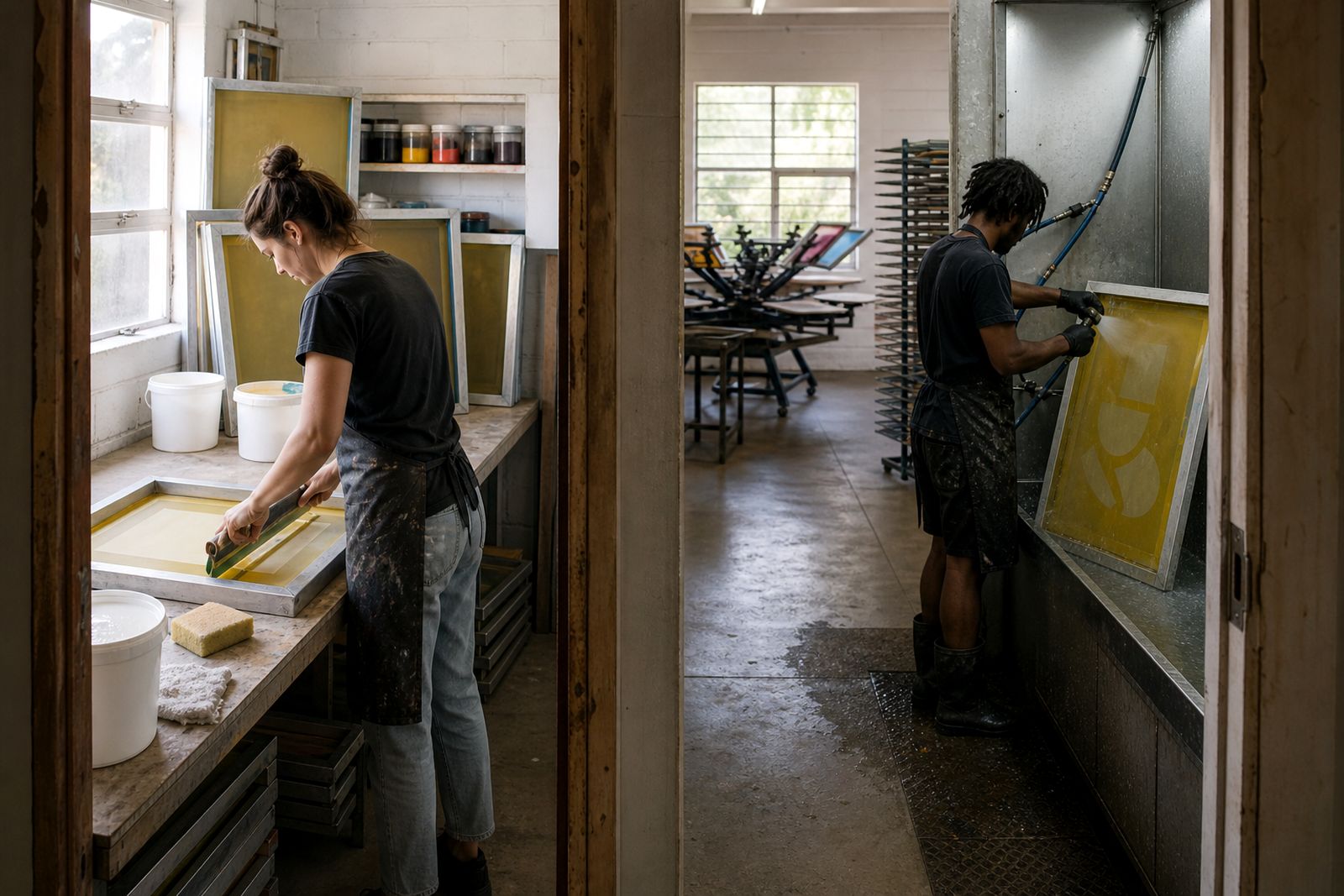
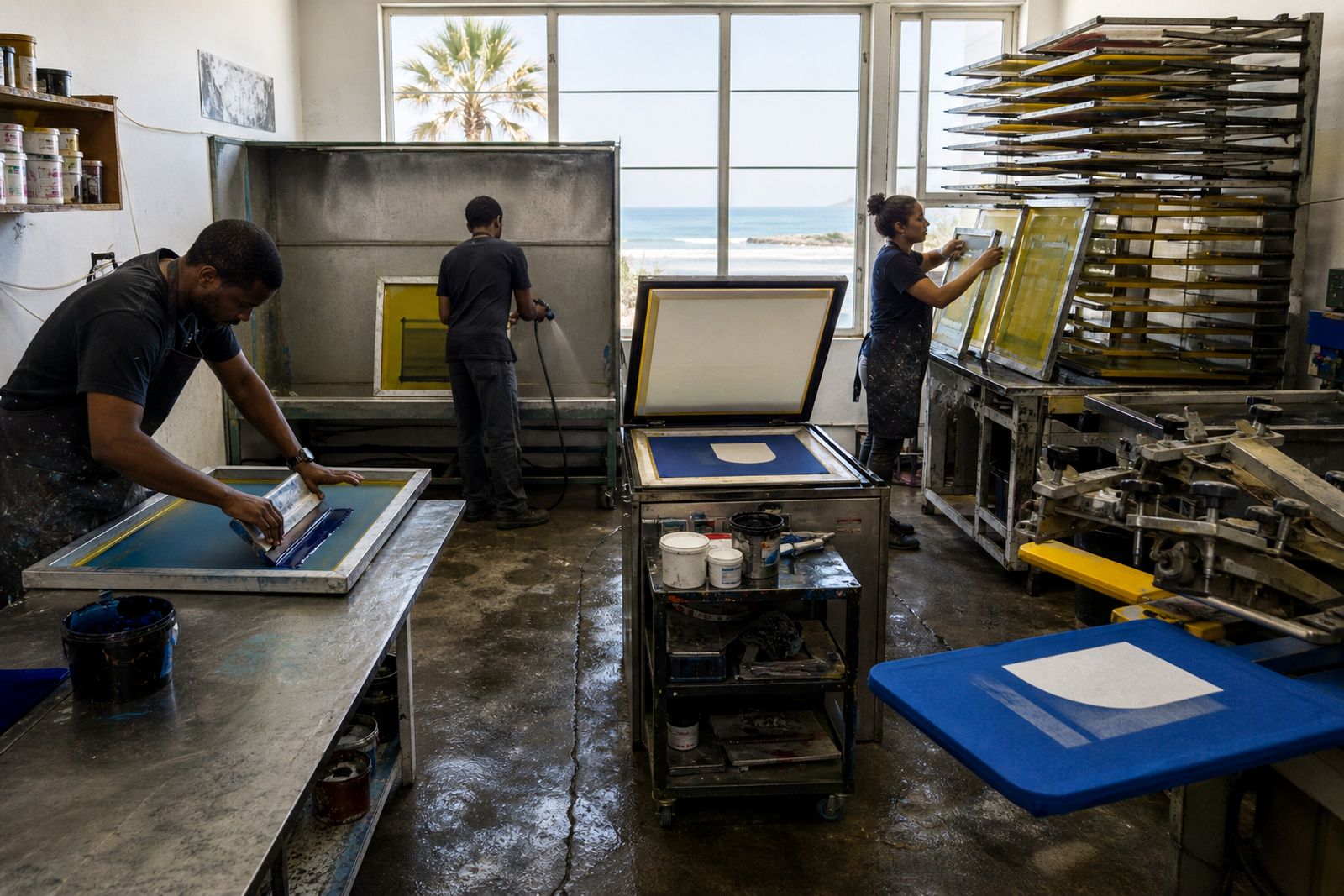
Gentle reclaim is a bench note for stripping used screens without roughing up the mesh. It focuses on remover choice, dwell time, water pressure, and brush pressure so emulsion clears while the weave stays open. South African print rooms get guidance where one frame may cycle through plastisol, water based, and discharge work in the same week.
A lot of mesh damage starts after reclaim, not during print. Hard nylon brushes, over-strong caustic mixes, and a pressure lance held too close can fray threads, polish the knuckles, or drive ghost image deeper into the fabric. On coastal jobs, salt air and slow drying can make residue sit longer, so rinse order matters more than people think.
Use this note while the screen is still on the washout side, not later at exposure. Check the stencil type, ink family, and mesh count before you reach for chemistry, because a white water based screen does not reclaim like a solvent-heavy black. In Salt River and across inland shops, the best check is simple: hold the wet mesh to light and look for blocked squares before degreasing.
Mark the reclaim method on the ticket card and keep the linked route close by. Open the stencil route under Stencils, confirm the frame details under Screens, and pull any matching reclaim consumables from Kits before the wash bay gets crowded. That small step stops the wrong remover landing on a fresh retensioned mesh.
- Low pressure first rinse, both sides
- Brush only with soft reclaim bristles
- Match remover to ink residue
- Note mesh count on frame tag
- Check ghost image against backlight
When a note does not match your setup, send it through our contact form so we can rewrite the card.
Small habits keep reclaim useful after the first read.
Readable beside the wash bay
Long explanations do not sit well on rush tickets.
These notes stay brief so a night lead can check pressure, scrub direction, and rinse sequence between screens without carrying a manual around the room.
Crews working around Clearwater, Cresta, Pavilion, Tyger Valley, Baywest, Mimosa, and Riverside often see different water hardness and dust levels, which change how residue releases from mesh. Bring one failed sample if you have it, especially when the stencil locked into the weave after a hot day or a delayed washout. A real screen tells more than a phone description of haze.
For print rooms, briefs land best by email when mesh count, stencil thickness, reclaim chemistry, and ghosting history are written on the first pass. Include the frame size and the press in use so the reclaim note fits the actual room, not a generic setup.
What our Screen Stencil customers say
Verified Google reviews
Also worth a look
Tell us what you are printing
Send a note through our contact form with the inks and substrates you print, your mesh counts and frame sizes, your exposure unit and your town, and we will come back with practical advice and a quote.
Open the contact form