

Sleeve pinhole hunt
Finding pinholes before they print on a bottle wrap.
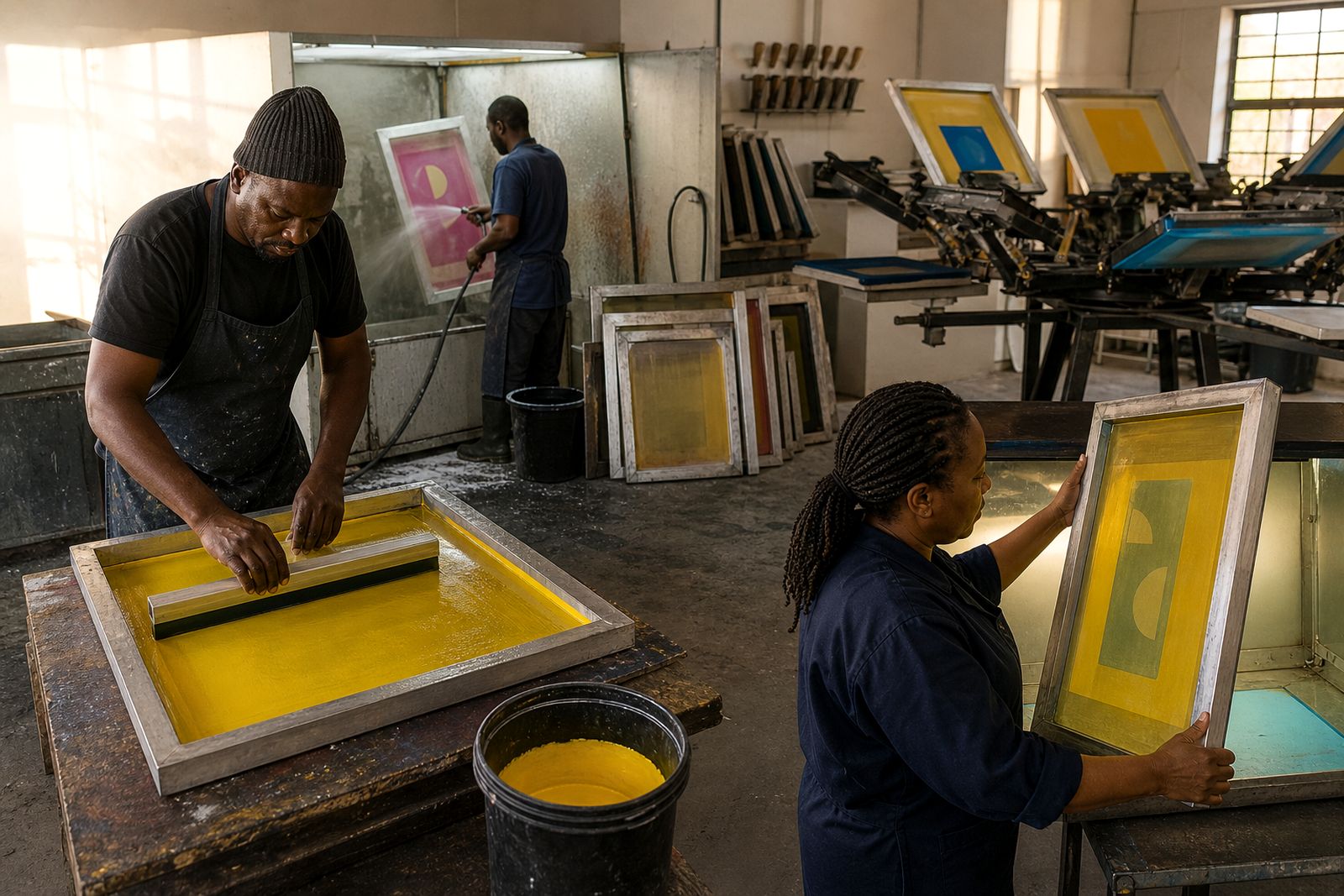
Bench checks for sleeve wraps
Bottle sleeves hide tiny voids until ink hits pressure and wraps around the container. Print rooms that need checks a press minder can use at the bench should look for them before the run starts.
A pinhole often shows up after mesh prep, reclaim, or a dusty dry down, not only during exposure. Under wrap work, one speck can print as a bright dot right across type or a barcode panel. In inland shops the dust load matters, while coastal rooms must also watch salt residue and damp storage.
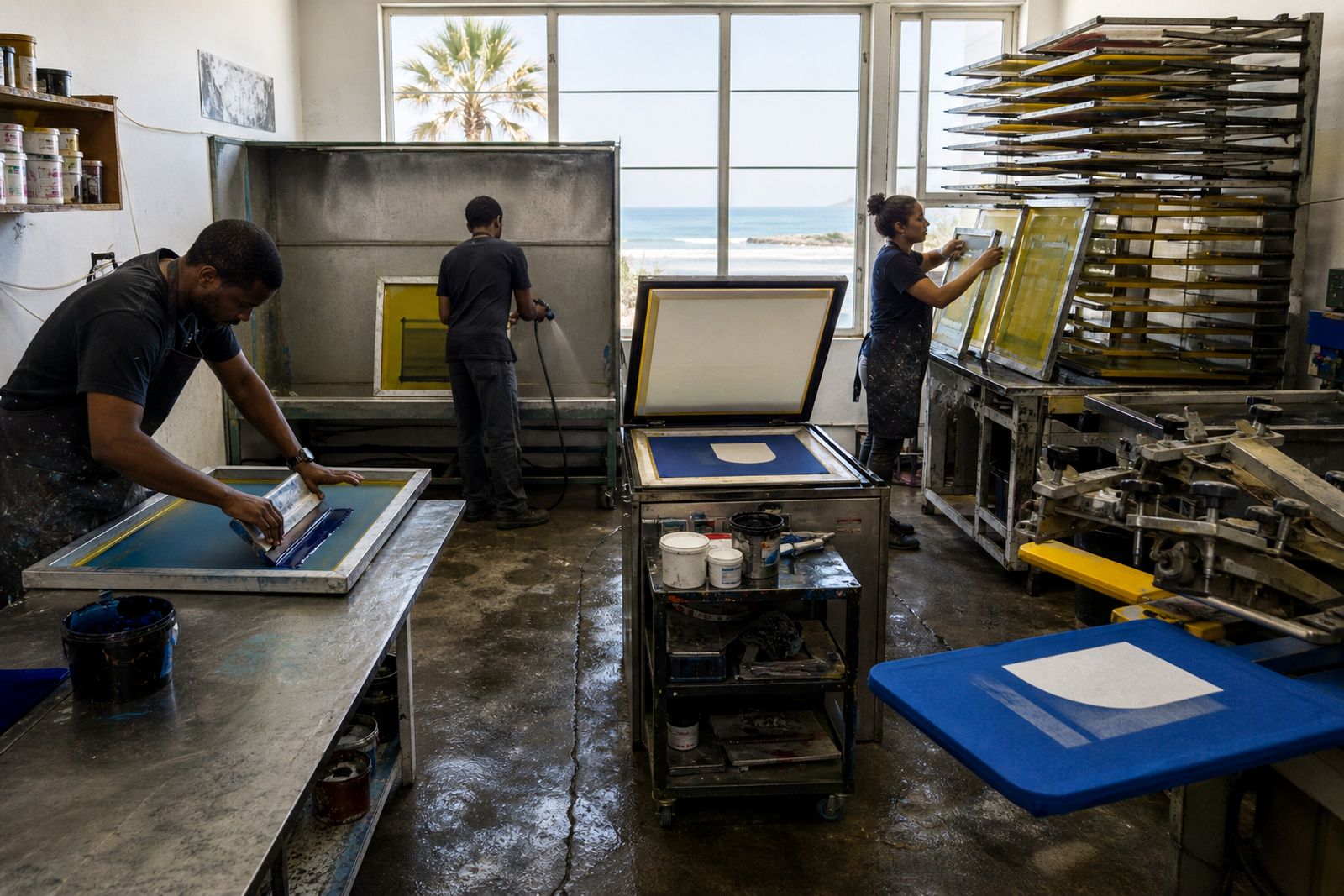
Keep the note next to the frame card, film, and approved sleeve artwork while you inspect. Compare the image area, mesh count, and sleeve circumference marks before ink goes near the screen. Teams in Salt River often tape the check sheet by the washout booth so day shift and night shift mark the same faults.
Mark the ticket with the exact screen used for the bottle wrap and keep the matching one under Stencils and Screens. If the note calls for patching mesh, blockout, or a remake frame, check Kits before the next pull. On sleeve work, those links matter because a tiny defect can repeat around every container.
- Torch behind mesh before first ink
- Circle each pinhole on tape
- Check wrap join near copy
- Note mesh count on frame
- Wipe glass before fresh exposure
When a note does not match your setup, send it through our contact form so we can rewrite the card.
Small habits keep the sleeve pinhole hunt useful after the first read.
Short notes beside the washout booth
A rush ticket is no place for long explanations.
Long theory does not help when a sleeve run is waiting and the first bottle is due. A tight note works better next to reclaim chemicals, inspection light, and drying racks. The useful part is the fault pattern, where to look, and what to stop before it prints again.
Shops feeding centres at Clearwater, Cresta, Pavilion, Tyger Valley, Baywest, Mimosa, and Riverside often send mixed samples from different batches and substrates. Bring one printed sleeve with the defect and one clean control if you need the screen fault traced properly. A mark that looks like artwork dropout can come from damaged mesh, dirty glass, or weak stencil edges.
Screen Stencil supplies notes for screen print rooms handling bottle wraps, curved containers, and other sleeve work in South Africa. Job details are sent by email so frame references, artwork names, and defect photos stay tied to the same job record.
What our Screen Stencil customers say
Verified Google reviews
Also worth a look
Tell us what you are printing
Send a note through our contact form with the inks and substrates you print, your mesh counts and frame sizes, your exposure unit and your town, and we will come back with practical advice and a quote.
Open the contact form