

First burn lesson
Classroom burns without scaring the first-time printer.
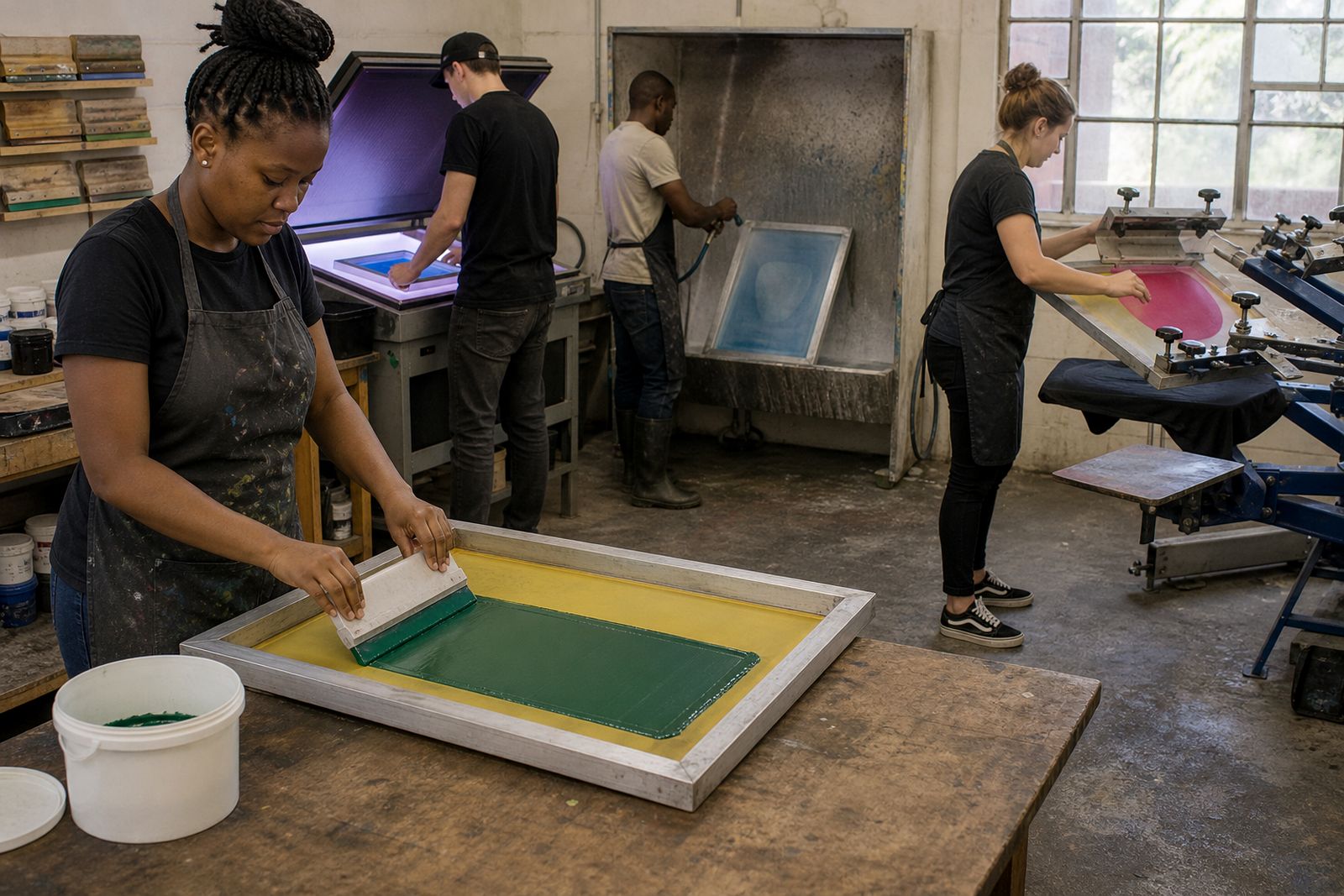
First-burn checks at the bench
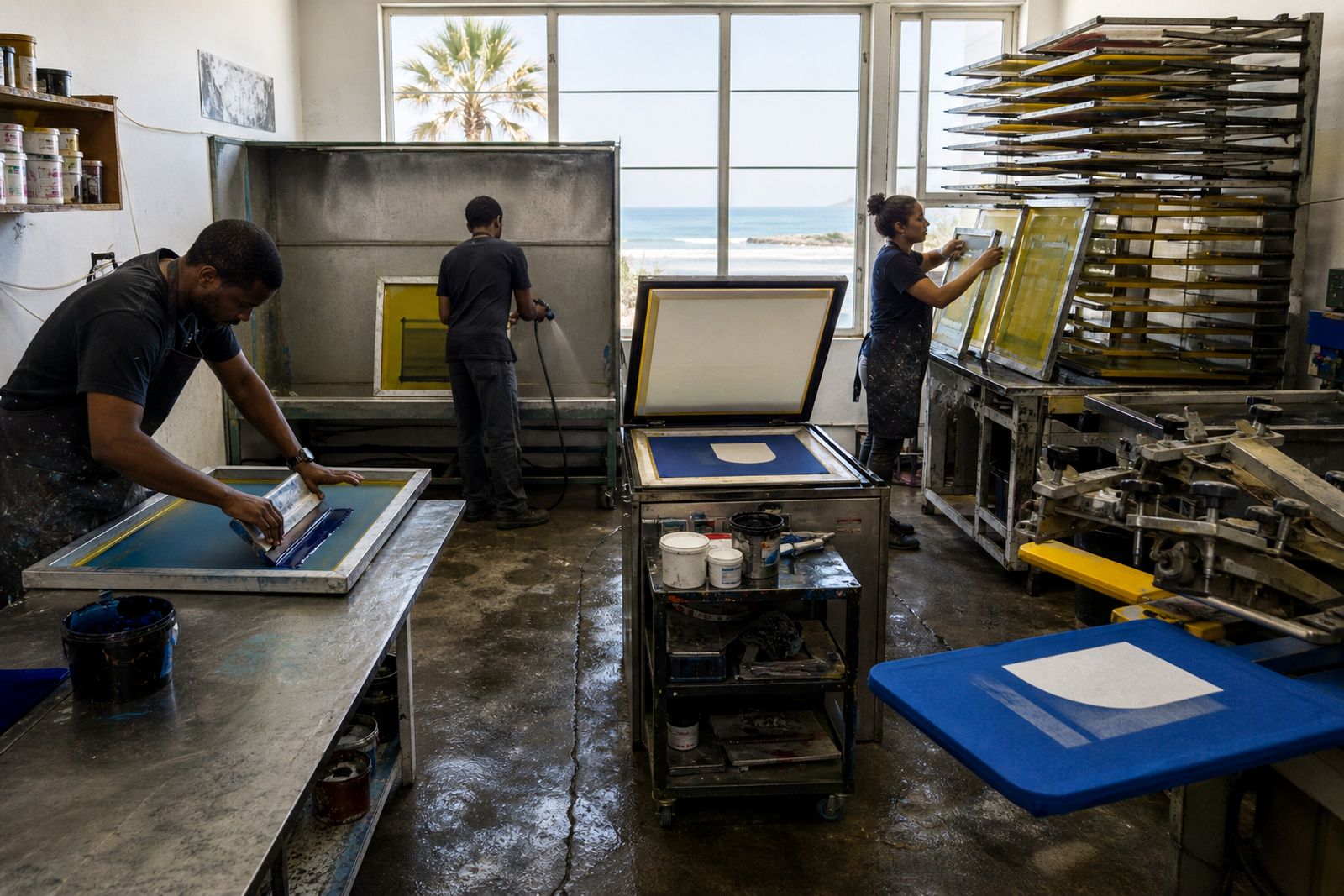
Teaching first burn deals with the moment a new printer coats, exposes, and washes out a screen for the first time. It is framed for South African print rooms where the learner may be working between live jobs, not in a quiet training block. The note keeps attention on exposure, rinse-out, and stencil condition rather than theory that never reaches the carousel.
First burns usually fail at the simple checks. A screen that looked fine under room light can show pinholes, soft emulsion, or undercut edges once water hits it, especially when dust sat on the glass or the positive lifted at one corner. Learners should check those visible signs before they blame mesh count, artwork, or the reclaim bay.
Use the sheet next to the job card, mesh record, and the film or CTS output for that screen. If the mesh count, coating side, or exposure note differs across those labels, stop and correct the paperwork before another frame is coated. In Cape Town humidity and inland dust, small mismatches become expensive teaching moments very quickly.
Keep the training note with the active ticket, not in a classroom file. Open the stencil route under Stencils, confirm the frame details under Screens, and if the lesson uses scoop coaters, degreasers, or reclaim items, match them in Kits. That way the learner reads one set of names from coating trough to washout booth.
- Glass cleaned before film is taped
- Coating side marked on the frame
- Washout checked for edge breakdown
- Exposure note written on the ticket
- Pinholes circled before tape-up
When a note does not match your setup, send it through our contact form so we can rewrite the card.
Small habits keep the first burn useful after the first read.
Short notes for live training
Lengthy explanations seldom work on a rush ticket.
A first-burn guide must be readable while the booth is running and other screens are queued behind it. Long teaching copy gets skipped when a learner is holding a wet frame over the drain board. Brief prompts work better because they can be followed in the order the screen is actually handled.
Shops feeding work from Clearwater, Cresta, Pavilion, Tyger Valley, Baywest, Mimosa, and Riverside do not all train under the same conditions. A coastal room may be watching slower drying on coated mesh, while a Highveld room spends more time dealing with dust settling before exposure. Bringing the used screen, failed film, or marked sample gives the discussion something measurable instead of a guess from memory.
Teaching first burn assumes the reader needs enough detail to complete the next screen correctly, then move on with the shift.
What our Screen Stencil customers say
Verified Google reviews
Also worth a look
Tell us what you are printing
Send a note through our contact form with the inks and substrates you print, your mesh counts and frame sizes, your exposure unit and your town, and we will come back with practical advice and a quote.
Open the contact form