

Bottle sleeve screens
Sleeve and soft-substrate screens that hate pinholes on long wraps.
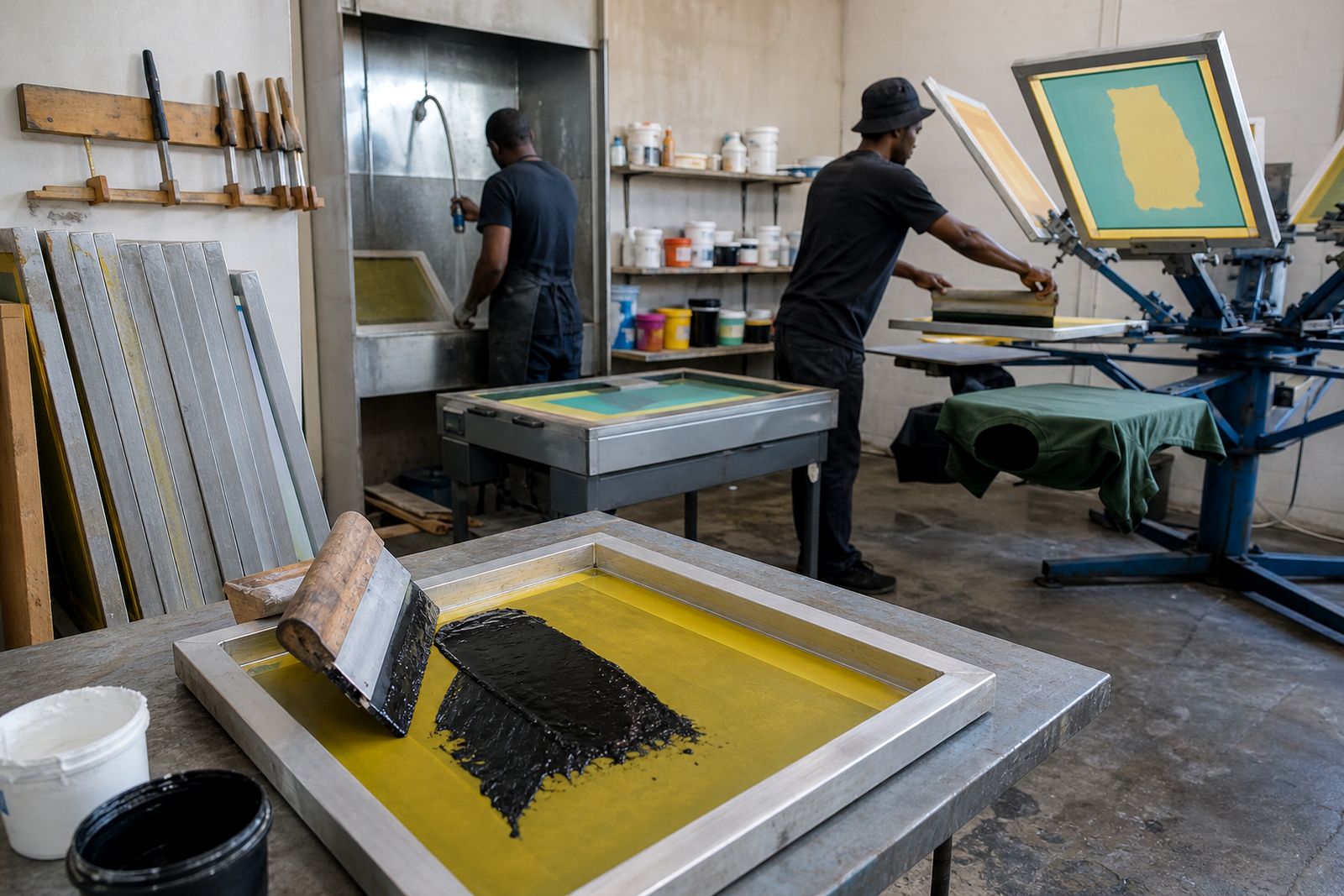
Bottle sleeve wrap screens
Bottle sleeve print needs a stencil that holds on long circumferences without opening pinholes midway through the run. Soft film sleeves, shrink materials, and flexible bottle wraps can carry static and surface dust, so the screen has to release ink cleanly while keeping edge detail around copy and barcodes. Water resist emulsion suits many bottle sleeve jobs where repeated wet passes and long image areas put extra stress on the stencil. If your wrap width, ink type, or cylinder setup differs, note it when you use our contact form.
In South African print rooms, sleeve work is affected quickly by coastal moisture, inland dust, and stoppages during power cuts. Fine mesh tension and coating consistency matter because a tiny defect can repeat right around the bottle. Check stencils and mesh against the artwork size so reverse text, registration marks, and wrap joins stay readable on press.
Bottle sleeve screens often fail at the overlap area first, especially when the image runs close to the join. Mark the lead edge, trail edge, and print direction on the job card before exposing the screen. One note about substrate, one note about ink, and one note about wrap length will save guesswork when the next operator takes over.
Bottle sleeve setup order
- Mark circumference and overlap allowance
- Match mesh to text and solids
- Test wrap on actual bottle size
- Inspect first print for pinholes
- Record squeegee side and print direction
Link this bottle sleeve ticket to the job card that travels with the wrap run. Curved stock, soft sleeves, and long image repeats need one set of notes for mesh choice, tension, and the drying method after coating. After a power cut, check register on a fresh sleeve before production speed goes up. Three spoiled wraps usually point to distortion or tack, not the artwork size.
Coastal rooms should watch moisture before coating and drying, as soft sleeve stock can pick up handling issues quickly. Highveld shops usually need stricter dust control around exposed screens and stored sleeves. On night shift, write down the approved wrap sample location so the operator compares against the same reference every time.
Print rooms using sleeve screens
Bottle sleeve print suits packaging lines printing wraps for bottles used in drinks, health products, cleaning liquids, and promotional runs. Jobs like these turn up in Cape Town, Durban, Johannesburg, and Pretoria where printers need image length control around curved containers. The screen ticket belongs near the exposure unit, washout area, or the press where the first wrapped sample is checked.
Screen Stencil keeps its range focused on stencils, mesh and frames for South African print rooms.
Bring an actual bottle and sleeve sample when the artwork sits close to a seam or cap line. A flat proof does not show how copy behaves once the material curves and overlaps. Reference pieces with the true bottle shape make it easier to check distortion, alignment, and readable type before a full run starts.
Pre-run checks for sleeve wraps
- Main product: water resist emulsion
- Format and finish agreed
- Join area marked on sample
- Mesh count matches artwork detail
- First wrapped bottle kept for reference
Read the mesh note before exposing a repeat image for bottle sleeves, especially where small text meets large solids. Use the contact form if the job needs a sketch for overlap, image repeat, or press direction. Pair it with a kit when the print room also needs mesh cards, scoop coater notes, or reclaim checks.
What our Screen Stencil customers say
Verified Google reviews
Also worth a look
Tell us what you are printing
Send a note through our contact form with the inks and substrates you print, your mesh counts and frame sizes, your exposure unit and your town, and we will come back with practical advice and a quote.
Open the contact form