

Sharp carton marks
Export marks and stencil art that still look sharp on corrugated.
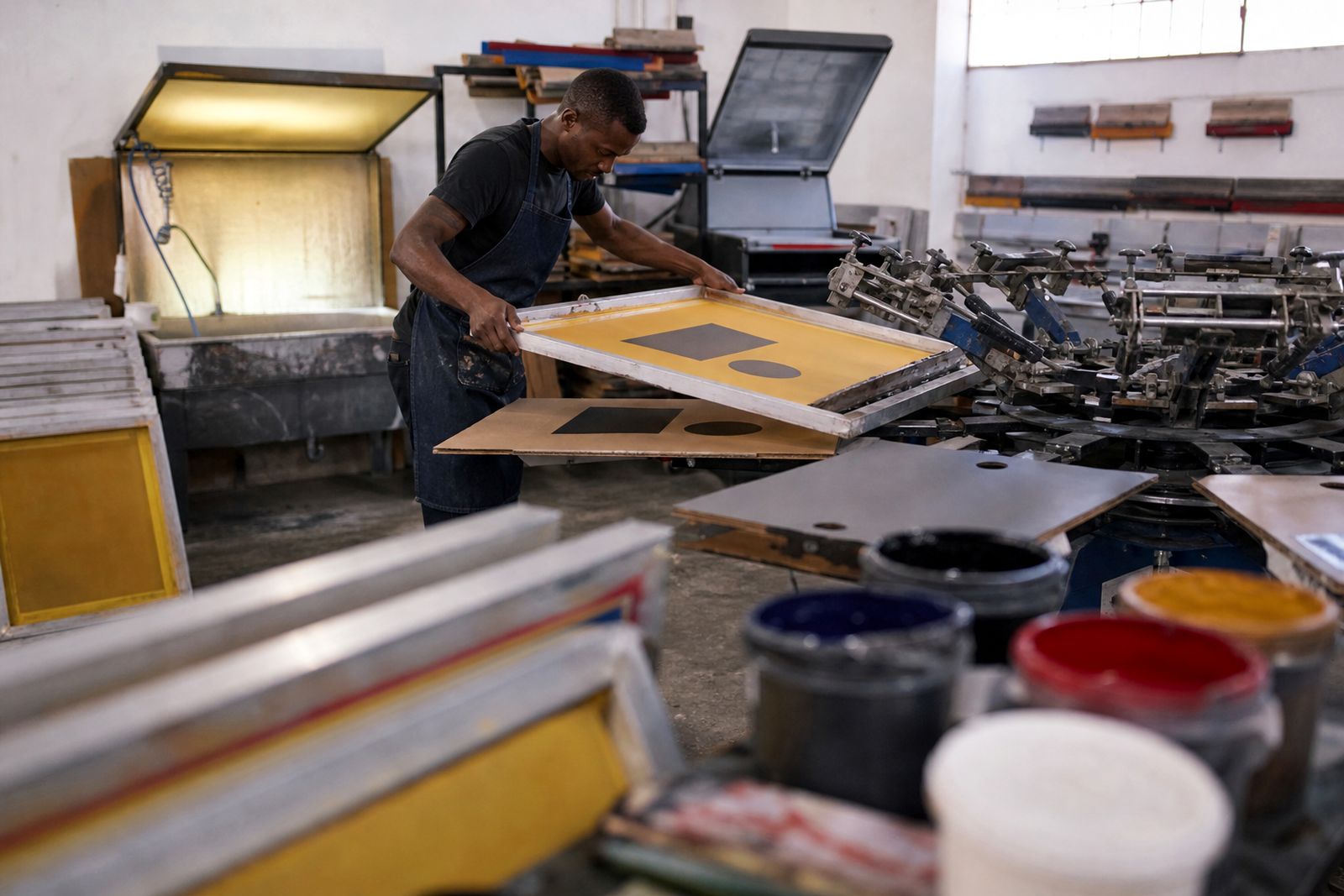
Export carton mark screen guide
Export carton marks need legible print on rough corrugated, often with batch detail, handling icons, and destination text in one layout. The main ticket is stencil art transfer, with the mark size, carton board type, and print face noted before artwork is exposed. If your board varnish, ink type, or frame depth differs, note it on our contact form when you send the job.
South African screens deal with power cuts, dust, and humidity in the same week. Do not treat humidity like a rumour. Photograph the first wet face. Lock the colour names. Keep the card where the next shift can see it. Browse Stencils and Mesh so the language stays shared across day and night crews.
Most export carton errors start when carton size, mark position, and ink colour are kept in separate chats or paper notes. Put those details on one production card and include the approved orientation of the carton face. That keeps repeat runs consistent when another operator sets the screen later in the shift.
Carton marking order on press
- Record board grade and panel size
- Match mark text to shipping spec
- Test ink hold on corrugated face
- Check first print for broken letters
- File screen notes with carton sample
For export carton mark work, the ticket should travel with the sample carton, not only with the screen room paperwork. Include substrate, print side, and any no-print flap zones so the layout is not guessed at the press. After power cuts or a long stop, run another check on registration and fill, because corrugated can respond differently once production restarts.
Coastal shops often add a moisture note when cartons have been stored near docks or in wrapped pallets. Inland teams may note dust on stored board before the first run starts. Night shift handover should state which version of the export mark is current and which sample was signed off.
Common settings for these marks
These marks are usually printed in packaging rooms handling outer cartons for food, produce, industrial goods, and general export packing. The job often needs clear block text, arrows, codes, and handling symbols that stay readable after stacking and transport. Positioning matters because flap folds, tape lines, and strapping can cut through a mark if the screen layout ignores the carton structure.
Screen Stencil keeps its range focused on stencils, mesh and frames for South African print rooms.
Bring an actual carton or a flat sample when the mark is being prepared. A board sample shows flute pattern, coating, and print absorbency far better than a digital mock-up. It also helps confirm whether the mark should sit on a side wall, end panel, or top face.
Before opening the ink
- Main product: Stencil art transfer
- Format and finish agreed
- Approved carton face clearly identified
- Current export code version verified
- First sample compared to master artwork
Check the related mesh note before exposing or reclaiming a screen for fine export text. Use the contact form if the mark needs a layout sketch for flap clearance or symbol spacing. Add the right kit when the job includes repeat carton sizes, changeable codes, or multiple board grades.
What our Screen Stencil customers say
Verified Google reviews
Also worth a look
Tell us what you are printing
Send a note through our contact form with the inks and substrates you print, your mesh counts and frame sizes, your exposure unit and your town, and we will come back with practical advice and a quote.
Open the contact form