

Cafe apron screens
Aprons and soft goods with waterbase-friendly stencils.
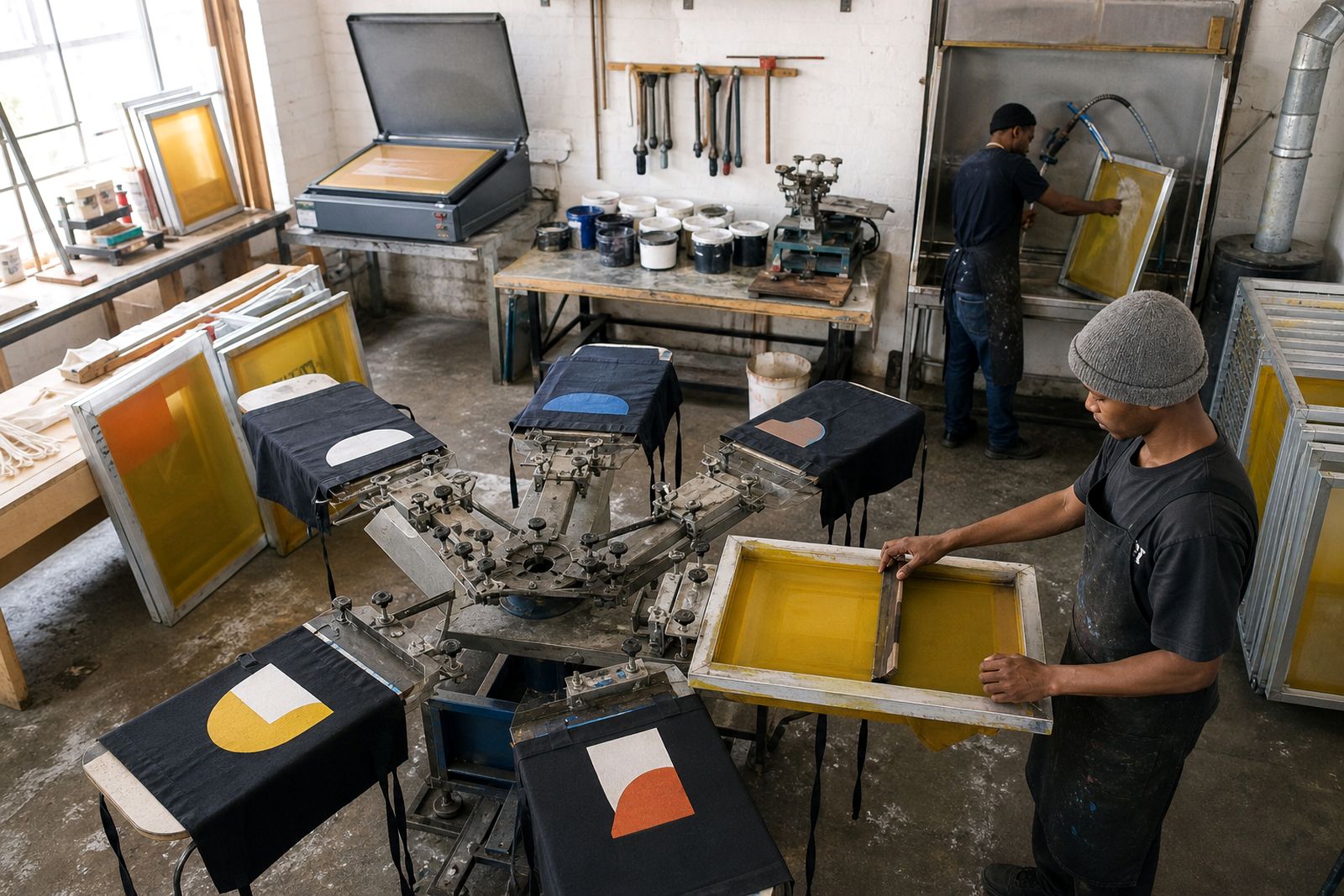
Cafe apron stencil setup
Apron runs usually mean cotton or polycotton blanks taking chest prints, waist marks, or small pocket hits. Water resist emulsion suits these jobs when waterbased ink is on the table and the print room wants edge hold on absorbent fabric. If your artwork sits near seams, straps, or a pocket hem, note that in our contact form so the stencil plan matches the garment.
Busy food-service workwear needs prints that stay readable after washing, steam, and regular handling at counters and prep stations. In coastal shops, extra moisture in the room can slow drying on coated screens, while inland dust can mark an open mesh before exposure. Check Stencils with Mesh before setup so apron fabric, ink, and screen count are speaking the same language.
Cafe aprons often look simple until the blank arrives with heavy twill, stitched channels, or a deep dye that affects print brightness. Mark the print position from the top hem or pocket line, not by eye on the pallet. Keep the same note beside the press so the next operator does not shift the image to dodge a seam and change the whole run.
Apron run points to lock
- Measure print height from hem or pocket
- Record fabric as cotton or polycotton
- Check strap bulk against pallet contact
- Print one washed sample before volume
- Note ink, mesh, and apron style together
A cafe apron ticket should tie the garment shape to the screen, not just list the logo. Bib aprons, waist aprons, and cross-back cuts sit differently on the pallet, and that changes where pressure builds under the mesh. After a power break, recheck off-contact and registration before restarting because soft goods can shift more than flat stock.
Cape humidity can leave coated screens tacky for longer, especially when the room is closed up overnight. Highveld winter air may dry things fast but static and lint can still interfere with a clean face on fabric work. For night runs, write down which apron blank was approved, because similar navy and black styles can get mixed on the rack.
Typical South African apron work
These stencil notes fit branded aprons for cafés, roasteries, bakeries, delis, food trucks, and market stalls. Many South African orders mix front-of-house presentation with hard daily use, so the print has to suit repeated washing and contact with coffee, flour, or sauce splashes. A small chest mark and a larger centre print may need different screen choices on the same order.
Screen Stencil keeps its range focused on stencils, mesh and frames for South African print rooms.
Bring an actual apron if placement is critical around pockets, rivets, or stitched panels. A flat mock-up does not show how thick seams lift the mesh or where the garment twists once it is loaded. Sample notes are easier to use when they mention the exact blank colour and strap style seen on press.
Before the first apron pulls
- Main product: water resist emulsion
- Format and finish agreed
- Pocket seam cleared from print area
- Lint brushed off dark twill blanks
- Approved sample tagged to the rack
Read the matching mesh note before exposing a screen for aprons with textured weave or heavy twill. Use the contact form if the print area must work around pockets, straps, or mixed garment sizes in one run. Pair it with a kit guide when pallet prep, tape layout, or garment guides are part of the setup.
What our Screen Stencil customers say
Verified Google reviews
Also worth a look
Tell us what you are printing
Send a note through our contact form with the inks and substrates you print, your mesh counts and frame sizes, your exposure unit and your town, and we will come back with practical advice and a quote.
Open the contact form