

Coastal humidity shop
Durban and Cape coastal rooms where humidity fights dry-down.
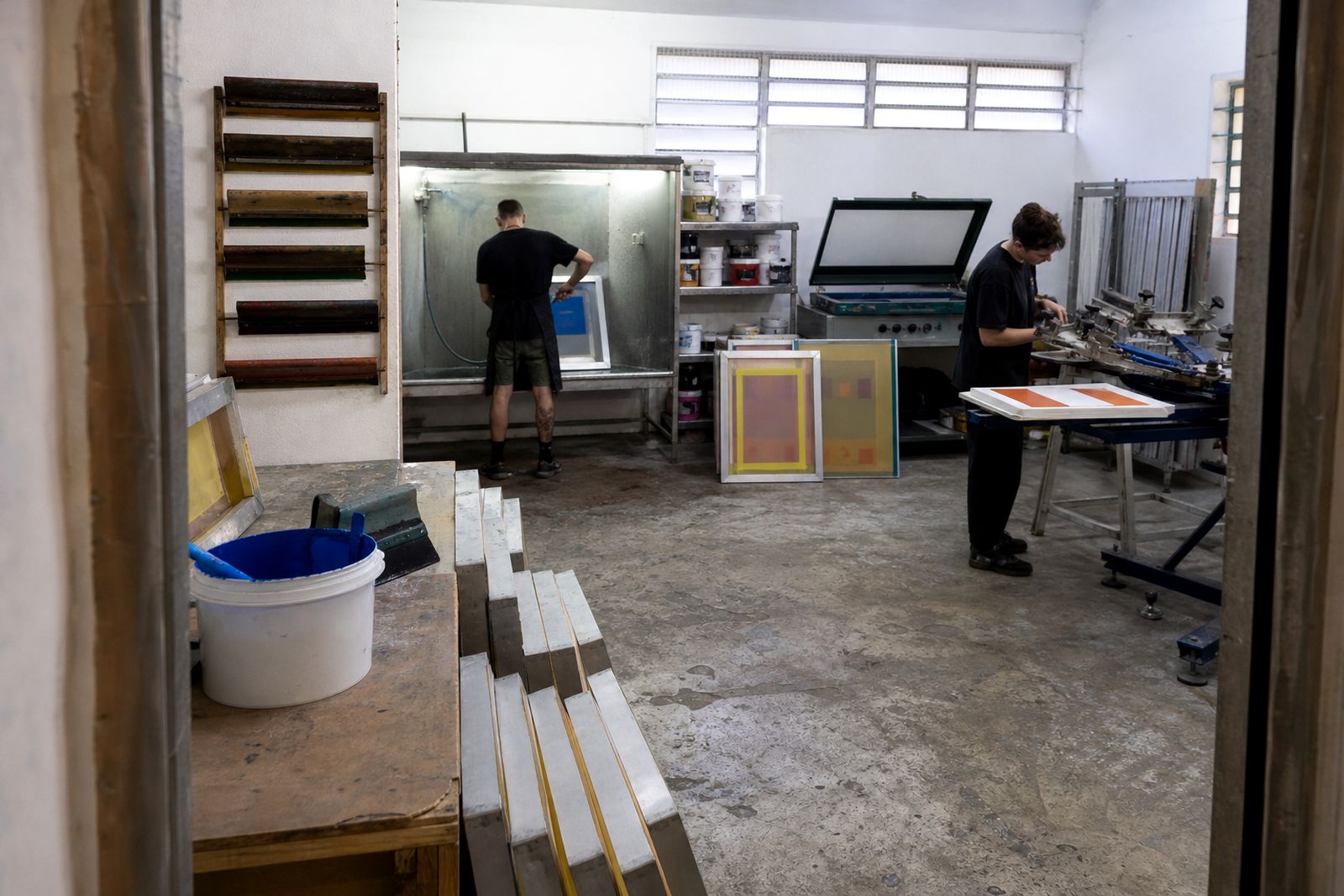
Coastal stencil routine
Durban and Cape print rooms often deal with damp air that slows exposure, drying and reclaim. Dual-cure emulsion pro is often chosen when coastal moisture keeps hanging around the washout area. If your room runs textile plastisol one day and water-based ink the next, mention that in our contact form so the stencil notes match the work.
Sea air changes how screens behave between coating and press. In busy South African shops, power cuts, overnight moisture and lint can all affect edge hold on fine detail. Check Stencils and Mesh together when you set up a coastal job, so mesh count and emulsion choice are read as one decision.
A humid-room ticket needs more than the artwork name. Note the coat count, drying position and whether the screen stood near an open roller door before exposure. That gives the next operator a usable record when pinholes, soft shoulders or slow dry-down start showing up on press.
Coastal room ticket points
- Record mesh count with stencil choice
- Note coat side and coat count
- Mark drying rack or cabinet used
- Check first washout for soft edges
- Write humidity-related changes on the card
On coastal jobs, the card should travel with the frame from coating through reclaim. Write down whether the stencil dried in a cabinet, under a fan, or in general room air, because that difference matters near the coast. When power cuts interrupt exposure prep, add the restart notes on the same ticket instead of splitting them across messages.
Durban rooms may need stronger attention on drying storage when the air stays heavy after rain. Cape coastal shops can see moisture shift quickly between morning and late afternoon, especially near open loading bays. A short note about weather, drying method and exposure result helps the next run start from something measured.
Print rooms in humid conditions
This ticket fits garment printers near Durban, Cape Town and other coastal centres where damp conditions can soften stencil handling. It also suits small sign and flatstock rooms that keep coated screens standing longer before exposure. The stencil record should stay with the frame, not in a chat thread.
Screen Stencil keeps its range focused on stencils, mesh and frames for South African print rooms.
Bring a used screen note or sample print when you want to compare stencil behaviour. A failed edge, slow washout or sticky drying result says more than a generic sketch from memory. Matching the sample to the card makes it easier to track whether the issue came from mesh, coating, exposure or room moisture.
Before the screen goes live
- Main product: dual-cure emulsion pro
- Format and finish agreed
- Drying area checked for damp air
- Exposure unit timings written clearly
- First stencil held for edge inspection
Check the matching mesh note before coating screens for a humid-day run. Use the contact form if you want the stencil setup reviewed against your room conditions or artwork detail. Add a kit guide when reclaim supplies, scoop coaters and exposure checks are all part of the same problem.
What our Screen Stencil customers say
Verified Google reviews
Also worth a look

Tell us what you are printing
Send a note through our contact form with the inks and substrates you print, your mesh counts and frame sizes, your exposure unit and your town, and we will come back with practical advice and a quote.
Open the contact form