

Garment print house
Tees, totes, and multi-colour carousel days with steady stencil rhythm.
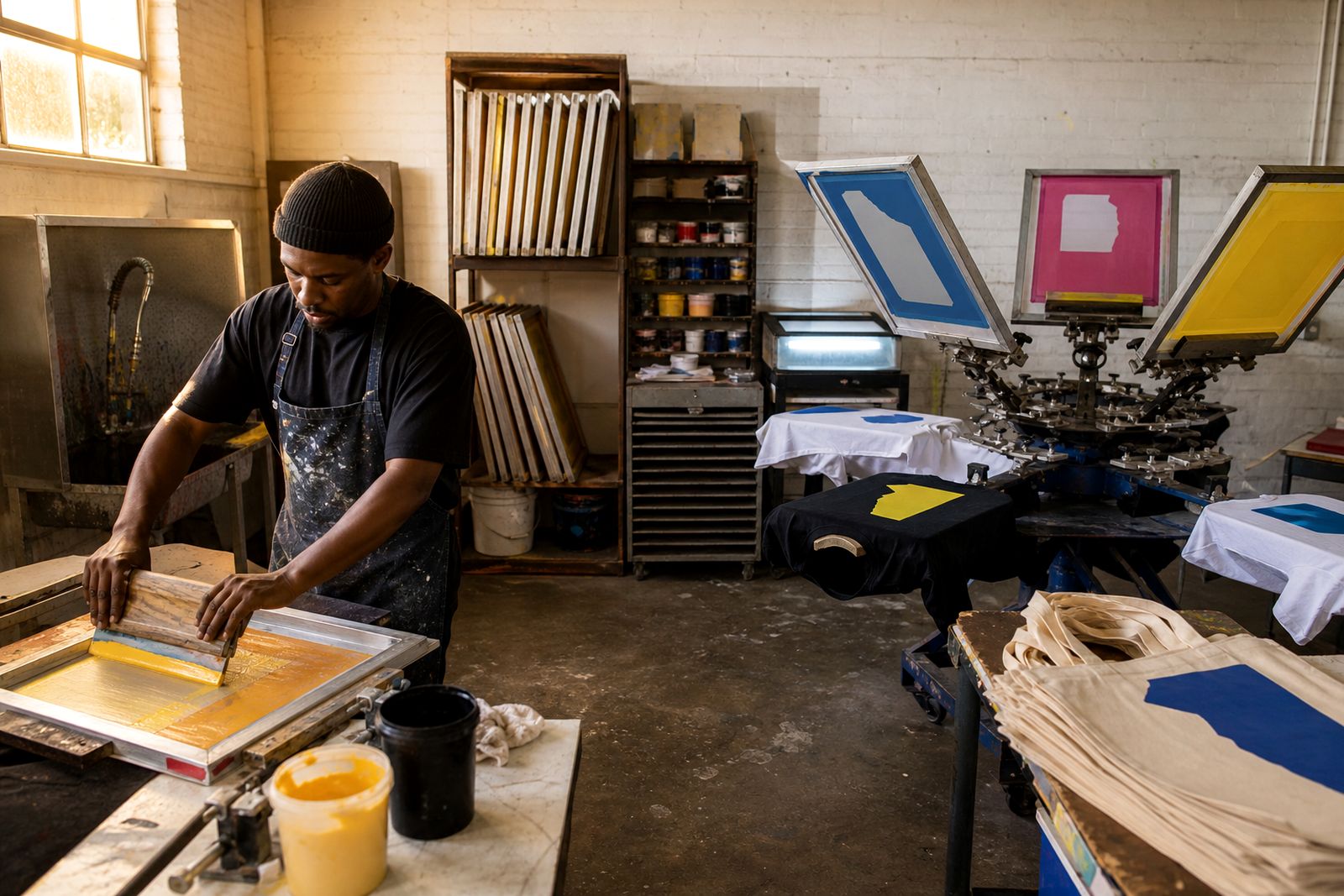
Garment print room screens
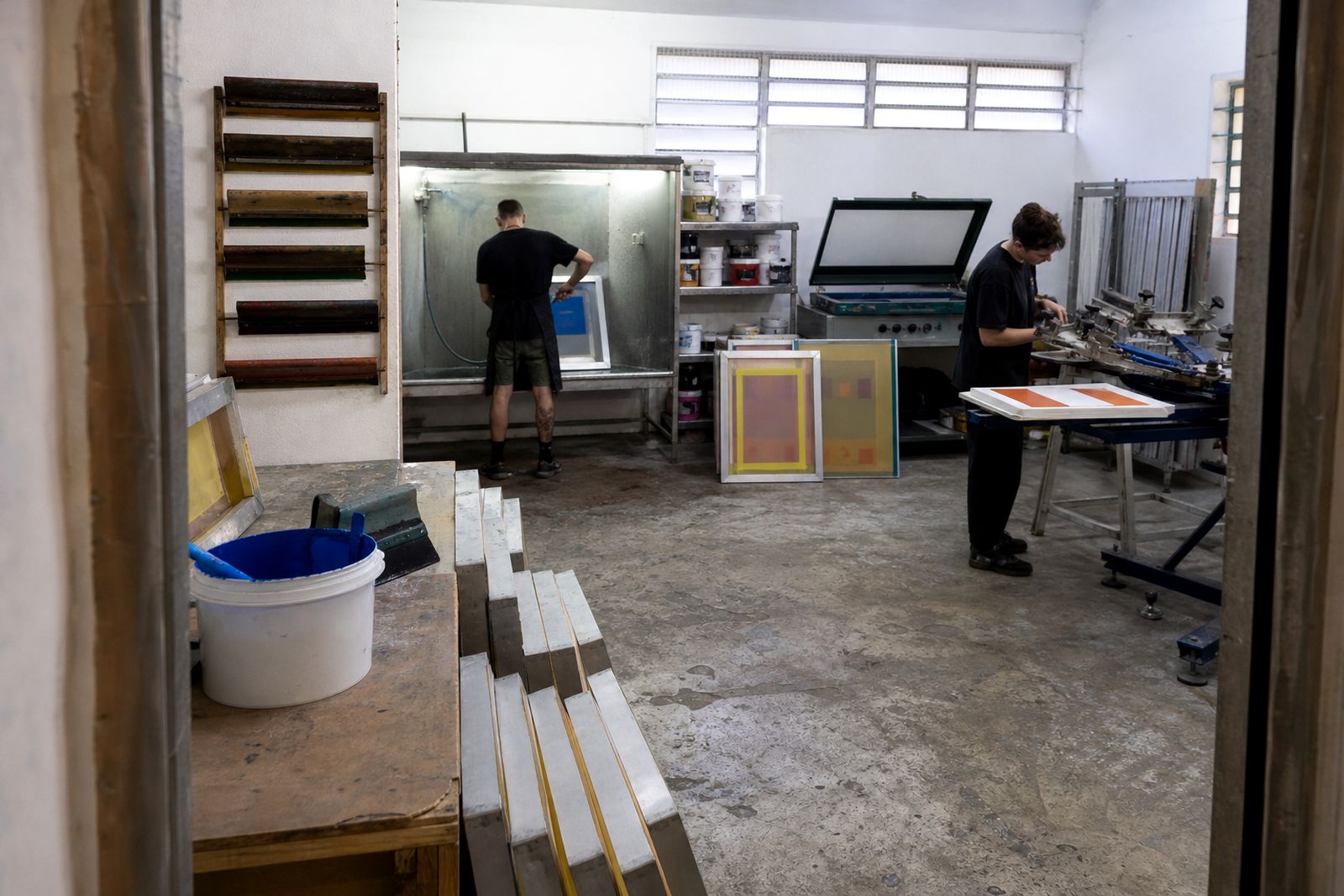
A garment print house usually runs plastisol, water based, discharge, or blocker white across tees, totes, hoodies, and cut panels. In these busy textile exposure rooms, dual-cure emulsion pro suits repeat jobs, reclaim cycles, and press-side touch-ups. If your setup differs, send the details through our contact form so the stencil spec matches your ink, mesh, and frame size.
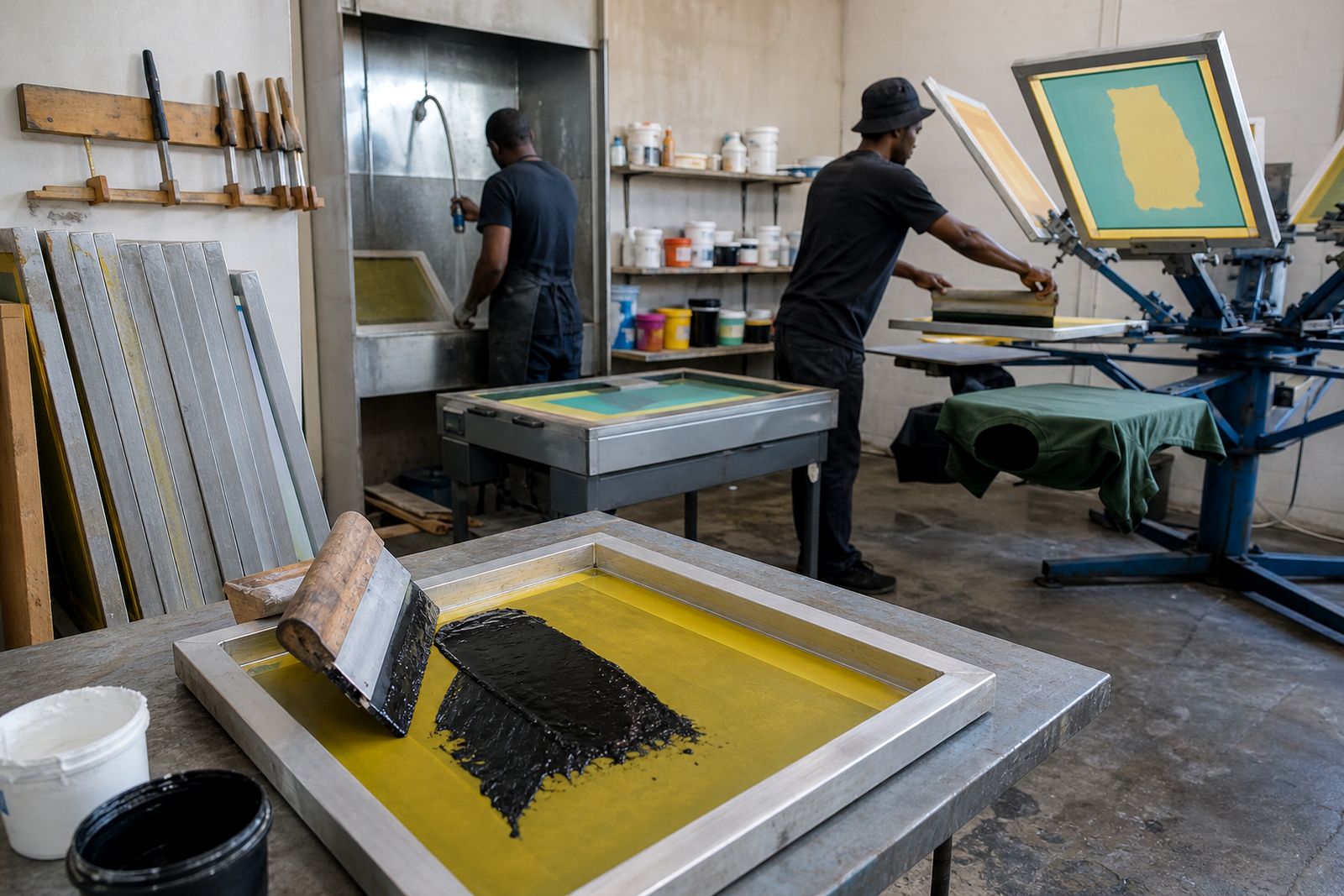
Cape humidity, Highveld dust, and power cuts all affect coated mesh in different ways. Garment shops should keep exposure notes close to the washout booth, especially when teams swap between fine halftones and heavy white underbases. Compare options in Stencils and Mesh when your room uses more than one mesh count across day and night production.
Textile screens often go wrong when reclaim, coating, and press setup are treated as separate conversations. The useful record is one ticket with mesh count, ink type, squeegee side, and the garment being printed. That gives the next operator a clear read before a carousel starts turning on a multi-colour run.
Press ticket notes that matter
- Write mesh count beside each colour
- Mark underbase and highlight order
- Note ink type for every screen
- Check pinholes before taping edges
- Record flash position on the carousel
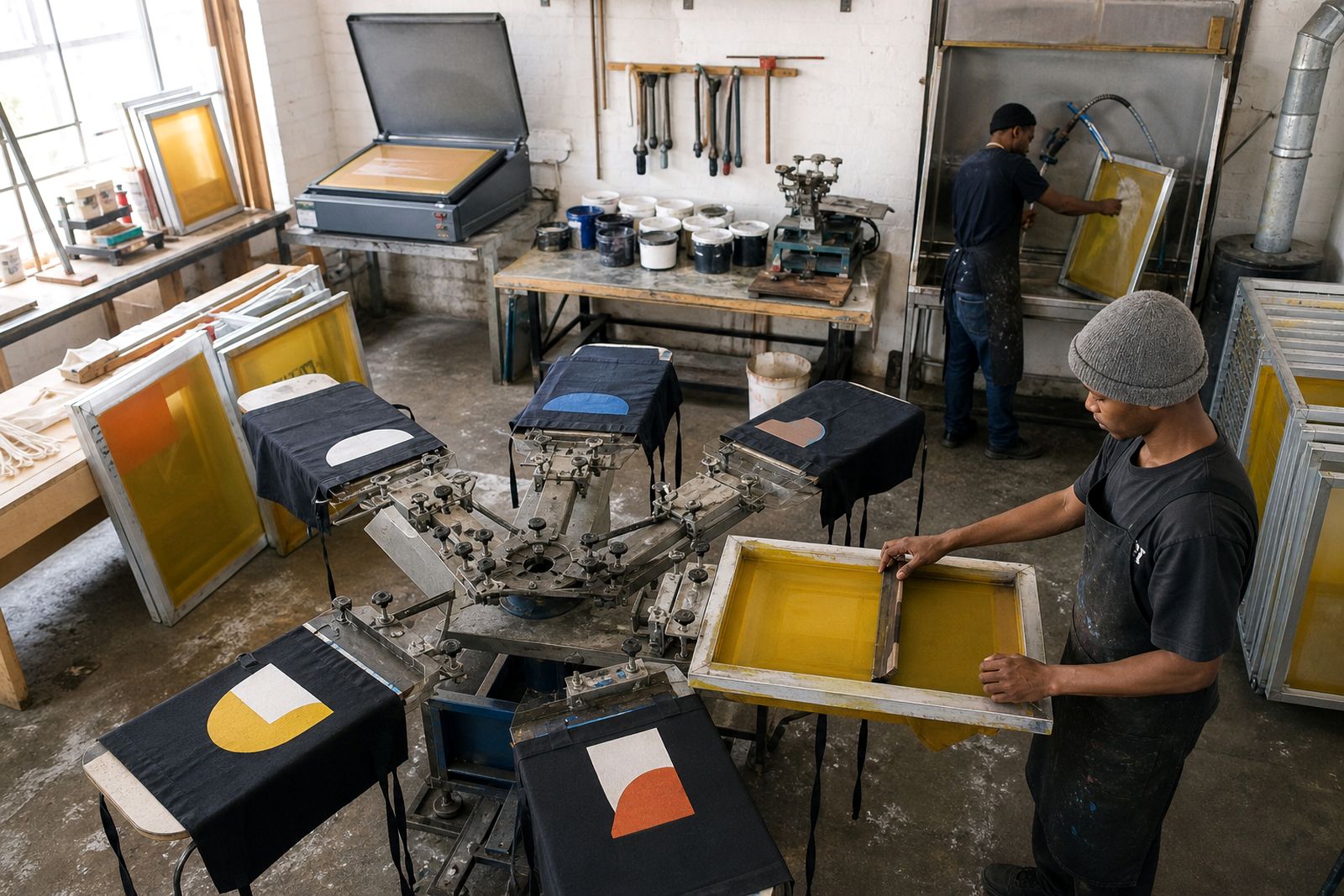
Garment print rooms benefit from a ticket that follows the screen from coating bench to press clamp. Include pallet type, off-contact setting, and whether the art has fine text, halftones, or big blocker areas. After a power cut, that record helps the crew restart with the same screen order rather than guessing from half-cured samples.
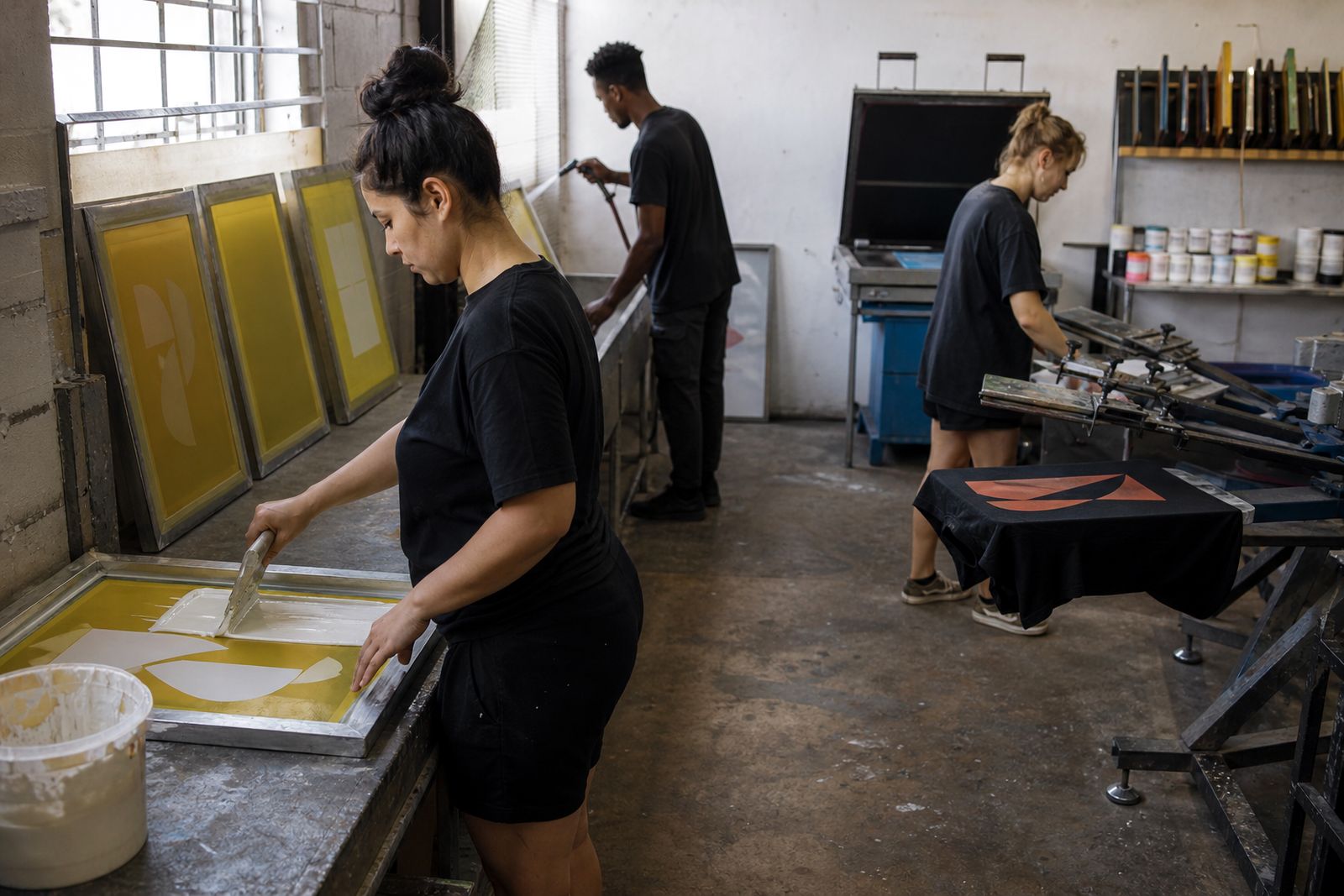
Coastal shops may need extra drying attention before exposure, while inland rooms often battle static, lint, and dusty reclaim areas. Night teams should note whether screens are parked for a morning rerun or fully stripped for the next job. Small notes like these suit textile production better than broad instructions pinned up for every department.
Typical garment room settings
These screens suit T-shirt printers, promo garment suppliers, workwear decorators, school leavers apparel runs, and tote bag production across South Africa. They are common in carousel rooms where white sits under bright colours, registration stays tight, and repeat names or numbers need the same image every time.
We would rather change route early than pretend every job starts from scratch. Screen Stencil keeps its range focused on stencils, mesh and frames for South African print rooms.
Bring an actual garment sample or a used strike-off when discussing a screen setup. A black cotton tee, poly-cotton golf shirt, or coarse tote can change mesh choice, stencil thickness, and how the image opens on press. That makes the conversation more useful than working from artwork alone.
Before the carousel starts
- Main product: dual-cure emulsion pro
- Format and finish agreed
- Exposure note posted near washout booth
- Frame tension checked before coating
- First print kept beside the ticket
Read the mesh note before coating for fine text, halftones, or heavy white coverage. Use the contact form if the job needs help with garment type, fine detail, or stencil build. Pair it with a kit guide when scoop coaters, blockout, degreaser, and reclaim chemistry all affect the result.
What our Screen Stencil customers say
Verified Google reviews
Also worth a look
Tell us what you are printing
Send a note through our contact form with the inks and substrates you print, your mesh counts and frame sizes, your exposure unit and your town, and we will come back with practical advice and a quote.
Open the contact form