

Highveld dust shop
Gauteng dust on mesh and glass, with degrease habits that stick.
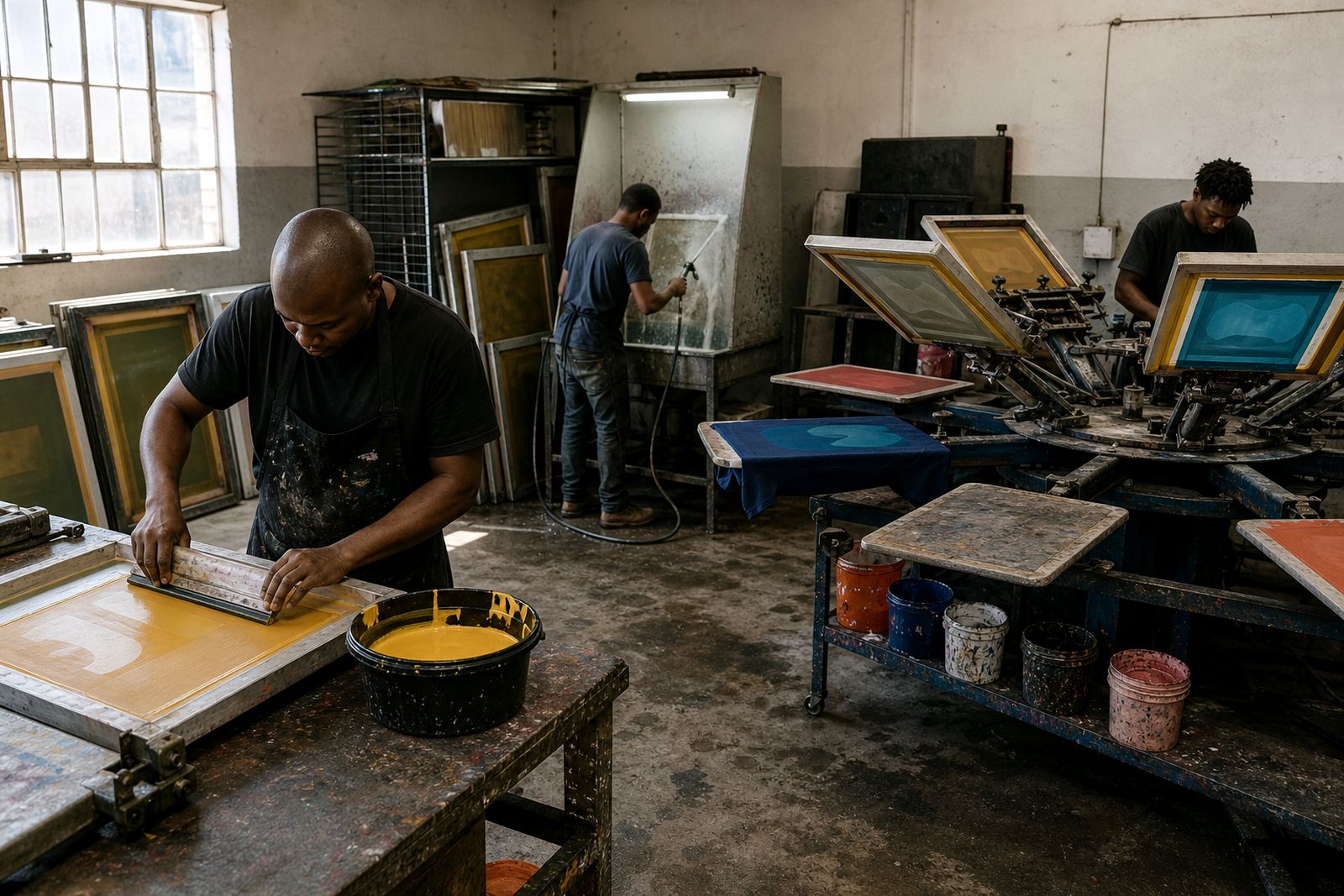
Highveld dust on mesh
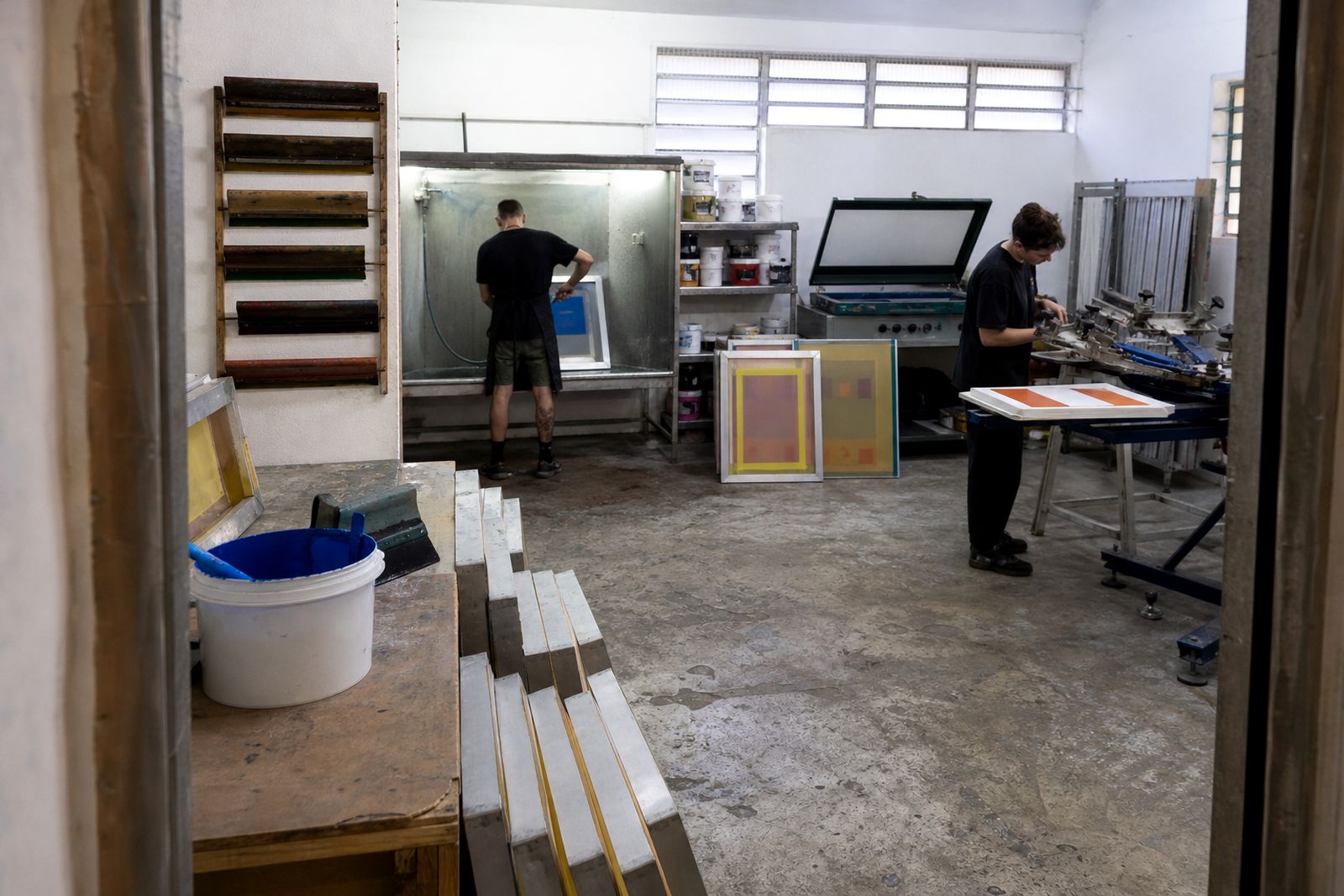
Print rooms on the Highveld often deal with fine dust settling on coated mesh, glass tables and exposed frames between runs. The main product named here is mesh degreaser, used when greasy marks, powder and workshop dust start affecting stencil hold. If your shop uses different mesh counts, frame sizes or ink systems, add that in our contact form.
Gauteng air can leave a dry film on screens even after a bench looked clean at shift start. Start with a checked wash and note what happened on the first pull, especially if dust specks show near halftones or fine type. Keep the same terms across Stencils and Mesh so day shift and night shift record the same fault, not three versions of it.
A dust issue usually shows up as pinholes, fisheyes or weak adhesion after exposure, not as one obvious mistake. Put the mesh cleaning step, the degrease product and the inspection point on one ticket where the next operator can read it. When a frame moves from washout to coating, that note matters more than a chat thread buried under press photos.
Dust control before coating
- Wipe glass and frame edges first
- Mark mesh count on the ticket
- Degrease before fresh emulsion goes on
- Check first exposed image for specks
- Leave notes for the next shift
Use this Highveld ticket where dust keeps returning to the same bench, rack or coating area. Note whether contamination showed on raw mesh, after drying, or only once the stencil was exposed and rinsed. That sequence helps separate poor prep from airborne workshop dirt. After power cuts, inspect screens again before coating because settled dust can undo a clean start.
In inland shops, dry weather often leaves mesh looking clear while still holding fine powder on the threads. Add one line for shelf drying, one for frame storage, and one for who checked the degreased surface under light. Coastal branches may track humidity first, but Highveld rooms usually need stronger attention on dust landing during stops and restarts.
Print rooms that use this
This kind of note suits garment printers in Gauteng, poster rooms with open racks, and shops near busy roads or light industrial yards where dust carries indoors. It also fits small exposure rooms using shared wash bays, where mesh moves through several hands before reclaim and recoating. On those sites, one missed clean can affect a full stack of frames.
Screen Stencil keeps its range focused on stencils, mesh and frames for South African print rooms.
Bring a used screen reference when you want to compare residue, ghosting or dust marks against a fresh prep method. A sample with visible specks near the image edge tells more than a clean artwork file on a phone. The aim is to match the cleaning step to the frame condition, not guess from memory after the run is packed away.
Before the press starts
- Main product: mesh degreaser
- Format and finish agreed
- Bench wiped after the power break
- Mesh count matched to the job
- First exposed screen checked under light
Read the mesh note before reclaim or recoating if the same frame keeps showing random specks. Use the contact form when you need the cleaning step written into a wider kit guide for the room. That helps when mesh prep, tape, reclaim chemicals and bench handling all play a part in the fault.
What our Screen Stencil customers say
Verified Google reviews
Also worth a look
Tell us what you are printing
Send a note through our contact form with the inks and substrates you print, your mesh counts and frame sizes, your exposure unit and your town, and we will come back with practical advice and a quote.
Open the contact form