

Merch short run
Band and brand merch with fast burns and clean reclaim between SKUs.
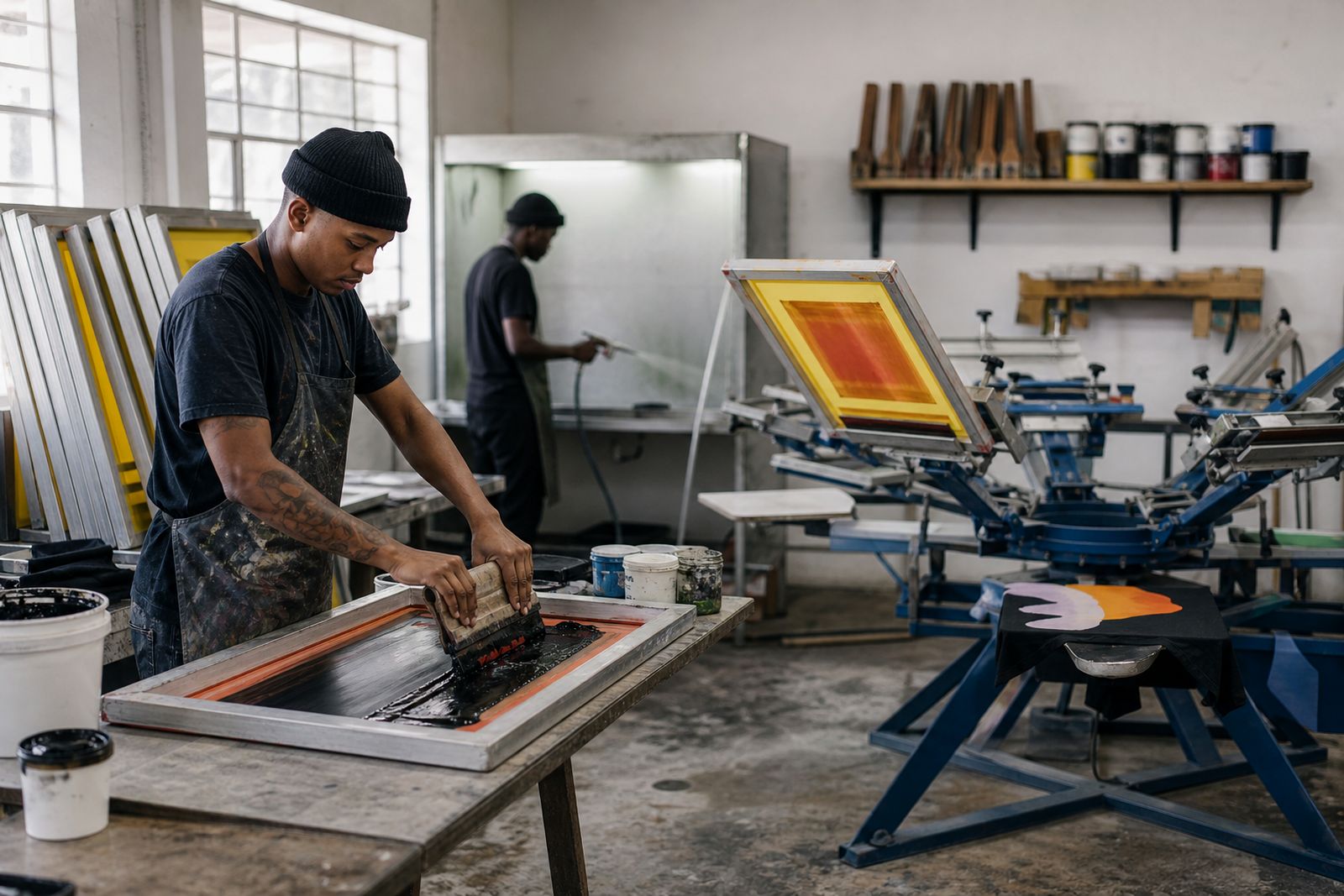
Merch runs for fast SKU changes
Short merch runs need a stencil that exposes quickly, holds fine type, and strips out cleanly before the next design goes on press. SBQ Photopolymer Fast suits band tees, event drops, promo hoodies, and brand samples where one room may burn several small jobs in a day. If you are working with waterbased, plastisol, or discharge, note that in our contact form so the screen setup matches the ink system.
When a merch run switches from one band tee to the next, the screen room needs notes that survive shift change and power cuts. Coastal humidity can soften exposure behaviour, while inland dust shows up in fine text and halftones, so keep the first approved pull and mark the ink set on the job card. Use the same wording across Stencils and Mesh so reclaim, recoat, and remake decisions stay clear.
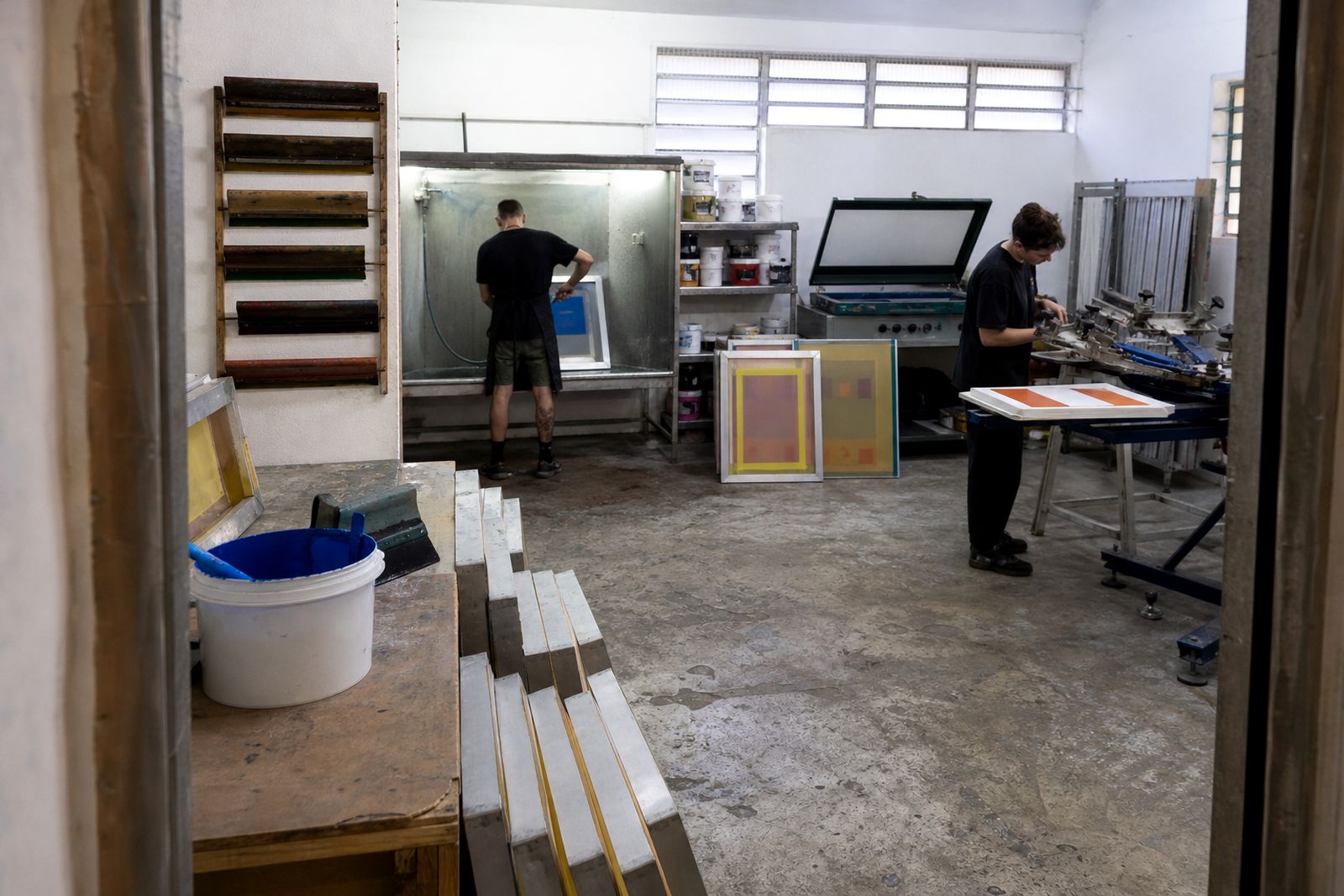
Merch work often changes from one logo to another with very little room between jobs, so the reclaim stage matters as much as the print itself. Put mesh count, squeegee note, and flash requirement on the ticket where the operator can see it beside the carousel. When a client swaps black tees for natural cotton, update the card before the next burn rather than after the first misprint.
Short-run press order
- Match mesh count to artwork detail
- Mark ink type on each frame
- Test print on spare garment first
- Check fine text after first flash
- Record reclaim notes for the next SKU
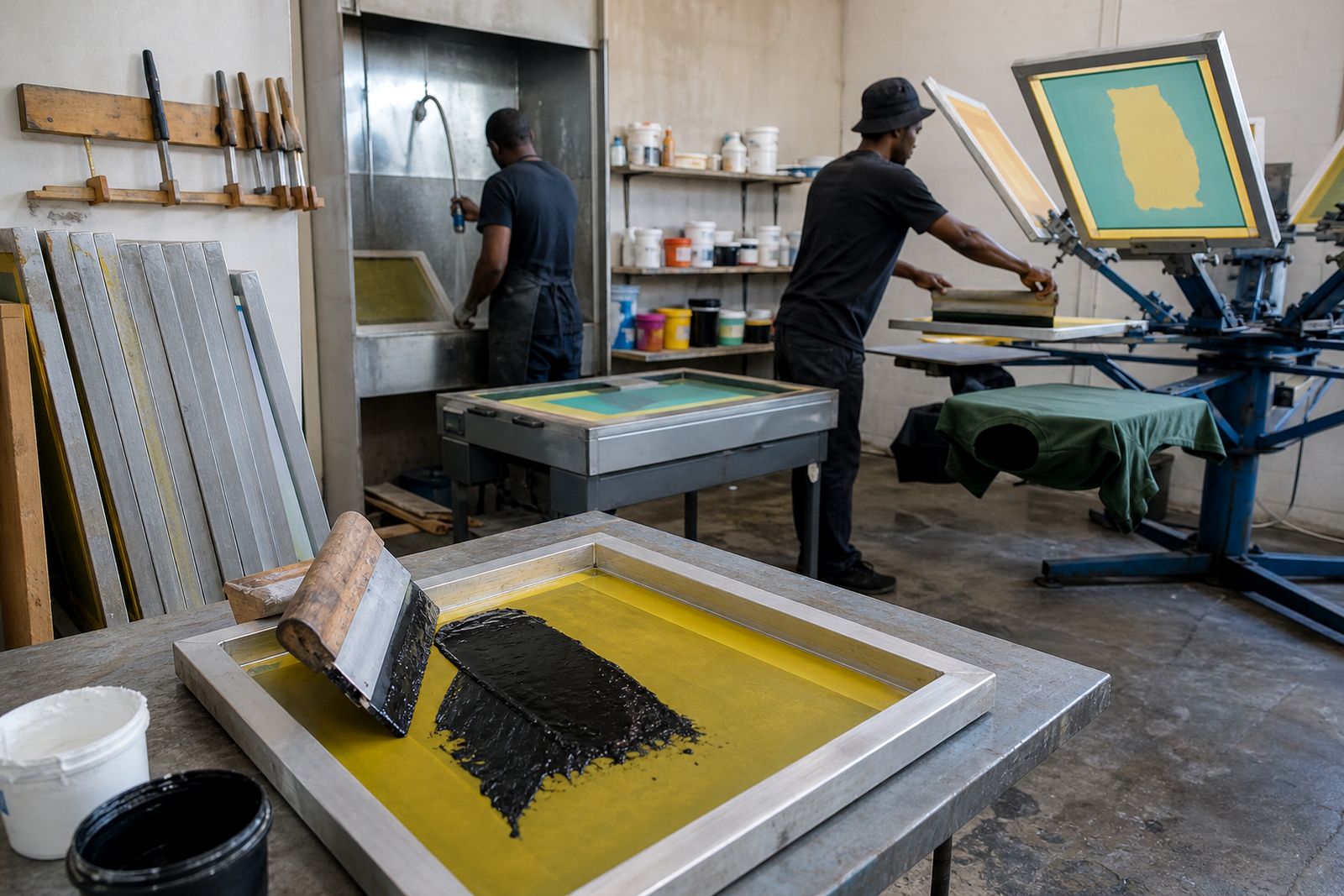
For merch, the job ticket must cover the full cycle from exposure to washout to reclaim. A stencil can print sharply in the morning and still waste time at changeover if the room skipped ink notes or flash settings. Keep the card short, but include enough detail that the next operator can reset the press without paging through old WhatsApp photos.
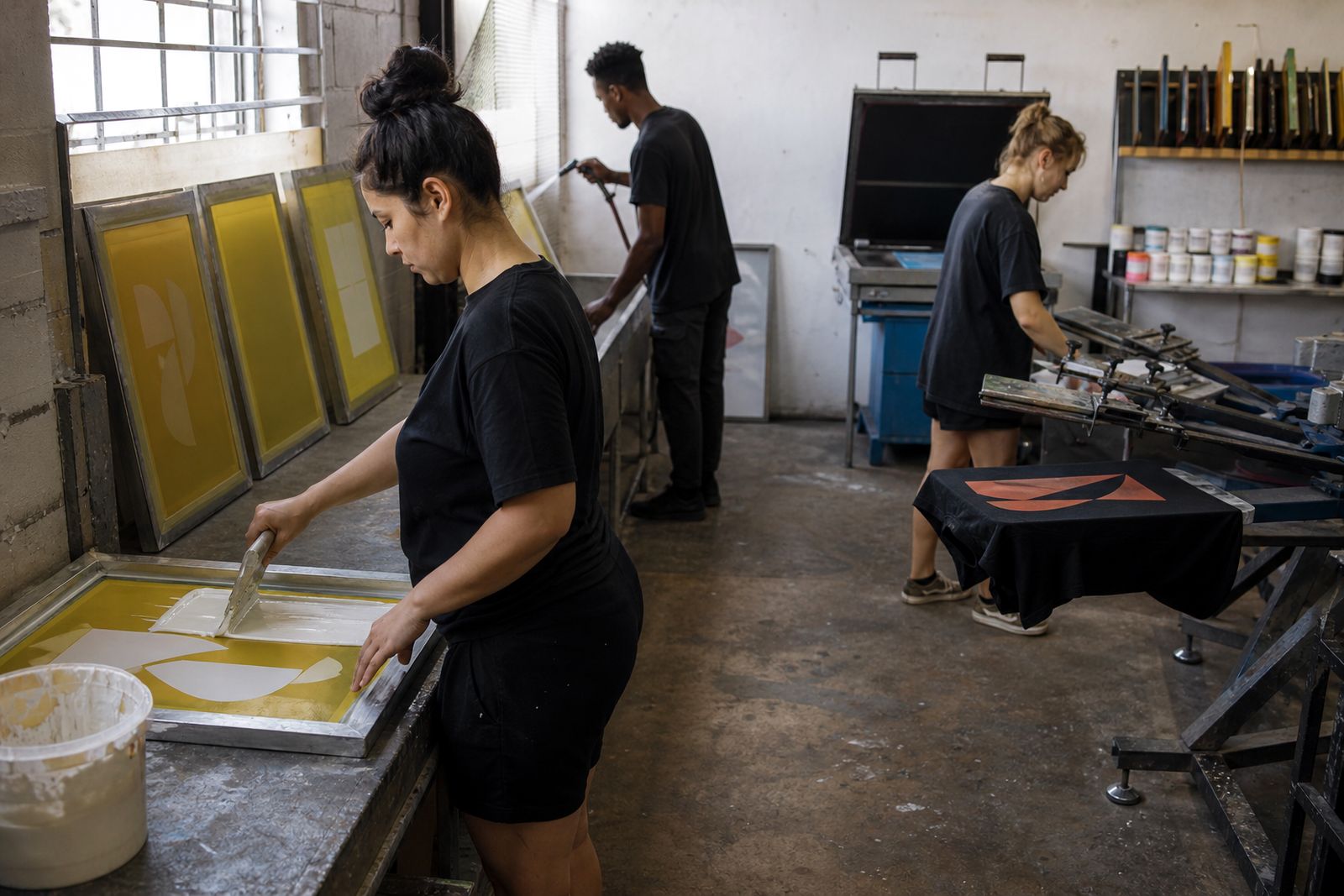
Coastal shops should watch moisture before coating and exposure, especially in Durban and Cape Town air. Highveld rooms may need extra attention on dust around the washout area and on garments waiting open in the stock room. Night crews should note which screens are priority reclaim so morning staff do not strip the wrong frame for a repeat order.
Typical rooms using this setup
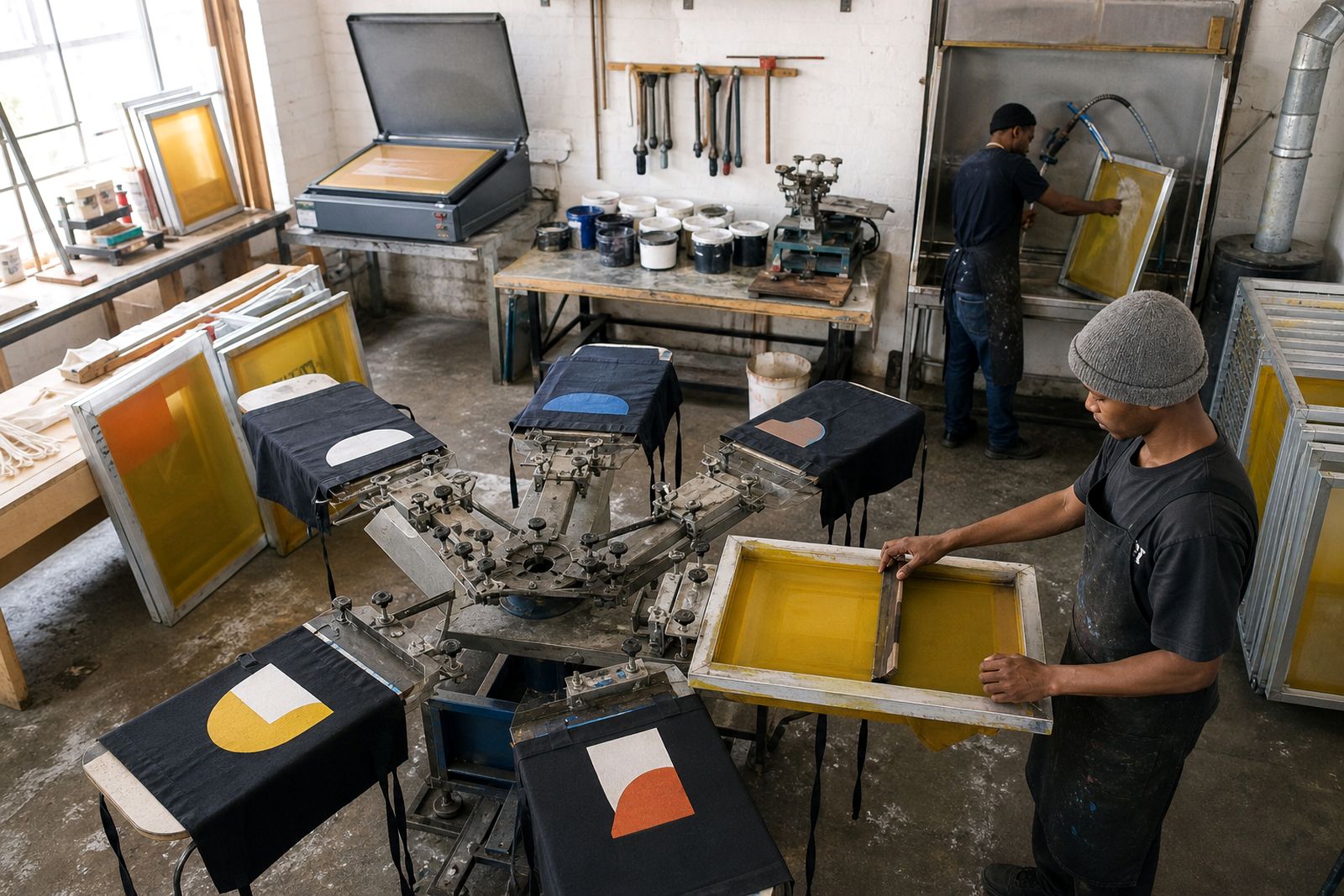
This suits garment print rooms handling music merch, school leavers' shirts, staff apparel, and once-off promo drops. It is often used where art changes frequently but frame stock is limited, so screens must return to service quickly after each run. It also suits sample runs for agencies and labels that need a physical print before approving bulk production.
Screen Stencil keeps its range focused on stencils, mesh and frames for South African print rooms.
Bring an actual shirt, hoodie, tote, or sleeve sample when you need the stencil choice checked against the fabric and print position. Rib collars, pocket placements, and fleece surfaces can all change how the image clears and how much deposit you want through the mesh. A real sample tells more than a phone mock-up when the run is only a few dozen pieces.
Pre-press checks for merch swaps
- Main product: SBQ Photopolymer Fast
- Format and finish agreed
- Exposure unit glass cleaned and checked
- Correct mesh pulled for garment type
- Reclaim bay ready for fast turnaround
Check the matching mesh note before coating screens for a repeat merch job. Use the contact form if you need input on stencil choice, reclaim behaviour, or a tricky print position on sleeves and pockets. Add a kit option when your room also needs mesh cards, reclaim consumables, or exposure checks on the same order.
What our Screen Stencil customers say
Verified Google reviews
Also worth a look
Tell us what you are printing
Send a note through our contact form with the inks and substrates you print, your mesh counts and frame sizes, your exposure unit and your town, and we will come back with practical advice and a quote.
Open the contact form