

Poster edition studio
Edition posters where soft edges and registration matter more than speed.
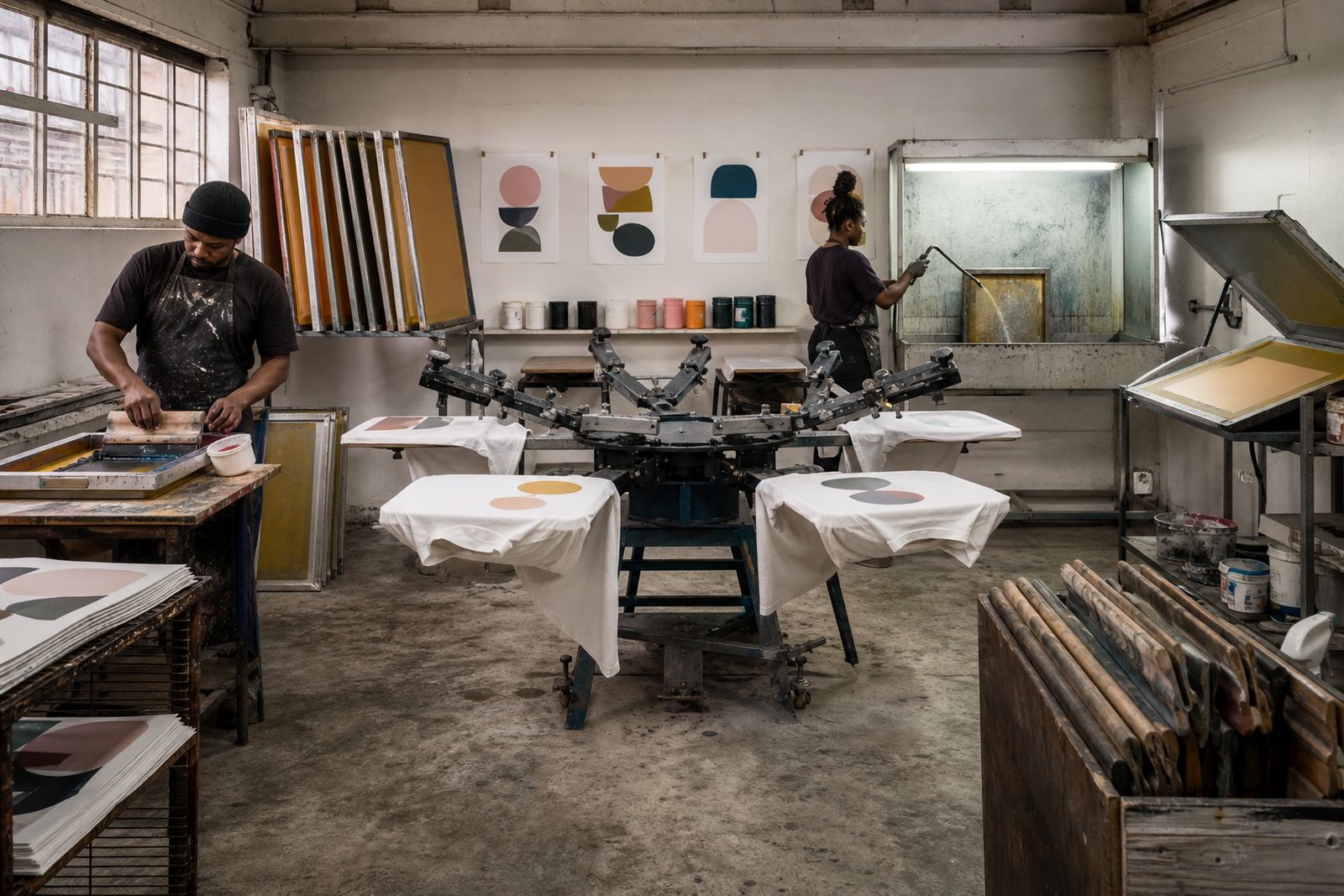
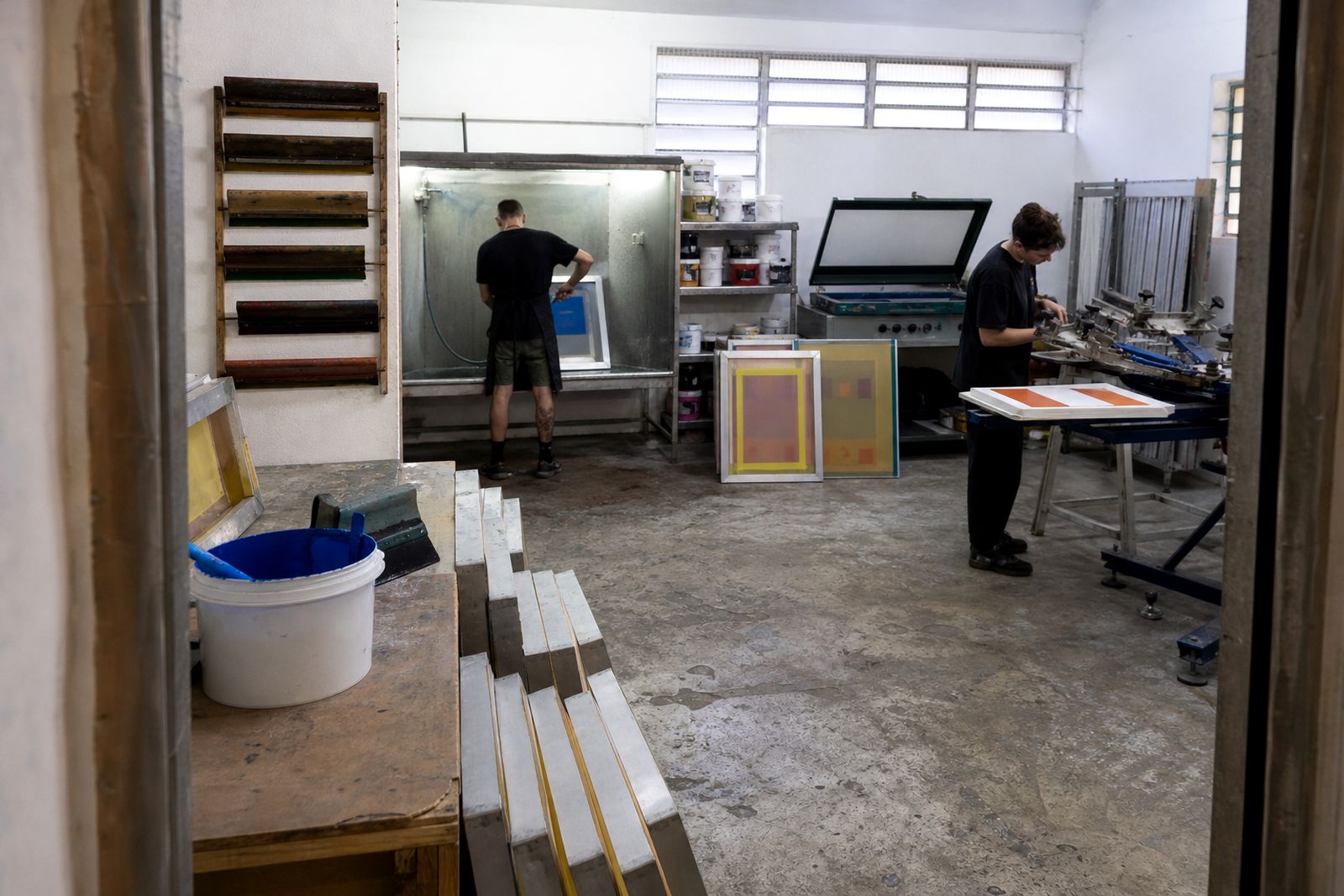
Poster edition screen setup
Poster runs need edge control and repeatable register across the full edition, especially on art paper that shows every spread of ink. For this room type, Capillary Film Soft Edge suits prints where a slightly gentler shoulder on the image matters more than raw throughput. Use the notes to mention stock, print size, and whether you print by hand or semi-automatic.
Cape Town humidity, inland dust, and power breaks all change how a poster screen behaves on press. Keep one tested note beside the frame for mesh tension, exposure result, and the first approved pull, then compare every restart against that record. Use Stencils and Mesh pages when the studio needs shared terms for edge softness, deposit, and registration across different shifts.
Edition work benefits from one visible job card next to the press or table, not scattered notes across phones. Record the approved paper, the intended ink deposit, and the registration marks used for the signed run. When the artist changes a border width or asks for a softer edge, update the card before the next stack is printed.
Poster edition bench order
- Note stock, size, and margin position
- Match mesh count to image detail
- Proof on final paper, not substitute
- Check soft edges under good light
- Log register marks for the next shift
For poster editions, the stencil choice, the paper surface, and the print sequence all affect how the final stack reads as a set. A soft-edge capillary film route can help when solids must sit cleanly beside finer linework without a harsh rim. After any power cut, pull a fresh proof and compare it to the approved sheet before restarting the numbered run.
Studios near the coast should watch drying and storage conditions once exposed screens come off the rack. Highveld rooms often need extra care with dust on stock and on the print side of the screen before a long session begins. Night crews should inherit a written note on off-contact, squeegee hardness, and the approved pull direction.
Studios that use this setup
Poster edition studios, art print rooms, and teaching spaces need reliable alignment for signed prints, test pulls, and short runs. You might be printing gig posters in Cape Town, limited editions in Johannesburg, or short gallery runs for a Durban launch. The common requirement is a stencil route that respects paper choice and visible edge quality.
Screen Stencil keeps its range focused on stencils, mesh and frames for South African print rooms.
Bring or describe a printed sample if one colour is filling too heavily or fine type is losing shape at the edges. A real poster sheet says more than a generic file when you need to discuss margins, stock tooth, or how the image sits on the page. That makes it easier to match the stencil route to the way your room actually prints.
Before opening the edition
- main product: capillary film soft edge
- Format and finish agreed
- Paper stack acclimatised to the room
- Register tabs fixed and rechecked
- Approved proof kept beside the press
Before the first overnight run, check a matching mesh note against the poster size, ink deposit, and edge softness you need. If your print room needs a layout sketch or a specific stencil recommendation for edition work, use the contact form. Pair edition work with a kit option where mesh cards, reclaim notes, or packing checks are part of the job setup.
What our Screen Stencil customers say
Verified Google reviews
Also worth a look
Tell us what you are printing
Send a note through our contact form with the inks and substrates you print, your mesh counts and frame sizes, your exposure unit and your town, and we will come back with practical advice and a quote.
Open the contact form