

Teaching studio
Classroom coating and burn routines that forgive first-time hands.
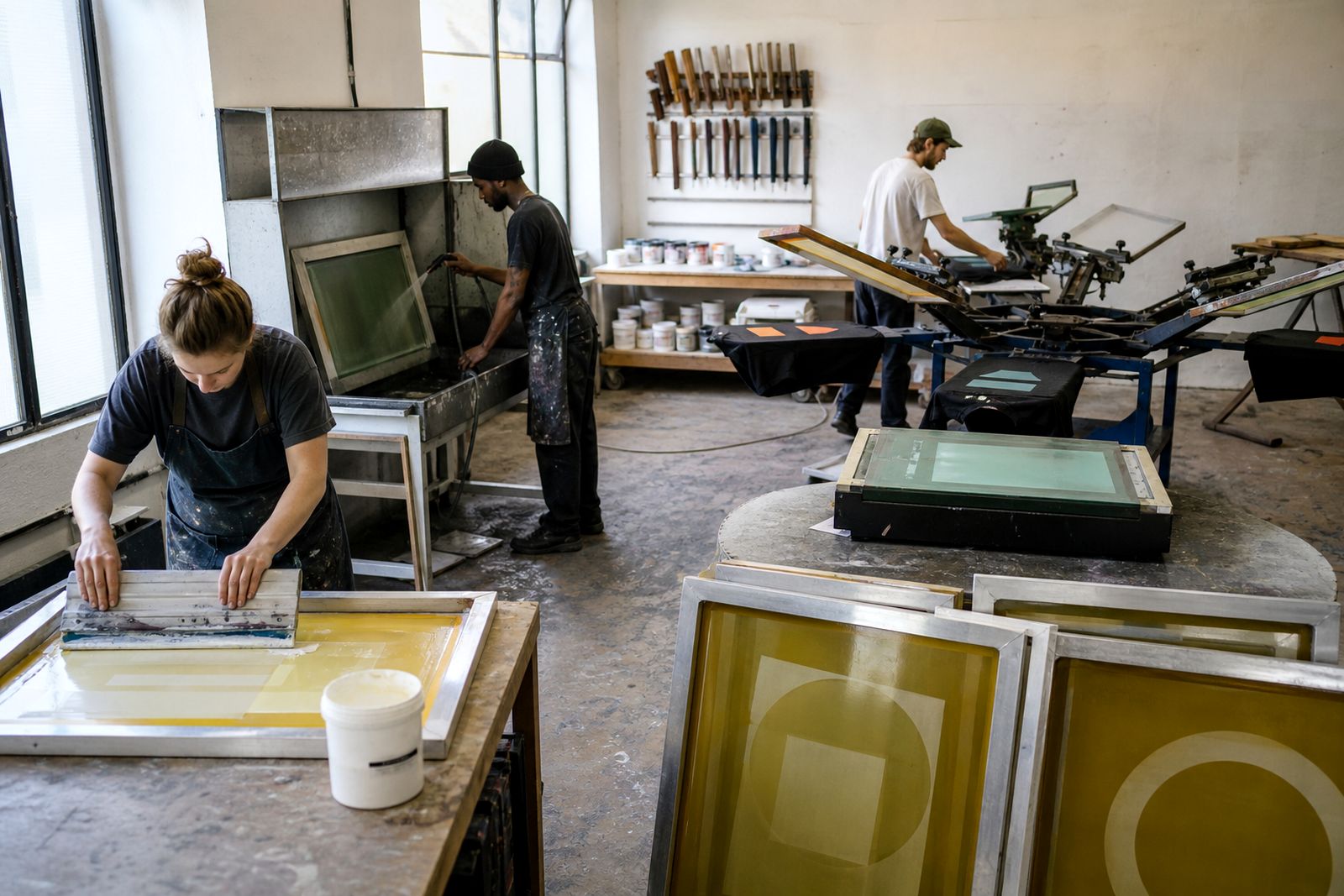
Classroom screen prep routine
A teaching studio needs a stencil plan that suits shared benches, mixed ability, and repeated demonstrations. Diazo mesh coat fits classes where students must see coating, drying, exposure, and washout as separate steps. If your group works with larger frames or a different ink set, note it when you use our contact form.
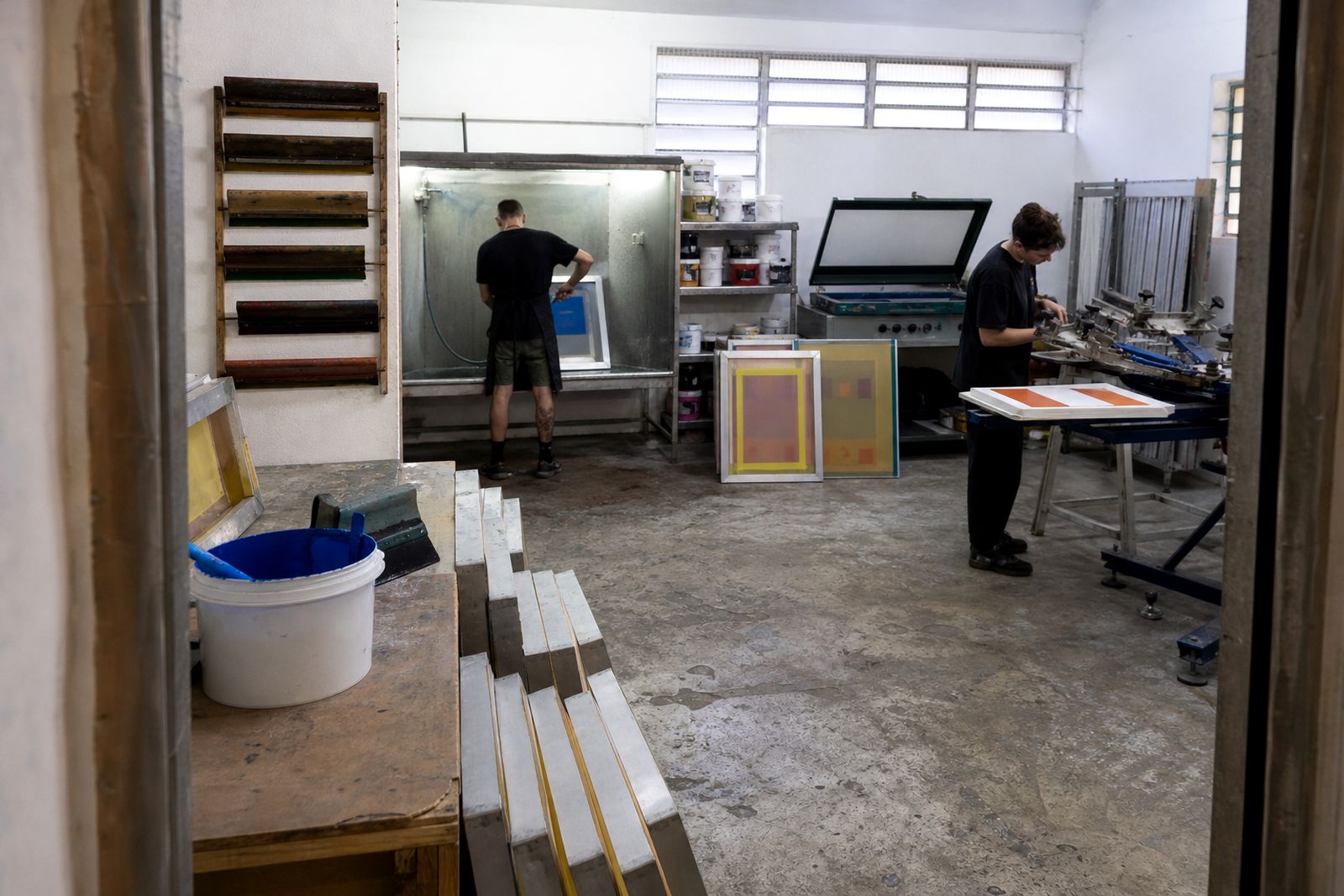
Student print rooms in South Africa often deal with dust from open windows, damp coastal air, and stop start power through a teaching day. Keep one marked sample screen near the sink so learners can compare a good coat against a thin edge or missed corner. Point classes to Stencils and Mesh when you want everyone using the same names for count, coating side, and reclaim checks.
Training spaces run better when the coating notes stay beside the exposure unit, not lost in chat messages. Put mesh count, scoop coater choice, and drying position on one card for the whole class to read. New hands usually make fewer errors when the washout example and the written steps sit together on the wall.
Studio order for student screens
- Label frame size before coating
- Record mesh count on the card
- Dry coated screens away from dust
- Test washout on one training frame
- Leave tutor notes for the next class
In a teaching studio, the ticket should help a lecturer, assistant, and first timer follow the same sequence without guessing. List the emulsion, exposure reference, and reclaim method in the order students will actually do them. After power cuts or a long pause, restart with a check screen before anyone burns the full batch for class.
Coastal campuses should watch drying time more closely when humidity rises during the day. Highveld studios usually need stricter dust control around coated mesh and the drying rack. Evening sessions also benefit from a named handover note so one tutor knows which screens were coated, exposed, or left to dry.
Teaching rooms that use this setup
School art departments, college print rooms, community workshops, and campus studios often have several people sharing one coating area. It is useful where frames are reused often and learners need a repeatable burn routine rather than ad hoc bench notes. Diazo mesh coat works well on tickets for demonstration screens, class editions, and short training runs.
Screen Stencil keeps its range focused on stencils, mesh and frames for South African print rooms.
Bring one used frame or a sample print when you need the setup matched to your room. That makes it easier to discuss mesh count, image detail, and whether the class prints on paper, board, or fabric. A reference from your own studio also shows how the stencil is holding up after repeated student use and reclaiming.
Before students start coating
- Main product: diazo mesh coat
- Format and finish agreed
- Drying rack cleared and labelled
- Degreased mesh checked under light
- Demo frame ready for washout
Read the mesh note before the first coating demo so the whole group starts with the same mesh and stencil language. Use the contact form if your room needs a sketch for rack layout, washout flow, or exposure bench order. Pair class stock with a kit guide when it includes scoop coaters, tape, reclaim chemistry, and cleaning tools.
What our Screen Stencil customers say
Verified Google reviews
Also worth a look
Tell us what you are printing
Send a note through our contact form with the inks and substrates you print, your mesh counts and frame sizes, your exposure unit and your town, and we will come back with practical advice and a quote.
Open the contact form