

Textile yardage
Yardage tables where mesh tension and soft shoulders keep repeats calm.
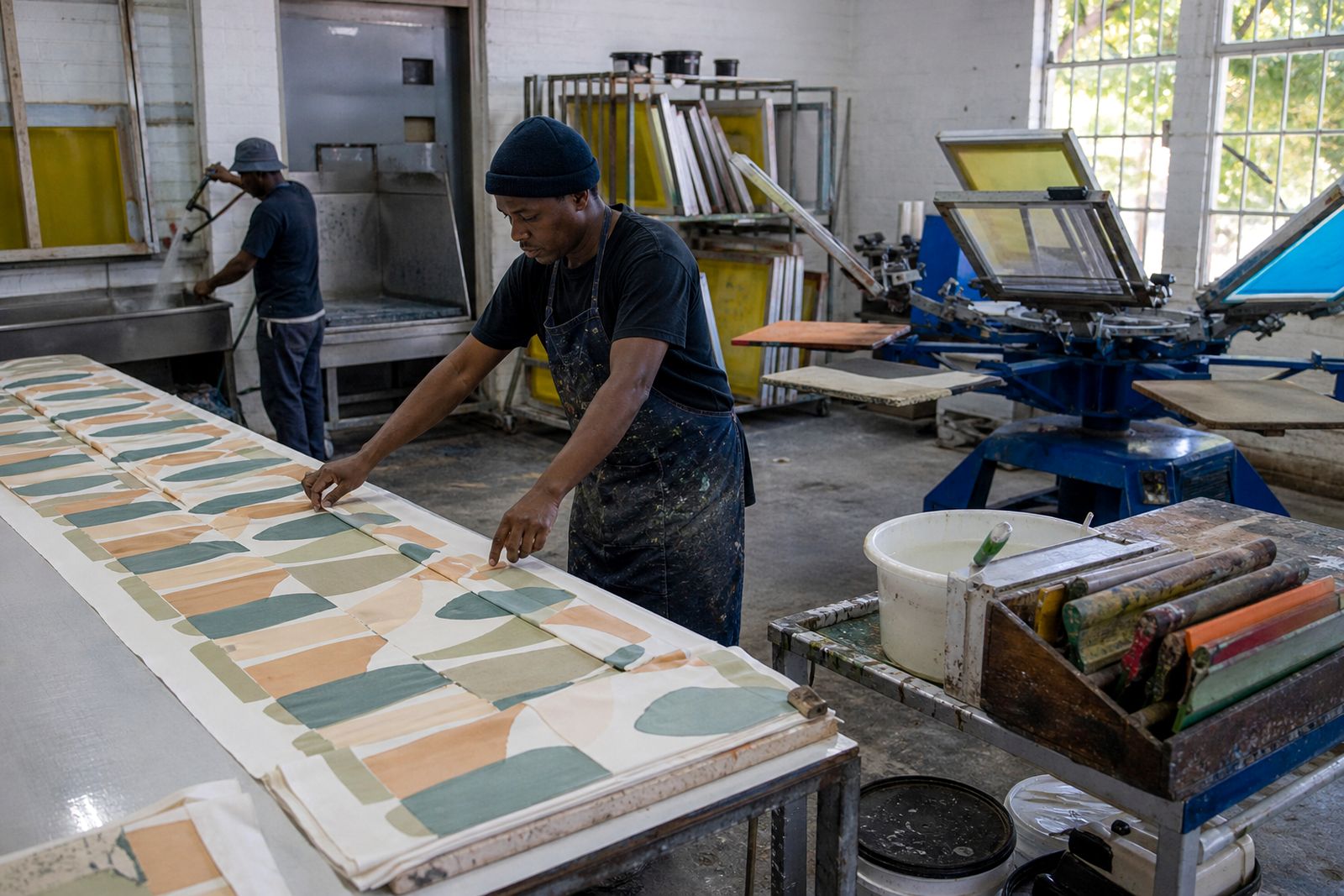
Textile yardage stencil planning
Yardage printing needs a stencil spec that matches repeat length, cloth width, and the ink deposit required across a long run. Direct emulsion high mesh is often chosen when fine detail must hold on fabric and the print room wants a cleaner edge on repeat joins. If the cloth is absorbent, stretchy, or heavily textured, note that in our contact form before the screen is prepared.
On textile yardage runs, repeat accuracy matters from the first metres to the last roll. Lint from cottons, overnight moisture on the coast, and stop-start power conditions can all affect how the stencil opens and holds detail. Check Stencils and Mesh before setup so mesh count, emulsion build, and squeegee pressure suit the cloth and ink in the room.
Long fabric orders go wrong when repeat notes sit in one message and curing notes in another. Put fabric type, repeat size, mesh choice, and finish requirement on the same job card. That gives the next operator a clear reference when the roll changes or a fresh screen is brought onto the table.
Repeat setup on the print table
- Measure repeat against the fabric width
- List each colour in print order
- Test one strike-off on actual cloth
- Mark the approved repeat join
- Write curing notes on the job card
For textile yardage, the stencil note should travel with the table sheet, not with a private chat. Include mesh count, coating side, fabric name, and whether the run is pigment or water-based. After power cuts or a lunch break, those details help the crew restart with the same registration and ink behaviour.
Cape and KZN rooms may need extra attention to drying and screen storage when the air is damp. Highveld shops often contend with airborne dust that can sit on open mesh before exposure or printing. Night teams should also note who checked the final repeat alignment before the next roll was loaded.
Typical textile yardage settings
This work suits fabric printers handling continuous lengths for apparel, decor cloth, liners, and promotional textiles in Gauteng, the Western Cape, and KZN. On longer tables, small registration drift becomes visible very quickly, so stencil choice and mesh tension matter from the first metres. Repeat accuracy is especially important where patterns must meet cleanly across the full width of the cloth.
Screen Stencil keeps its range focused on stencils, mesh and frames for South African print rooms.
Bring or send a cutting from the actual fabric where possible. Cotton sheeting, polycotton, and heavier blends can take ink very differently, and that affects the stencil recommendation. A physical sample also helps when discussing edge sharpness, penetration, and the finish expected after curing or washing.
Pre-run checks for yardage
- Main product: direct emulsion high mesh
- Format and finish agreed
- Repeat marks aligned before first pull
- Mesh tension checked across the frame
- Approved strike-off filed for both shifts
Read the matching mesh note before exposing or reclaiming a replacement screen for the same fabric job. Use the contact form if the print bay needs a stencil layout linked to cloth width or repeat spacing. Pair the ticket with a kit guide when tape, blockout, reclaim, or exposure checks are part of the setup.
What our Screen Stencil customers say
Verified Google reviews
Also worth a look
Tell us what you are printing
Send a note through our contact form with the inks and substrates you print, your mesh counts and frame sizes, your exposure unit and your town, and we will come back with practical advice and a quote.
Open the contact form